



Hackers News Hackers News
  • CyberSecurity News
  • Threats
  • Attacks
  • Vulnerabilities
  • Breaches
  • Comparisons

Social Media

Hackers News Hackers News
  • CyberSecurity News
  • Threats
  • Attacks
  • Vulnerabilities
  • Breaches
  • Comparisons
Search the Site
Popular Searches:
technology Amazon AI
Recent Posts
EtherRAT Targets Enterprise Admins with SEO Poison
May 1, 2026
New Spyware Platform: Rebrand & Resell Android Lets Buyers
May 1, 2026
Attackers Abuse CAPTCHA, ClickFix for Cred Tactics Boost
May 1, 2026
Home/Threats/New XWorm RAT Campaign Uses Themed Phishing Lures and
Threats

New XWorm RAT Campaign Uses Themed Phishing Lures and

A new phishing campaign is delivering an updated variant of XWorm, a Remote Access Trojan (RAT) enabling attackers to gain full remote control of infected Microsoft Windows systems. First tracked in...

Marcus Rodriguez
Marcus Rodriguez
February 13, 2026 3 Min Read
0 0

A new phishing campaign is delivering an updated variant of XWorm, a Remote Access Trojan (RAT) enabling attackers to gain full remote control of infected Microsoft Windows systems.

First tracked in 2022, XWorm is still actively distributed and is often traded through Telegram-based marketplaces, keeping it within easy reach of many threat actors.
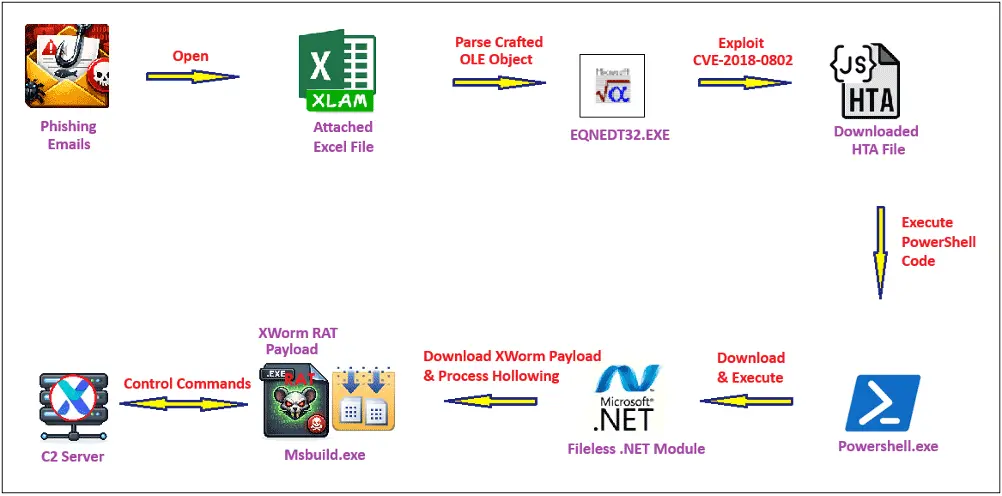
Overview of the XWorm phishing campaign infection chain (Source - Fortinet)
Overview of the XWorm phishing campaign infection chain (Source – Fortinet)

In the latest activity, attackers used multiple business-style email themes—such as payment detail reviews, purchase orders, and signed shipment documents—to trick targets into opening a malicious Excel add-in attachment (.XLAM).
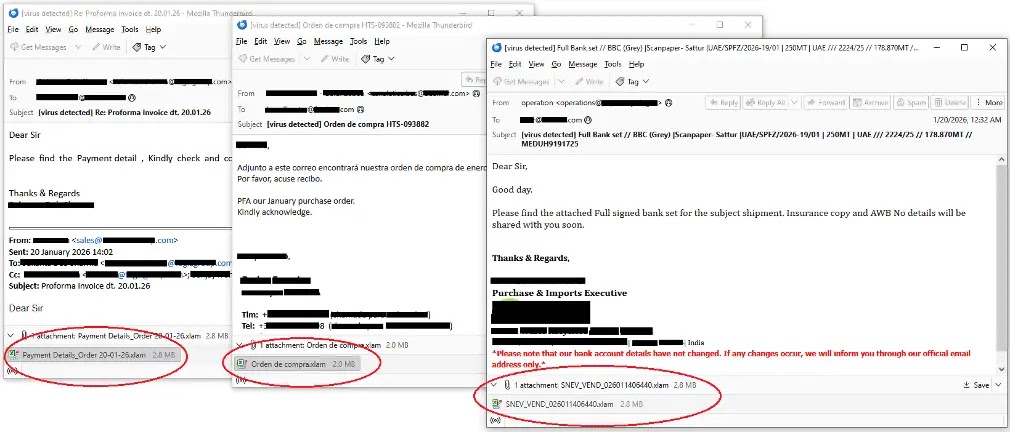
Examples of phishing emails used in the XWorm campaign (Source - Fortinet)
Examples of phishing emails used in the XWorm campaign (Source – Fortinet)

The lure is simple but effective: once the attachment is opened, the attack chain moves quickly from document execution to in-memory malware delivery, raising the risk of account theft, data loss, and hands-on keyboard control.

Fortinet researchers identified this campaign after capturing it in the wild, and they documented how a crafted Excel file abuses CVE‑2018‑0802, a Microsoft Equation Editor (EQNEDT32.EXE) remote code execution flaw that remains in real-world use.
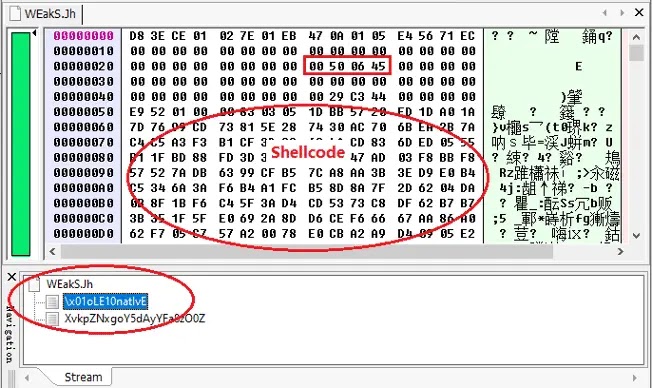
Malformed OLE object stream exploiting CVE-2018-0802 (Source - Fortinet)
Malformed OLE object stream exploiting CVE-2018-0802 (Source – Fortinet)

Their analysis shows an embedded OLE object set to auto-load, which leads to shellcode execution when the file is opened.

Infection mechanism

When CVE‑2018‑0802 is triggered, the shellcode downloads an HTA from retrodayaengineering[.]icu/HGG.hta and saves it as %APPDATA%VA5.hta, then launches it via ShellExecuteExW.
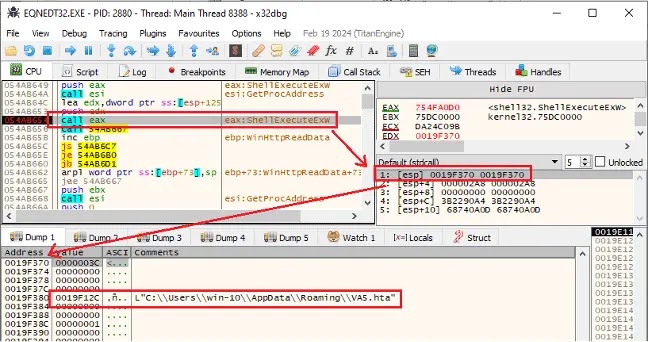
Execution of the downloaded HTA file via ShellExecuteExW() (Source - Fortinet)
Execution of the downloaded HTA file via ShellExecuteExW() (Source – Fortinet)

This step shifts the chain from a document exploit to script-based execution, helping the operator blend into normal Windows activity while the payload is staged.

Next, the obfuscated HTA runs under mshta.exe and drops a Base64 PowerShell payload that fetches optimized_MSI_lpsd9p.jpg from a Cloudinary URL and extracts a hidden .NET module placed between “BaseStart” and “-BaseEnd” markers.

The loader module is disguised with the assembly name Microsoft.Win32.TaskScheduler and runs filelessly in memory, avoiding a clean on-disk malware binary in the early stages.
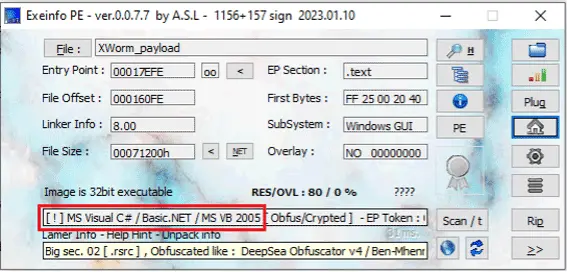
XWorm payload observed in a static analysis tool (Source - Fortinet)
XWorm payload observed in a static analysis tool (Source – Fortinet)

From there, the .NET loader decodes a reversed Base64 URL, pulls wwa.txt from pub-3bc1de741f8149f49bdbafa703067f24[.]r2[.]dev, reconstructs the XWorm payload in memory, and injects it into a newly created Msbuild.exe using process hollowing.

After execution, the RAT decrypts its configuration, connects to berlin101[.]com:6000, and uses AES-encrypted traffic, so defenders should prioritize patching Equation Editor exposure, blocking or isolating .XLAM/HTA execution paths, tightening controls on mshta.exe/PowerShell/Msbuild.exe, and adding detections for the listed domains and URLs.

Disclaimer: HackersRadar reports on cybersecurity threats and incidents for informational and awareness purposes only. We do not engage in hacking activities, data exfiltration, or the hosting or distribution of stolen or leaked information. All content is based on publicly available sources.


Tags:

AttackCVEExploitMalwarePatchphishingThreat

Share Article

Marcus Rodriguez

Marcus Rodriguez

Marcus is a security researcher and investigative journalist with expertise in vulnerability research, bug bounties, and cloud security. Since 2017, Marcus has been breaking stories on critical vulnerabilities affecting major platforms. His investigative work has led to the disclosure of numerous security flaws and improved defenses across the industry. Marcus is an active participant in bug bounty programs and has been recognized for responsible disclosure practices. He holds multiple security certifications and regularly speaks at industry events.

Previous Post

OysterLoader Evasion Loader: Obfusc Multi‑Stage Uncovered

Next Post

Zimbra Security Patch for XSS, XXE & LDAP Update Injection

No Comment! Be the first one.

Leave a Reply Cancel reply

Your email address will not be published. Required fields are marked *

Popular Posts
Ransomware Victims Jump to 7,831 as AI Crime Tools Scale Global
May 1, 2026
Deep#Door Stealer Harvests Passwords, Cloud Browser Tokens
May 1, 2026
China-Aligned Attackers Use ShadowPad, IOX Proxy WMIC Multi-Stage
May 1, 2026
Top Authors
Marcus Rodriguez
Marcus Rodriguez
Sarah simpson
Sarah simpson
Emy Elsamnoudy
Emy Elsamnoudy
Let's Connect
156k
2.25m
285k

Related Posts

Jennifer sherman
By Jennifer sherman
Threats

GlassWorm Attacks macOS via Malicious VS Code…

January 1, 2026
Emy Elsamnoudy
By Emy Elsamnoudy
Attacks

ClickFix Attack Hides Malicious Code via Stegan Security

January 1, 2026
Sarah simpson
By Sarah simpson
Vulnerabilities

MongoBleed Detector Tool Detects Critical MongoDB CVE-

January 1, 2026
Emy Elsamnoudy
By Emy Elsamnoudy
Breaches

Conti Ransomware Gang Leaders & Infrastructure Exposed

January 1, 2026
Hackers News Hackers News
  • [email protected]

Quick Links

  • Contact Us
  • Privacy Policy
  • Terms of service

Categories

Attacks
Breaches
Comparisons
CyberSecurity News
Threats
Vulnerabilities

Let's keep in touch

receive fresh updates and breaking cyber news every day and week!

All Rights Reserved by HackersRadar ©2026

Follow Us






