




Top 10 Best Data Security Companies in 2026
Protecting sensitive information in 2026 demands robust solutions from data security companies, especially with the escalation of cyber threats and the complexities of cloud environments. In 2026,...

Protecting sensitive information in 2026 demands robust solutions from data security companies, especially with the escalation of cyber threats and the complexities of cloud environments.
Table Of Content
- How to Choose the Best Data Security Company in 2026
- Comparison Table: Top 10 Best Data Security Companies 2026
- 1. IBM
- Why We Picked It
- Specifications
- Features
- Reason to Buy
- 2. Microsoft
- Why We Picked It
- Specifications
- Features
- Reason to Buy
- 3. Palo Alto Networks
- Why We Picked It
- Specifications
- Features
- Reason to Buy
- 4. Cisco
- Why We Picked It
- Specifications
- Features
- Reason to Buy
- 5. Commvault
- Why We Picked It
- Specifications
- Features
- Reason to Buy
- 6. Varonis
- Why We Picked It
- Specifications
- Features
- Reason to Buy
- 7. Cyera
- Why We Picked It
- Specifications
- Features
- Reason to Buy
- 8. BigID
- Why We Picked It
- Specifications
- Features
- Reason to Buy
- 9. Immuta
- Why We Picked It
- Specifications
- Features
- Reason to Buy
- 10. Sentra
- Why We Picked It
- Specifications
- Features
- Reason to Buy
- Conclution
In 2026, data security has become a top priority for organizations of all sizes as cyber threats, regulatory pressure, and cloud adoption continue to accelerate.
With sensitive business data spread across cloud platforms, SaaS applications, endpoints, and hybrid environments, enterprises are actively searching for the best data security companies that can protect critical information from breaches, leaks, and unauthorized access.
Modern data security solutions now focus on data discovery and classification, data loss prevention (DLP), encryption, access control, identity governance, insider threat detection, and continuous monitoring.
As ransomware attacks, supply-chain breaches, and AI-driven threats grow more advanced, choosing the right data security vendor in 2026 is essential for maintaining compliance, reducing risk, and ensuring business continuity.
This curated list of the Top 10 Best Data Security Companies in 2026 highlights industry leaders delivering advanced data protection, scalable security architectures, and compliance-ready solutions for modern enterprises. Whether you are a CISO, security architect, or IT decision-maker, these companies represent the most trusted and innovative data security providers shaping the future of information protection.
These top providers offer advanced tools for data discovery, protection, and compliance, helping businesses safeguard their assets effectively.
How to Choose the Best Data Security Company in 2026
Vendor Reliability and Roadmap: Evaluate the vendor’s market presence, customer adoption, and long-term innovation strategy.
Data Discovery and Classification: Ensure the solution can automatically identify and classify sensitive data across cloud, SaaS, hybrid, and on-premise environments.
Comprehensive Data Protection: Look for strong data loss prevention (DLP), encryption, and access controls to prevent unauthorized data exposure.
Cloud and Hybrid Support: The platform should provide consistent data security across multi-cloud and hybrid infrastructures without visibility gaps.
Insider Threat Detection: Choose vendors that offer continuous monitoring and behavioral analytics to detect suspicious internal activity.
Compliance and Privacy Readiness: The best data security companies support regulatory requirements through policy enforcement, audit reporting, and compliance automation.
Scalability and Performance: The solution should scale with growing data volumes and enterprise workloads.
Integration Capabilities: Seamless integration with IAM, SIEM, SOAR, and cloud security tools is essential for centralized security operations.
Ease of Deployment and Management: Prefer solutions that are easy to deploy, manage, and maintain without operational complexity.
AI and Automation: Advanced analytics and automation help improve threat detection accuracy and reduce response time.
Comparison Table: Top 10 Best Data Security Companies 2026
| Company | Core Focus | Key Features | Deployment | Strengths | Pricing Model | Best For |
|---|---|---|---|---|---|---|
| 1. IBM | Data discovery & monitoring | AI threat detection, vulnerability assessments, compliance automation | On-prem, cloud, SaaS | Multi-DB support, zero-trust, X-Force intel | Subscription (enterprise) | Large hybrid enterprises |
| 2. Microsoft | Unified governance & DLP | Sensitivity labels, insider risk mgmt, Sentinel SIEM | Cloud-native (Azure/365) | Ecosystem integration, AI Copilot | Per-user/per-workload | Microsoft stacks |
| 3. Palo Alto Networks (Prisma) | Cloud-native DLP & CSPM | Data classification, malware scanning, SASE | Multi-cloud SaaS | Precision AI, low false positives | Usage-based | Multi-cloud infra |
| 4. Cisco | XDR & network analytics | Stealthwatch UEBA, Duo MFA, endpoint protection | Hybrid/on-prem/cloud | Broad portfolio, Talos intel | Perpetual/subscription | Network-heavy orgs |
| 5. Commvault | Cyber recovery & backup | Immutable storage, AI anomaly detection, air-gapping | Multi-cloud | Ransomware resilience, fast RTO | Per-TB/workload | Backup security |
| 6. Varonis | DSPM & UEBA | Data classification, access governance, MDDR | Cloud/SaaS/on-prem | Insider threat focus, automation | Subscription | Unstructured data risks |
| 7. Cyera | AI-native DSPM | LLM classification, risk prioritization, IAM integration | Agentless cloud | SMB-friendly, data context | Usage-based | Cloud discovery |
| 8. BigID | Privacy & governance | No-copy scanning, regulatory risk scoring | Cloud/SaaS | Compliance-heavy, secure access | Enterprise subscription | Regulated industries |
| 9. Immuta | Policy automation | Dynamic masking, data lineage, self-service | Multi-cloud | Analytics governance, zero-trust | Subscription | Data teams |
| 10. Sentra | Cloud posture & lineage | Agentless scanning, auto-remediation | Cloud-native | Scalability, privacy focus | Usage-based | Growing clouds |
1. IBM

Why We Picked It
IBM stands out in 2026 for its comprehensive data security suite that integrates AI-driven threat intelligence with robust data protection.
Guardium discovers sensitive data across databases, clouds, and big data platforms using pre-built patterns for PCI, GDPR, and HIPAA compliance.
It monitors access in real-time, detecting insider threats and anomalies with behavioral analytics.
The platform automates vulnerability assessments for over 15 database types, identifying misconfigurations and weak passwords.
Specifications
IBM Guardium offers discovery for structured/unstructured data, real-time monitoring of access activities, and over 2000 security assessments.
Supports databases like Oracle, SQL Server, and cloud stores with encryption, tokenization, and masking. Deployment options include on-premises, cloud, and SaaS with scalability for petabyte-scale data.
Features
Key features encompass AI-powered threat detection, identity access management, application security testing, and automated compliance audits.
Includes data risk analytics dashboard for vulnerability prioritization and policy enforcement across endpoints.
Reason to Buy
Choose IBM for its proven track record in Fortune 500 environments, where it cuts detection times by 50% via ML analytics. Ideal if you need unified protection for diverse data landscapes without silos, ensuring resilience against sophisticated threats.
| Pros | Cons |
|---|---|
| Comprehensive multi-environment support | High initial setup complexity |
| Strong AI threat intelligence | Premium pricing for full suite |
| Automated compliance tools | Steep learning curve for customization |
 Best For: Large enterprises needing hybrid cloud data protection.
🔗 Try IBM here → IBM Official Website2. Microsoft
Why We Picked It
Microsoft leads in 2026 with integrated data security via Purview and Defender, leveraging vast telemetry for AI-enhanced protection.
Purview unifies information protection, governance, and compliance across Microsoft 365, Azure, and third-party apps. Sentinel provides SIEM with agentic defense, detecting risks in real-time.
Entra ID verifies identities zero-trust style, while Priva manages privacy risks proactively. Defender XDR covers endpoints, identities, and clouds holistically.
Its cloud-native design scales seamlessly for global operations. Microsoft excels in reducing alert fatigue through ML prioritization.
Specifications
Supports data classification, encryption at rest/transit, sensitivity labels, and retention policies. Integrates with Defender suite for threat hunting; scales to billions of endpoints with SQL Server 2025 enhancements like managed identities.
Features
Includes insider risk management, eDiscovery, audit logs, and AI Copilot for security tasks. Data Loss Prevention policies block exfiltration across email, endpoints, and browsers.
Reason to Buy
Opt for Microsoft if you’re in the ecosystem already—seamless integration slashes deployment time. It empowers teams with actionable insights, cutting breach costs via rapid response.
| Pros | Cons |
|---|---|
| Deep Microsoft ecosystem integration | Vendor lock-in risks |
| AI-powered risk remediation | Complex licensing |
| Scalable for enterprises | Best with Azure/365 |
 Best For: Microsoft-centric organizations seeking unified security.
🔗 Try Microsoft here → Microsoft Official Website3. Palo Alto Networks

Why We Picked It
Palo Alto dominates 2026 data security with Precision AI for DLP across networks, clouds, and SaaS. Enterprise DLP prevents leaks with accurate classification, reducing false positives.
Prisma Cloud secures multi-cloud data flows, while Cortex XDR adds behavioral analytics. App-ID controls applications beyond ports, inspecting SSL traffic for threats.
WildFire detects zero-days in real-time via cloud sandboxing. SASE integrates secure access everywhere. For GenAI, it monitors shadow apps securely.
Specifications
NGFW with 100Gbps throughput, supports AWS/Azure/GCP, DLP for 100+ data types. Includes UEBA, decryption at scale, and API integrations.
Features
AI-driven prevention, SaaS security posture management, GenAI access controls, and automated reporting for compliance.
Reason to Buy
Buy for next-gen prevention in high-threat environments; its ML evolves with attacks, ensuring long-term efficacy.
| Pros | Cons |
|---|---|
| Advanced threat prevention | Expensive hardware |
| Multi-cloud visibility | Configuration intensive |
| Zero-trust enforcement | Focused on Palo ecosystem |
 Best For: Network-heavy enterprises with cloud expansion.
🔗 Try Palo Alto Networks here → Palo Alto Networks Official Website4. Cisco
Why We Picked It
Cisco excels in 2026 with Breach Protection Suite, combining XDR, Secure Endpoint, and Talos intelligence for end-to-end data defense.
User Protection includes Duo for MFA and email security. Cloud Protection safeguards hybrid setups with Secure Workload.
Stealthwatch (Secure Network Analytics) provides traffic visibility, detecting anomalies early. ASA firewalls unify threat management.
Security Cloud simplifies multi-cloud ops. Its managed services reduce complexity for SMBs to enterprises.
Specifications
XDR across endpoints/clouds, supports hybrid/multi-cloud, encryption, and threat intel feeds.
Features
Adaptive security, network analytics, email/endpoint protection, and incident response automation.
Reason to Buy
Select Cisco for resilient infrastructure protection; its analytics predict breaches effectively.
| Pros | Cons |
|---|---|
| Broad portfolio coverage | Integration challenges |
| Strong threat intelligence | Higher costs |
| Managed service options | Legacy product overlap |
 Best For: Hybrid network security needs.
🔗 Try Cisco here → Cisco Official Website5. Commvault
Why We Picked It
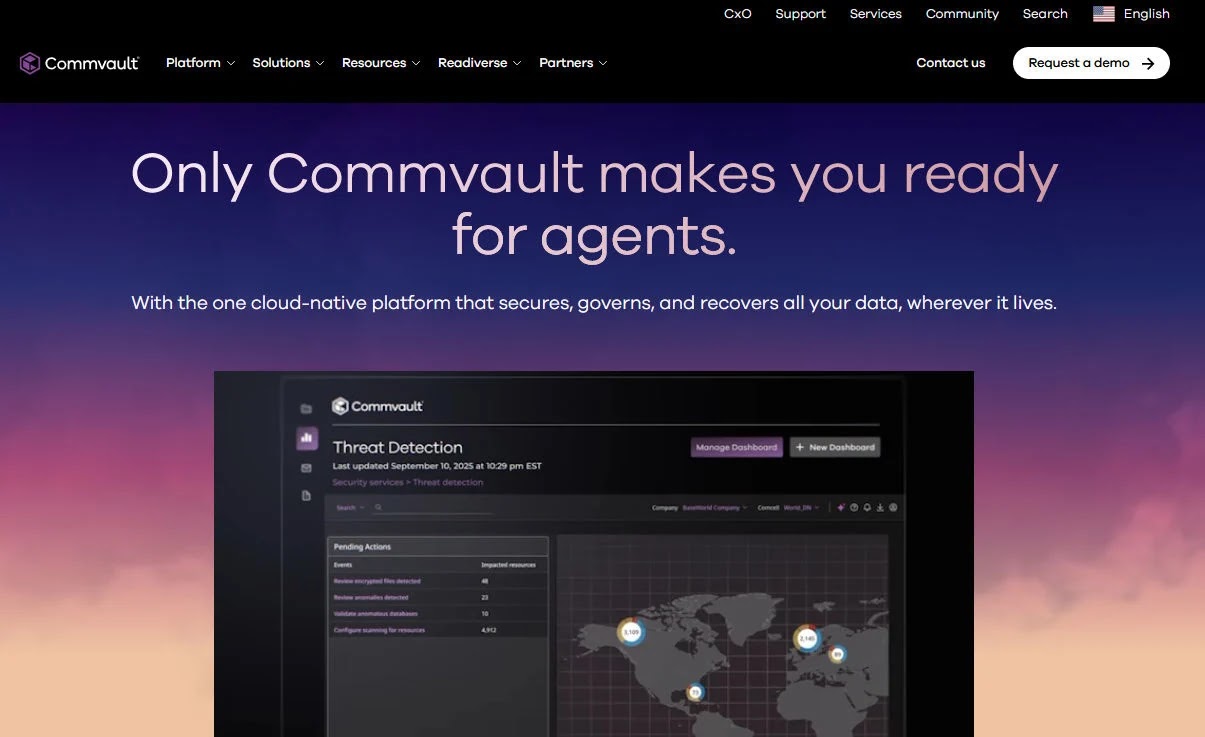
Commvault shines in 2026 for cyber resilience with Cloud platform’s ransomware protection and WORM immutability. Handles hybrid/multi-cloud backups with AI threat detection. Automates recovery, cutting downtime.
Supports databases/apps with granular recovery. Metallic SaaS offers modular scalability. Air gap copies thwart attacks.
Compliance lock ensures tamper-proof retention. Reviews praise its security and ease for ops teams. Ideal for data mobility without risk exposure.
Specifications
Backup encryption, multi-cloud support, cyber recovery vault, scales to exabytes.
Features
AI anomaly detection, orchestration, reporting, and database-specific tools.
Reason to Buy
Perfect for recovery-focused teams; its immutability beats ransomware reliably.
| Pros | Cons |
|---|---|
| Ransomware-proof backups | Backup-centric, less DLP |
| Multi-cloud automation | Pricing per workload |
| Fast recovery | UI dated |
 Best For: Data backup and recovery security.
🔗 Try Commvault here → Commvault Official Website6. Varonis
Why We Picked It
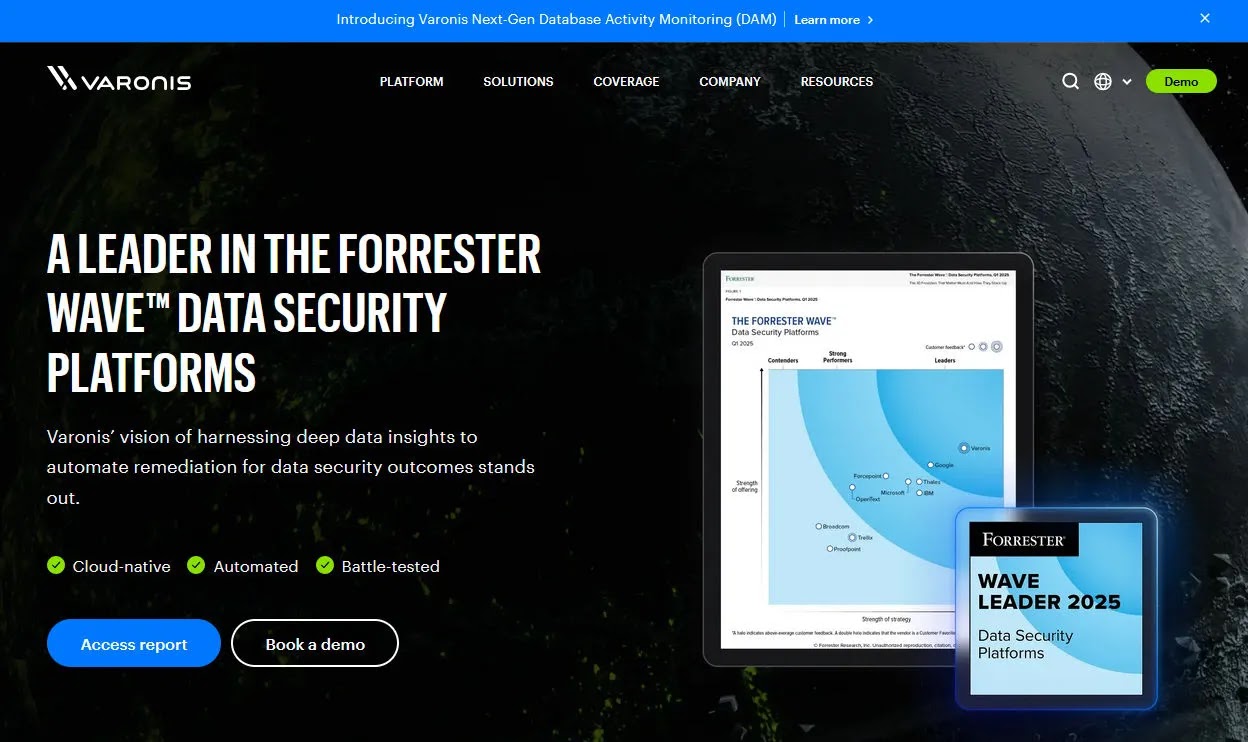
Varonis pioneered data-centric security, topping 2026 lists for DSPM and UEBA. Discovers/classifies sensitive data across cloud/SaaS/on-prem. Monitors behaviors to detect insiders/externals. Automates access governance, locking stale data.
DLP prevents exfiltration; MDDR offers 24/7 response. Supports M365, AWS, Salesforce. Reduces risks proactively with risk scoring. Automation sustains secure states efficiently.
Specifications
Data discovery for 100+ environments, UEBA on trillions of events, DLP policies.
Features
Classification, access reviews, threat response, compliance reporting.
Reason to Buy
Go for Varonis if unstructured data sprawl threatens you; its analytics pinpoint risks fast.
| Pros | Cons |
|---|---|
| Data-focused UEBA | Deployment time |
| Automation-heavy | Costly for small firms |
| Broad environment support | Focused on files/emails |
 Best For: Unstructured data protection.
🔗 Try Varonis here → Varonis Official Website7. Cyera
Why We Picked It
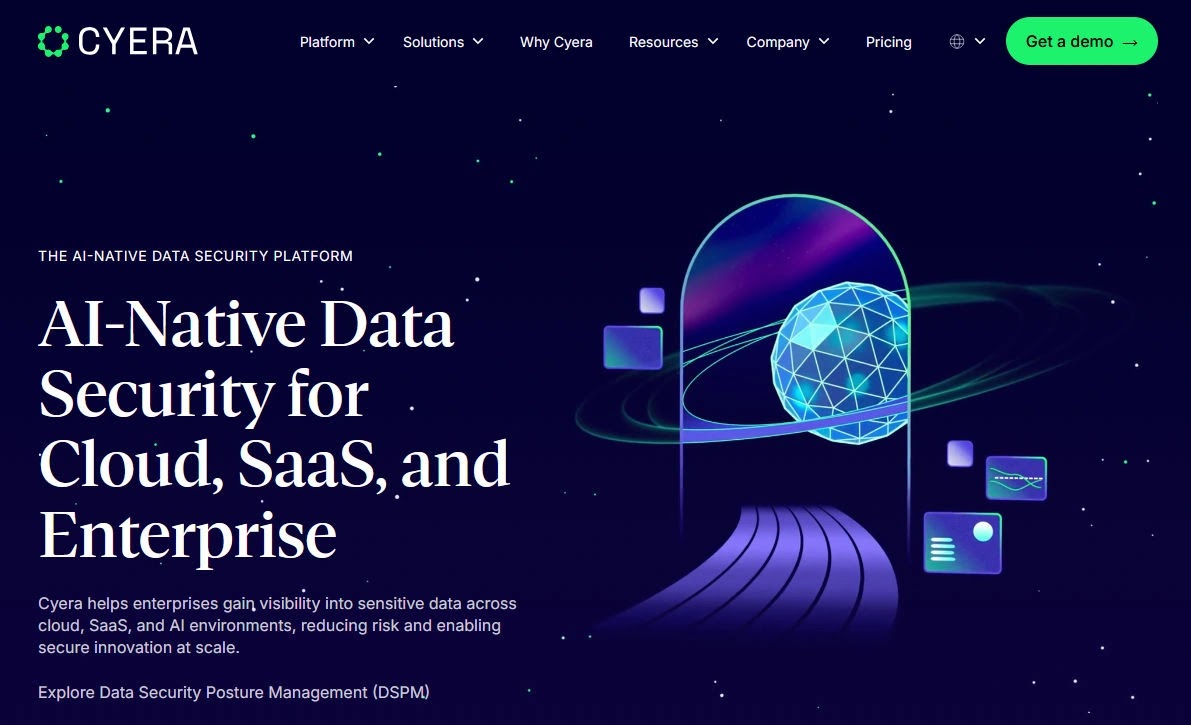
Cyera disrupts 2026 as AI-native DSPM leader, offering visibility into all data with risk context. Discovers across cloud/SaaS/databases, automates remediation. Unicorn status reflects innovation in data exposure assessment.
Unified platform cuts blind spots, supports AI ecosystems. Reduces attack surface via policy enforcement. Backed by top VCs, it’s built for data-driven enterprises.
Specifications
Agentless scanning, risk prioritization, supports 50+ data stores.
Features
Discovery, classification, access governance, privacy controls.
Reason to Buy
Choose Cyera for modern DSPM; its AI context beats legacy tools.
| Pros | Cons |
|---|---|
| AI-native insights | Emerging player |
| Multi-environment | Limited integrations |
| Fast deployment | Pricing opaque |
 Best For: Cloud-native data discovery.
🔗 Try Cyera here → Cyera Official Website8. BigID

Why We Picked It
BigID connects data dots for security/privacy/AI governance in 2026. Enterprise-grade without data copying, FIPS-compliant. Tracks regulatory risks, automates assessments. Prioritizes via scoring, supports RBAC.
No-privileges scanning secures without compromise. Ideal for compliance-heavy sectors.
Specifications
Privacy/compliance tools, AI risk mgmt, scoped access.
Features
Data mapping, violation remediation, consent governance.
Reason to Buy
BigID suits regulated industries; its no-copy approach minimizes risks.
| Pros | Cons |
|---|---|
| Privacy-focused | Complex for non-experts |
| Secure scanning | Enterprise pricing |
| Compliance automation | Narrower threat focus |
 Best For: Privacy and compliance.
🔗 Try BigID here → BigID Official Website9. Immuta
Why We Picked It
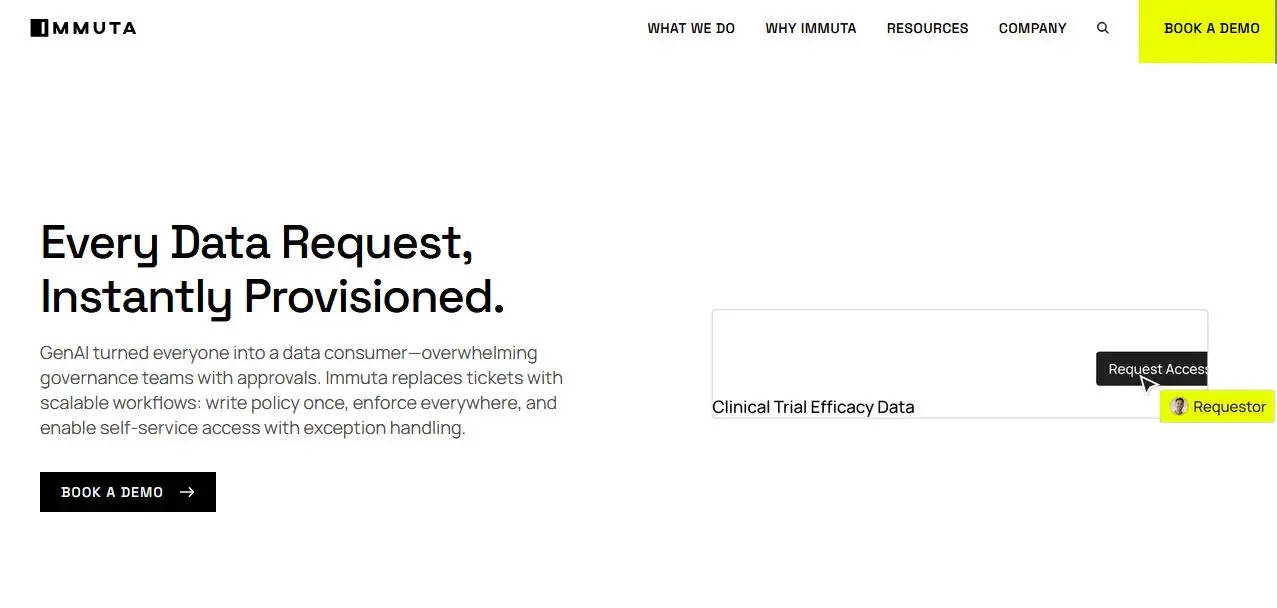
Immuta automates data governance/security for 2026, enforcing policies dynamically. Policy-as-code for access, masking in real-time.
Supports multi-cloud, reduces admin overhead. Integrates with Snowflake, Databricks for secure analytics.
Zero-trust data access prevents leaks. Scales for big data teams.
Specifications
Dynamic policies, audit trails, supports SQL/NoSQL.
Features
Automated provisioning, anomaly detection, lineage tracking.
Reason to Buy
Immuta shines for data teams needing governed self-service.
| Pros | Cons |
|---|---|
| Policy automation | Data platform dependent |
| Analytics-friendly | Setup expertise needed |
| Multi-tenant | Less DLP |
 Best For: Data science security.
🔗 Try Immuta here → Immuta Official Website10. Sentra
Why We Picked It
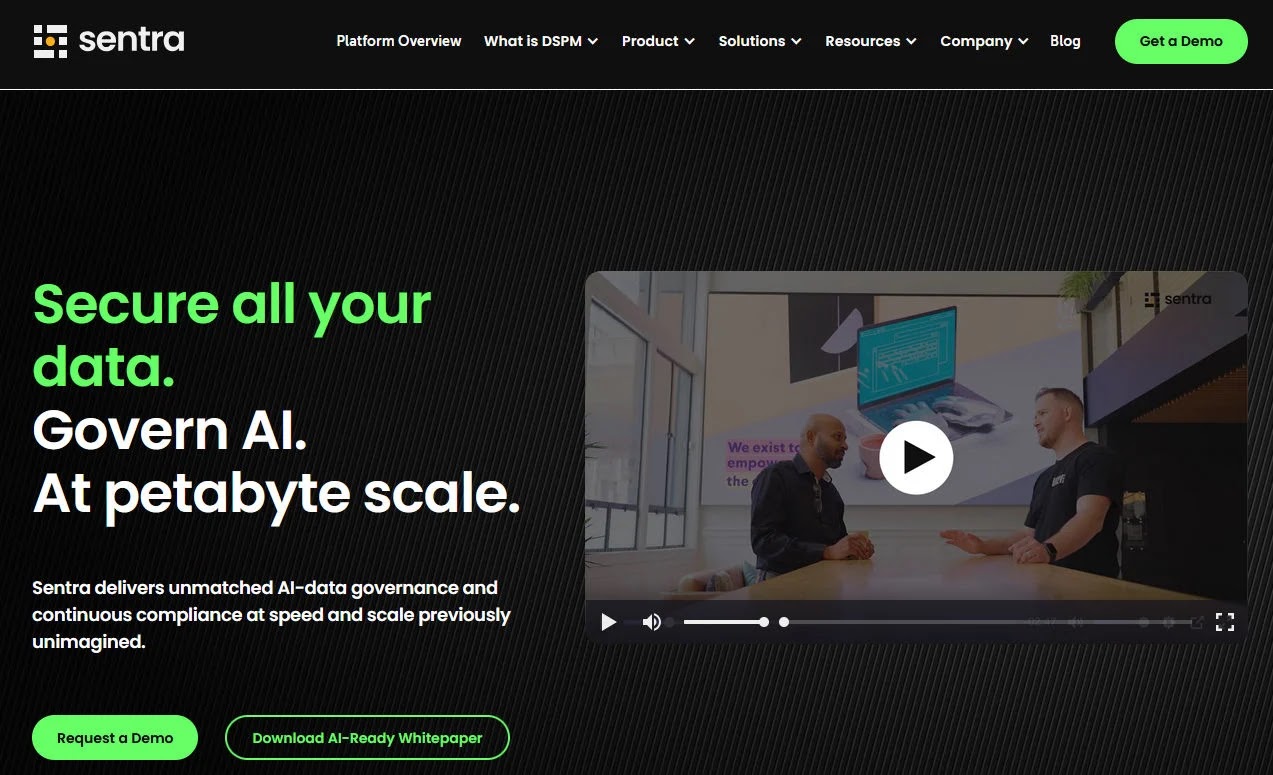
Sentra provides agentless data security for clouds in 2026, focusing on posture management. Discovers lineage, risks continuously.
Automates fixes for exposures. Supports AWS/Azure/GCP with fine-grained controls. Emerging leader in stealthy protection.
Specifications
Cloud-native, lineage mapping, risk scoring.
Features
Exposure remediation, compliance dashboards, integrations.
Reason to Buy
Sentra fits growing clouds needing quick posture wins.
| Pros | Cons |
|---|---|
| Agentless ease | Newer entrant |
| Cloud lineage | Limited on-prem |
| Fast ROI | Scaling proof pending |
 Best For: Cloud data posture.
🔗 Try Sentra here → Sentra Official WebsiteConclution
The top 10 data security companies of 2026 IBM, Microsoft, Palo Alto Networks, Cisco, Commvault, Varonis, Cyera, BigID, Immuta, and Sentra represent the pinnacle of protection against evolving cyber threats in cloud, hybrid, and AI-driven environments.
Each excels in specific domains: IBM and Microsoft for enterprise-scale integration, Palo Alto and Cisco for network-centric defense, while newer players like Cyera and Sentra innovate in DSPM and agentless posture management.
Organizations should prioritize based on infrastructure cloud-heavy teams benefit from Cyera or Sentra, regulated sectors from BigID or Varonis, and recovery-focused operations from Commvault.
This curated selection ensures comprehensive coverage, from data discovery to zero-trust enforcement, minimizing breach risks amid 2026’s ransomware surge and compliance pressures.
Forward-thinking cybersecurity strategies demand these proven solutions for resilient data assets.
Disclaimer: HackersRadar reports on cybersecurity threats and incidents for informational and awareness purposes only. We do not engage in hacking activities, data exfiltration, or the hosting or distribution of stolen or leaked information. All content is based on publicly available sources.









No Comment! Be the first one.