




Best Application Control and Allowlisting Tools in 2024
Key Takeaways Application control and allowlisting are critical defenses against modern threats like ransomware and zero-day malware. The security model shifts from detecting malicious software to...

Key Takeaways
- Application control and allowlisting are critical defenses against modern threats like ransomware and zero-day malware.
- The security model shifts from detecting malicious software to only permitting approved applications to run, drastically reducing attack surfaces.
- ThreatLocker (8.8/10) stands out as the top overall solution for operationalizing default-deny policies, while Airlock Digital (8.5/10) excels as a specialized allowlisting tool.
- Microsoft’s built-in App Control for Business (formerly WDAC) offers a robust, free option (7.2/10) for organizations with significant Windows engineering expertise.
- Effective deployment requires extensive learning modes, robust approval workflows, and comprehensive coverage of executables, scripts, and DLLs.
Application allowlisting fundamentally transforms the cybersecurity paradigm by reversing the traditional detection model. Instead of continuously scanning for and identifying malicious software, this approach enforces a “default-deny” posture, permitting only explicitly authorized applications to execute. When implemented correctly, this strategy provides an impenetrable defense against ransomware, novel malware, and unknown threats, irrespective of signature databases. Conversely, a poorly executed allowlisting deployment can severely disrupt business operations.
Table Of Content
- Key Takeaways
- The 2026 Allowlisting Scorecard
- How We Scored
- Why Allowlisting is Back
- The Ten, Scored
- 1. ThreatLocker — 8.8/10 · best overall
- 2. Airlock Digital — 8.5/10 · best allowlisting specialist
- 3. Heimdal Application Control — 7.9/10 · best for automated application control
- 4. Ivanti — 7.6/10 · best within an Ivanti estate
- 5. BeyondTrust — 7.5/10 · best alternative privilege-led option
- 6. VMware Carbon Black App Control — 7.4/10 · strongest lockdown pedigree
- 7. Fortinet — 7.3/10 · best value inside the Fabric
- 8. Microsoft (WDAC/AppLocker) — 7.2/10 · best value overall
- 9. Trellix — 7.0/10 · best in a Trellix estate
- 10. ColorTokens — 6.9/10 · allowlisting adjacent to segmentation
- Buyer’s Guide
- Frequently Asked Questions
- What is application allowlisting?
- What is the best application allowlisting tool in 2026?
- Is Windows WDAC good enough instead of paying?
- Does allowlisting stop ransomware?
- How disruptive is allowlisting to deploy?
Our comprehensive assessment ranks ThreatLocker — 8.8/10 · best overall as the leading solution for its ability to make default-deny policies practical and manageable. Airlock Digital — 8.5/10 · best allowlisting specialist is recognized for its specialized engineering in allowlisting, while Microsoft’s native Windows Defender Application Control (WDAC), now known as App Control for Business, offers a cost-free alternative if an organization can manage the operational complexities. Below is a detailed scorecard of the ten top-performing tools.
The 2026 Allowlisting Scorecard
| Rank | Tool | Policy automation (30%) | Operability (25%) | Coverage (20%) | Ecosystem (15%) | Value (10%) | Total |
| 1 | ThreatLocker | 9 | 9 | 9 | 8 | 8 | 8.8 |
| 2 | Airlock Digital | 9 | 9 | 8 | 7 | 8 | 8.5 |
| 3 | Microsoft (WDAC/AppLocker) | 6 | 5 | 8 | 9 | 10 | 7.2 |
| 4 | Heimdal Application Control | 8 | 8 | 8 | 7 | 7 | 7.8 |
| 5 | VMware Carbon Black (App Control) | 8 | 7 | 8 | 7 | 6 | 7.4 |
| 6 | Ivanti | 8 | 7 | 8 | 8 | 7 | 7.6 |
| 7 | BeyondTrust | 8 | 7 | 8 | 8 | 6 | 7.5 |
| 8 | Trellix | 7 | 6 | 8 | 8 | 6 | 7.0 |
| 9 | Fortinet | 7 | 7 | 7 | 8 | 8 | 7.3 |
| 10 | ColorTokens | 7 | 7 | 7 | 6 | 7 | 6.9 |
Scores represent weighted averages rounded to one decimal place, reflecting editorial assessments of documented capabilities rather than benchmark test results.
How We Scored
Our evaluation process is based on extensive research and analysis of documented product features, without conducting direct lab testing. The most significant weighting, Policy automation (30%), was assigned due to its critical role in the success or failure of allowlisting initiatives. Manual approval processes for new and updated software are notorious for creating bottlenecks that can derail these projects. Operability (25%) assesses factors like ease of learning mode configuration, efficiency of exception handling, and the potential burden on help desk resources.
Coverage (20%) evaluates the breadth of file types and activities controlled, including executables, scripts, DLLs, installers, and advanced controls extending to storage and network interactions beyond simple executables. Finally, Ecosystem (15%) and Value (10%) round out our scoring methodology, considering integration capabilities and overall cost-effectiveness.
Why Allowlisting is Back
The proliferation of ransomware has revitalized the relevance of default-deny security models. While traditional malware protection, relying on signature and behavior-based detection, can sometimes be bypassed by sophisticated attackers, an application control policy that strictly permits only approved binaries to execute is inherently more resilient. Such a policy cannot be circumvented by novel packers or obfuscation techniques.
Leading cybersecurity agencies, including CISA, consistently identify application control as one of the most effective mitigation strategies. Despite its proven efficacy, these agencies also frequently highlight its underutilization, largely due to perceived operational complexities. The tools reviewed in this article aim to alleviate these concerns, and our scorecard quantifies their success in doing so.
The Ten, Scored
1. ThreatLocker — 8.8/10 · best overall
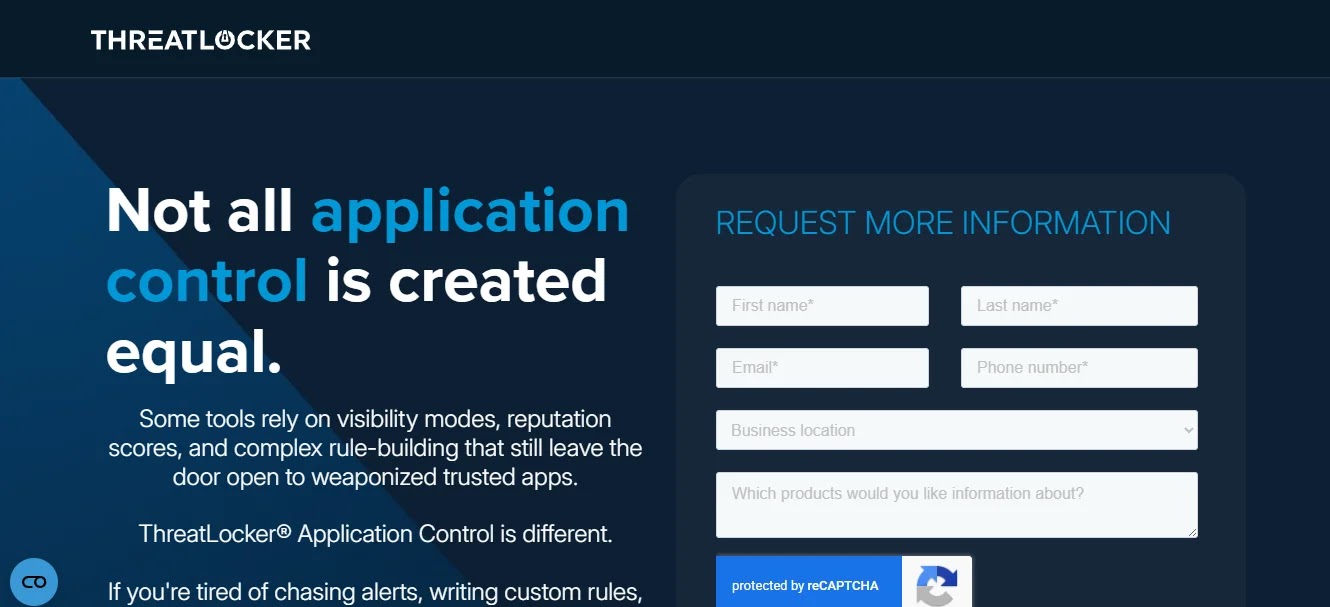
Why: ThreatLocker has transformed application allowlisting from a complex consulting engagement into a streamlined product offering. Its intuitive learning mode establishes a foundational baseline, while integrated application definitions automatically track vendor updates. The unique Ringfencing feature further enhances security by restricting the actions of even approved applications, preventing them from executing unauthorized functions like calling PowerShell or accessing the internet, thereby enforcing stringent endpoint security best practices.
Strengths: Automated update tracking significantly reduces the burden of managing approval queues. Ringfencing offers a genuinely differentiated layer of control. The platform consolidates storage and elevation control within a single agent, supports a robust MSP model, and provides responsive 24/7 approval assistance.
Trade-offs: The subscription model can lead to accumulating costs across multiple modules. The management console requires an investment of time to master, and its enterprise reference base is smaller compared to larger, more established platform vendors.
Verify: Review current module packaging to understand comprehensive offerings.
2. Airlock Digital — 8.5/10 · best allowlisting specialist

Why: This Australian vendor focuses exclusively on application allowlisting, offering exceptional depth in its specialized capabilities. Airlock’s sophisticated workflow, encompassing baseline generation, trusted publisher identification, file reputation analysis, and one-click approvals, is the result of years of dedicated allowlisting engineering. It extends into preventative endpoint security and governance, providing granular execution metadata that satisfies stringent compliance frameworks like Australia’s Essential Eight.
Strengths: Features the most streamlined approval workflow in its category. Provides robust compliance evidence for frameworks such as Essential Eight. Utilizes an efficient agent and facilitates genuinely rapid deployment for an allowlisting solution.
Trade-offs: Offers a narrower platform scope compared to comprehensive security suites, focusing primarily on allowlisting rather than a full endpoint platform. Its market presence is smaller outside Australia and the U.S. public sector.
3. Heimdal Application Control — 7.9/10 · best for automated application control
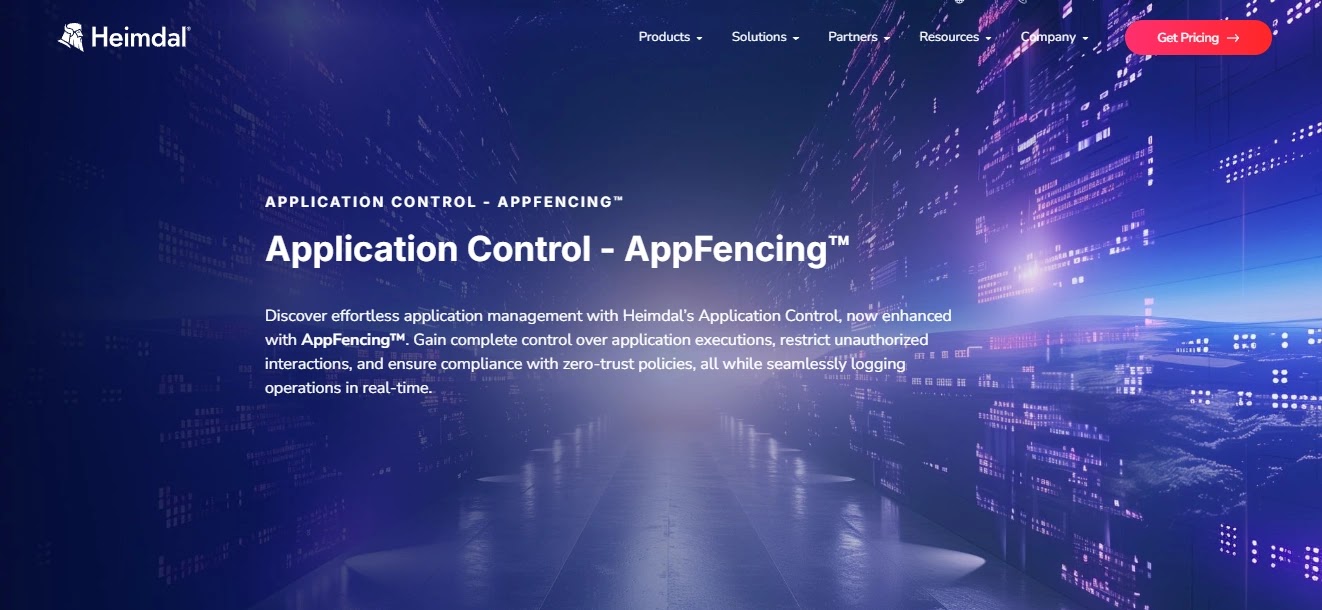
Why: Heimdal Application Control leverages allowlisting to meticulously govern which software is permitted to execute, effectively blocking unauthorized applications while ensuring trusted software runs unimpeded. Its centralized management and policy-driven controls streamline the application approval and enforcement processes across all endpoints.
Strengths: Provides automated application allowlisting and centralized policy management. Offers comprehensive application blocking and approval controls, and integrates seamlessly with Heimdal’s broader endpoint security platform.
Trade-offs: Organizations seeking a standalone allowlisting solution might find the broader Heimdal platform to be more extensive than necessary. Pricing is typically quote-based, and implementing advanced policies may demand considerable configuration and tuning.
4. Ivanti — 7.6/10 · best within an Ivanti estate
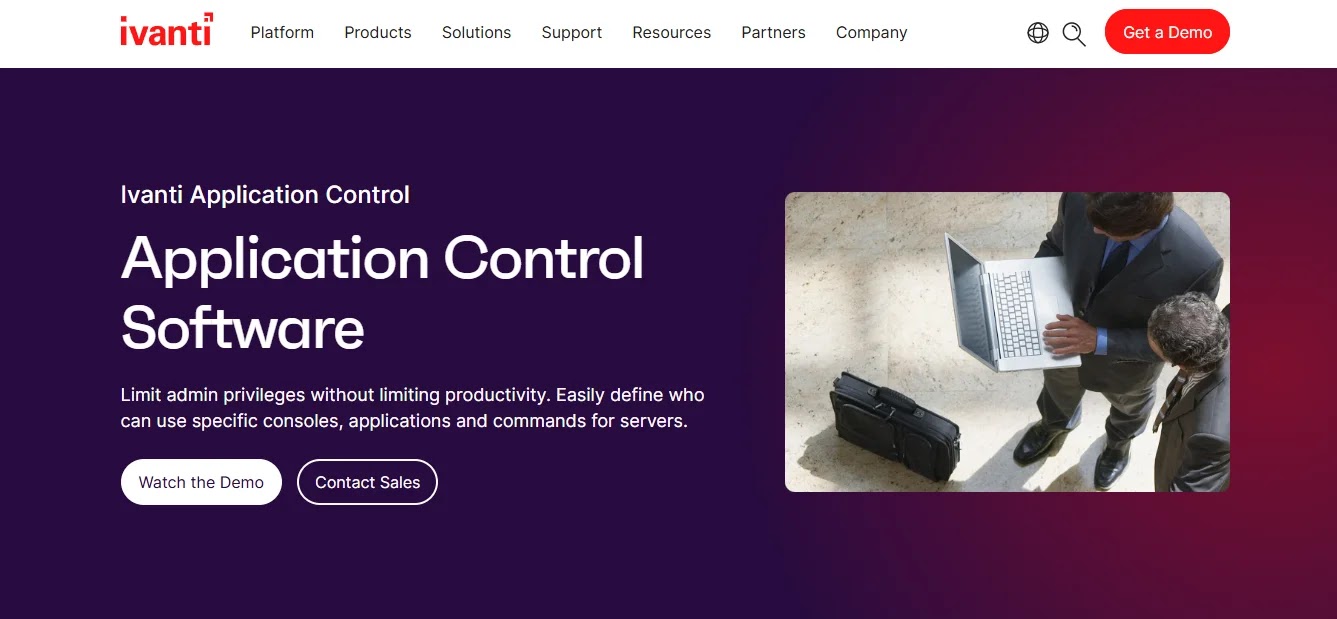
Why: Ivanti Application Control implements a trusted-ownership model where only files installed by trusted administrators are permitted to run, while all other executions are blocked. This significantly reduces the administrative overhead associated with list maintenance in Windows environments and integrates effectively with automated patch management systems.
Strengths: The trusted ownership model is both elegant and requires minimal maintenance. It integrates seamlessly with Ivanti’s Unified Endpoint Management (UEM) and patching solutions, and includes privilege elevation capabilities within the same product.
Trade-offs: Ivanti’s history of exploited vulnerabilities necessitates rigorous due diligence on platform security and adherence to strict patch SLAs. Its deepest value is realized within an existing Ivanti ecosystem.
5. BeyondTrust — 7.5/10 · best alternative privilege-led option
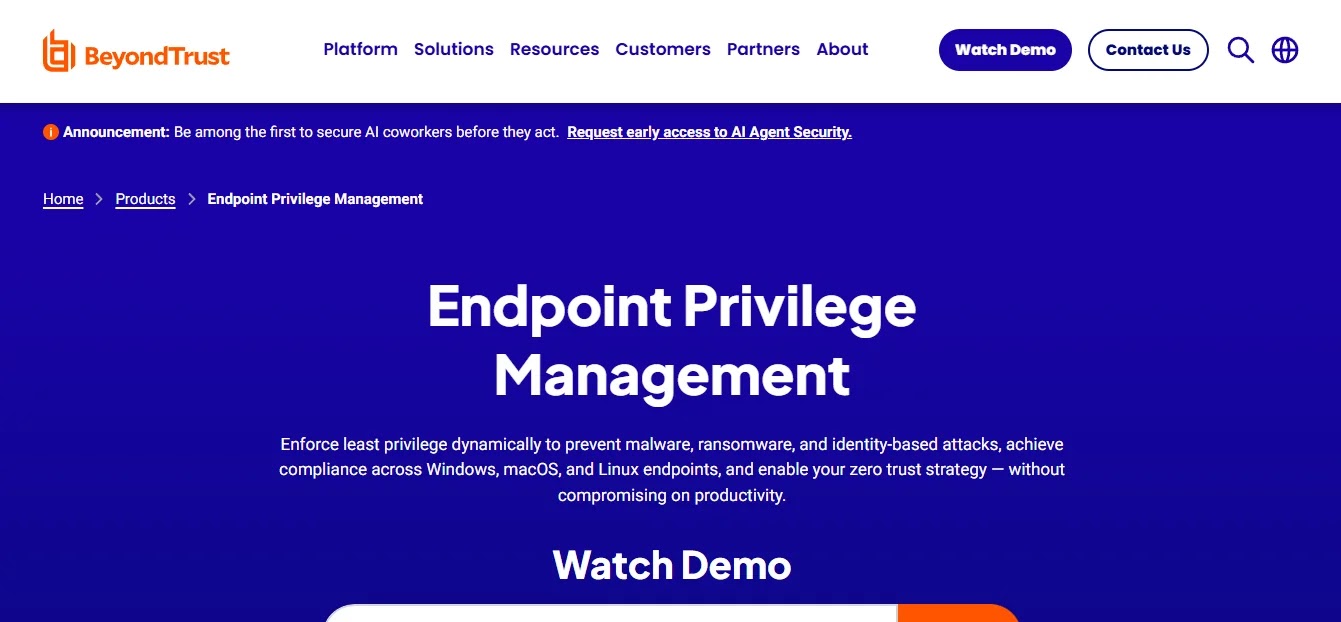
Why: Similar to CyberArk, BeyondTrust integrates application control with privilege management within its Endpoint Privilege Management solution. This addresses how attackers exploit privileged access by offering robust policy granularity and leveraging a substantial Privileged Access Management (PAM) install base.
Strengths: Combines mature least-privilege principles with comprehensive application control. QuickStart policy templates accelerate deployment, and it provides strong support for Unix/Linux environments alongside Windows.
Trade-offs: This is a platform-level purchase rather than a standalone tool. Enterprise pricing is quote-based, and the depth of its console requires a dedicated investment of time to master.
6. VMware Carbon Black App Control — 7.4/10 · strongest lockdown pedigree

Why: Formerly Bit9, this product remains a benchmark for high-assurance lockdown in environments such as fixed-function systems, regulated servers, and air-gapped networks. It complements leading advanced endpoint security tools with its mature change window management and reputation services.
Strengths: Proven effectiveness in the most demanding lockdown deployments. Offers robust server protection and flexible enforcement levels.
Trade-offs: Now part of Broadcom following the VMware acquisition; it is imperative to confirm current product naming, roadmap, and licensing before committing. Administration is considered heavyweight by contemporary standards.
7. Fortinet — 7.3/10 · best value inside the Fabric
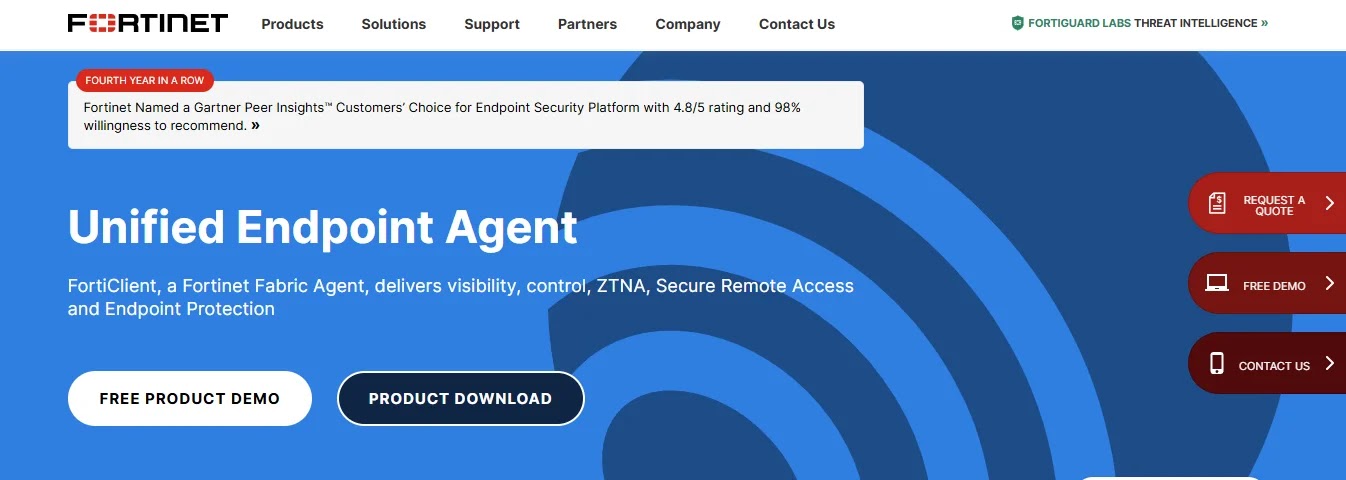
Why: Fortinet’s application control, delivered via FortiClient and FortiGate, offers significant control at a minimal incremental cost for organizations already invested in the Fortinet ecosystem. It enhances endpoint security by complementing EDR/XDR architectures through application-category control.
Strengths: Provides low-cost integration within the Fortinet Fabric. Network-level application control effectively complements endpoint policies, and its operation is straightforward.
Trade-offs: Does not offer granular binary allowlisting in the same vein as ThreatLocker or Airlock. Fortinet’s history of vulnerabilities listed in CISA’s KEV catalog necessitates rigorous patch management discipline.
8. Microsoft (WDAC/AppLocker) — 7.2/10 · best value overall

Why: App Control for Business (formerly WDAC) and AppLocker are natively included in Windows, incurring no additional licensing costs. WDAC is exceptionally robust, featuring kernel-level enforcement and tamper resistance. It aligns well with established Windows patch management strategies, earning a perfect value score due to its zero-cost implementation.
Strengths: Free to use, offers stronger kernel-level enforcement than many third-party agents. Manageable via Intune, and includes managed-installer and Intelligent Security Graph (ISG) options to streamline list maintenance.
Trade-offs: Receives the lowest operability score in this review for valid reasons: policy authoring is complex, tooling is fragmented, and there is no vendor-maintained application catalog to track updates. It is a viable option for teams with strong Windows engineering expertise but can be exceptionally challenging without it.
Verify: Confirm current naming (App Control for Business) and Intune management scope.
9. Trellix — 7.0/10 · best in a Trellix estate

Why: Trellix Application Control carries forward the legacy of McAfee’s product, excelling in server and fixed-function system protection. It integrates seamlessly with the broader Trellix ecosystem and centralized enterprise Security Operations Center (SOC) platforms.
Strengths: Offers robust coverage for servers and legacy operating systems. Integrates with change-control processes and fits well into existing Trellix deployments.
Trade-offs: Current portfolio consolidation necessitates a detailed roadmap discussion. Administration interfaces feel somewhat dated, and standalone buyers should first evaluate specialized allowlisting solutions.
10. ColorTokens — 6.9/10 · allowlisting adjacent to segmentation
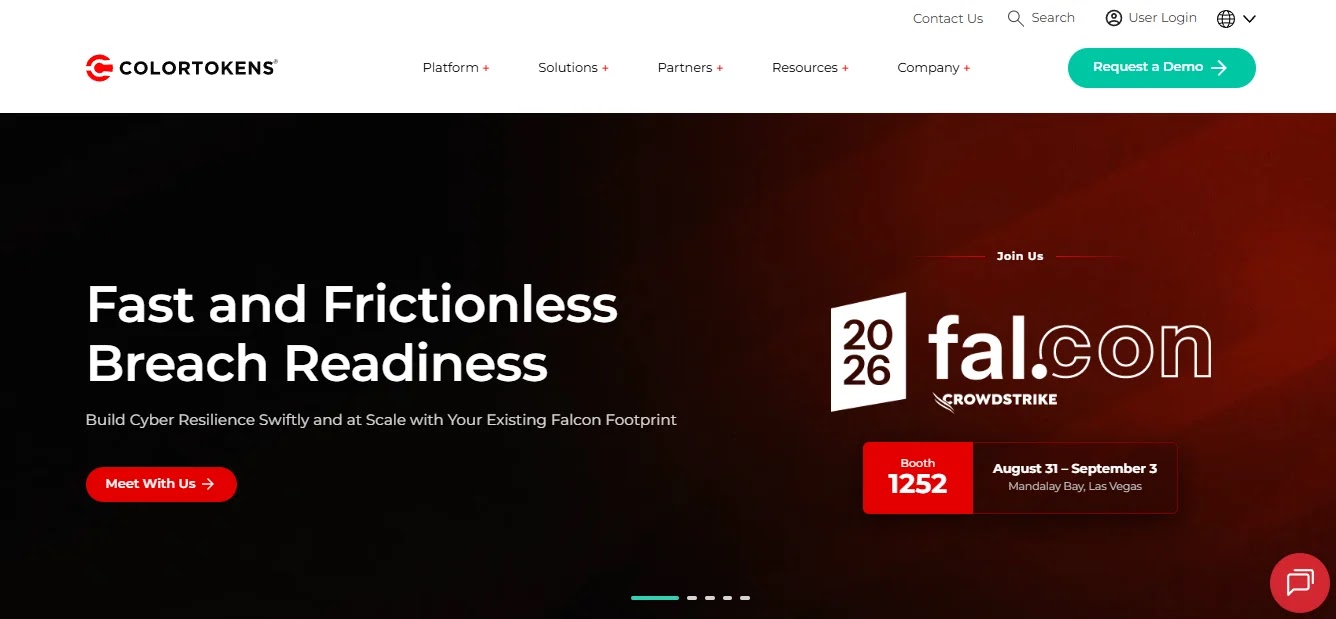
Why: ColorTokens integrates process-level application control with its microsegmentation platform, positioning it among the top tools for network security. This combination is ideal for organizations seeking both workload lockdown and comprehensive lateral movement control.
Strengths: Delivers a unified story for segmentation and application control. Features cloud-delivered management for ease of access and control.
Trade-offs: The depth of its allowlisting capabilities is not as specialized as dedicated solutions. It operates within a smaller ecosystem, and current packaging options should be verified.
Buyer’s Guide
Extend Learning Mode Duration: A common pitfall in allowlisting deployments is prematurely enforcing policies before a comprehensive baseline is established. Always run your learning mode for several weeks, not just days. Ensure this period captures all operational processes, including month-end tasks and infrequent departmental applications, before transitioning to enforcement.
Prioritize the Approval Workflow: The efficiency of your approval process is paramount. When evaluating vendors, pose this scenario: “A user requires a new application at 4 PM on a Friday. Walk me through the exact steps, who makes which approvals, and the estimated time to resolution.” The clarity and speed of this workflow directly reflect the product’s operational viability.
Demand Script and DLL Coverage: Limiting control to executables alone leaves significant vulnerabilities. Modern attackers frequently exploit PowerShell, script-based attacks, and DLL side-loading. Insist on solutions that provide comprehensive coverage for these critical attack vectors.
Understand Offline Behavior: A “default-deny” policy that fails open when the agent loses connection to the cloud is a critical security flaw. Conversely, a policy that fails closed due to a broken connector can cause a widespread outage. Thoroughly understand the precise offline behavior of any solution before deployment.
Avoid Common Mistakes:
- Deploying to servers first: Begin with workstations to gain experience, then scale to servers.
- Lacking a ‘break-glass’ procedure: Always have an emergency override plan in place.
- Treating allowlisting as a replacement for EDR and patching: Allowlisting is a powerful layer of defense, but it complements, rather than replaces, other essential security controls.
Frequently Asked Questions
What is application allowlisting?
Application allowlisting is a security strategy that enforces a default-deny rule, permitting only explicitly approved software to execute while blocking all other applications. This inverts the traditional detection model, making it highly effective against unknown malware, novel ransomware, and living-off-the-land binaries that might bypass signature or behavior-based tools.
What is the best application allowlisting tool in 2026?
ThreatLocker is recognized as the top choice for its ability to make default-deny policies operationally feasible at scale, offering features like automatic update tracking and Ringfencing controls. Airlock Digital stands out as the strongest specialist in pure allowlisting. For organizations with robust Windows engineering capabilities, Microsoft’s built-in App Control for Business offers the best value. When combining allowlisting with privilege management, CyberArk or BeyondTrust are leading options.
Is Windows WDAC good enough instead of paying?
Technically, Windows App Control for Business (formerly WDAC) is often sufficient. Its kernel-enforced mechanism provides greater tamper resistance than many paid third-party agents. However, operationally, it demands significant Windows engineering expertise and lacks a vendor-maintained application catalog to manage updates automatically. Organizations without this internal capacity often opt for solutions like ThreatLocker or Airlock Digital precisely to offload this maintenance burden.
Does allowlisting stop ransomware?
Allowlisting is one of the most effective controls against ransomware, as an unapproved ransomware binary is simply prevented from executing. Attackers often respond by using living-off-the-land techniques, leveraging approved tools. Therefore, integrating script control, Ringfencing-style containment of approved applications, and privilege management alongside allowlisting is crucial for comprehensive protection.
How disruptive is allowlisting to deploy?
With modern
Disclaimer: HackersRadar reports on cybersecurity threats and incidents for informational and awareness purposes only. We do not engage in hacking activities, data exfiltration, or the hosting or distribution of stolen or leaked information. All content is based on publicly available sources.









No Comment! Be the first one.