



Hackers News Hackers News
  • CyberSecurity News
  • Threats
  • Attacks
  • Vulnerabilities
  • Breaches
  • Comparisons

Social Media

Hackers News Hackers News
  • CyberSecurity News
  • Threats
  • Attacks
  • Vulnerabilities
  • Breaches
  • Comparisons
Search the Site
Popular Searches:
technology Amazon AI
Recent Posts
HackerOne Mandates ID Verification for Bug Bounty Submissions
August 1, 2026
Arch Linux Disables AUR Package Takeovers After Malicious Commits
August 1, 2026
Keycloak CVE-2024-3700 Exposes User Data Across Admin Boundaries
July 31, 2026
Home/Vulnerabilities/PoC Exploit Released HPE OneView Vulnerability that Enables Remote Code Execution
Vulnerabilities

PoC Exploit Released HPE OneView Vulnerability that Enables Remote Code Execution

PoC Exploit Released for HPE OneView R Vulnerability Hey, heads up for anyone using HPE OneView R Vulnerability in the platform. You know, HPE OneView, that popular IT infrastructure management...

Sarah simpson
Sarah simpson
January 1, 2026 2 Min Read
126 0

PoC Exploit Released for HPE OneView R Vulnerability

Hey, heads up for anyone using HPE OneView R Vulnerability in the platform. You know, HPE OneView, that popular IT infrastructure management system so many businesses rely on. HPE themselves have already released an advisory on this, so it’s a big deal.

The flaw, tracked as CVE-2025-37164, carries a maximum CVSS score of 10.0, indicating immediate danger to enterprise environments.

The vulnerability allows remote attackers to execute malicious code on affected systems without needing a password or any form of authentication.

A valid Metasploit module has already been published, making it easy for threat actors to weaponize this flaw.

Feature Details
CVE ID CVE-2025-37164
Severity Critical (CVSS 10.0)
Vendor Hewlett Packard Enterprise (HPE)
Affected Product HPE OneView (Versions < 11.0)
Vulnerability Type Remote Code Execution (RCE)
Exploit Status PoC & Metasploit Module Available

Technical Breakdown

The issue lies within the ID-Pools REST API endpoint of the HPE OneView software.

Specifically, the vulnerability exists in how the application handles the executeCommand parameter. The code explicitly marks the authentication header as “not required.”

This oversight allows an attacker to send a simple JSON command, such as opening a reverse shell, which the server then executes with high privileges.
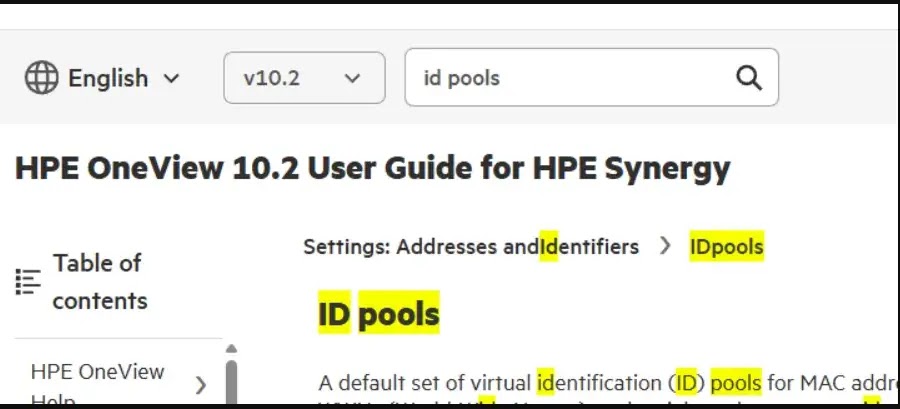
unpatched versions of ‘HPE OneView for HPE Synergy’ are likely all vulnerable

While HPE’s advisory states that all versions before 11.0 are affected.

According to Rapid7’s analysis, the application accepts user input via a specific API request (PUT /rest/id-pools/executeCommand). However, it fails to verify whether the user is authorized.

Researchers found that the vulnerable “id-pools” feature is primarily active in HPE OneView for HPE Synergy and specific versions of HPE OneView for VMs (Branch 6.x).

HPE has released a hotfix that patches the flaw by blocking access to the vulnerable URL path.

Given the release of public exploit code and the high privileges associated with OneView management consoles, administrators are urged to patch immediately.

Verify your OneView version immediately and apply the vendor-supplied hotfix to prevent unauthorized access to your physical and virtual infrastructure.

Disclaimer: HackersRadar reports on cybersecurity threats and incidents for informational and awareness purposes only. We do not engage in hacking activities, data exfiltration, or the hosting or distribution of stolen or leaked information. All content is based on publicly available sources.


Tags:

AttackCVEExploitPatchSecurityThreatVulnerability

Share Article

Sarah simpson

Sarah simpson

Sarah is a cybersecurity journalist specializing in threat intelligence and malware analysis. With over 8 years of experience covering APT groups, zero-day exploits, and advanced persistent threats, Sarah brings deep technical expertise to breaking cybersecurity news. Previously, she worked as a security researcher at leading threat intelligence firms, where she analyzed malware samples and tracked cybercriminal operations. Sarah holds a Master's degree in Computer Science with a focus on cybersecurity and is a regular contributor to major security conferences.

Previous Post

Dentsu has Disclosed that its U.S.-based Subsidiary Merkle Suffers Cyberattack

Next Post

Deloitte Data Breach Leaked Source Code & GitHub Credentials

No Comment! Be the first one.

Leave a Reply Cancel reply

Your email address will not be published. Required fields are marked *

Popular Posts
FBI Warns North Korean IT Workers Exploit Stolen Identities
July 31, 2026
Google AI Agents Find and Fix 1,072 Chrome Vulnerabilities
July 31, 2026
North Korean EtherHiding Targets Crypto Wallets and Developer Credentials
July 31, 2026
Top Authors
Marcus Rodriguez
Marcus Rodriguez
Emy Elsamnoudy
Emy Elsamnoudy
Jennifer sherman
Jennifer sherman
Let's Connect
156k
2.25m
285k

Related Posts

Jennifer sherman
By Jennifer sherman
Threats

GlassWorm Attacks macOS via Malicious VS Code…

January 1, 2026
Emy Elsamnoudy
By Emy Elsamnoudy
Attacks

ClickFix Attack Hides Malicious Code via Stegan Security

January 1, 2026
Sarah simpson
By Sarah simpson
Vulnerabilities

MongoBleed Detector Tool Released to Detect MongoDB Vulnerability(CVE-2025-14847)

January 1, 2026
Emy Elsamnoudy
By Emy Elsamnoudy
Breaches

Conti Ransomware Gang Leaders & Infrastructure Exposed

January 1, 2026
Hackers News Hackers News
  • [email protected]

Quick Links

  • Contact Us
  • Privacy Policy
  • Terms of service

Categories

Attacks
Breaches
Comparisons
CyberSecurity News
Threats
Vulnerabilities

Let's keep in touch

receive fresh updates and breaking cyber news every day and week!

All Rights Reserved by HackersRadar ©2026

Follow Us





