




Critical Nginx-UI Vulnerability Actively Exploited, Allows Server Takeover
Key Takeaways A critical authentication bypass vulnerability (CVE-2026-33032) in Nginx UI is being actively exploited in the wild. The flaw, rated 9.8 CVSS, allows unauthenticated remote attackers to...

Key Takeaways
- A critical authentication bypass vulnerability (CVE-2026-33032) in Nginx UI is being actively exploited in the wild.
- The flaw, rated 9.8 CVSS, allows unauthenticated remote attackers to achieve full server takeover of affected Nginx web servers.
- Over 2,600 publicly exposed Nginx UI instances are vulnerable, posing a significant risk.
- A patch is available in Nginx UI version 2.3.4, and immediate updates or mitigation steps are crucial.
A severe authentication bypass vulnerability in Nginx UI, designated CVE-2026-33032 and carrying a maximum CVSS score of 9.8, is currently under active exploitation. This critical flaw enables unauthenticated remote attackers to gain complete control over vulnerable Nginx web servers.
Table Of Content
Cybersecurity researchers at Pluto Security were credited with discovering the vulnerability. Their analysis revealed that the issue stems from a critical omission: a single function call was missing in the application’s Model Context Protocol (MCP) integration, creating a gaping security hole.
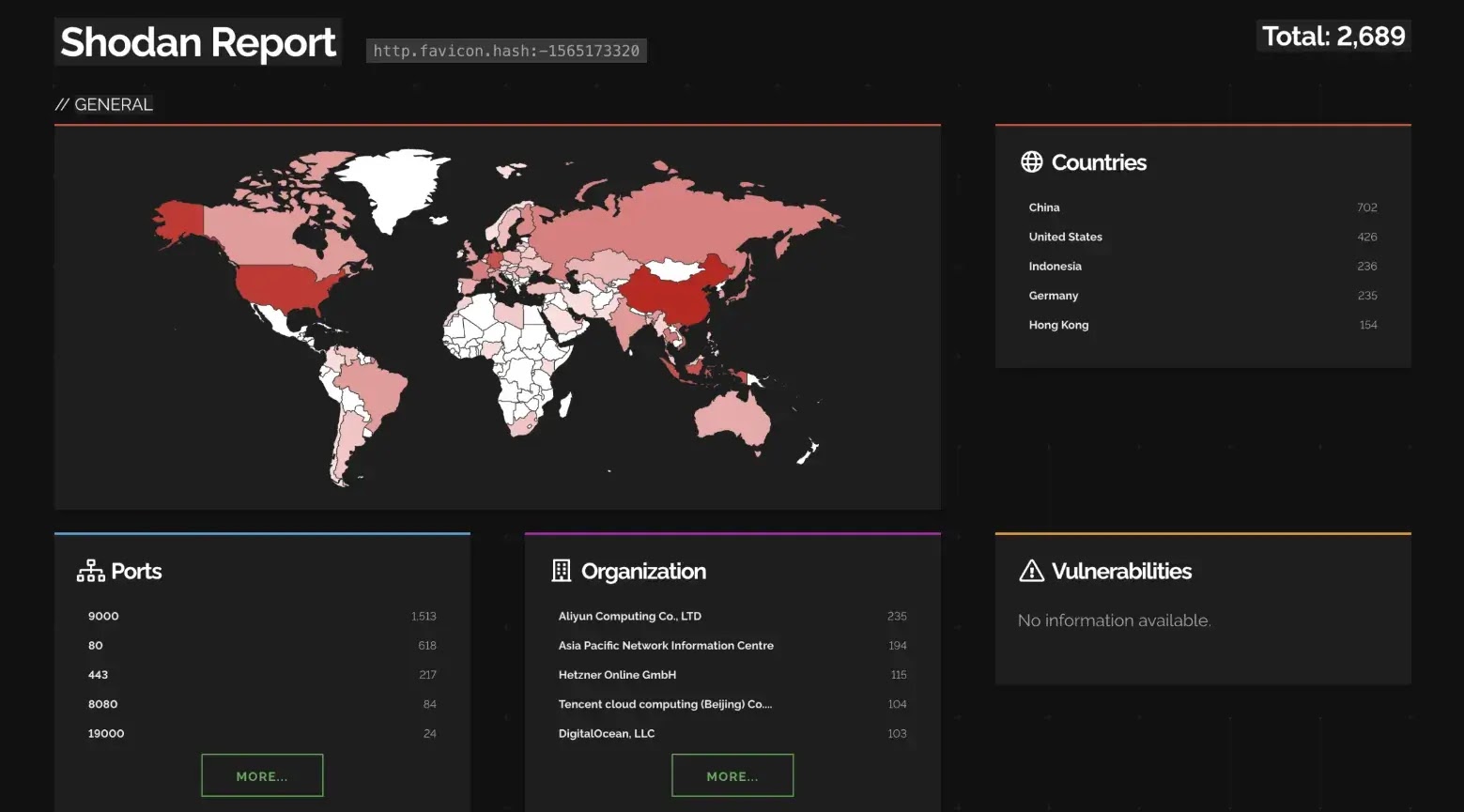
The exposure is widespread, with over 2,600 instances of Nginx UI publicly accessible via Shodan, highlighting the significant risk to organizations that depend on this tool for managing their Nginx environments.
Deep Dive into the Nginx-UI Vulnerability
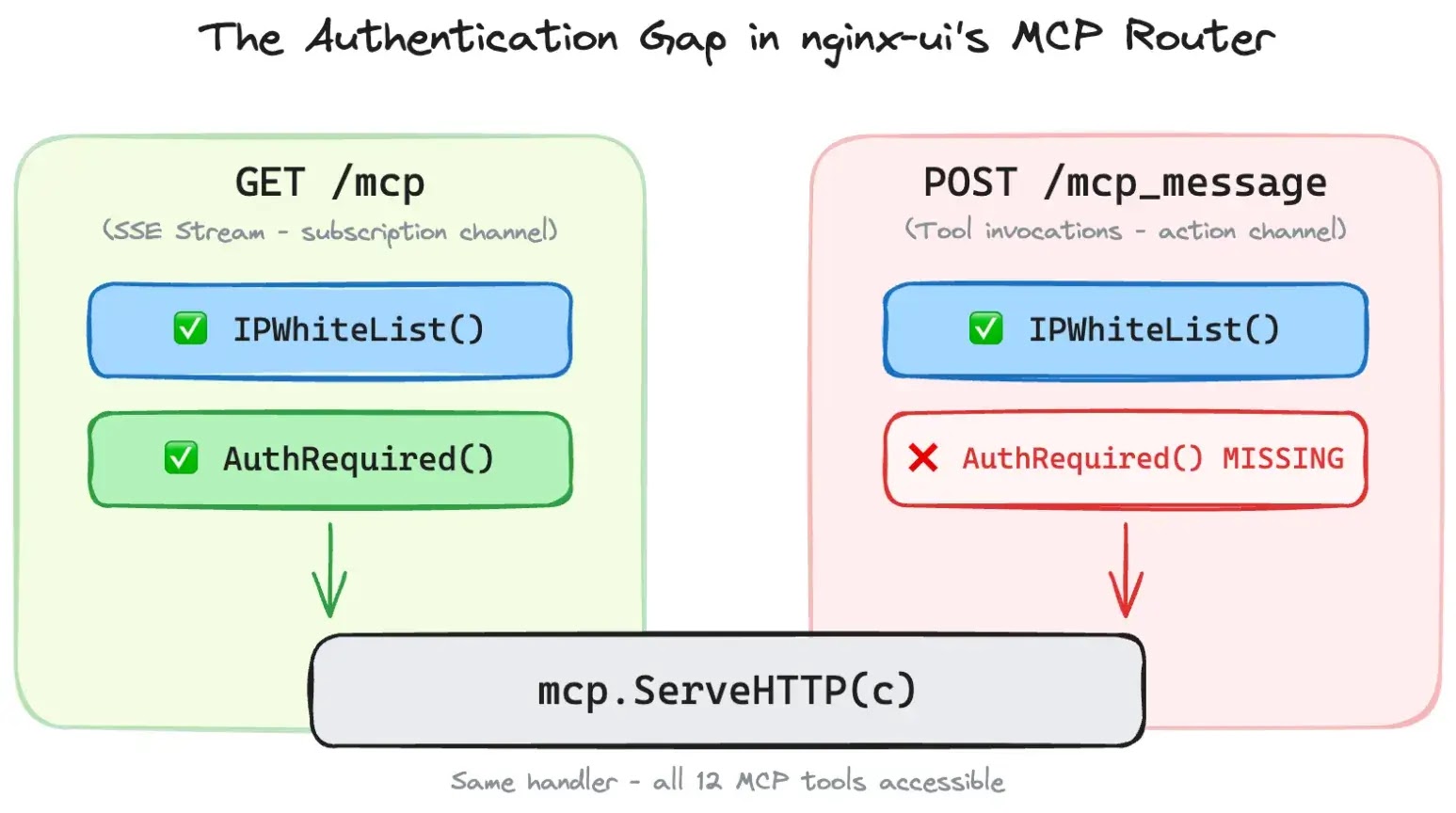
The vulnerability resides within the MCP integration of Nginx UI, a widely used web interface designed to streamline Nginx configuration management. The application leverages two distinct HTTP endpoints for its MCP functionality: /mcp and /mcp_message.
While the /mcp endpoint correctly implements both IP whitelisting and authentication mechanisms, the /mcp_message endpoint critically lacks any authentication middleware. Compounding this issue, the IP whitelist feature operates with a “fail-open” design; an empty whitelist, which is the default setting, is interpreted by the system as permission to allow all inbound traffic.
This dangerous combination—a missing authentication layer and a default permissive configuration—allows any attacker on the network to send direct HTTP POST requests to the /mcp_message endpoint. This enables them to invoke administrative tools without requiring any form of authentication, such as a password, token, or session cookie.
An unauthenticated attacker can exploit this flaw to execute any of the 12 available MCP tools, granting them extensive control over the Nginx server.
Given that these tools are specifically designed for managing the underlying Nginx server, the ramifications of unauthorized access are severe. Attackers can achieve a range of malicious objectives:
- Complete Service Takeover: Using tools such as
nginx_config_add, attackers can create or modify configuration files. This action automatically triggers an immediate server reload, effectively granting them full control over the Nginx service. - Traffic Interception: By rewriting server blocks, malicious actors can redirect all incoming traffic through an attacker-controlled endpoint. This allows them to capture sensitive data in transit, including credentials and session tokens.
- Credential Harvesting: Attackers can inject custom logging directives to capture authorization headers from administrators accessing Nginx UI, facilitating further credential harvesting.
- Configuration Exfiltration: Read-only tools enable attackers to access and exfiltrate all existing configuration files, revealing backend topologies and paths to TLS certificates.
- Service Disruption: Crafting and deploying an invalid configuration, then forcing a server reload, can lead to a complete outage of the Nginx server.
Active Exploitation and Scope
The threat posed by CVE-2026-33032 is not merely theoretical. A public proof-of-concept exploit is actively circulating, and Pluto Security has confirmed active exploitation in the wild. VulnCheck has already added CVE-2026-33032 to its Known Exploited Vulnerabilities (KEV) list, while Recorded Future’s Insikt Group has identified it as a high-impact flaw being actively leveraged by threat actors.
The availability of exploit code on GitHub advisories significantly lowers the technical barrier for exploitation, making it accessible even to less skilled attackers. This underscores the urgent need for organizations running Nginx UI to take immediate action to secure their infrastructure against this pervasive threat.
What You Should Do
- Update Immediately: Upgrade to Nginx UI version 2.3.4 or later. This patched version includes the missing authentication middleware for the
/mcp_messageendpoint, effectively closing the vulnerability. - Disable MCP: If immediate patching is not feasible, disable the MCP feature entirely to eliminate the attack surface.
- Restrict IP Whitelist: Configure the IP whitelist to include only trusted administrator IP addresses. Do not leave the whitelist empty, as this defaults to a fail-open, permissive security posture.
- Review Logs and Configurations: Conduct thorough reviews of Nginx access logs and configuration directories for any signs of unauthorized changes or the presence of unfamiliar files, which could indicate a compromise.
Disclaimer: HackersRadar reports on cybersecurity threats and incidents for informational and awareness purposes only. We do not engage in hacking activities, data exfiltration, or the hosting or distribution of stolen or leaked information. All content is based on publicly available sources.








No Comment! Be the first one.