




Critical MajorDoMo RCE Vulnerability (CVE-2024-XXXX) Lets Attackers Execute Code
Key Takeaways A critical remote code execution (RCE) vulnerability, CVE-2026-27174, affects MajorDoMo smart home automation servers. The flaw allows unauthenticated attackers to execute arbitrary...

Key Takeaways
- A critical remote code execution (RCE) vulnerability, CVE-2026-27174, affects MajorDoMo smart home automation servers.
- The flaw allows unauthenticated attackers to execute arbitrary code due to a broken authentication flow and unsafe PHP evaluation.
- Exploitation requires a single, crafted HTTP GET request, potentially leading to wider network compromise, especially in IoT environments.
- A public detection template is already available, increasing the urgency for immediate mitigation.
A severe vulnerability has emerged, exposing internet-accessible MajorDoMo servers to unauthenticated remote code execution. This critical flaw, identified as CVE-2026-27174, stems from a combination of an improperly handled authentication process and the insecure evaluation of dynamic PHP code.
Table Of Content
The core of the vulnerability resides within the /admin.php request flow. Here, a misconfiguration allows the server to continue processing requests even after a redirect intended to enforce access controls, effectively bypassing authentication mechanisms. This oversight then exposes an internal AJAX console handler, which directly feeds attacker-controlled input into PHP’s eval() function. The result is that a single, specially crafted HTTP request can lead to full server-side code execution on vulnerable MajorDoMo installations.
Given that MajorDoMo commonly serves as a central hub for managing various smart devices, including cameras, sensors, and automation routines within IoT environments, successful exploitation could quickly escalate. Attackers could pivot from compromising the web application to gaining control over an entire smart environment and broader network infrastructure.
Exploitation Mechanics and Attack Chain
Exploiting this architectural weakness is remarkably straightforward, requiring only one meticulously crafted HTTP GET request aimed at the exposed administrative interface.
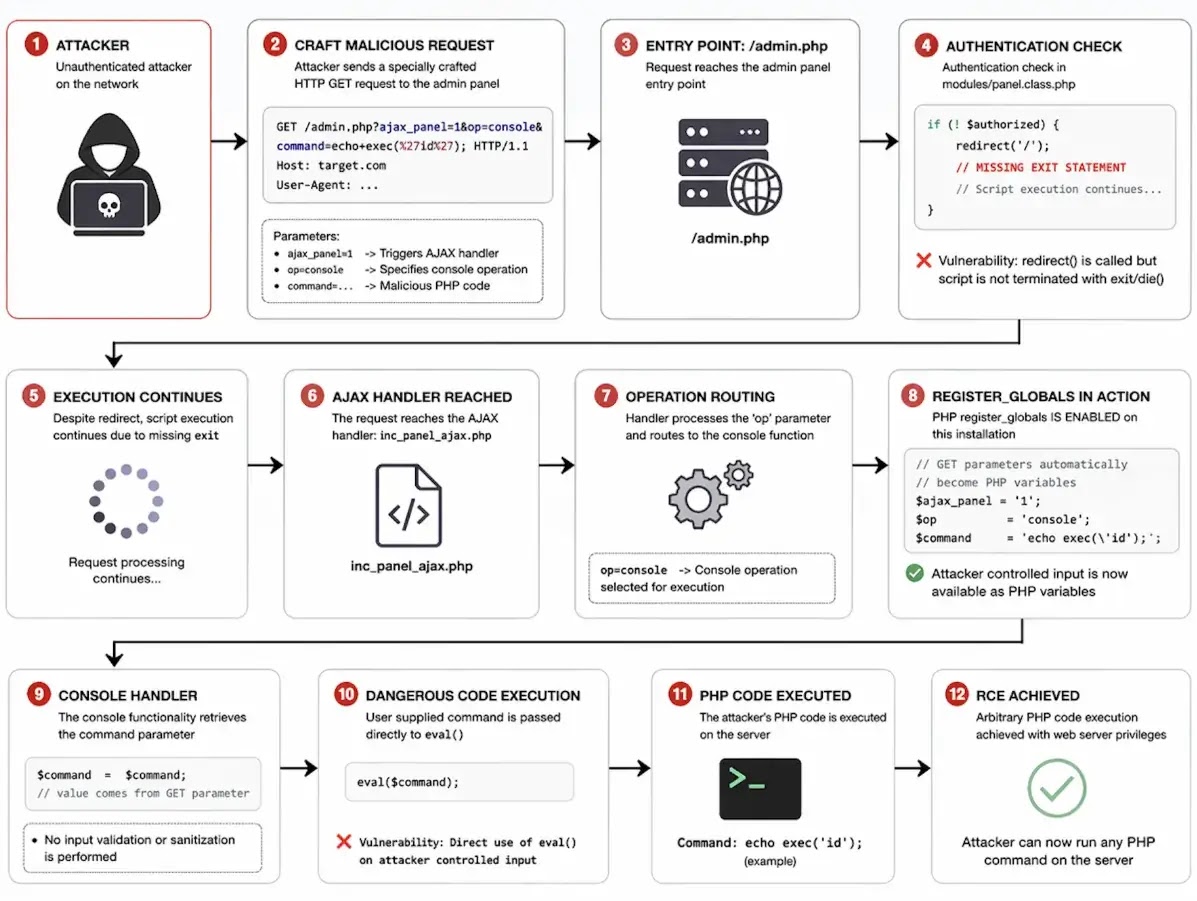
Threat actors can trigger the vulnerability by specifying particular routing variables, specifically by selecting an internal console operation and embedding their malicious payload within the command parameter. Despite the server responding with a redirect to the client, the backend PHP interpreter proceeds to process the injected payload, executing arbitrary PHP instructions.
This grants attackers unfettered access to the application’s environment, enabling them to execute system-level commands, retrieve sensitive configuration files, and establish persistent backdoor access by deploying web shells onto the underlying file system.
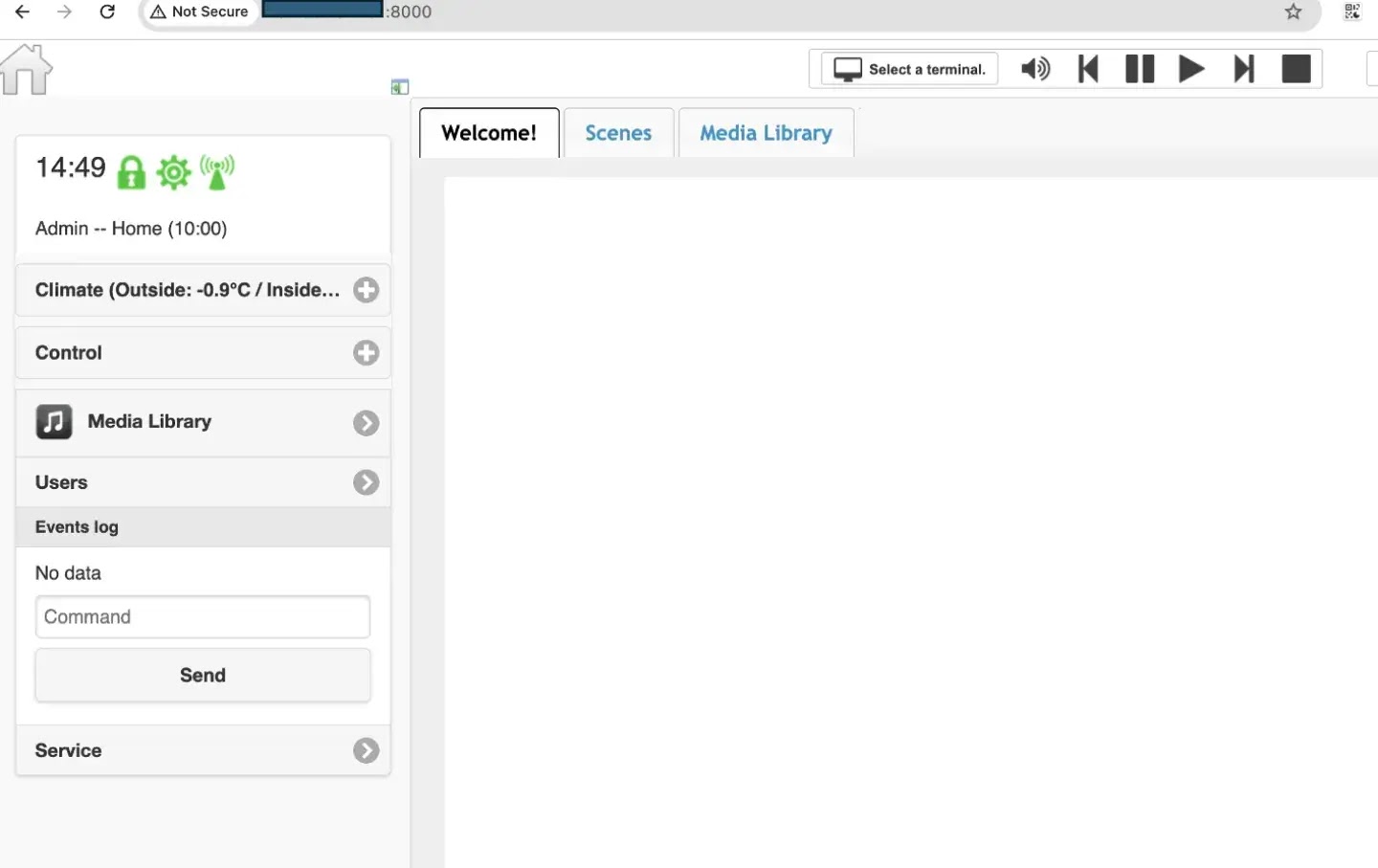
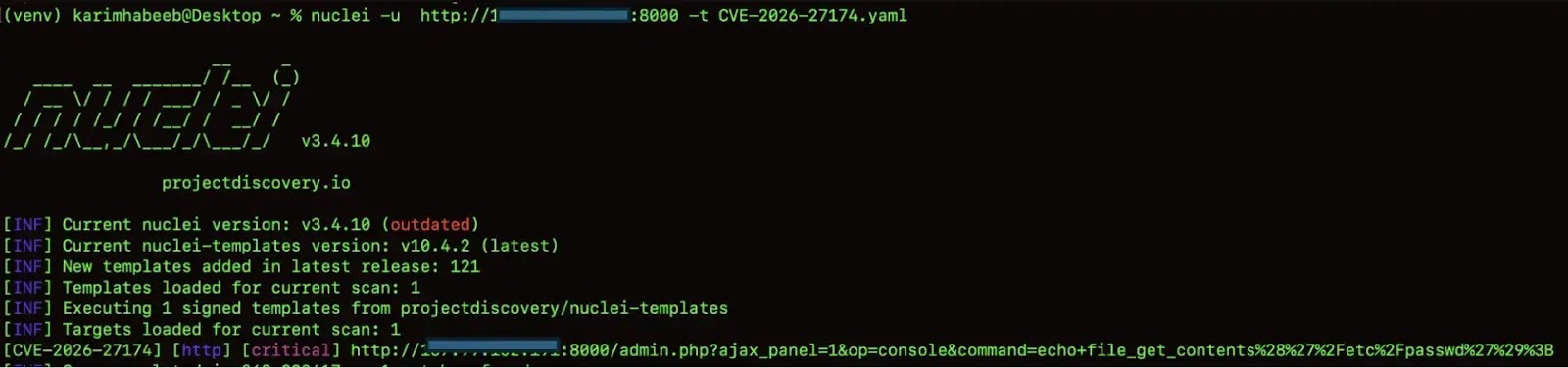
Resecurity has reported that a public detection template for this vulnerability is already available in the ProjectDiscovery Nuclei repository. This public availability significantly increases the likelihood of rapid exploitation against exposed smart-home systems.
Given MajorDoMo’s role as a primary control system for IoT devices, surveillance cameras, and private automation networks, the implications of this remote code execution flaw extend beyond the immediate web application. Security researchers warn that a compromised host can become a strategic entry point, allowing attackers to intercept surveillance feeds, exfiltrate stored network credentials, and move laterally into more secure segments of an internal network.
Indicators of Compromise (IoCs)
| Type | Indicator Details |
|---|---|
| Network | HTTP GET requests to /admin.php containing parameters such as ajax_panel, op, and command originating from external or untrusted IP addresses. |
| Network | Unusual outbound network connections from the MajorDoMo server, potentially indicating command and control (C2) communications or data exfiltration. |
| Host | Suspicious child processes initiated by the web server user (e.g., www-data, apache), suggesting remote command execution. |
| Host | Presence of unexpected PHP files, web shells, or backdoors in web-accessible or temporary directories, indicative of compromise. |
Note: IP addresses and domains are intentionally defanged (e.g., [.]) to prevent accidental resolution or hyperlinking. Re-fang only within controlled threat intelligence platforms such as MISP, VirusTotal, or your SIEM.
What You Should Do
- Immediately restrict access to the MajorDoMo administrative panel to only trusted internal IP addresses.
- Deploy the MajorDoMo platform behind a secure virtual private network (VPN) or an advanced reverse proxy with robust authentication.
- Proactively audit system logs for any unexpected console operations or suspicious activity.
- Apply all available vendor patches as soon as they are released to permanently address unsafe dynamic code-execution pathways.
Disclaimer: HackersRadar reports on cybersecurity threats and incidents for informational and awareness purposes only. We do not engage in hacking activities, data exfiltration, or the hosting or distribution of stolen or leaked information. All content is based on publicly available sources.









No Comment! Be the first one.