




Anthropic Claude Opus 4.7 Enhances Cybersecurity with Real-Time Safeguards
Key Takeaways Anthropic has launched Claude Opus 4.7, its latest AI model, featuring enhanced coding and vision capabilities. The most significant new feature is the integration of real-time,...

Key Takeaways
- Anthropic has launched Claude Opus 4.7, its latest AI model, featuring enhanced coding and vision capabilities.
- The most significant new feature is the integration of real-time, automated safeguards designed to detect and block high-risk cybersecurity requests.
- This release marks a strategic move by Anthropic to test advanced cyber defenses on a broadly available model before deploying them on more powerful, unreleased systems.
- The company is also introducing a Cyber Verification Program for legitimate security researchers to utilize the model for approved security work with fewer restrictions.
Anthropic’s Claude Opus 4.7 Integrates Real-Time Cybersecurity Safeguards
Anthropic has officially released Claude Opus 4.7, its newest flagship artificial intelligence model, which introduces a critical layer of automated, real-time security protections aimed at identifying and preventing high-risk cybersecurity queries. This update also brings substantial improvements to the model’s coding and vision processing capabilities.
Table Of Content
This launch is particularly noteworthy as Anthropic is implementing these advanced protective measures within a widely accessible model. This strategy aims to gather real-world data and refine these safeguards before potentially integrating them into its more potent, unreleased Mythos-class AI systems.
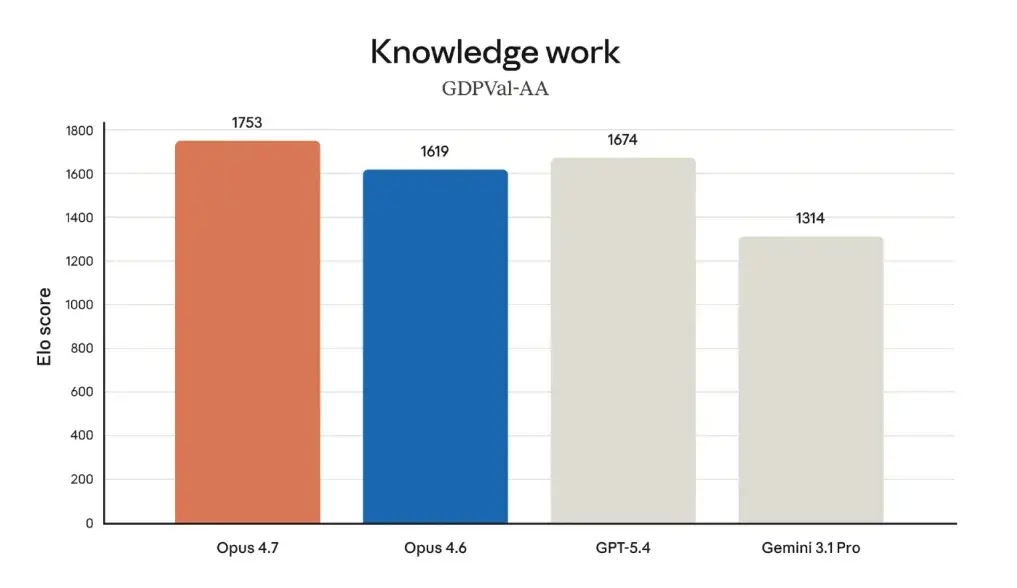
According to statements from Anthropic, Opus 4.7 surpasses its predecessor, Opus 4.6, in complex coding scenarios, exhibits greater precision in following instructions, and can perform self-verification of its outputs prior to generating a response.
Key Enhancements in the Latest Update
The company highlights that the model now possesses superior vision capabilities, supporting images up to 2,576 pixels along the longest edge. This enhancement is expected to significantly improve the AI’s ability to conduct detailed screenshot analysis, interpret diagrams, and comprehend complex documents.
The core upgrades in Opus 4.7 include a 10-15% improvement in coding proficiency, more precise instruction adherence, enhanced reliability for long-running tasks, and a stronger memory function. Its vision system boasts improved UI and diagram reading with a reported 98.5% visual accuracy. From a security standpoint, the model now features real-time threat blocking, a verification program, and advanced safeguards.
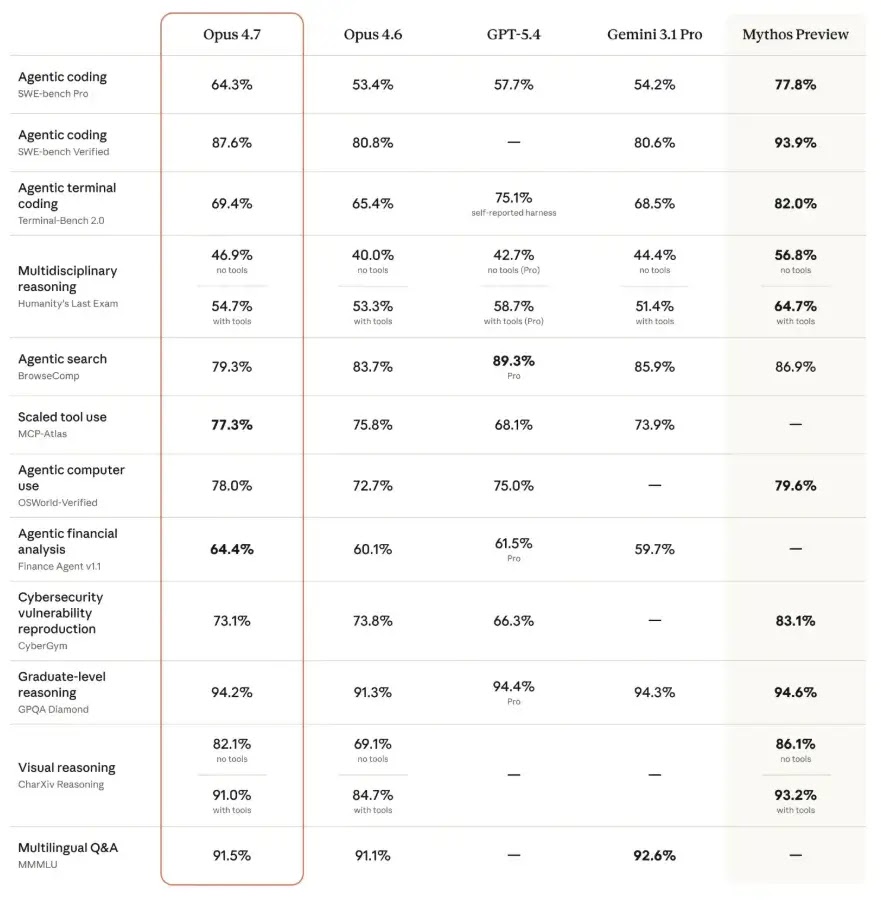
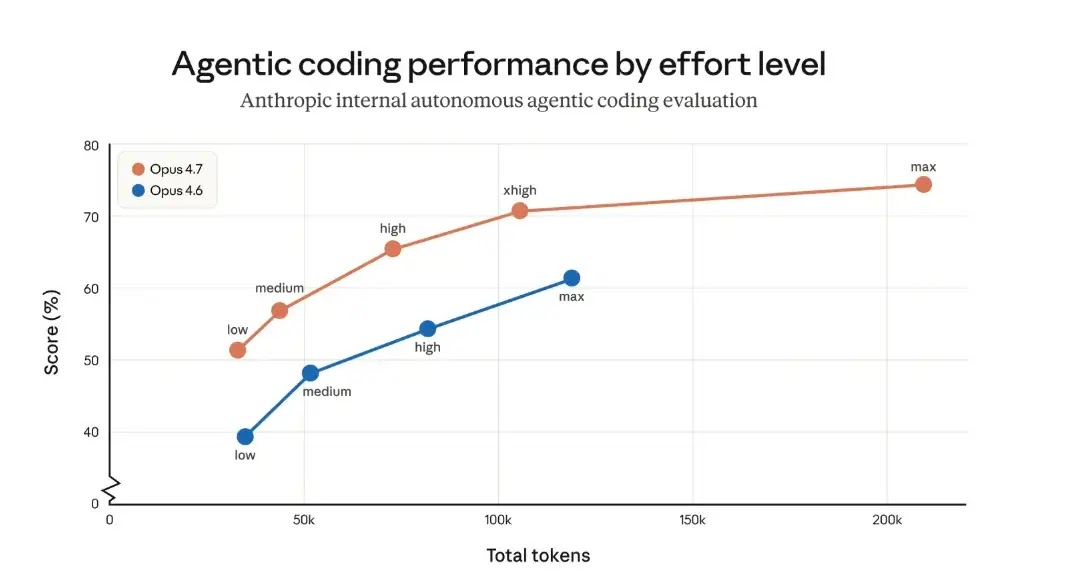
Developer-centric features have also been introduced, such as an xhigh mode for intensive tasks, task budgets to manage resource consumption, an improved tokenizer, and a 1-hour cache. For Claude Code users, new functionalities include /ultrareview, a fullscreen TUI, and an auto mode with xhigh as the default setting.
Anthropic has confirmed that Opus 4.7 incorporates safeguards designed to automatically detect and block prompts associated with prohibited or high-risk cyber activities. Concurrently, the company is inviting legitimate security researchers, red-teamers, and penetration testers to apply for its new Cyber Verification Program. This program aims to provide approved security professionals with less restrictive access to the model for authorized security work.
This release builds upon Anthropic’s recent Project Glasswing initiative, which explored how advanced AI models could bolster critical software defenses while mitigating risks of offensive misuse. During the Glasswing announcement, Anthropic disclosed that its unreleased Claude Mythos Preview demonstrated such potent vulnerability discovery and exploit development capabilities that it was deemed too powerful for general public release.
Instead, Anthropic committed to first validating new cyber defense mechanisms on a less capable model, a strategy now realized with the production deployment of Opus 4.7.
Availability and Developer Considerations
Anthropic has maintained the pricing for Opus 4.7, which remains at $5 per million input tokens and $25 per million output tokens. The model is now accessible across all Claude products, the Claude API, Amazon Bedrock, Google Cloud Vertex AI, and Microsoft Foundry, offering diverse enterprise deployment avenues.
Beyond security enhancements, developers will find operational updates. These include a new xhigh effort level for more demanding reasoning tasks, public beta task budgets for effective token management in extended jobs, and a new /ultrareview feature within Claude Code for comprehensive bug and design reviews.
A notable change for developers is Opus 4.7’s adoption of a new tokenizer, which may increase token counts by 1.0 to 1.35 times, depending on the content. This means teams upgrading to the new model may need to adjust existing prompts, budgets, and output limits.
From a cybersecurity industry perspective, this release underscores a growing trend among AI vendors to treat cyber capabilities as a governed and managed feature, rather than solely a competitive differentiator. Anthropic’s approach with Opus 4.7 demonstrates an effort to balance increased coding autonomy with automated misuse controls, leveraging live deployment data to inform the safe and responsible release of future, more powerful AI models.
What You Should Do
- Organizations currently using Claude models should review the migration guide for Opus 4.7, especially regarding the new tokenizer, and adjust prompts and token budgets as necessary.
- Security researchers and penetration testers interested in leveraging advanced AI for legitimate security work should consider applying for Anthropic’s Cyber Verification Program.
- Enterprises evaluating AI solutions should note the integrated real-time safeguards in Opus 4.7 as a significant step towards more secure AI deployment, particularly for sensitive tasks.
Disclaimer: HackersRadar reports on cybersecurity threats and incidents for informational and awareness purposes only. We do not engage in hacking activities, data exfiltration, or the hosting or distribution of stolen or leaked information. All content is based on publicly available sources.









No Comment! Be the first one.