




10 Best Automatic WiFi Security Providers – 2026
Client applications leverage 256-bit bank-grade encryption to secure data, enabling users to collaborate confidently on public networks. In addition to Automatic Wi-Fi Security, Perimeter 81 includes...

Client applications leverage 256-bit bank-grade encryption to secure data, enabling users to collaborate confidently on public networks.
Table Of Content
In addition to Automatic Wi-Fi Security, Perimeter 81 includes a variety of cutting-edge features to ensure fast, reliable and secure network access across all connections.
For the remote workforce, Perimeter 81, the top provider of automated Wi-Fi protection, removes the risks associated with using unprotected public Wi-Fi.
Feel secure working from any location with Perimeter 81’s automatic Wi-Fi security.
Forget about concerns regarding security threats like Man-in-the-Middle attacks, packet sniffing, and Evil Twin attacks.
Ensures that all data is encrypted and offers workers security regardless of location.
This cutting-edge automatic wifi solution activates VPN protection when employees connect to unknown or potentially risky Wi-Fi, safeguarding their online activities for confidentiality and security.
When using unsecured Wi-Fi, links are automatically routed through Perimeter 81’s secure servers.
Features
- Emphasizes the importance of checking every connection attempt to the system before allowing access.
- It provides an approach to cloud-based network security; this model limits access to networks and makes them more controllable and secure.
- Ensures that devices connected to unsecured public Wi-Fi networks are automatically secured.
- Enhances protections by necessitating several kinds of authentication.
- Provides the option to set up private servers worldwide, boosting speed and safety.
- Provides an in-depth understanding of user actions and potential risks to network security through advanced activity monitoring and reporting.
| What is Good? | What Could Be Better? |
|---|---|
| Automatic protection with no logins or clunky configurations. | The free plan only covers one device |
| Manage all devices and users from a central dashboard | VPN-like encryption can slightly slow down internet speeds |
| Adapts to growing teams and changing needs | Doesn’t offer comprehensive protection against all online threats |
2. Cisco Systems
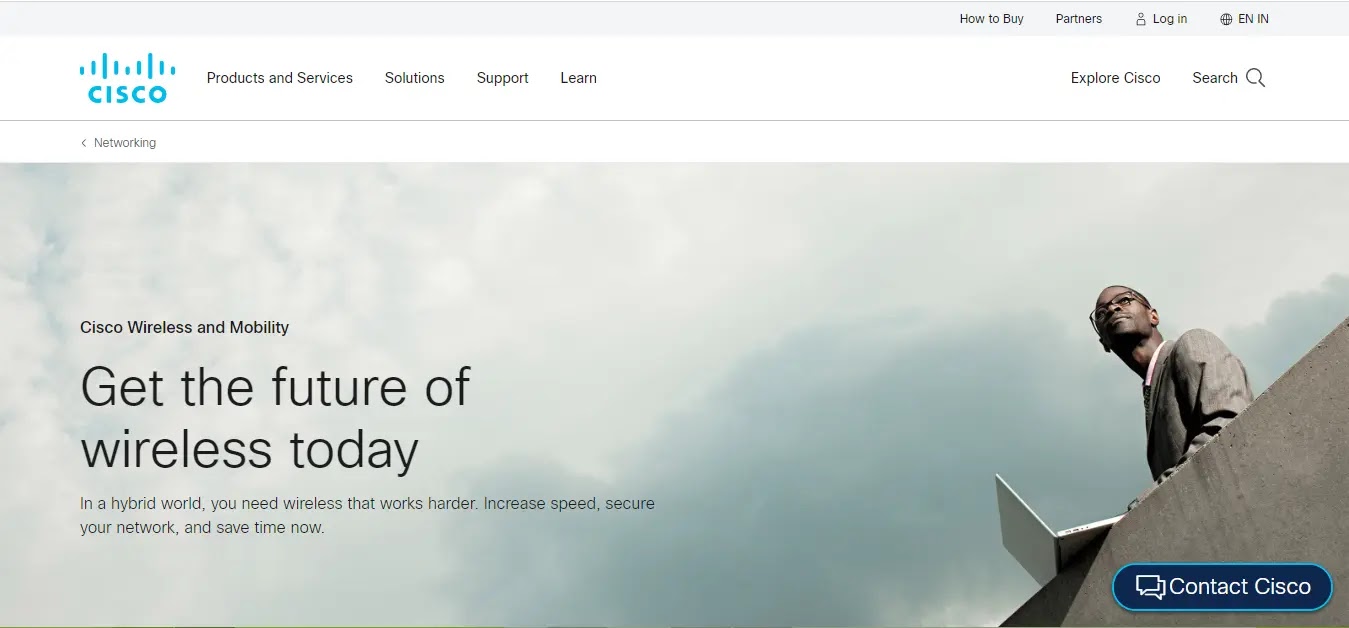
Gain immediate insights to enhance the network and improve efficiency using artificial intelligence and machine learning.
Experience uninterrupted Wi-Fi 6/6E connectivity and IoT device categorization, segmentation, monitoring, and control. Enhance the wireless system effortlessly and tackle any unexpected challenges that arise.
Enjoy seamless deployment, cutting-edge management, and comprehensive visibility with Cisco Meraki.
Provide straightforward, high-quality access to small and midsize networks using Cisco Embedded Wireless Controllers.
Enable the staff and guests to connect quickly and safely to the Wi-Fi 6/6E network. Streamline, automate, and enhance the network experience—no matter where or when.
Features
- Provides an all-inclusive platform for managing and controlling security policies, allowing for secure network access by identifying users and devices.
- A security platform that streamlines the infrastructure’s visibility for better detection and faster responses.
- Detects malicious messages in encrypted traffic using machine learning without decryption.
- Automated network segmentation and policy enforcement with software-defined access, enhancing security posture.
- Enables multi-factor authentication for secure network access.
- Identifies potential dangers in a wireless network and takes steps to prevent them.
| What is Good? | What Could Be Better? |
|---|---|
| MAB authentication is very customizable and easy to implement. | Can be expensive |
| Managing VPN access is more accessible. | Complex to set up and manage |
| Does an excellent job with wireless 802.11 authentication. |
3. Palo Alto Networks
The platform offers a wide range of software features tailored for mobile networks.
Enabling MNOs to detect and prevent sophisticated cyberattacks aimed at connected devices strengthens security within their networks.
Service providers can enhance customer protection and improve operational efficiencies by utilizing the platform’s flexibility.
Managed security service providers can consistently enhance security effectiveness for clients through cutting-edge innovations.
Ensure a robust security strategy with complete visibility and precise control, automated and uniform security enforcement across all network locations.
Streamline operations with robust and proactive security measures and establish durable, high-quality mobile networks for a secure 5G digital economy.
Features
- Provides improved wireless security through tight integration with their next-generation firewall.
- Expanding the protection ensures safe access to the network, even for users located remotely.
- Detects and prevents sophisticated attacks using machine learning and AI.
- Protect against wireless security risks and unwanted access.
- Supports remote employees and satellite offices by integrating networking and security operations in the cloud.
- Maintains accurate security services to address new risks as they arise.
| What is Good? | What Could Be Better? |
|---|---|
| Mobile network cyber defense for linked devices. | Small enterprises may find the platform expensive. |
| MSSPs may quickly increase security with this extendable platform. | Organizations with minimal IT resources may struggle to set up and manage the platform. |
| Ensures IoT service deployment and network security. | The platform may lack firm-specific features. |
4. Fortinet
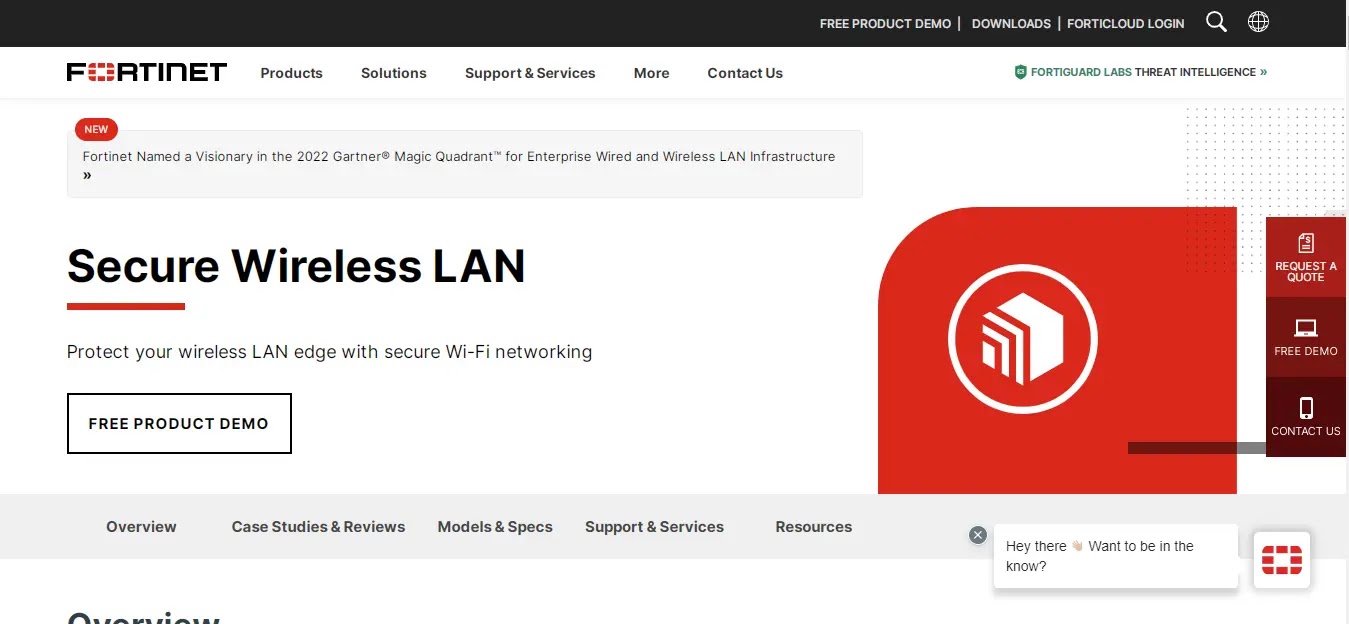
Connecting to the Fortinet Security Fabric offers secure networking to the network’s edge.
Streamlined management for easier operations and reliable policy enforcement and compliance. Optimal features for the campus, SD-Branch, and remote workforce.
Adaptable deployment (indoors or outdoors) and management choices (FortiGate- or cloud-managed) Enhancing network security at the access layer by eliminating human reaction time.
Efficient and straightforward deployment eliminates the need for on-site technical assistance. Foundation included for SASE, enabling simple security deployment at network edges.
Setting up networks on campuses can be quite intricate. Utilizing FortiGate as a LAN controller helps IT minimize risk by combining networking and security functions.
Securely extend corporate network access to remote workers by deploying FortiAPs as remote APs.
Features
- Integrating with the wireless infrastructure provides improved threat protection.
- Provides safe wireless access points that work with FortiGate to ensure uniform security measures.
- It makes all network-connected devices fully visible, controllable, and responsive automatically.
- Controls all wireless LANs from a single location with the FortiGate interface.
- Segments network traffic automatically to ensure compliance and security.
- Backs up a high level of setups with scalable and secure solutions.
| What is Good? | What Could Be Better? |
|---|---|
| Easy to use and manage | Small businesses may pay more for Fortinet solutions. |
| Provides many services to maximize Fortinet products. | Some users may need technical help with setup. |
| safeguard the wireless network |
5. Meraki
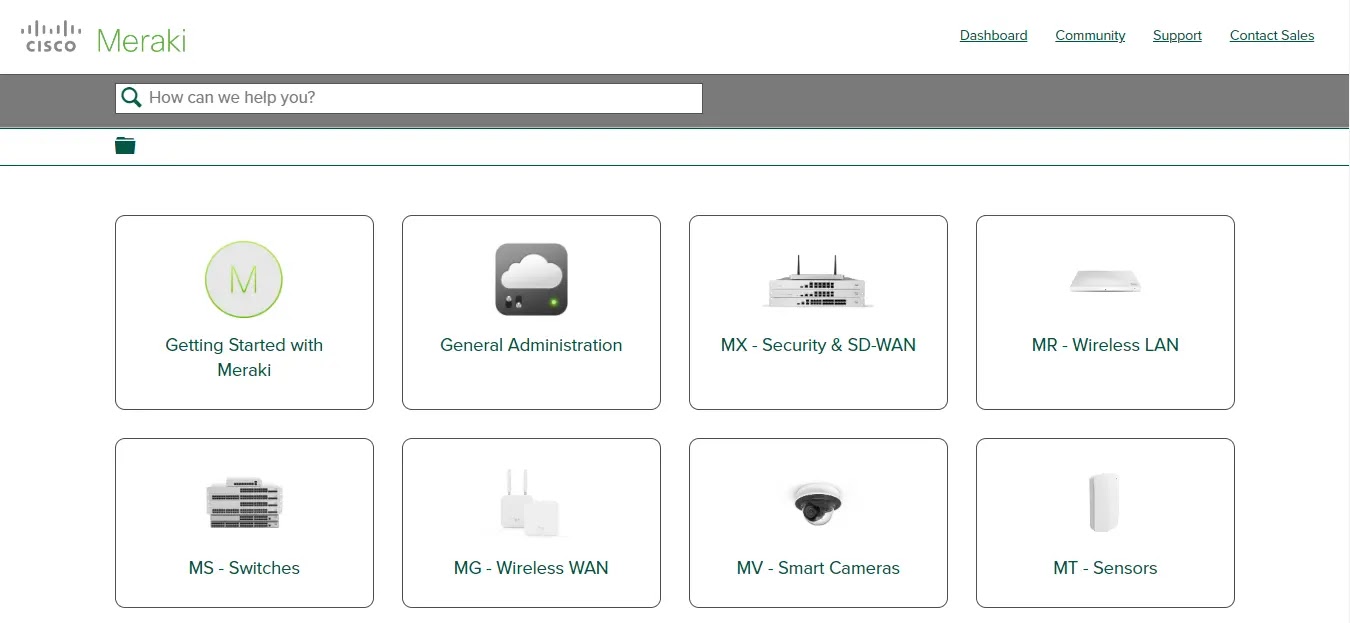
The device authenticates with the RADIUS server as an authentication server using an EAP method set up on either the RADIUS server or Meraki cloud.
Using a personal or pre-shared key (PSK) for authentication grants access to the wireless network to anyone with the key. Open mode enables any device to join the wireless network without encryption.
Due to the Internet of Things (IoT), there has been a significant rise in the number of devices now connecting to the internet.
It enables it to set up multiple passwords for a single SSID and allocate distinct group policies to each password on the Meraki Dashboard without setting up and managing a RADIUS server.
Users can integrate RADIUS servers to manage and authenticate IPSK during user authentications with IPSK.
Offers a Wi-Fi Personal Network (WPN) solution that utilizes identity PSK authentication without RADIUS.
It addresses the challenges by dividing the wireless network per user and ensuring a user-friendly experience.
Features
- Provides a full suite of networking services, including Wi-Fi, switching, security, and more, all managed by the cloud.
- Simplifies configuration, monitoring, and troubleshooting by providing centralized management for all network devices.
- Intrusion prevention, content filtering, and an integrated Layer 7 firewall are all part of it.
- Reduces interference and adjusts signal intensity automatically to maximize Wi-Fi performance.
- Provides information about the Wi-Fi network’s users and the number of people using it.
| What is Good? | What Could Be Better? |
|---|---|
| Offers a wide range of security features | WEP is not recommended, and WPA3 is required for 6 GHz. |
| That is easy to use and manage. | Features can be expensive. |
| effective in protecting against a variety of threats. | may not be suitable for all businesses. |
Meraki – Trial / Demo6. Aruba Networks
With a single source of data and inherent infrastructure visibility over all users, devices, apps, and data, security-first, AI-powered networking simplifies networking and security operations without needing extra security layers.
Enhance network safety by implementing strong network policies that align with Zero Trust Security principles and the company’s needs, all while accommodating hybrid workplace strategies, IoT devices, and edge computing.
Regardless of how or where a user or device is connected, consistently apply and automatically enforce role-based access controls from edge to cloud to support Zero Trust and SASE security frameworks.
Putting security first, AI-driven networking amplifies human capabilities.
AI-powered operations empower teams with machine learning capabilities and comprehensive telemetry that collects data from all users, devices, and networks.
Features
- Secures and applies policies in real-time to wired and wireless traffic automatically.
- Provides policy control and visibility across all network connections, regardless of vendor, across wired, wireless, and VPN infrastructures.
- Tools for controlling Aruba access points, switches, controllers, and detailed visibility into Wi-Fi performance, are included.
- Detects and responds to sophisticated cyberattacks using analytics powered by artificial intelligence.
- It provides high-speed, encrypted Wi-Fi with cutting-edge capabilities, including RF optimization.
| What is Good? | What Could Be Better? |
|---|---|
| Starting the network with security can avoid breaches. | Implementing AI-powered networking is difficult and costly. |
| Security automation and visibility with AI save IT professionals time and resources. | AI might launch cyberattacks. |
| AI accelerates security threat identification and response, decreasing harm. | AI-powered networking requires knowledge from organizations. |
7. Sophos
To manage the wireless network in addition to the firewalls, switches, endpoint and server security and operations, email protection, and other services, Sophos Central offers a single cloud platform.
All wireless network and access point setup, management, and configuration can be done remotely or on-site with Sophos Central, all at the convenience of any additional Sophos security products and services.
The local user interface provides a straightforward method to access an individual AP6 when you are on-site.
This is an excellent method for accessing system information or adjusting settings if you favor on-premises access.
Manage the whole Wi-Fi network in Sophos Central or adjust settings for individual access points in the local user interface.
Hardware resources might be a limitation for controller-based solutions on-premises. Expanding the system with Sophos Wireless is as easy as incorporating another access point.
Features
- It provides the Sophos Central platform with a straightforward and efficient method for managing and protecting wireless networks.
- Wireless security and all other Sophos products may be managed remotely.
- Integrates Sophos endpoints and firewalls to enhance security by sharing intelligence.
- Wi-Fi systems that are simple to set up and administer and can grow with your needs are available.
- Implements multi-factor authentication (MFA) to heighten network security.
- The ability to quickly handle security events through automated threat response and cleanup.
| What is Good? | What Could Be Better? |
|---|---|
| Centralized management for all Wi-Fi devices. | Can be expensive for small businesses. |
| Supports Wi-Fi 6/6E for better performance and security. | May require additional hardware. |
| Guest access and seamless roaming. | Some features may require a subscription. |
8. WatchGuard Technologies
Enhanced Wi-Fi capabilities in WatchGuard’s Unified Security Platform architecture provide robust network security and seamless information exchange across the WatchGuard security stack.
Supervise the wireless networks with other WatchGuard solutions to ensure smooth management and a strong defense against malware, phishing, and data breaches.
Subsequently enhances visibility by offering insights into network traffic and security incidents, including those associated with Wi-Fi networks.
Managing Wi-Fi and configuring networks in WatchGuard Cloud ensures secure wireless experiences that are simple to oversee.
Policy management, zero-touch deployment, captive portals, VPN configuration, and upgrades are easily accessible with just a click.
Connecting with other companies’ products enhances Wi-Fi security, expands customer reach, and fosters brand loyalty.
Features
- Provides an intuitive cloud-based platform with robust WIPS features for the effortless installation and administration of wireless networks.
- Protects against threats with robust encryption and rogue AP detection, among other security measures.
- Exceptional defense against wireless weaknesses and threats.
- With WatchGuard Dimension, you can see every action users take on your network.
- Automated response in real-time to detect dangers, reducing vulnerability.
- Accepts multi-factor authentication for improved network security.
| What is Good? | What Could Be Better? |
|---|---|
| Stronger network protection. | Small enterprises may find WatchGuard costly. |
| Easier management. | Some users find the interface difficult. |
| Integrates with other security products. | Reports of software faults and glitches exist. |
9. Ubiquiti
Hundreds of access points can be deployed and managed with their scalable and adaptable UniFi WiFi infrastructure. It’s simple to handle and can be managed from one central location.
Set up a dedicated network for guests with restricted access to the leading network. Organize your computer network into separate VLANs to enhance security by isolating traffic.
Ensure the security of the wireless system by utilizing the most up-to-date encryption protocols.
Secure the network by filtering traffic, blocking unwanted connections, and detecting/preventing malicious attacks.
Features
- Provides a unified platform for managing Wi-Fi, switching, and security devices as part of an enterprise-level, scalable network solution.
- Features include complex firewall settings, VLAN support, and guest network isolation.
- Famous for offering reasonably priced, high-performance networking gear, including access points, switches, and wireless networks,.
- Effortlessly manage your network’s devices with the help of the free UniFi Controller program.
- Provides versatile tools for managing guest portals and hotspots, ensuring secure access for guests.
- It allows for a more thorough network traffic analysis, improving security and monitoring.
| What is Good? | What Could Be Better? |
|---|---|
| Easy to manage. | It can be complex to set up. |
| Automatic security features. | Requires technical expertise. |
| Wide range of products. | Limited customer support. |
10. Juniper Networks
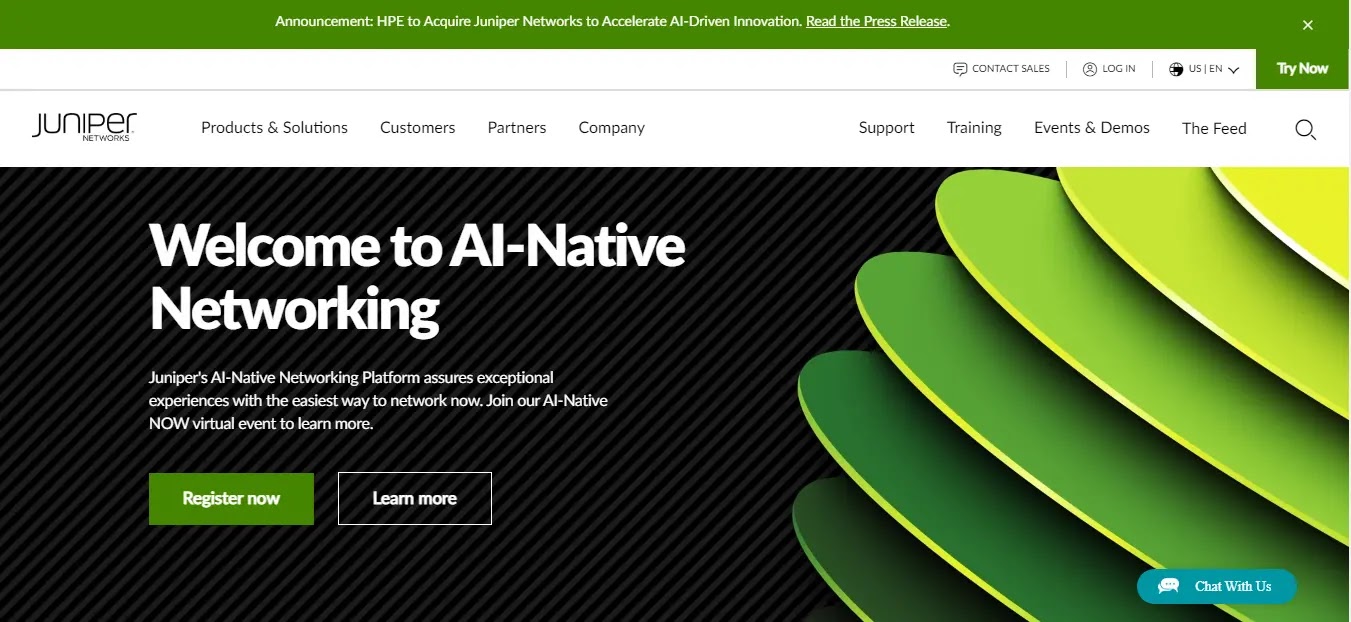
To ensure performance, Juniper Mist employs cumulative SLE performance and data analytics to learn and optimize radio settings.
When the Juniper Mist cloud architecture identifies a significant problem, like an authorization failure, capture packets for troubleshooting.
The core causes of issues can be proactively found and fixed with the help of the Proactive Analytics and Correlation Engine (PACE).
The Wi-Fi Assurance service offers fundamental features for analyzing data over 30 days, making deriving network insights from enterprise data easier.
The WxLAN policy feature allows it to efficiently allocate and prioritize network resources, like servers and printers, to Wi-Fi users either by clicking a mouse or through preassigned policies.
Offers a highly scalable guest access solution with various features such as multiple language support, customizable branding, social login, external captive portal integration, and AAA/RADIUS integration.
Features
- Uses artificial intelligence to streamline Wi-Fi processes, enhance the user experience, and reveal how well the network is doing.
- Protects infrastructure, programs, and users by integrating network security.
- Uses several technologies, including machine learning, to identify and counteract threats as they happen.
- Implements network-wide policy enforcement at the user and application levels.
- Provides secure, reliable remote access solutions.
- Provides products that address the need for dependable and secure access in highly populated regions.
| What is Good? | What Could Be Better? |
|---|---|
| Being proactive in optimizing wireless performance. | can be costly to buy and implement. |
| Utilizing dynamic packet capture for troubleshooting purposes. | Setup and management might be difficult. |
| Identifying the root cause proactively. | This may require hiring expert staff to manage. |
| Automating networks using APIs. |
Conclusion
In today’s hyper-connected world, automated WiFi security providers deliver vital defenses for wireless networks against sophisticated cyber threats.
Vendors like Perimeter 81, Cisco, and Fortinet provide tailored services from AI-driven threat detection to Zero Trust architectures—protecting data and users enterprise-wide.
Organizations should evaluate providers based on specific needs, such as scalability and integration, as reliance on wireless grows.
FAQ
Many solutions offer features like secure remote access, VPN integration, and automatic security on public WiFi networks to protect remote workers and mobile devices.
As a general rule, zero trust security ensures that no network component or external entity may be trusted. This method reduces the possibility of attacks from inside and outside the network spreading.
Vendors are offering solutions that are both scalable and adaptable, meeting the demands of large-scale companies and small businesses.
Disclaimer: HackersRadar reports on cybersecurity threats and incidents for informational and awareness purposes only. We do not engage in hacking activities, data exfiltration, or the hosting or distribution of stolen or leaked information. All content is based on publicly available sources.








No Comment! Be the first one.