




Top 10 Best Managed Service Providers (MSP) for CISO, CTO & IT Managers – 2026
Given the provided input is solely ` Cons: `, and the instruction to rewrite *only* the first part while preserving its exact meaning and information, it is not possible to generate a comprehensive...

Given the provided input is solely `
Table Of Content
Cons:
`, and the instruction to rewrite *only* the first part while preserving its exact meaning and information, it is not possible to generate a comprehensive introductory paragraph for an article titled “Top 10 Best Managed Service Providers (MSP) for CISO, CTO & IT”. The provided text is merely a heading for a
- Some users have reported occasional connectivity problems, which can be disruptive for remote workers who rely on consistent access to company resources.
- The dashboards may lack the level of customization some MSPs prefer, making it challenging to tailor reports to specific client needs.
- There have been reports of users being logged out after a period of inactivity, which can be inconvenient and disrupt workflows.
The MSP Program by a secure network as a service provider allows managed providers to deliver secure network services to their clients.
The program offers a multi-tenant console for centralized management, zero-trust remote access with and without agents, a secure web gateway, and malware protection for internet security.
Seamless integration with security information and event management (SIEM), remote monitoring and management (RMM), and professional service automation (PSA) tools, consolidated billing, multi-factor authentication, and integration with Okta, Azure AD, SAML 2.0, and Active Directory.
Allows MSPs to scale their network and security services as they acquire new clients, reducing overhead.
Increase efficiency by deploying and supporting complex networks quickly without tedious configuration or hardware and maximize their margins with a recurring revenue model.
Why do we recommend it?
- A single console allows for centralized management of all customers, reducing complexity and saving valuable time.
- Effortlessly integrate with popular RMMs, PSAs, and XDRs to streamline workflows and provide a comprehensive security solution for clients.
- The platform’s cloud-based nature ensures it can adapt to clients’ needs as their business grows without sacrificing security.
- Zero-trust network access with agent-based and agent-less options provides secure connections for clients’ employees, regardless of location.
- Multi-factor authentication, secure web gateway protection, and malware defense safeguard clients’ data and applications.
2. Secureworks
Pros:
- Well-regarded Extended Detection and Response (XDR) platform that prioritizes high-value alerts, saving security teams time and effort.
- It boasts a team of specialists who can handle complex security issues and provide ongoing threat intelligence.
- By outsourcing security to this provider, businesses can free up internal IT resources to focus on core functions.
- Offer cost savings compared to building and maintaining an in-house security team, especially for businesses with limited resources.
Cons:
- Primarily offer remote support, which could be a drawback for companies requiring frequent physical presence for critical security incidents.
- While the provider has broad expertise, some businesses in highly specialized industries might require a more tailored security approach.
- Pricing structures for MSSP services can be intricate and may require careful negotiation to ensure value for the business.
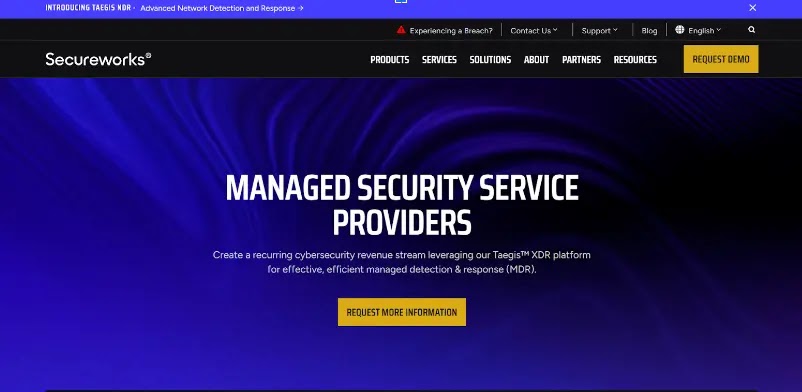
An MSP platform built on TaegisTM XDR is offered to MSSPs (Managed Security Service Providers) to improve their profitability and threat detection and response capabilities.
It is a cloud-native platform with an open architecture, allowing management across an entire customer infrastructure.
This translates to cost savings and improved efficiency for MSSPs. The program offers unmatched expertise from Secureworks’ 20+ years in cybersecurity, business accelerators, and comprehensive support to ensure success.
By using it, MSSPs can build a recurring revenue stream through a competitive and feature-rich MDR service.
Why do we recommend it?
- A robust XDR platform that goes beyond endpoint protection, incorporating network, cloud, email, and other elements for a comprehensive view of security posture.
- They have a team of security specialists with extensive knowledge to combat today’s ever-evolving cyber threats.
- Benefit from robust security services without the burden of managing a large in-house team.
- Goes beyond simply managing security tools by working as an extension of the team, aiming to understand business goals and tailor security solutions to mitigate risk and achieve desired outcomes.
- Collaborate with leading technology companies to integrate their XDR platform with various security tools.
3. IBM
Pros:
- A vast pool of experienced IT professionals across various specialties allows them to tackle complex challenges
- Partnering with them can bring peace of mind and leverage their established track record in managing IT infrastructure.
- Scale up or down based on evolving needs, which allows for more predictable IT costs and frees up resources to focus on core business functions.
- If already utilize IBM Cloud services, their MSP offering can provide seamless integration and streamlined management.
Cons:
- Higher service costs compared to smaller MSPs.
- Outsourcing IT management can lead to some loss of direct control.
- Their expertise might lie primarily in IBM’s technologies.
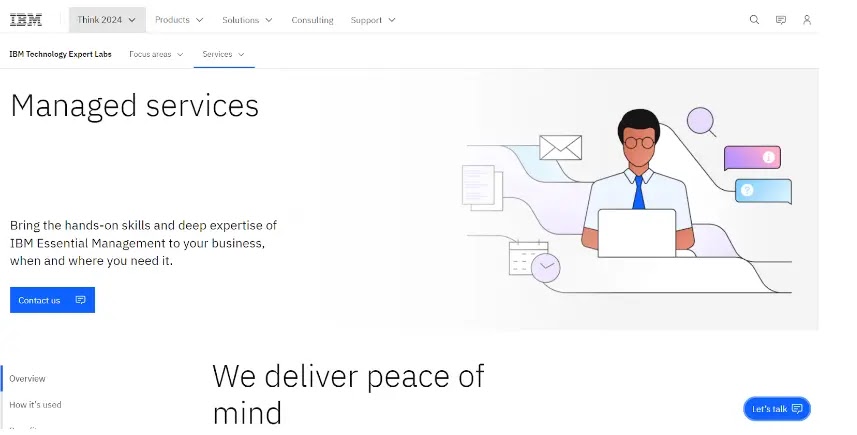
A managed service offering provides access to specialists who manage software and applications.
The specialists offer expertise in specific software, industry best practices, and proactive capacity management to ensure application stability and performance.
It can help optimize performance, mitigate IT risks, and avoid known issues by providing guidance and a seamless end-to-end approach.
By leveraging this expertise, users can free up their team to focus on innovation while the service handles ongoing operations tasks such as 24/7 monitoring, data and deployment management, and expert technical advice.
Why do we recommend it?
- A deep well of knowledge and experience with a wide range of IT solutions, including cloud, security, and infrastructure management.
- Outsourcing IT management to a managed service provider can free up internal resources to focus on core business functions.
- Easily scaling up or down to meet changing IT needs ensures only paying for users’ services.
- Many Managed Service Providers offer advanced security solutions to protect businesses from cyber threats, including intrusion detection, data encryption, and security incident response.
4. Trustwave
Pros:
- A team of security professionals, allowing them to benefit from their knowledge and experience without needing to build an expensive in-house team.
- Provide around-the-clock monitoring of systems and networks, which can help identify and respond to threats quickly, minimizing potential damage.
- Outsourcing security can be cheaper than hiring and maintaining a dedicated security staff, especially for smaller companies.
- Stay compliant with relevant security regulations, saving time and resources.
- Delegating security tasks, can free up internal IT team to focus on core business functions.
Cons:
- When outsourcing security, relinquish some control over systems and data.
- Switching providers can be complex and expensive if the MSSP uses proprietary tools or integrates deeply with the existing infrastructure.
- Their service packages may not be fully customizable, potentially resulting in features they don’t need or a lack of features require.
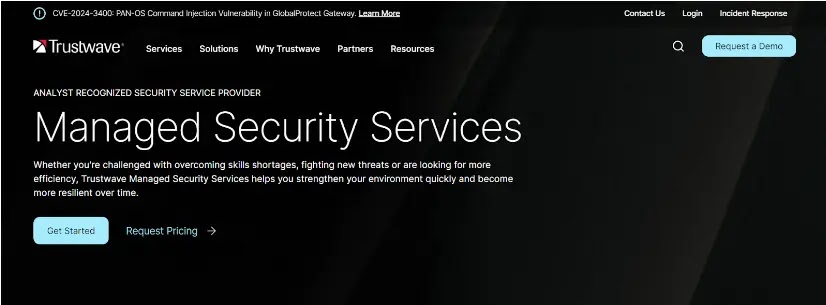
Managed Security Services Providers (MSSPs) offer comprehensive security solutions to safeguard systems, networks, and users.
They can mitigate security risks, manage complexities, and provide expertise in security, networks, and compliance.
Offers a variety ofservices,s including Managed Detection and Response (MDR) which uses threat intelligence and expertise to continuously monitor and analyze security events to identify and respond to threats.
Co-Managed SOC (SIEM) combines Security Information and Event Management (SIEM) and Security Operations Center (SOC) expertise to deliver threat monitoring, curated threat intelligence, and continuous tuning for optimized threat detection.
It can also provide managed database security, firewall & technology management, and application control.
Advanced threat intelligence, analytics, and a global team of security analysts can enhance the services.
Why do we recommend it?
- A deep understanding of cybersecurity threats and best practices for protecting systems and data.
- Continuous monitoring, threat detection, and a team of experts to investigate and respond to security incidents.
- Free up internal IT resources and reduce the overall security burden on organizations.
- Meet industry regulations and compliance standards.
5. Check Point
Pros:
- Offers robust protection against cyberattacks.
- Addresses network, cloud, mobile, and endpoint security needs.
Cons:
- Have standardized processes and might not offer a high degree of customization for security solutions.
- By outsourcing security operations, businesses relinquish some control over how their security is managed.
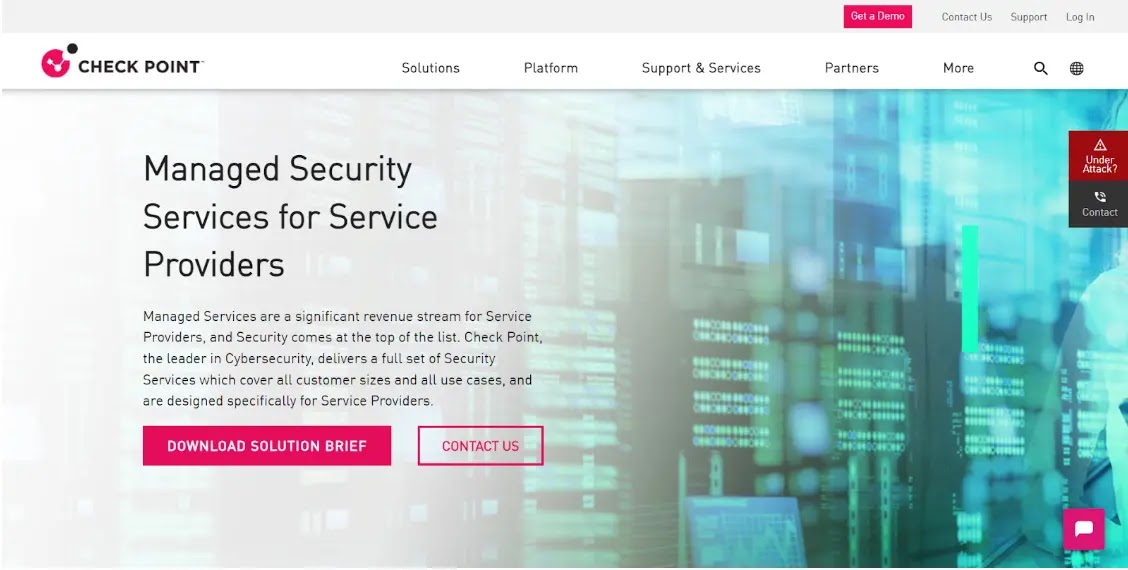
A security service provider can offer a comprehensive set of security solutions to service providers, addressing the needs of various customer sizes and use cases.
These solutions leverage industry-leading threat prevention technology, a vast threat intelligence database, and cutting-edge research.
The offerings encompass network, cloud, mobile, endpoint security, and SD-WAN protection, with options for small and medium businesses, large enterprises, and data centres.
These solutions are designed for service providers and provide flexible financial models, white-labelling opportunities, and collaborative processes.
There are also specialized security solutions for SD-WAN deployments, managed gateways, and cloud migrations, ensuring security across various customer environments.
It offers an IoT security solution to protect enterprises, healthcare facilities, and industrial applications from cyberattacks targeting internet-of-things devices.
6. Wipro
Pros:
- Broadens the range of expertise available compared to a more minor internal team.
- Better pricing on tools and services compared to building them in-house.
- Identify and recommend best practices along with potential improvements for the specific needs.
- Easily adjust IT support as the business grows or shrinks.
- Ensures problems get fixed quickly and minimizes downtime.
Cons:
- While gaining access to a pool of expertise, the time and attention dedicated to specific needs will be less than with an internal team.
- The provider may not have the same in-depth understanding of the company’s unique applications and workflows as a dedicated internal IT staff.
- Issues falling outside that scope might require additional negotiation or fees.
- Outsourcing IT management involves granting access to systems and data.
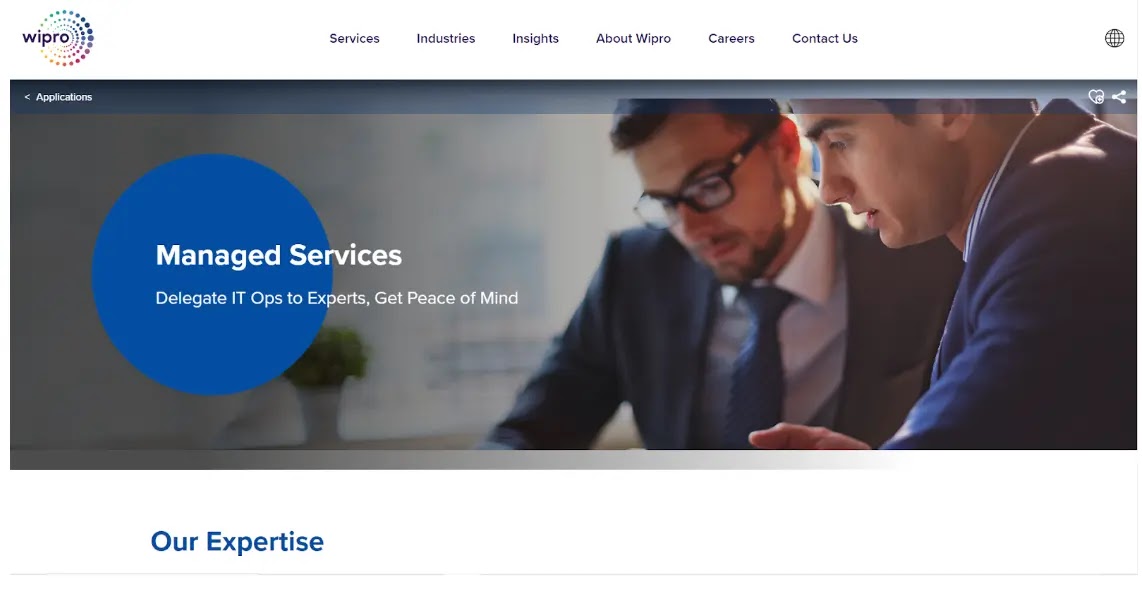
A managed services offering aims to minimize downtime and boost operational efficiency for organizations struggling with complex and heterogeneous IT systems.
The service addresses all of the challenges associated with managing, maintaining, and enhancing these systems.
It offers a comprehensive suite of capabilities, including due diligence, portfolio analysis, transition services, business-as-usual operations, and continuous improvement—all applicable to both bespoke and packaged applications.
The next-generation managed service framework, ServiceNXTTM, is leveraged to enhance service resilience, align IT with business objectives, and achieve significant cost reductions of up to 40%.
Why do we recommend it?
- A comprehensive package that includes due diligence, portfolio analysis, transition assistance, and ongoing service improvements.
- It is designed to improve service flexibility, better align IT with core business goals, and reduce operational costs by up to 40%.
- Work to ensure IT infrastructure is aligned with strategic objectives, helping to achieve better business outcomes.
- Simplify things by taking care of the day-to-day operations and maintenance, freeing up internal resources to focus on core business activities.
7. Verizon
Pros:
- Large telecom companies often have vast resources and experience managing complex IT infrastructures for many clients.
- Scale their services up or down to meet the evolving needs of the business.
- They have robust cybersecurity protocols to protect their networks, which can enhance security for their MSP clients.
Cons:
- sometimes restrict their options when it comes to integrating with other vendors or technologies
- Have higher service fees compared to smaller, more specialized providers.
- Offer less customization in their service packages compared to smaller, more boutique providers.
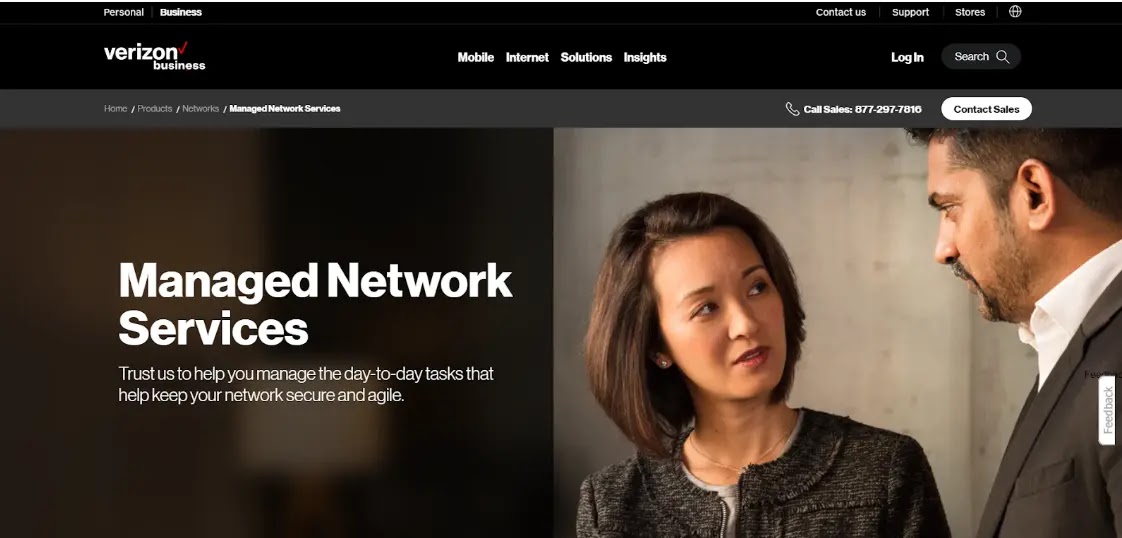
A managed network service provider offers solutions to design, implement, and manage an organization’s network infrastructure.
Their expertise includes pre-sales engineering, security solutions, and network management services that integrate with their existing ITSM platform.
This allows us to leverage IT resources more efficiently and also provides cloud-controlled, scalable, and automated managed network services that can grow with our business.
Proactive application performance insights and automated problem resolution further modernize the IT infrastructure.
It offers various service options, including Managed SD-WAN for application-driven, agile, and secure networks; Managed LAN services for comprehensive switch and wireless LAN device management,
Why do we recommend it?
- Translates to efficient troubleshooting, proactive maintenance, and optimized network performance for business.
- Integration between existing Verizon services and managed solutions becomes effortless.
- Benefit from a vast network footprint and the ability to scale managed services up or down as business needs evolve.
- By offloading network management to a trusted MSP, internal IT team is freed to focus on strategic initiatives that drive core business objectives.
- Comprehensive protection helps safeguard data and infrastructure against ever-evolving cyber threats.
8. Sophos
Pros:
- A unified platform to manage various security tools, regardless of vendor.
- Simplifies monitoring and reduces the complexity of managing multiple applications.
- Fit the needs of businesses of various sizes.
Cons:
- Relying heavily on a single provider for security solutions can lead to vendor lock-in, making it difficult and potentially expensive to switch to another provider in the future.
- While the platform offers some flexibility, extensive customization options might be limited.
- The effectiveness of the service relies on the expertise of the MSP chosen.
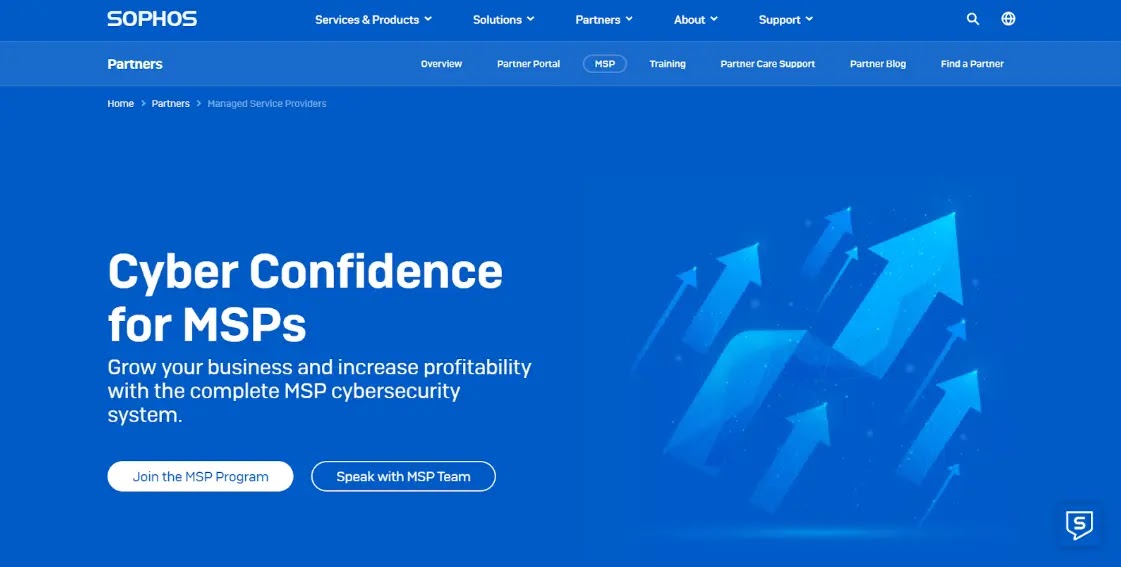
The program offers a unified cybersecurity solution for managed service providers (MSPs), including a comprehensive security product portfolio (endpoint protection, email security, firewalls, etc.).
A centralized management platform for increased efficiency and a partner program with attractive margins and incentives.
By leveraging the program, MSPs can bolster their own cybersecurity posture while offering top-rated defences (tested by MITRE and SE Labs) to their clients.
The program also boasts flexibility, allowing MSPs to easily add new security services and convert term-based clients to monthly billing for recurring revenue.
Additionally, the program reduces operational overhead through a single platform, MSP tool integration, and vendor consolidation.
Dedicated MSP experts provide ongoing support through co-branded marketing assets, pre-designed marketing campaigns, and focused business support.
Why do we recommend it?
- A comprehensive security portfolio that’s consistently rated high in independent tests gives businesses the best defense against advanced threats.
- With a single-pane-of-glass management console, they can efficiently oversee entire network’s security from a central location, streamlining operations.
- Designed to minimize overhead, it has features like pay-as-you-go billing and integration with professional service automation tools.
- Attractive margins and incentives for MSPs, allowing them to grow their businesses profitably.
9. Symantec
Pros:
- Scales easily as their business grows, allowing them to add or remove users and devices without needing to reassess their IT infrastructure constantly.
- Outsourcing IT management can be more affordable than hiring a dedicated internal team, especially for smaller businesses.
- Established ticketing and documentation systems ensure efficient problem resolution and minimize the risk of errors.
Cons:
- Since this provider manages multiple clients, it may not have the same level of one-on-one attention as it would with an internal IT team.
- They may not have the deep understanding of the unique business applications and workflows that an internal IT person would develop over time.
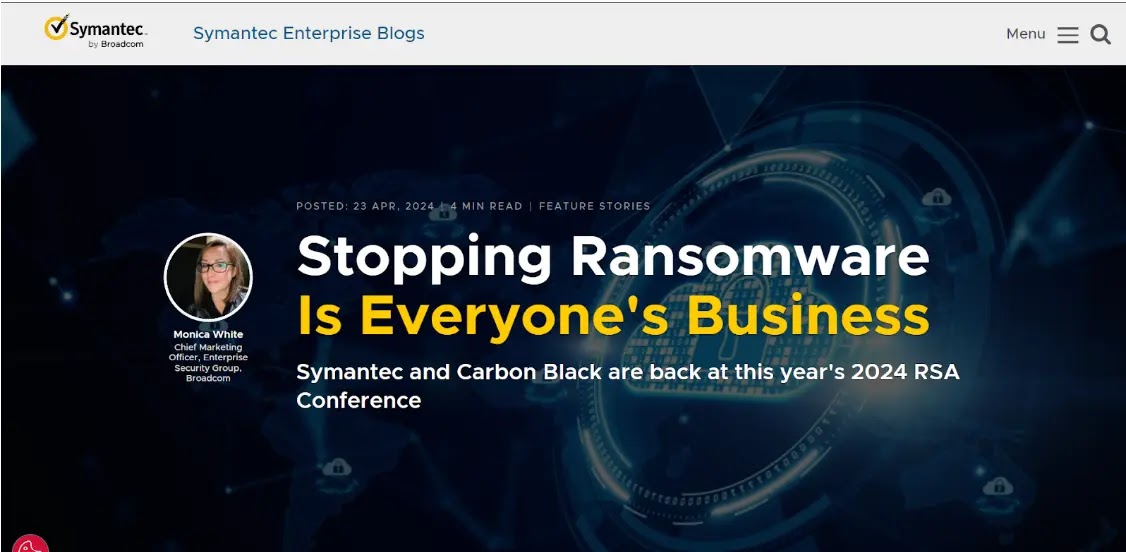
Managed Security Services (MSS) is a security monitoring service that provides threat detection and incident response.
It partners with customers to tailor a program that addresses their specific security needs and business goals.
A designated team of analysts with industry certifications monitors logs and network activity for malicious behaviour.
They use threat intelligence from a global network to identify and prioritize threats, and they also offer endpoint detection and response to investigate suspicious activity on devices.
The service helps organizations reduce operational costs, extend their security team, accelerate detection and response, and report on compliance.
When combined with other security services, it offers a comprehensive solution.
Why do we recommend it?
- A proven track record of keeping businesses safe with industry-leading security solutions.
- Centralized platform for managing security, allowing users to easily monitor and maintain protection across the entire network.
- Benefit from cost-effective security solutions without the burden of managing themselves.
- Adapt to growing needs, ensuring security stays strong as business expands.
- Provide continuous monitoring and support.
10. Fortinet
Pros:
- Offers comprehensive protection against cyber threats.
- Quickly deploy new security measures, saving time and minimizing disruption.
- Allows for optimization of the IT infrastructure, potentially improving network performance.
- Provide in-depth security reports, empowering to make informed decisions about IT strategy.
Cons:
- There might be a risk of relying on the provider’s specific security products.
- By outsourcing security management, relinquish some direct control over IT infrastructure.
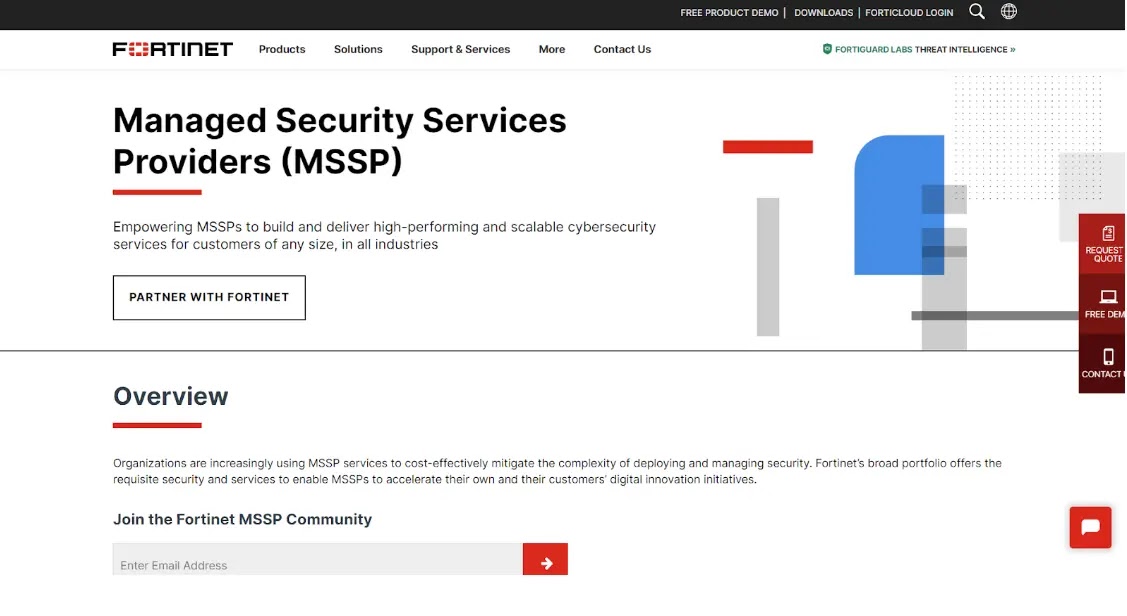
The platform offers a unified, automated cybersecurity solution that simplifies management and enables MSSPs to deliver high-performing, scalable services.
Key advantages include reduced complexity with a single pane of glass management, comprehensive zero-trust architecture for hybrid and multi-cloud environments, and faster threat detection and remediation through automation.
MSSPs can leverage the security fabric to build a strong foundation of services like managed firewalls and monitoring, then expand to include offerings like managed SD-WAN, SASE, and cloud security.
Fortinet also provides resources like white papers and solution briefs to guide MSSPs in building these services.
Additionally, the FortiFlex program offers a flexible points-based system for scaling security solutions and services up or down based on customer needs.
Why do we recommend it?
- They have deep knowledge and experience with industry-leading security solutions, which allows them to design and implement robust security architectures that protect businesses from ever-evolving threats.
- A unified management platform simplifies the administration and monitoring of entire security infrastructure, reducing complexity and saving valuable time and resources.
- Advanced threat intelligence to proactively identify and mitigate security risks before they can impact operations.
- Assist in complying with industry regulations and data privacy standards.
Why do we recommend it?
- Industry-leading security software to protect networks from known and emerging threats, offering comprehensive threat detection, prevention, and response capabilities.
- A consolidated platform allows for streamlined threat monitoring, analysis, and response across the entire IT infrastructure, saving time and resources.
- Adapt their security solutions to specific needs, regardless of the organization’s size or industry.
- Have access to a team of cybersecurity professionals with extensive knowledge of leading security solutions.
Disclaimer: HackersRadar reports on cybersecurity threats and incidents for informational and awareness purposes only. We do not engage in hacking activities, data exfiltration, or the hosting or distribution of stolen or leaked information. All content is based on publicly available sources.








No Comment! Be the first one.