




Top 10 Mobile Application Security Testing Tools for 2026
Key Takeaways Mobile application security testing (MAST) is critical due to escalating cyber threats targeting mobile ecosystems. The top MAST tools for 2026 offer robust static (SAST) and dynamic...

Key Takeaways
- Mobile application security testing (MAST) is critical due to escalating cyber threats targeting mobile ecosystems.
- The top MAST tools for 2026 offer robust static (SAST) and dynamic (DAST) analysis, API security, and seamless CI/CD integration.
- Solutions range from enterprise-grade commercial platforms like NowSecure and Veracode to powerful open-source options like MobSF.
- Effective MAST integrates continuous security into the development lifecycle, addressing vulnerabilities before production deployment.
- Choosing the right tool depends on organizational size, budget, and specific needs, including compliance, threat intelligence, and developer workflow integration.
The ubiquity of mobile devices for vital functions such as financial transactions, healthcare management, and corporate operations has led to a parallel surge in sophisticated cyber threats. Attackers relentlessly refine their methodologies to exploit mobile environments, employing diverse tactics from advanced Android banking malware to covert data exfiltration techniques.
Table Of Content
- Key Takeaways
- Methodology for Selection
- Selection Criteria for Top 10
- Mobile Application Security Testing Tools Comparison Table
- Top 10 Best Mobile Application Security Testing (MAST) Tools in 2026
- 1. NowSecure
- Why We Picked It
- Specifications
- Reason to buy
- Features
- Pros
- Cons
- 2. Veracode Mobile Security
- Why We Picked It
- Specifications
- Reason to buy
- Features
- Pros
- Cons
- 3. AppKnox
- Why We Picked It
- Specifications
- Reason to buy
- Features
- Pros
- Cons
- 4. Data Theorem Mobile Secure
- Why We Picked It
- Specifications
- Reason to buy
- Features
- Pros
- Cons
- 5. Checkmarx One
- Why We Picked It
- Specifications
- Reason to buy
- Features
- Pros
- Cons
- 6. Quokka Q-mast (formerly Kryptowire)
- Why We Picked It
- Specifications
- Reason to buy
- Features
- Pros
- Cons
- 7. OpenText Fortify
- Why We Picked It
- Specifications
- Reason to buy
- Features
- Pros
- Cons
- 8. Snyk Code
- Why We Picked It
- Specifications
- Reason to buy
- Features
- Pros
- Cons
- 9. MobSF (Mobile Security Framework)
- Specifications
- Reason to buy
- Features
- Why We Picked It
- Pros
- Cons
- 10. Synopsys Polaris
- Specifications
- Reason to buy
- Features
- Why We Picked It
- Pros
- Cons
- Conclusion
In response to this increasingly perilous digital landscape, Mobile Application Security Testing (MAST) has evolved from a recommended practice into an indispensable requirement.
Integrating robust security protocols throughout the software development lifecycle is essential to identify vulnerabilities before applications are deployed. Whether the objective is to enhance DevSecOps workflows or actively search for zero-day exploits, selecting appropriate tools is paramount.
This comprehensive guide delves into the leading Mobile Application Security Testing (MAST) tools for 2026, equipping development and security teams with the optimal solutions to protect their critical applications.
Methodology for Selection
Identifying the premier MAST solutions necessitated a thorough examination of the current cybersecurity market. Our research team evaluated over 40 distinct platforms, scrutinizing their adaptability to the rapid pace of modern application development. We leveraged market reports, vendor documentation, and independent security reviews to establish a performance baseline.
Recognizing that mobile vulnerabilities often mirror complex web-based flaws, we cross-referenced these platforms with leading Dynamic Application Security Testing (DAST) solutions to pinpoint vendors offering the most comprehensive cross-environment protection. Furthermore, consultations with threat intelligence experts and analysis of recently exploited vulnerabilities provided insight into contemporary attacker targets.
By examining the tooling favored by top-tier penetration testing firms, we identified the software trusted by enterprise-level security operations centers. We also meticulously assessed how these tools align with the latest OWASP Mobile Top 10 risks, ensuring our recommendations address the most prevalent and critical threats facing the industry.
Selection Criteria for Top 10
The process of narrowing down to the final top 10 extended beyond simply listing well-known names. Our priority was given to tools that offer actionable, continuous security rather than merely a point-in-time assessment. The chosen MAST platforms were required to demonstrate superior static and dynamic analysis capabilities, integrating seamlessly into Zero Trust Architecture frameworks. We favored platforms with robust API testing, acknowledging the significant risk posed by API key exposures in modern cloud architectures.
Additionally, we evaluated the ease with which these tools integrate into existing CI/CD pipelines. Tools requiring minimal configuration to deliver immediate value scored higher. We also considered the growing prevalence of outsourced security risks, selecting tools that empower internal teams to efficiently audit third-party code. Finally, our choices include a mix of enterprise-grade commercial platforms and highly regarded open-source frameworks, providing viable options for diverse budget constraints and organizational sizes.
Mobile Application Security Testing Tools Comparison Table
Below is a concise overview of the primary testing capabilities offered by our top selections.
| Tool Name | SAST (Static) | DAST (Dynamic) | API Security | CI/CD Ready |
| NowSecure | Yes | Yes | Yes | Yes |
| Veracode Mobile Security | Yes | Yes | Yes | Yes |
| AppKnox | Yes | Yes | Yes | Yes |
| Data Theorem Mobile Secure | Yes | Yes | Yes | Yes |
| Checkmarx One | Yes | Yes | Yes | Yes |
| Quokka Q-mast | Yes | Yes | Yes | Yes |
| OpenText Fortify | Yes | Yes | Yes | Yes |
| Snyk Code | Yes | No | Yes | Yes |
| MobSF | Yes | Yes | Yes | Yes |
| Synopsys Polaris | Yes | Yes | Yes | Yes |
Top 10 Best Mobile Application Security Testing (MAST) Tools in 2026
1. NowSecure
Why We Picked It:
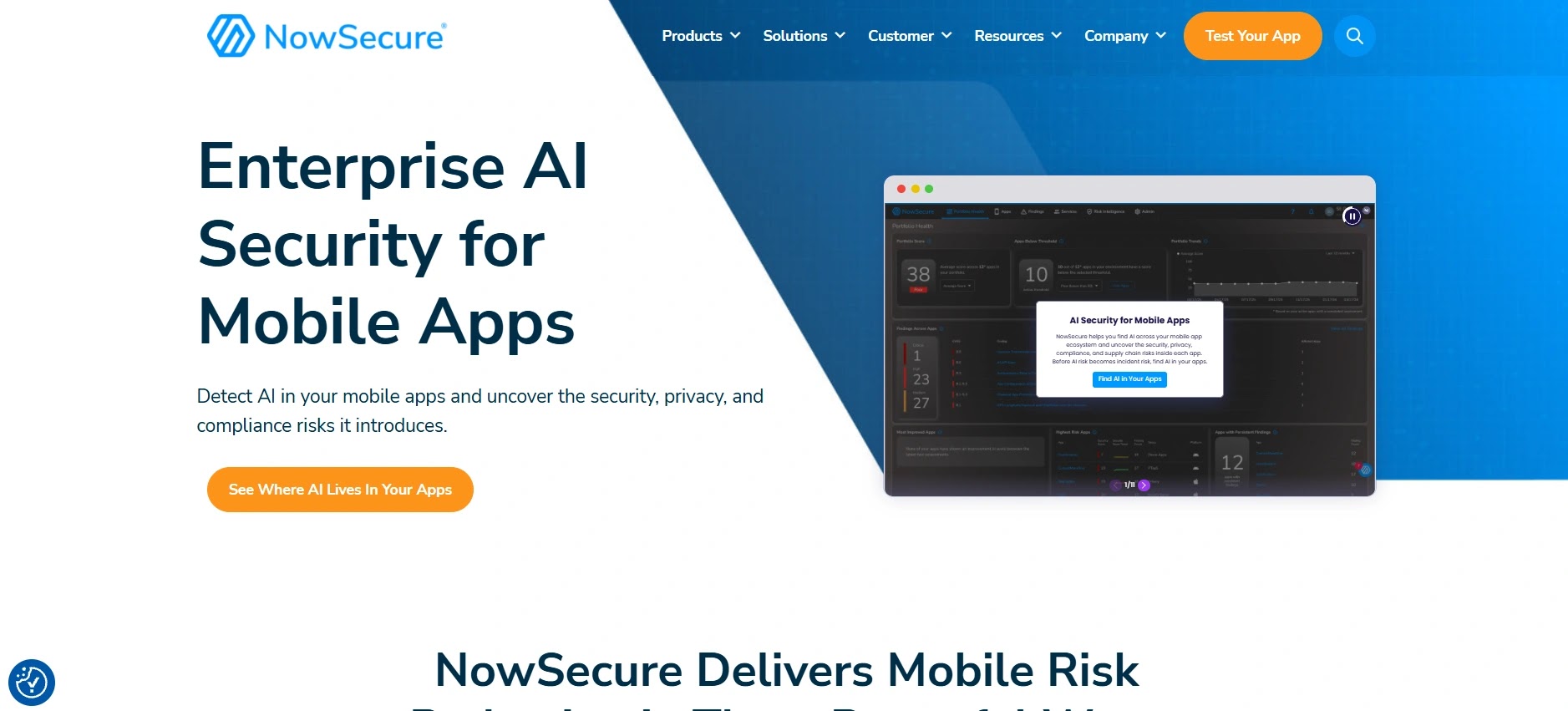
NowSecure offers an exceptional blend of static, dynamic, and behavioral testing, yielding highly precise risk assessments. Security engineers frequently commend its clear remediation pathways, which significantly decrease the time required to address critical vulnerabilities. We selected NowSecure for its remarkably comprehensive analysis that spans a wide array of mobile threats. Its automation capabilities facilitate rapid deployment, meeting the stringent demands of agile development teams.
Specifications:
- Deployment: Cloud-based and on-premises options.
- Coverage: Android and iOS mobile applications.
- Analysis Types: SAST, DAST, IAST, and API security testing.
- Compliance: Supports OWASP, NIAP, and GDPR reporting.
Reason to buy:
- Provides fully automated, continuous security testing specifically designed for mobile binaries.
- Eliminates false positives by leveraging real devices instead of mere emulators.
- Delivers exceptionally detailed developer remediation steps, pinpointing exact lines of vulnerable code.
Features:
- Automated binary analysis with deep dynamic testing conducted on actual iOS and Android devices.
- Integrates seamlessly with developer tools such as Jira, Jenkins, and GitHub.
- Incorporates threat intelligence to identify malicious behavioral patterns in real-time.
- Advanced API testing capabilities to prevent unauthorized data access and backend breaches.
Pros
- Utilizes real devices for dynamic testing, enhancing accuracy.
- Outstanding CI/CD integration for automated testing.
- Generates highly detailed and compliance-ready reports.
Cons
- Pricing may be prohibitive for smaller startups.
- The learning curve for configuring custom behavioral tests can be steep.
Try NowSecure: Explore the NowSecure Suite
2. Veracode Mobile Security
Why We Picked It:
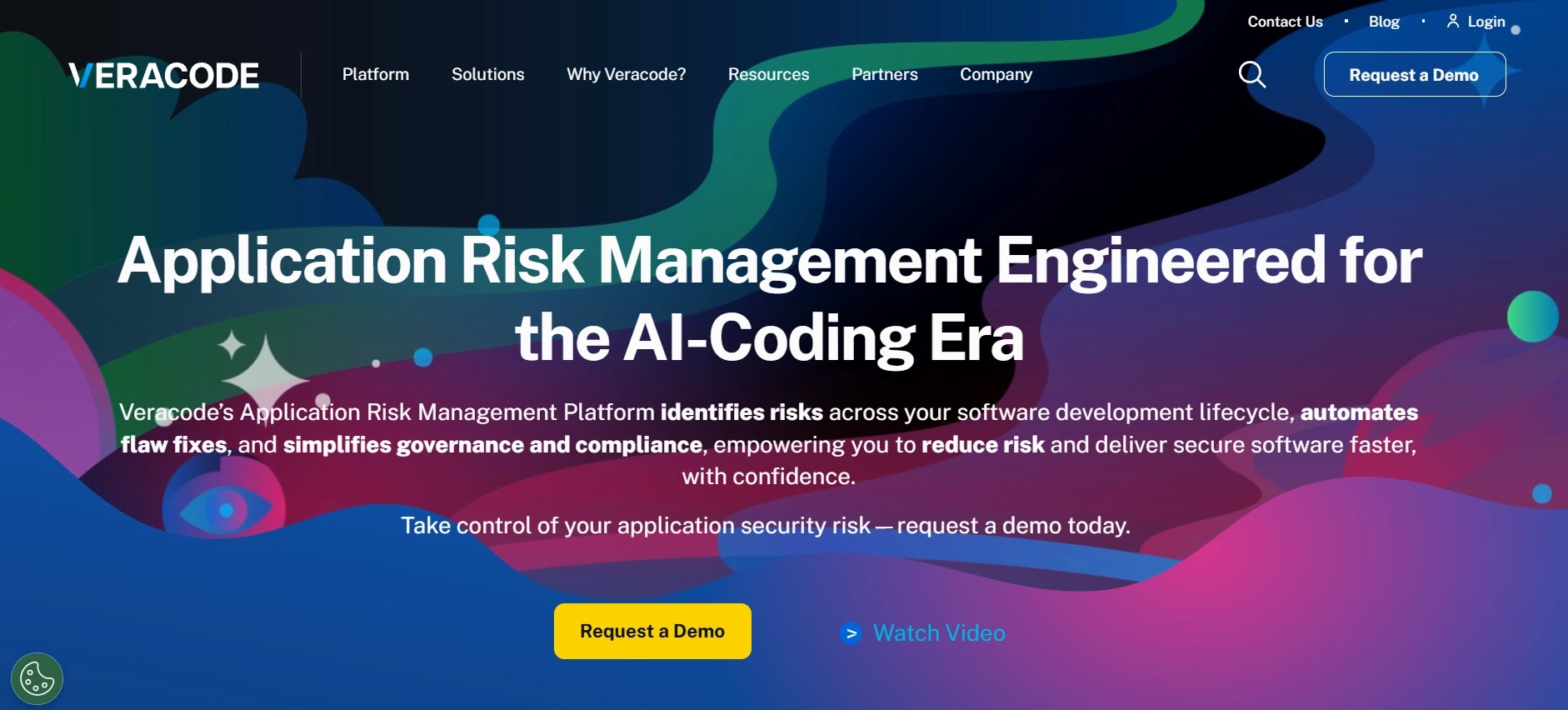
Veracode distinguishes itself through its holistic approach to application security, consolidating SAST, DAST, and SCA into a unified dashboard. It provides development teams with a continuous feedback loop that cultivates a robust security culture. The tool consistently adapts to the latest architectural shifts in mobile operating systems, ensuring its long-term relevance. We particularly valued its effortless integration with existing enterprise SOC tools, which streamlines the overall threat response process.
Specifications:
- Deployment: SaaS/Cloud-native.
- Coverage: Cross-platform mobile ecosystems.
- Analysis Types: SAST, DAST, SCA, and manual penetration testing.
- Integration: Broad IDE and repository support.
Reason to buy:
- Offers a unified platform for managing web, API, and mobile application security concurrently.
- Features exceptional vulnerability management capabilities to track risk over time.
- Supported by world-class security researchers providing on-demand mitigation advice.
Features:
- Pipeline-native scanning that delivers immediate feedback to developers during code writing.
- Software Composition Analysis (SCA) to pinpoint risks within third-party mobile SDKs and libraries.
- Automated remediation guidance that accelerates the resolution of identified flaws.
- Compliance reporting aligned with major regulatory standards.
Pros
- Comprehensive, single-pane-of-glass dashboard for all security testing.
- Strong support for identifying vulnerabilities in open-source dependencies.
- Excellent customer support and access to security experts.
Cons
- Scans on very large, monolithic applications can be somewhat slow.
- The sheer volume of features may be overwhelming for new users.
Try Veracode: Explore the Veracode Mobile Security Suite
3. AppKnox
Why We Picked It:
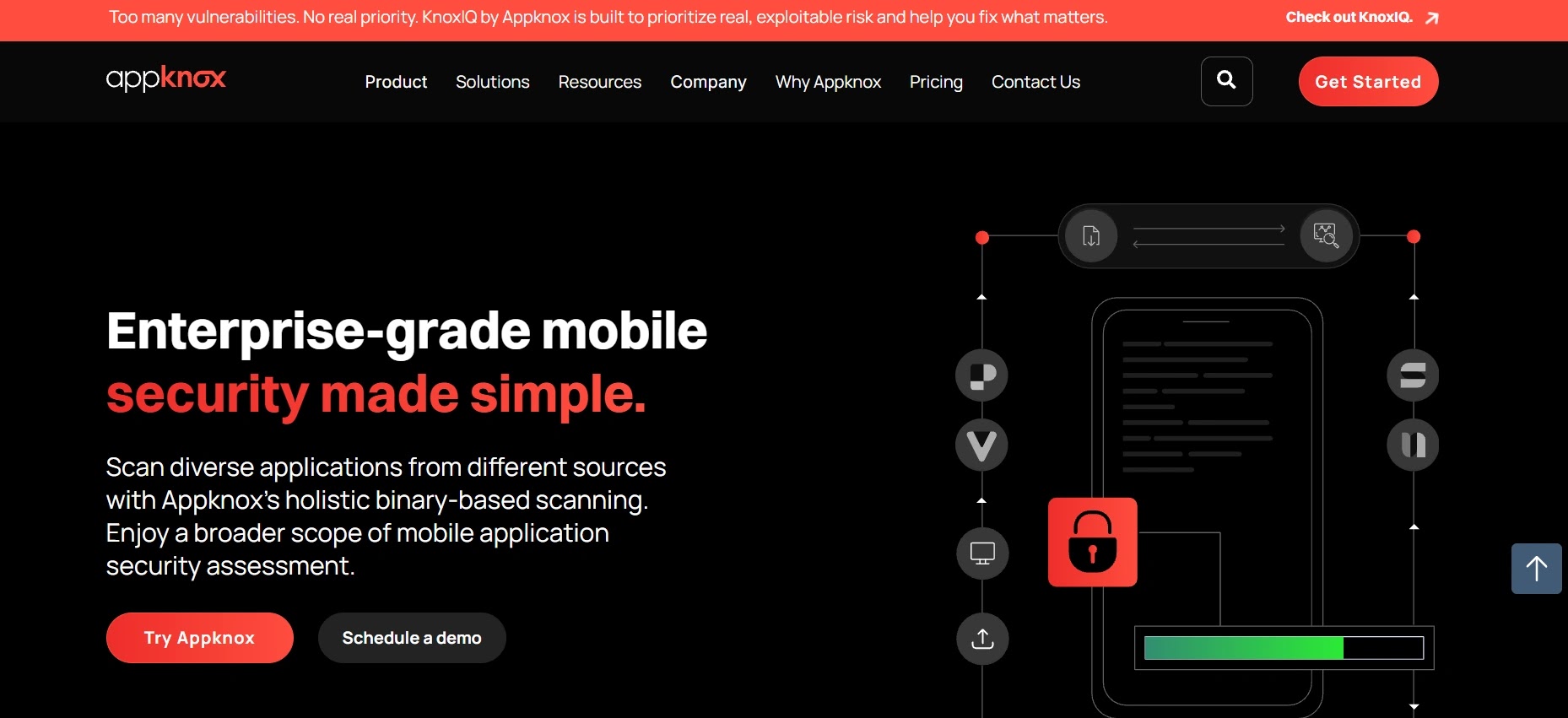
AppKnox secured its position on this list due to its highly intuitive interface, which simplifies complex security assessments. It acts as a force multiplier for leaner security teams needing to rapidly validate their mobile builds. The platform’s advanced API assessment capabilities bridge the gap between frontend mobile security and backend infrastructure defense. Its automated dynamic scanning accurately simulates modern attacker techniques, providing reliable and actionable intelligence.
Specifications:
- Deployment: Cloud-based SaaS.
- Coverage: iOS, Android, and backend APIs.
- Analysis Types: SAST, DAST, and API testing.
- Automation: High degree of automated scheduled scanning.
Reason to buy:
- A user-friendly “plug-and-play” system requiring minimal configuration to initiate.
- Extremely strong focus on API penetration testing, identifying weak backend links.
- Cost-effective solution compared to massive enterprise suites, offering significant ROI.
Features:
- One-click automated vulnerability assessments.
- In-depth dynamic testing that simulates real-world phishing attacks and data interception.
- Detailed executive and developer-centric PDF/CSV reporting.
- On-demand manual penetration testing services available via the platform.
Pros
- Very simple onboarding and easy-to-use interface.
- Excellent specialized API vulnerability detection.
- Affordable pricing structure for mid-market companies.
Cons
- Lacks some of the ultra-granular policy customizations found in larger suites.
- Manual testing requests can sometimes take a few days to schedule.
Try AppKnox: Explore the AppKnox Security Platform
4. Data Theorem Mobile Secure
Why We Picked It:
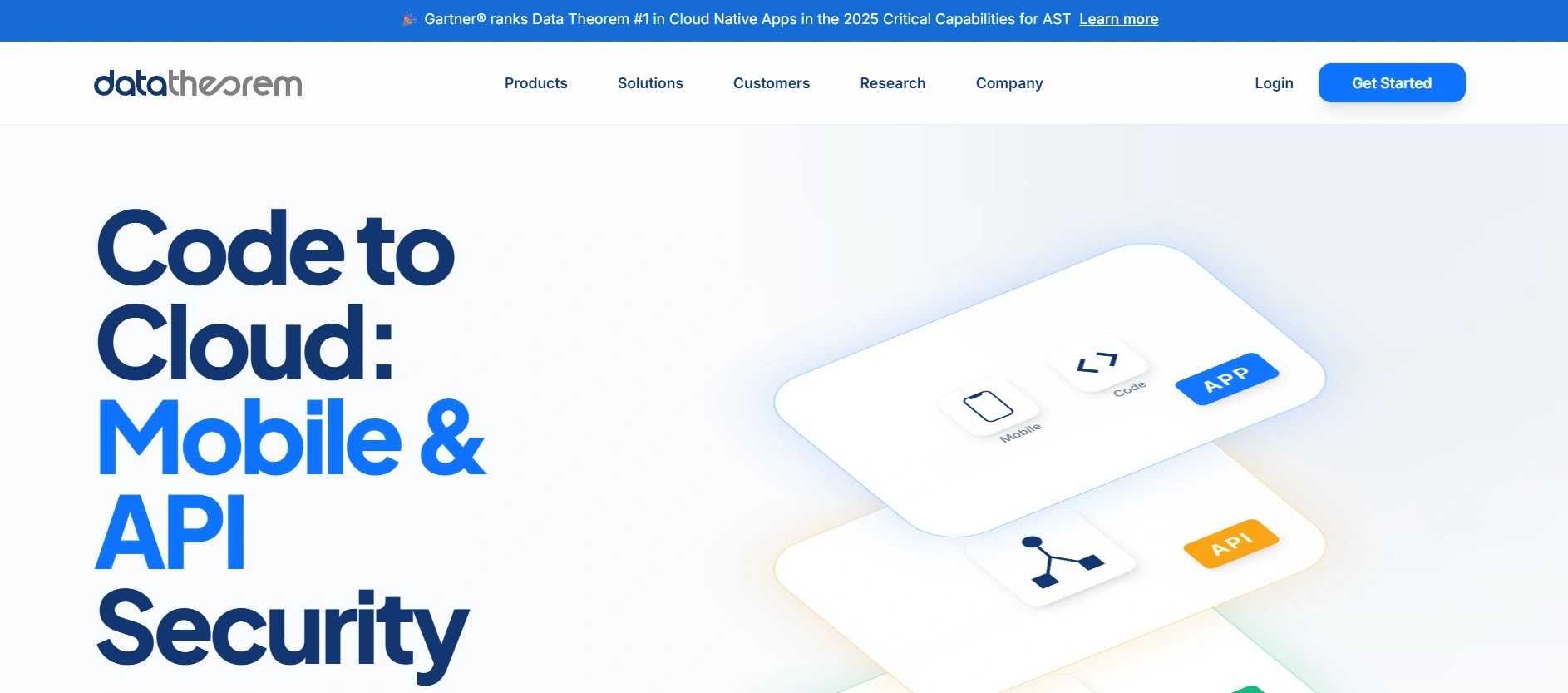
Data Theorem excels at securing the entire mobile ecosystem, extending beyond isolated application code. It automatically traces connections from the mobile client to the cloud, uncovering hidden backend vulnerabilities. Its capability to detect shadow APIs and unauthorized data flows makes it an indispensable tool for maintaining data privacy. The platform’s continuous app store monitoring ensures that no vulnerable application version silently reaches the public.
Specifications:
- Deployment: Cloud-native SaaS.
- Coverage: iOS and Android binaries.
- Analysis Types: Automated SAST, DAST, and Open Source Intelligence (OSINT).
- Compliance: Checks against Apple App Store and Google Play privacy requirements.
Reason to buy:
- Continuous discovery of mobile apps, including rogue or shadow applications linked to your brand.
- Automated workflows that validate Zero Trust Network Access implementations within mobile clients.
- Provides automated “Auto-Triage” to reduce alert fatigue for security analysts.
Features:
- Full-stack analysis covering the app, the API, and the cloud backend.
- Detection of insecure data storage, weak cryptography, and backend data leaks.
- Automated tracking of third-party SDK privacy compliance.
- Continuous monitoring of app store releases to catch unauthorized modifications.
Pros
- Unmatched visibility into the app-to-cloud connection path.
- Drastically reduces false positives using intelligent auto-triage.
- Excellent compliance checks for modern app store regulations.
Cons
- The dashboard interface feels somewhat cluttered due to the volume of data presented.
- Requires a solid understanding of cloud architecture to fully utilize.
Try Data Theorem: Explore the Data Theorem Mobile Secure Solution
5. Checkmarx One
Why We Picked It:
Checkmarx One is a formidable platform for analyzing mobile application source code to uncover hidden flaws. Its capacity to scan uncompiled code significantly shifts security left, identifying errors before the build phase. The platform provides exceptional value by correlating various vulnerability types into a single, coherent risk narrative. This contextual awareness prevents developers from expending effort on low-priority issues, directing their focus instead to genuine threats.
Specifications:
- Deployment: Cloud-native platform.
- Coverage: Multi-language, multi-platform mobile applications.
- Analysis Types: SAST, SCA, API Security, and Infrastructure as Code (IaC) scanning.
- Integration: Deep integration with major IDEs and source control managers.
Reason to buy:
- Globally recognized as one of the most powerful SAST tools available for custom code.
- Enables developers to scan uncompiled code directly from their IDEs.
- Correlates vulnerabilities across different scanning engines to prioritize the highest risks.
Features:
- Industry-leading static code analysis with extensive language support.
- Software Composition Analysis to detect risky open-source packages.
- API Security module that identifies shadow and zombie APIs used by mobile apps.
- “Fusion” technology that correlates SAST and SCA findings for enhanced context.
Pros
- Exceptional static analysis accuracy with low false positive rates.
- Seamless IDE integrations that developers find genuinely useful.
- Comprehensive coverage of both custom and open-source code.
Cons
- Dynamic analysis (DAST) capabilities are not its primary strength.
- Configuration and initial tuning can be complex and time-consuming.
Try Checkmarx: Explore the Checkmarx One Platform
6. Quokka Q-mast (formerly Kryptowire)

Why We Picked It:
Quokka Q-mast offers remarkable insight into application behavior without requiring access to the original source code. This makes it an ideal solution for auditing third-party applications where source code is unavailable. Its origins in federal security testing ensure exceptionally rigorous privacy and vulnerability checks. Organizations prioritizing strict data sovereignty and mobile privacy compliance will find this tool invaluable.
Specifications:
- Deployment: Cloud-based.
- Coverage: Android, iOS, and IoT mobile applications.
- Analysis Types: Automated SAST and DAST without requiring source code.
- Compliance: NIAP, OWASP, and strict federal standards.
Reason to buy:
- Offers military-grade security testing that meets rigorous federal compliance mandates.
- Can fully analyze compiled binaries without ever needing access to proprietary source code.
- Monitors applications for privacy violations and AI-powered mobile protection evasions.
Features:
- Automated binary analysis that uncovers hidden malware and privacy leaks.
- Continuous monitoring of mobile endpoints for suspicious behavioral anomalies.
- Detailed tracking of how third-party SDKs access device hardware (camera, microphone).
- Generates comprehensive, audit-ready compliance documentation instantly.
Pros
- Does not require source code to perform deep, accurate analysis.
- Stellar privacy and data leakage detection capabilities.
- Trusted by government agencies for high-level security audits.
Cons
- Can be overly strict, flagging minor issues that require manual dismissal.
- The user interface is functional but lacks modern aesthetic polish.
Try Quokka: Explore the Quokka Q-mast Solution
7. OpenText Fortify
Why We Picked It:
OpenText Fortify remains a leading force in the industry due to its unparalleled depth of analysis and proven reliability. Its sophisticated machine learning algorithms effectively minimize false positives, saving analysts countless hours. The platform’s flexibility allows large enterprises to tailor the security testing process to their unique architectural needs. It serves as a foundational pillar for any mature Security Operations Center engaged in custom application development.
Specifications:
- Deployment: On-premises, Cloud, or Hybrid.
- Coverage: iOS, Android, and cross-platform frameworks.
- Analysis Types: SAST, DAST, and SCA.
- Integration: Integrates easily into highly complex, custom DevOps toolchains.
Reason to buy:
- A mature, enterprise-grade application security solution with decades of industry refinement.
- Offers incredibly flexible deployment models to suit strict internal network security policies.
- Leverages machine learning to accurately filter out false positives during static analysis.
Features:
- Deep static code analysis supporting dozens of programming languages.
- Dynamic application security testing tailored specifically for mobile endpoints.
- Integrates smoothly with modern SIEM solutions for centralized event logging.
- Provides a centralized management server to govern enterprise-wide security policies.
Pros
- Highly mature and customizable scanning engines.
- Excellent false-positive reduction via machine learning algorithms.
- Flexible deployment options cater to strict data residency rules.
Cons
- The architecture is heavy and requires significant resources for on-premises maintenance.
- Licensing costs are tailored toward large enterprise budgets.
Try OpenText Fortify: Explore the Fortify AppSec Portfolio
8. Snyk Code
Why We Picked It:
Snyk fundamentally transforms the security testing paradigm by embedding it seamlessly into the daily tools developers already utilize. Its AI-driven engine delivers real-time feedback, ensuring that vulnerable code is corrected the moment it is written. We highly favored Snyk for its developer-first approach, which dismantles traditional silos between security and engineering teams. It makes securing mobile infrastructure straightforward, efficient, and remarkably collaborative.
Specifications:
- Deployment: Cloud-native/SaaS.
- Coverage: Mobile codebases, open-source libraries, and container infrastructure.
- Analysis Types: SAST, SCA, and Container security.
- Automation: Real-time scanning directly within the developer’s workflow.
Reason to buy:
- Built entirely with the developer in mind, fostering rapid adoption and frictionless security.
- Executes SAST scans in near real-time, matching the speed of agile development.
- Provides automated pull requests with precise code fixes for known vulnerabilities.
Features:
- AI-powered static analysis engine that learns from millions of global open-source commits.
- Deep IDE, Git repository, and CI/CD pipeline integration.
- Identifies risks related to bypassing charset validation and other injection flaws.
- Comprehensive tracking of open-source dependency health and license compliance.
Pros
- Incredibly fast scanning speeds ideal for continuous deployment.
- Developer-centric design drives high adoption rates.
- Automated fix suggestions streamline the remediation process.
Cons
- Focuses primarily on static analysis; lacks a native dynamic (DAST) testing module.
- Can struggle slightly with very obscure or legacy proprietary frameworks.
Try Snyk: Explore the Snyk Code Security Platform
9. MobSF (Mobile Security Framework)
Specifications:
- Deployment: Local installation, Docker, or self-hosted server.
- Coverage: Android, iOS, and Windows mobile applications.
- Analysis Types: SAST, DAST, and Malware Analysis.
- Cost: Free and Open-Source.
Reason to buy:
- The premier open-source tool for mobile application security testing and reverse engineering.
- Perfect for rapid assessments, bug bounty hunters, and budget-conscious security teams.
- Supports full-scale dynamic analysis using Android emulators and iOS simulators.
Features:
- Fully automated static and dynamic analysis for compiled mobile binaries.
- Built-in REST API allowing for custom integrations into various CI/CD pipelines.
- Web API testing suite that intercepts and analyzes mobile-to-server traffic.
- Can be deployed locally to maintain absolute control over sensitive application data.
Why We Picked It:
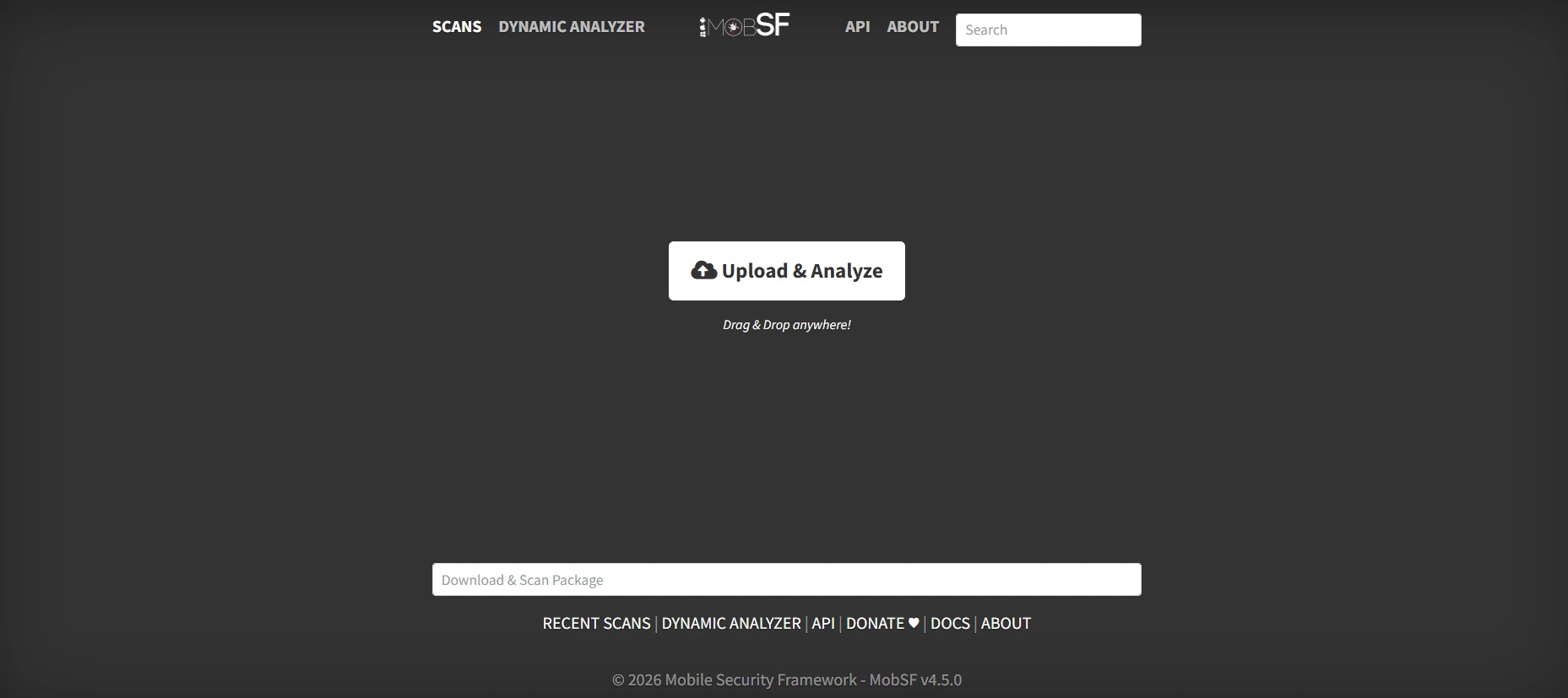
MobSF is the benchmark for open-source mobile security, offering capabilities that rival expensive commercial alternatives. It is a vital asset for independent researchers engaged in autonomous penetration testing and malware analysis. The framework is actively maintained by a dedicated community, ensuring it remains updated against the latest mobile attack vectors. Its flexibility to operate entirely offline guarantees that highly confidential binaries stay strictly within the corporate network.
Pros
- Completely free and open-source with a highly active community.
- Provides both static and dynamic analysis in a single, lightweight package.
- Excellent for reverse engineering and detailed malware analysis.
Cons
- Requires manual configuration and maintenance of testing environments (emulators).
- Lacks the enterprise-level compliance reporting found in commercial tools.
Try MobSF: Explore the Mobile Security Framework
10. Synopsys Polaris
Specifications:
- Deployment: Cloud-native SaaS platform.
- Coverage: Broad support across mobile, web, and cloud-native applications.
- Analysis Types: SAST, SCA, and integrated DAST workflows.
- Integration: Features deep DevOps security tools integration.
Reason to buy:
- Combines the powerful Coverity SAST and Black Duck SCA engines into a unified cloud interface.
- Scales effortlessly to support thousands of developers and massive enterprise application portfolios.
- Provides a highly centralized view of security posture across all mobile and cloud assets.
Features:
- High-fidelity static analysis powered by the industry-renowned Coverity engine.
- Comprehensive open-source risk management to detect supply chain vulnerabilities.
- Integrates deeply with SIEM automation and ticketing systems for optimized workflows.
- Actionable dashboard analytics that track remediation speed and overall risk trends.
Why We Picked It:
Synopsys Polaris unifies some of the most respected analysis engines in the cybersecurity industry under one robust cloud platform. It effortlessly manages the immense scale and complexity demanded by massive, globally distributed engineering teams. The platform excels at delivering deep, actionable insights into both proprietary code and third-party dependencies. It is an instrumental tool for organizations aiming to establish a highly mature, heavily automated application security program.
Pros
- Powered by industry-leading scanning engines (Coverity and Black Duck).
- Highly scalable architecture designed for massive enterprise deployments.
- Exceptional visibility into complex software supply chains.
Cons
- The initial setup and policy configuration can be quite complex.
- Premium pricing models cater exclusively to large-scale enterprise clients.
Try Synopsys Polaris: Explore the Polaris AppSec Platform
Conclusion
Securing mobile applications demands a proactive, multi-layered strategy that seamlessly integrates testing into the development pipeline. The tools highlighted in this guide represent the forefront of application security in 2026, offering capabilities ranging from deep binary reverse engineering to automated open-source risk management. Whether your organization requires the enterprise scalability of Synopsys, the developer-centric approach of Snyk, or the advanced anti-phishing simulations of AppKnox, selecting the appropriate MAST tool is the foundational step in fortifying your mobile ecosystem against future threats.
Disclaimer: HackersRadar reports on cybersecurity threats and incidents for informational and awareness purposes only. We do not engage in hacking activities, data exfiltration, or the hosting or distribution of stolen or leaked information. All content is based on publicly available sources.








No Comment! Be the first one.