




Parrot OS 7.3 Released With Security Updates, Optimized Packages
Key Takeaways Parrot Security has launched Parrot OS 7.3, focusing on performance enhancements and system optimizations for cybersecurity professionals. The update introduces optimized package builds...

Key Takeaways
- Parrot Security has launched Parrot OS 7.3, focusing on performance enhancements and system optimizations for cybersecurity professionals.
- The update introduces optimized package builds for modern CPU architectures (x86-64-v3 and ARMv8.2-A), potentially yielding 20-50% performance gains in compute-intensive tasks.
- A redesigned, Go-based application management system, featuring
parrot-execandlauncher-updater, now enables on-demand tool installation directly from the menu, reducing system bloat. - Key security tools like Metasploit, SQLMap, Bettercap, and Ghidra have been updated, alongside a new Linux kernel 7.0.9.
- Official Vagrant boxes are now available, simplifying the deployment of Parrot OS instances in various environments.
Parrot OS 7.3 Released with Significant Performance and Usability Upgrades
Parrot Security has announced the release of Parrot OS 7.3, an update that prioritizes system-level optimizations, refined security tools, and an overhauled application management experience. This iteration aims to boost performance and streamline workflows for cybersecurity practitioners.
Table Of Content
Arriving mere months after its predecessor, the 7.3 release shifts focus from expanding the existing toolset to enhancing the core system. Developers have concentrated on optimizing the distribution for contemporary hardware and more efficient operational processes.
Optimized Package Builds for Modern Architectures
A significant advancement in Parrot 7.3 is the introduction of optimized package builds tailored for newer CPU architectures. Historically, Debian-based distributions compile packages against the older x86-64 baseline to ensure broad compatibility. However, this approach limits the ability to leverage advanced features found in modern processors.
Parrot 7.3 addresses this by offering an optional repository that provides packages recompiled for x86-64-v3 and ARMv8.2-A architectures. These optimized builds unlock advanced instruction sets such as AVX2, FMA, and BMI2, leading to substantial performance improvements. Users can expect performance gains ranging from 20% to 50% in demanding tasks like encryption, hashing, compression, and media processing.
Crucially, the system incorporates hardware checks to prevent incompatible installations, thereby maintaining stability across all supported devices.
Redesigned Application Management
The release also features a completely new menu system, which has been rewritten in Go. This modernization replaces legacy shell-based components with lightweight binaries. At the heart of this redesign are parrot-exec and launcher-updater, components designed to simplify tool access and management.
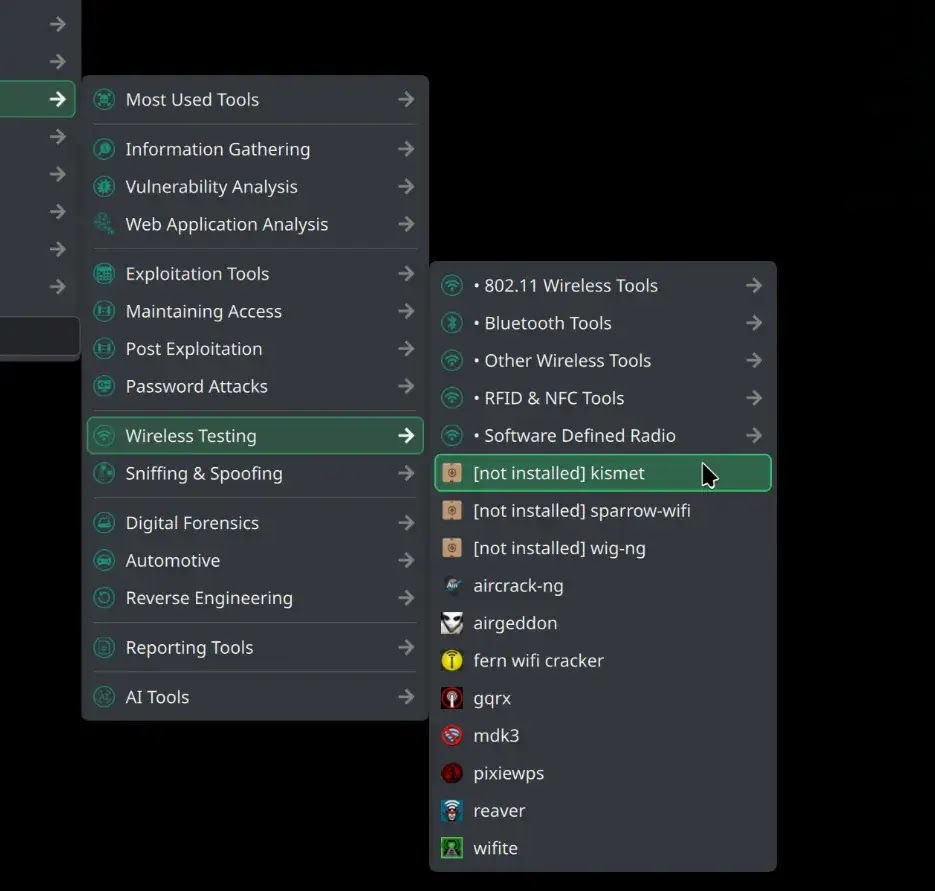
The new system allows users to install tools on demand directly from the application menu. When a user selects an uninstalled tool, the system automatically verifies its availability in the repository, initiates the package installation, and updates the launcher, all without requiring manual intervention. This method reduces system bloat while ensuring rapid access to a comprehensive suite of security tools. Parrot 7.3 further enhances reproducibility and deployment flexibility by introducing official Vagrant boxes for both Home and Security editions.
These pre-configured environments enable users to quickly provision Parrot instances with a single command, facilitating seamless integration into testing labs, collaborative environments, and CI/CD pipelines. This development aligns with the increasing adoption of Infrastructure as Code practices within the cybersecurity domain.
Privacy and Tooling Updates
Privacy enhancements are also part of the 7.3 update, alongside a newly designed Firefox start page built with Vite. This start page offers various search engine options and curated resources, all without collecting user data, reinforcing Parrot’s commitment to user privacy.
Regarding its core utilities, the distribution includes updated versions of widely utilized security tools, such as Metasploit 6.4.136, SQLMap 1.10.4, Bettercap 2.41.5, and Ghidra 12.0.4. The Linux kernel has also been updated to version 7.0.9. These updates are crucial for maintaining compatibility with the latest vulnerabilities and exploitation techniques, ensuring Parrot remains a relevant platform for penetration testing and threat research.
Internal improvements include a refactored parrot-updater that strengthens privilege escalation handling by directly invoking pkexec, reducing reliance on shell-based execution paths. Additional bug fixes address interface inconsistencies and improve the reliability of updates. Overall, Parrot OS 7.3 emphasizes performance optimization, modular tool access, and modern deployment capabilities, positioning it as a more efficient and adaptable platform for cybersecurity professionals operating in diverse environments.
What You Should Do
- Upgrade Immediately: Users of Parrot OS should update to version 7.3 to benefit from the latest security patches, performance improvements, and updated tools.
- Consider Optimized Builds: If your hardware supports x86-64-v3 or ARMv8.2-A architectures, enable the optional optimized package repository for significant performance gains.
- Utilize Vagrant Boxes: For testing, development, or automated deployments, leverage the new official Vagrant boxes to quickly provision Parrot OS instances.
- Review New Features: Familiarize yourself with the redesigned application management system for more efficient tool access and installation.
Disclaimer: HackersRadar reports on cybersecurity threats and incidents for informational and awareness purposes only. We do not engage in hacking activities, data exfiltration, or the hosting or distribution of stolen or leaked information. All content is based on publicly available sources.









No Comment! Be the first one.