




Go fsnotify Library Access Changes Spark Supply Chain Concerns
Key Takeaways A sudden, unexplained change in maintainer access for the popular Go library, fsnotify, triggered significant supply chain security concerns. The incident initially appeared to be a...

Key Takeaways
- A sudden, unexplained change in maintainer access for the popular Go library,
fsnotify, triggered significant supply chain security concerns. - The incident initially appeared to be a potential compromise due to unexpected access removals and unclear communication, prompting immediate scrutiny from the open-source community, including Kubernetes contributors.
- The situation was later clarified as a maintainer dispute over unreviewed code merges and an unauthorized change to the project’s funding file, rather than a malicious attack.
- No evidence of a supply chain compromise or malicious code was found; however, the event highlighted the fragility of trust in open-source dependencies and the need for clear governance.
Go fsnotify Library Access Changes Spark Supply Chain Concerns
A recent, abrupt alteration to maintainer access within the widely utilized Go library, fsnotify, ignited substantial alarm across the open-source community, raising critical questions about supply chain security. The unexpected changes led to immediate speculation regarding a potential compromise.
Table Of Content
The fsnotify library is a crucial component, offering cross-platform filesystem notification capabilities for applications operating across various environments, including Windows, Linux, macOS, BSD, and illumos. The sudden removal of contributors from its GitHub organization, without an immediate public explanation, left users uncertain whether these actions were routine administrative adjustments or indicative of a more severe security incident.
Widespread Impact and Initial Anxiety
The apprehension surrounding the incident was amplified by the library’s extensive adoption. GitHub data indicates that fsnotify boasts over 10,700 stars, 969 forks, and is a dependency for more than 321,000 projects. Its position deep within the software stack, underpinning developer tools, command-line interfaces, development servers, and infrastructure pipelines, meant that any uncertainty regarding who controlled its development pipeline could have rapid and far-reaching downstream effects.
Researchers at Socket.dev closely monitored the situation, noting that the sequence of events mirrored typical indicators of a supply chain compromise. These included a popular dependency, recent releases, altered maintainer access, a deleted public communication, and ambiguity surrounding control over the release process. While no malicious code was confirmed, the pattern was deeply troubling from an external perspective.
The Genesis of the Dispute
The incident came to public attention when Go developer Yasuhiro Matsumoto, known as “mattn,” posted on X (formerly Twitter). His now-deleted post, originally in Japanese, detailed his removal from the fsnotify GitHub organization and mentioned being criticized for independent contributions. He also incorrectly claimed that the project’s original author had been removed. This post, once translated and disseminated, prompted developers to scrutinize release histories and evaluate alternative forks.
Grafana Staff Developer Advocate Oshi Yamaguchi formally raised a GitHub issue, highlighting fsnotify‘s integration into significant open-source projects and the urgent need for clarity for downstream users. This public inquiry garnered considerable community engagement, pressing maintainer Martin Tournoij to provide an explanation.
Tournoij subsequently addressed the community directly in the GitHub thread, refuting the notion of a “takeover.” He clarified that the removed accounts possessed commit rights for legacy reasons but had not been actively involved as maintainers. He expressed concerns that recent merges had been executed too rapidly, lacked adequate review across all supported platforms, and threatened to undo years of meticulous code cleanup.
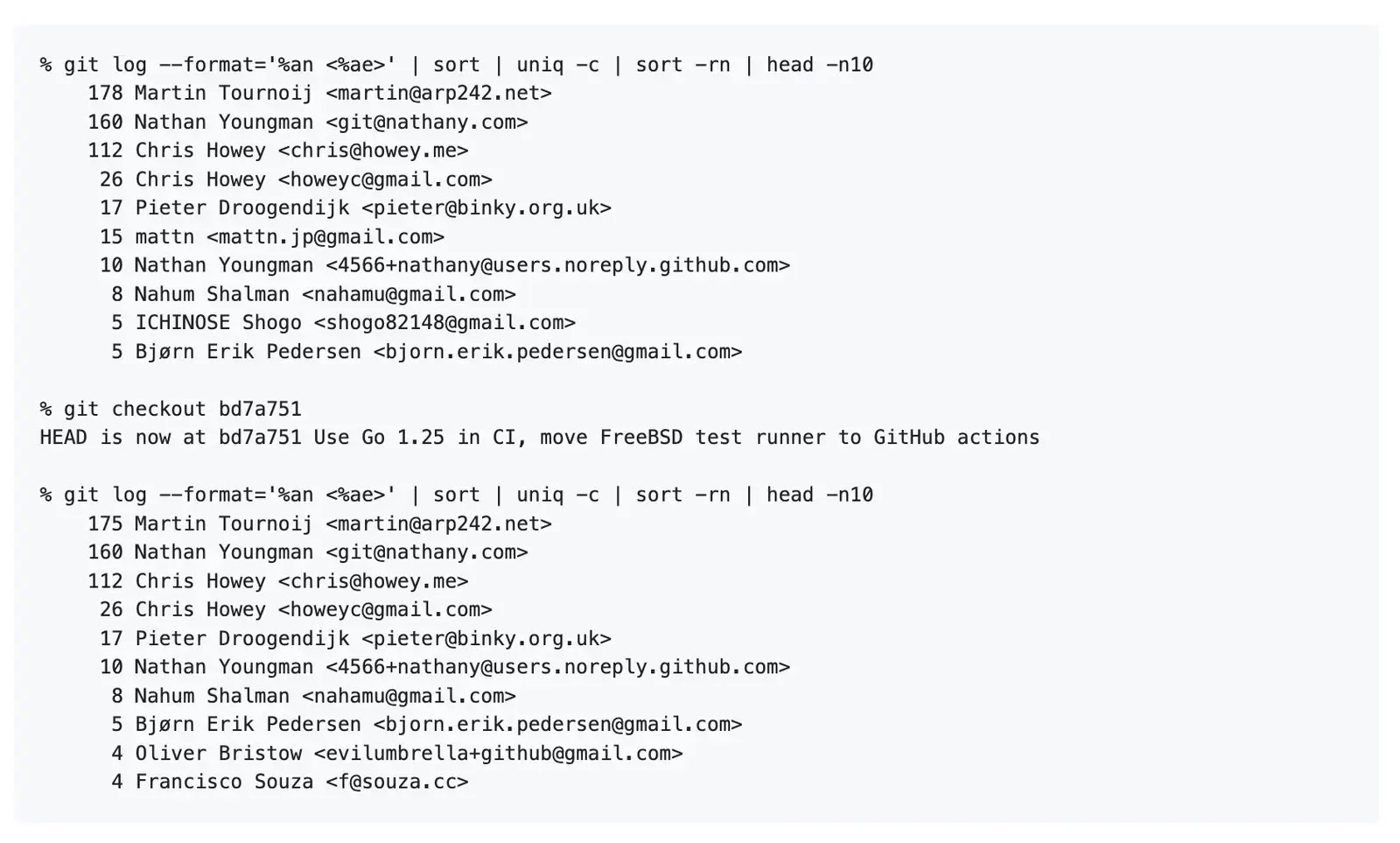
A key factor contributing to the access revocations was an unauthorized modification to the project’s funding file. Tournoij stated that Matsumoto had directly committed a sponsorship update to the main branch early in his involvement, without prior discussion. Matsumoto later acknowledged this funding file change as an error and apologized, also clarifying that his initial deleted post contained inaccuracies, specifically regarding the original author’s access status.
Supply Chain Fears and the Kubernetes Response
The ramifications of the maintainer dispute quickly extended to critical downstream projects. An issue titled “fsnotify/fsnotify: Healthy or not?” was opened on the Kubernetes GitHub, recommending close monitoring of the project and suggesting the evaluation of forks if stability was not restored. Kubernetes contributors also noted Matsumoto’s creation of a separate repository, gofsnotify/fsnotify, after his access was revoked, as another point of vigilance.
Sebastiaan van Stijn, a principal software engineer at Docker, articulated a core concern: libraries like fsnotify are often so deeply embedded that their presence is overlooked, and automated tools like Dependabot facilitate dependency updates with minimal scrutiny. His observation underscored the potential for a stealthy supply chain attack to propagate through a trusted, foundational library.
Socket.dev analysts emphasized that the initial indicators of a supply chain compromise and an internal maintainer dispute can appear strikingly similar. Both scenarios might involve unexpected releases, changes in access permissions, and contradictory public statements. The recent xz-utils backdoor incident serves as a stark reminder of the tangible threat, compelling developers to exercise heightened caution regarding unusual activity in core libraries.
What You Should Do
- Monitor Critical Dependencies: Implement robust monitoring for maintainer activity, commit histories, and release patterns in all critical open-source libraries.
- Verify Release Integrity: During periods of project governance uncertainty or disputes, thoroughly verify the integrity and authenticity of new releases before deployment.
- Evaluate Project Forks: If a project’s governance becomes unclear or contested, assess viable forks or alternative libraries that demonstrate stable maintenance and clear development practices.
- Implement Supply Chain Security Tools: Utilize software supply chain security tools that can detect unusual changes, unauthorized access, and potential tampering within your dependency tree.
- Maintain Communication Channels: Stay informed about official communications from project maintainers and engage with the broader community to gain clarity during ambiguous situations.
Disclaimer: HackersRadar reports on cybersecurity threats and incidents for informational and awareness purposes only. We do not engage in hacking activities, data exfiltration, or the hosting or distribution of stolen or leaked information. All content is based on publicly available sources.








No Comment! Be the first one.