




Best Wireless / Wi-Fi Security Solutions for 2026
Key Takeaways Cisco Meraki and HPE Aruba lead the 2026 rankings for enterprise Wi-Fi security solutions, both achieving a score of 8.9/10, though excelling in different areas. Cisco Meraki is...

Key Takeaways
- Cisco Meraki and HPE Aruba lead the 2026 rankings for enterprise Wi-Fi security solutions, both achieving a score of 8.9/10, though excelling in different areas.
- Cisco Meraki is recognized for its cloud-managed simplicity and robust policy enforcement, making advanced security accessible.
- HPE Aruba stands out for its deep enterprise-grade wireless security features and high-density performance, ideal for complex environments.
- Juniper Mist secures the third spot with an 8.8/10, leveraging AI for operational efficiency and user experience.
- The industry has largely adopted WPA3 as the default, shifted towards zero-trust architectures, and adapted to the unique security challenges presented by IoT devices.
Top Wireless Security Solutions for 2026 Revealed
In the evolving landscape of enterprise wireless networks, robust security solutions are paramount. Our 2026 evaluation of automatic Wi-Fi security platforms highlights leaders in cloud management, deep enterprise features, and AI-driven operations. These systems are crucial for protecting wireless networks through advanced encryption, strong authentication, and proactive threat detection, increasingly incorporating zero-trust principles at the connection point.
Table Of Content
- Key Takeaways
- Top Wireless Security Solutions for 2026 Revealed
- The 2026 Wi-Fi Security Scorecard
- Evaluation Methodology
- Key Shifts in Wireless Security
- The 10 Best Wi-Fi Security Solutions, Scored
- 1. Cisco Meraki — Score 8.9/10
- 2. HPE Aruba — Score 8.9/10
- 3. Juniper Mist — Score 8.8/10
- 4. Fortinet — Score 8.6/10
- 5. Nile — Score 8.2/10
- 6. Extreme Networks — Score 8.0/10
- 7. Arista — Score 7.9/10
- 8. CommScope (Ruckus) — Score 7.8/10
- 9. WatchGuard — Score 7.6/10
- 10. Ubiquiti — Score 6.9/10
- Head-to-Head: Comparisons Buyers Actually Make
- Meraki vs. Mist
- Aruba vs. Meraki
- Fortinet vs. Everyone Else
- How to Choose Secure Wireless
- Frequently Asked Questions
- What is the best Wi-Fi security solution in 2026?
- Is WPA3 actually more secure than WPA2?
- How do I detect rogue access points?
- Do I need NAC as well as secure Wi-Fi?
- How much do enterprise Wi-Fi security solutions cost?
- Is Ubiquiti secure enough for business use?
- Bottom Line
- What You Should Do
The 2026 Wi-Fi Security Scorecard
Each solution underwent an editorial assessment, scoring 1 to 10 across five weighted criteria, reflecting documented capabilities rather than lab benchmark results. The scores provide a comprehensive overview of each platform’s strengths in critical security areas.
| Rank | Solution | Security depth (30%) | Management (25%) | Zero-trust fit (20%) | Scale/perf (15%) | Value (10%) | Total |
| 1 | Cisco Meraki | 9 | 10 | 9 | 8 | 7 | 8.9 |
| 2 | HPE Aruba | 10 | 8 | 9 | 9 | 7 | 8.9 |
| 3 | Juniper Mist | 9 | 10 | 8 | 9 | 7 | 8.8 |
| 4 | Fortinet | 9 | 8 | 9 | 8 | 9 | 8.6 |
| 5 | Extreme Networks | 8 | 8 | 8 | 8 | 8 | 8.0 |
| 6 | Arista | 8 | 8 | 7 | 9 | 7 | 7.9 |
| 7 | CommScope (Ruckus) | 8 | 7 | 7 | 9 | 8 | 7.8 |
| 8 | Nile | 8 | 9 | 10 | 7 | 6 | 8.2 |
| 9 | WatchGuard | 8 | 8 | 7 | 6 | 9 | 7.6 |
| 10 | Ubiquiti | 6 | 8 | 5 | 7 | 10 | 6.9 |
Weighted averages are rounded to one decimal place.
Evaluation Methodology
Our assessment prioritizes real-world security impact, focusing on a structured, research-based evaluation rather than comparative lab testing. The criteria and their weights are as follows:
- Security depth (30%): Evaluates support for WPA3, 802.1X/RADIUS integration, wireless intrusion prevention systems (WIPS), rogue AP detection and containment, client isolation, and integrated threat inspection.
- Management (25%): Considers cloud vs. controller architectures, multi-site operations, policy consistency, and troubleshooting capabilities, recognizing that misconfiguration is a leading cause of wireless breaches.
- Zero-trust fit (20%): Assesses identity-based segmentation, network access control integration, per-user/per-device policy enforcement, and IoT device handling.
- Scale and performance (15%): Covers Wi-Fi 6E/7 support, performance in high-density environments, and roaming reliability.
- Value (10%): Examines total cost of ownership, including licensing, with preference for transparent pricing models.
Pricing information is included only where publicly available; otherwise, it is flagged for verification.
Key Shifts in Wireless Security
Several significant changes have reshaped wireless security:
- WPA3 as the Standard: WPA3 has become the default, mandated by Wi-Fi 6E and Wi-Fi 7 certifications. Its Simultaneous Authentication of Equals (SAE) handshake effectively mitigates offline dictionary attacks, a common vulnerability in WPA2-Personal. Enterprise Wi-Fi 7 deployments should prioritize WPA3, with transition modes reserved for legacy client compatibility.
- Zero Trust Integration: The focus has shifted from mere Wi-Fi encryption to granular control over what devices can access post-connection. This emphasizes zero-trust principles, reflected in the 20% weighting for “zero-trust fit” and the growing importance of NAC integration.
- IoT Challenges: The proliferation of IoT devices, such as cameras and sensors, complicates traditional wireless security models as they often lack 802.1X supplicant or certificate capabilities. Effective IoT handling is now a critical differentiator, especially in sectors like healthcare, manufacturing, and retail.
The 10 Best Wi-Fi Security Solutions, Scored
1. Cisco Meraki — Score 8.9/10

Why it scores here: Cisco Meraki achieved top marks for its management capabilities, simplifying enterprise-grade wireless security for organizations without dedicated RF specialists. Its cloud-managed dashboard centralizes AP, policy, and site management, with security features enabled by default.
Strengths: Exceptional cloud management for distributed environments, integrated Layer 7 firewall and traffic shaping at the AP, Air Marshal WIPS for rogue detection and containment, adaptive policy, and Umbrella integration for DNS-layer protection.
Trade-offs: Mandatory licensing means hardware ceases to function without it, a significant operational and budgetary consideration. It offers less granular RF tuning compared to controller-based platforms, and per-AP costs can accumulate at scale.
Ideal buyer: Multi-site organizations, retail, and mid-market enterprises lacking dedicated wireless engineers.
Verify before buying: Current licensing tiers and renewal terms. [VERIFY: Meraki license pricing]
2. HPE Aruba — Score 8.9/10

Why it scores here: HPE Aruba earned top scores for its security depth, establishing itself as an enterprise benchmark. Its integration with ClearPass Policy Manager and dynamic segmentation enforces role-based policies from the AP throughout the network.
Strengths: Comprehensive enterprise wireless security features, dynamic segmentation linking identity to network policy, robust WIPS/WIDS, excellent high-density performance, and strong guest/BYOD onboarding capabilities.
Trade-offs: More complex to manage than Meraki. ClearPass and other modules introduce additional licensing costs. Following the acquisition of Juniper Networks (completed July 2025), customers should inquire about HPE’s long-term roadmap for Aruba and Mist coexistence.
Ideal buyer: Large enterprises, universities, hospitals, and stadiums requiring extensive security and high-density support.
Verify before buying: HPE’s roadmap for Aruba and Mist coexistence following the Juniper acquisition.
3. Juniper Mist — Score 8.8/10

Why it scores here: Juniper Mist rivals Meraki in management prowess, augmented by superior AI capabilities. Its Marvis virtual network assistant leverages AI for streamlined troubleshooting and proactive zero-trust adoption, often resolving issues before users report them.
Strengths: AI-driven operations significantly reduce troubleshooting time, provides excellent user-experience visibility, strong cloud architecture, API-first design, and continued investment as part of HPE Juniper Networking.
Trade-offs: Subscription-based model with multiple tiers. Deeper security features often require integration with Juniper’s broader security portfolio. The post-acquisition portfolio overlap with Aruba warrants discussion with sales representatives.
Ideal buyer: Enterprises prioritizing operational efficiency and user experience alongside security.
Verify before buying: Current Mist subscription tiers and post-acquisition packaging.
4. Fortinet — Score 8.6/10

Why it scores here: Fortinet offers the strongest value among security-focused platforms. Its FortiAP access points are managed directly by FortiGate firewalls, allowing wireless traffic to benefit from full NGFW security services (IPS, antivirus, web filtering, application control) without additional hardware.
Strengths: Security-first architecture with the firewall acting as the wireless controller, integrated model eliminates separate wireless licensing, Security Fabric unifies wireless with NAC, switching, and endpoint response, and excellent price-performance.
Trade-offs: RF feature depth may not match Aruba/Mist in highly demanding high-density environments. Its value is maximized within an existing Fortinet ecosystem. Fortinet’s history of exploited vulnerabilities, including a FortiCloud authentication bypass (CVE-2022-41331) added to CISA’s KEV catalog in January 2026, underscores the necessity of prompt patching.
Ideal buyer: Organizations already utilizing FortiGate firewalls seeking secure wireless without adopting new platforms.
Verify before buying: Ensure your FortiGate model supports the required AP count.
5. Nile — Score 8.2/10
Why it scores here: Nile achieved the highest zero-trust score due to its network-as-a-service (NaaS) model, which inherently incorporates zero trust into its architecture, presenting an innovative option among modern network security providers.
Strengths: Truly zero-trust-by-default wireless, isolating devices until policy permits access. The NaaS model eliminates hardware refresh and configuration burdens. Strong choice for organizations building campus networks from the ground up.
Trade-offs: A newer vendor with a smaller reference base compared to established competitors. The NaaS model represents a commercial commitment rather than a product purchase. Less suitable for organizations aiming to retain existing hardware.
Ideal buyer: Enterprises modernizing campus networks that desire built-in zero trust without complex design efforts.
Verify before buying: Service coverage in your desired geographies and contract structure. [VERIFY: current NaaS terms]
6. Extreme Networks — Score 8.0/10

Why it scores here: Extreme Networks provides a robust, well-rounded solution with solid value. Its ExtremeCloud IQ platform offers strong role-based policy management, integrating wireless access with granular network microsegmentation.
Strengths: Flexible management options (cloud, on-prem, or hybrid), strong fabric-attached policy ensuring consistent user policy across the campus, a notable presence in education and healthcare sectors, and competitive licensing.
Trade-offs: Smaller ecosystem and integration library compared to Cisco/HPE. Security depth may not match the top three in highly specialized deployments.
Ideal buyer: Educational institutions, healthcare facilities, and campus environments seeking deployment model flexibility.
Verify before buying: Licensing tiers for essential features.
7. Arista — Score 7.9/10
Why it scores here: Arista excels in scale and performance, boasting a distinct WIPS heritage from its Mojo Networks acquisition. It offers seamless integration with its networking solutions and top cloud firewall products.
Strengths: Strong WIPS with minimal false positives, advanced cognitive Wi-Fi analytics, excellent performance engineering reflecting Arista’s networking expertise, and seamless integration with Arista switching and NDR.
Trade-offs: Smaller wireless market share and channel presence compared to industry leaders. Its enterprise wireless portfolio is newer than its established data center business.
Ideal buyer: Enterprises already utilizing Arista networks and organizations prioritizing precise rogue AP detection.
Verify before buying: Current AP lineup and Wi-Fi 7 availability.
8. CommScope (Ruckus) — Score 7.8/10

Why it scores here: CommScope’s Ruckus solutions offer exceptional RF performance in challenging environments, though its management modernity trails some competitors. Its BeamFlex adaptive antenna technology provides a significant engineering advantage in high-density and interference-prone venues, while Dynamic PSK simplifies secure guest access.
Strengths: Outstanding RF performance in stadiums, hospitality, and dense multi-dwelling units. Dynamic PSK streamlines secure onboarding without full 802.1X. Strong analytics are available via RUCKUS One.
Trade-offs: Management experience is not as intuitive as Meraki or Mist. Given CommScope’s recent portfolio restructuring, verifying the current corporate structure and product roadmap is advised. [VERIFY: current Ruckus ownership/business unit status]
Ideal buyer: Hospitality, stadiums, multi-dwelling units, and environments with challenging RF conditions.
Verify before buying: Current ownership status and long-term roadmap commitments.
9. WatchGuard — Score 7.6/10
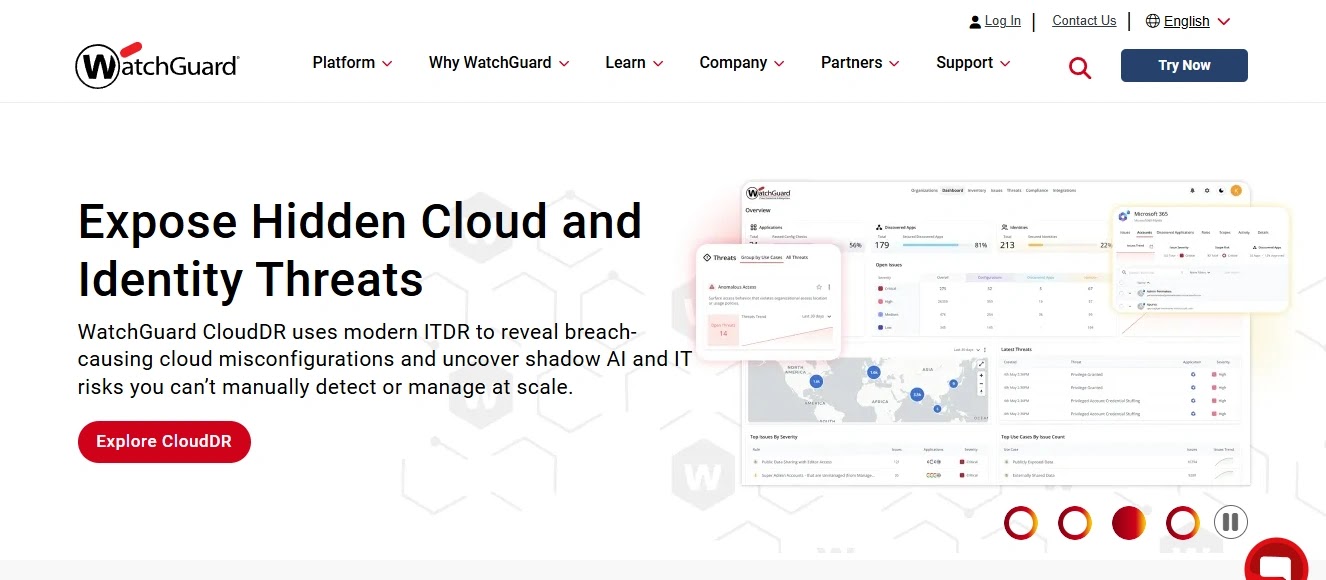
Why it scores here: WatchGuard offers strong value and is well-suited for SMBs. Its access points integrate with Firebox appliances, though administrators must ensure recent WatchGuard agent security updates are applied across endpoints to prevent privilege escalation.
Strengths: Effective WIPS for its price tier, unified management with WatchGuard Firebox and endpoint products, MSP-friendly multi-tenancy, and straightforward licensing.
Trade-offs: Not designed for large-enterprise scale or extreme density. Features a smaller AP portfolio and less RF sophistication compared to specialist vendors.
Ideal buyer: Small and mid-sized businesses, and the Managed Service Providers (MSPs) that serve them.
Verify before buying: Current AP lineup and Wi-Fi 6E/7 model availability. [VERIFY: current wireless portfolio]
10. Ubiquiti — Score 6.9/10
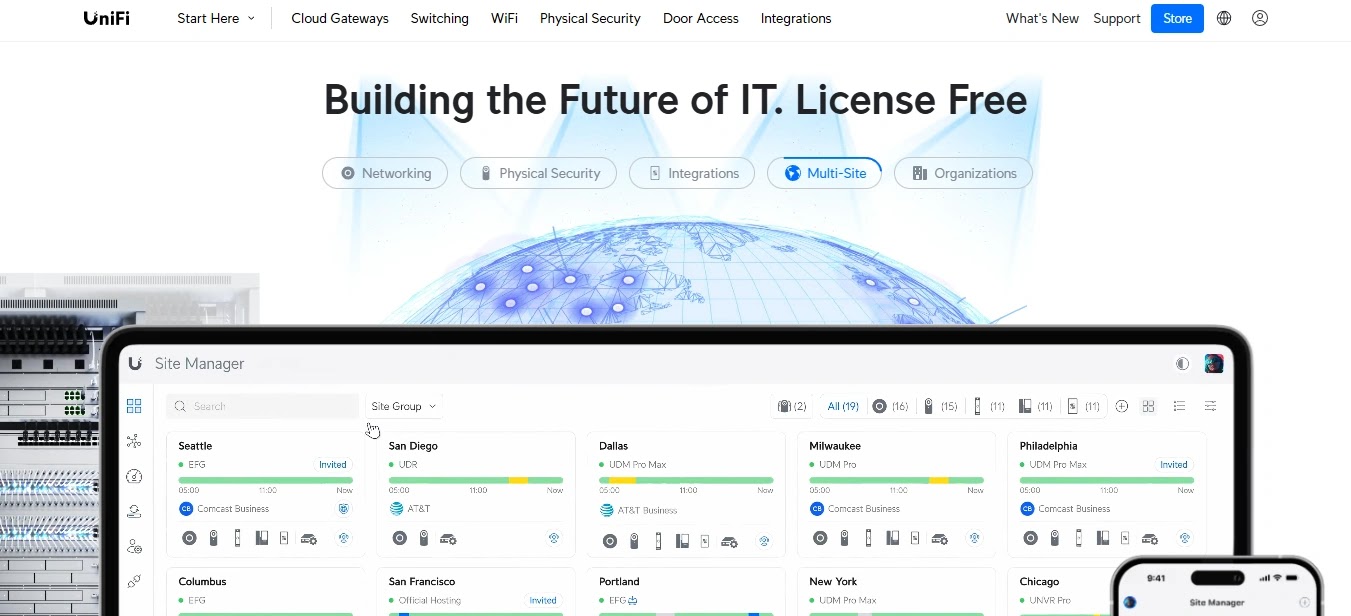
Why it scores here: Ubiquiti offers unmatched value but with a more limited security depth. UniFi delivers capable wireless at a fraction of enterprise costs, though administrators must actively patch known Ubiquiti UniFi OS vulnerabilities to prevent remote exploitation.
Strengths: Exceptional price-performance, excellent UniFi controller experience for the cost, strong community support, and robust hardware for small deployments.
Trade-offs: Limited advanced security features. Its support model relies on community and RMA rather than enterprise SLAs. Not suitable where compliance mandates documented WIPS, formal vendor support, or advanced policy enforcement.
Ideal buyer: Small businesses, branch offices, and budget-constrained deployments with modest compliance requirements.
Verify before buying: Whether your compliance obligations necessitate capabilities that UniFi does not offer.
Head-to-Head: Comparisons Buyers Actually Make
Meraki vs. Mist
Both Meraki and Mist are cloud-first platforms known for operational excellence. Meraki excels in the breadth of its ecosystem and simplicity, while Mist leads with AI-driven troubleshooting and API depth. Choose Meraki for a unified dashboard and minimal tuning, or Mist if wireless user-experience analytics are critical and you have engineers to leverage them.
Aruba vs. Meraki
Aruba surpasses Meraki in security depth, RF control, and high-density performance. Meraki, conversely, offers superior operational simplicity and multi-site management. Universities, hospitals, and large venues typically opt for Aruba, while distributed retail and mid-market enterprises often prefer Meraki.
Fortinet vs. Everyone Else
For organizations already using FortiGate firewalls, integrated FortiAP wireless presents a significantly more cost-effective solution, enabling full firewall inspection of wireless traffic. The trade-off is RF sophistication. This compromise is generally acceptable for most mid-market environments but would be inadequate for a 20,000-seat arena.
How to Choose Secure Wireless
Selecting the right wireless security solution requires a strategic approach, focusing on specific organizational needs and operational capabilities.
- Assess Your IoT Landscape: Begin by identifying the number of connected devices that cannot support 802.1X. This will dictate whether you need features like Dynamic PSK, MAC authentication with profiling, or a dedicated NAC platform, quickly narrowing down your options.
- Prioritize Management Model: Determine your preferred management model (cloud-managed like Meraki, Mist, or Nile vs. controller-based like Aruba, Extreme) before selecting a vendor. This decision hinges on your team’s expertise and your multi-site infrastructure, influencing all subsequent choices.
- Mandate WPA3 and Plan Transition: Enterprise deployments should target WPA3-Enterprise with 802.1X. Use transition mode only when legacy clients necessitate it, and establish a clear timeline for its removal. Relying on WPA2-Personal with a shared password is no longer a defensible security posture in 2026.
- Stress Test Roaming and Authentication: Many “security” incidents on wireless networks stem from authentication failures, which drive users to less secure alternatives such as guest networks, personal hotspots, or rogue APs. Ensure robust roaming and authentication under load, as reliability is a critical security control.
- Avoid Common Pitfalls: Do not overlook guest network security, leave WPS enabled, neglect continuous rogue AP detection, or purchase wireless solutions independently of network access control, as this can lead to inconsistent device policies.
Frequently Asked Questions
What is the best Wi-Fi security solution in 2026?
Cisco Meraki and HPE Aruba are tied at the top of our rankings, both scoring 8.9/10. Meraki excels in cloud-managed simplicity for distributed sites, while Aruba leads in enterprise security depth and high-density performance. Juniper Mist closely follows with an 8.8/10, distinguished by its AI-driven operations, and Fortinet offers the best value for organizations already using FortiGate estates.
Is WPA3 actually more secure than WPA2?
Yes, WPA3 provides meaningful security enhancements over WPA2. It replaces WPA2’s pre-shared key handshake with Simultaneous Authentication of Equals (SAE), which effectively prevents offline dictionary attacks—the primary method behind most WPA2-Personal compromises. WPA3 also introduces forward secrecy and stronger encryption for open networks through Enhanced Open.
How do I detect rogue access points?
Rogue access points can be detected using a wireless intrusion prevention system (WIPS), a feature integrated into most enterprise platforms. Examples include Cisco Meraki’s Air Marshal, Aruba’s WIPS, and Arista’s Mojo-derived engine, which are among the most effective. WIPS continuously scans for unauthorized APs, evil twins, and spoofed SSIDs, and can automatically contain them.
Do I need NAC as well as secure Wi-Fi?
If your organization has a significant number of IoT devices, contractors, or BYOD users, then Network Access Control (NAC) is highly recommended in addition to secure Wi-Fi. While wireless security authenticates the connection, NAC determines what each device is authorized to access post-connection and can quarantine non-compliant devices. Many platforms offer basic access control, but dedicated NAC solutions provide more extensive profiling and policy enforcement.
How much do enterprise Wi-Fi security solutions cost?
Most enterprise wireless solutions are priced per access point, typically involving a few hundred dollars per AP for hardware, plus annual per-AP licensing fees. Cloud-managed platforms often feature mandatory licensing, meaning hardware will cease to function without an active license. Ubiquiti offers a significantly lower cost but provides fewer advanced security features.
Is Ubiquiti secure enough for business use?
For small businesses with minimal compliance requirements, UniFi offers solid foundational security features like WPA3, VLAN segmentation, and guest isolation at an exceptional value. However, it lacks enterprise-grade WIPS, formal support SLAs, and advanced policy enforcement, making it less suitable for regulated environments or larger organizations that require a more robust enterprise platform.
Bottom Line
Cisco Meraki and HPE Aruba lead our 2026 evaluation, distinguished by their focus on operational simplicity and security depth, respectively. Juniper Mist stands out for its AI-driven operations, while Fortinet offers the most compelling economics for organizations already invested in FortiGate. Nile presents an attractive option for those rebuilding campus networks with a zero-trust-by-design approach. Regardless of your choice, ensure you deploy WPA3-Enterprise, maintain continuous WIPS monitoring, and integrate wireless with device-level access control. The wireless access point is merely the initial checkpoint in a comprehensive security strategy.
What You Should Do
- Implement WPA3-Enterprise with 802.1X across your wireless networks, transitioning from WPA2-Personal.
- Deploy and continuously monitor a Wireless Intrusion Prevention System (WIPS) to detect and contain rogue access points, evil twins, and spoofed SSIDs.
- Integrate Network Access Control (NAC) with your wireless solution to enforce granular, identity-based policies for all connected devices, especially for IoT, BYOD, and contractor populations.
- Regularly apply security updates and patches to all wireless infrastructure components to mitigate known vulnerabilities, such as those impacting Fortinet and Ubiquiti UniFi OS.
- Conduct thorough testing of roaming and authentication under load to ensure network reliability, as authentication failures can lead users to less secure alternatives.
- Review and secure guest network configurations, disable WPS, and establish clear policies for IoT device onboarding and segmentation.
Disclaimer: HackersRadar reports on cybersecurity threats and incidents for informational and awareness purposes only. We do not engage in hacking activities, data exfiltration, or the hosting or distribution of stolen or leaked information. All content is based on publicly available sources.








No Comment! Be the first one.