




Best Microsoft Azure Security Tools for 2026
Key Takeaways Microsoft Defender for Cloud remains the essential baseline for Azure security, offering a free foundational tier with transparent per-resource pricing for advanced features....

Key Takeaways
- Microsoft Defender for Cloud remains the essential baseline for Azure security, offering a free foundational tier with transparent per-resource pricing for advanced features.
- Third-party CNAPPs like Wiz and Orca excel in agentless attack-path correlation, transforming numerous security findings into prioritized, actionable remediation plans.
- The tight integration of Azure identity (Entra ID) and infrastructure presents both a significant operational advantage and the most critical attack surface, emphasizing the need for robust identity security tools.
- Enterprises with multi-cloud environments or existing security ecosystems can leverage platforms like Palo Alto Prisma Cloud for broad coverage or CrowdStrike for unified endpoint and cloud runtime protection.
- When selecting tools, prioritize solutions that offer deep Entra/CIEM capabilities, provide clear pricing models, and effectively consolidate findings with existing vulnerability management or SIEM programs.
Securing Azure in 2026: A Definitive Guide to Top Tools
As organizations continue to expand their footprint in Microsoft Azure, the complexity of securing these dynamic environments grows exponentially. The inherent coupling of identity services like Entra ID (formerly Azure Active Directory) with core infrastructure, while offering operational benefits, simultaneously introduces critical risk. A single misconfigured storage account or an overly permissive service principal can cascade into a tenant-wide credential exposure or a significant Azure Active Directory vulnerability.
Table Of Content
- Key Takeaways
- Securing Azure in 2026: A Definitive Guide to Top Tools
- Table of Contents
- Decision Matrix
- The 10 Tools in Depth
- 1. Microsoft Defender for Cloud
- 2. Wiz
- 3. Palo Alto (Prisma Cloud)
- 4. CrowdStrike (Falcon Cloud Security)
- 5. Tenable (Cloud Security)
- 6. Orca Security
- 7. Trend Micro (Cloud One / Vision One)
- 8. Check Point (CloudGuard)
- 9. Rapid7 (InsightCloudSec)
- 10. Qualys (TotalCloud)
Effective protection of Azure estates necessitates a comprehensive strategy that spans cloud infrastructure and workloads across all subscriptions, resource groups, and management planes. For 2026, the consensus among cybersecurity experts is clear: Microsoft Defender for Cloud provides the foundational security posture. Its tiered approach, ranging from a free basic offering to paid, published per-resource plans, establishes a rational baseline for any Azure deployment. Beyond this native capability, third-party platforms are carving out their niche by offering superior correlation depth, multi-cloud parity, and the ability to integrate Azure-specific findings into broader security programs.
This report delves into the ten leading Azure security tools, providing an in-depth analysis of each platform’s capabilities, distinguishing features, ideal use cases, and an honest assessment of their strengths and weaknesses. Our editorial evaluation focuses on functionality and suitability, with pricing considerations framed by their respective models.
Table of Contents
Decision Matrix
Organizations navigating the complex landscape of Azure security tools can utilize the following decision matrix to narrow down their options based on specific needs:
| If you need… | Shortlist | Why |
| The native floor (free→paid) | Defender for Cloud | Free tier + published plans |
| Attack-path correlation | Wiz, Orca | Agentless graph prioritization |
| Multicloud consolidation | Prisma Cloud | Breadth benchmark |
| Runtime + endpoint unity | CrowdStrike | One agent, one console |
| VM-program unification | Rapid7, Qualys, Tenable | Cloud + vuln in one view |
The 10 Tools in Depth
1. Microsoft Defender for Cloud
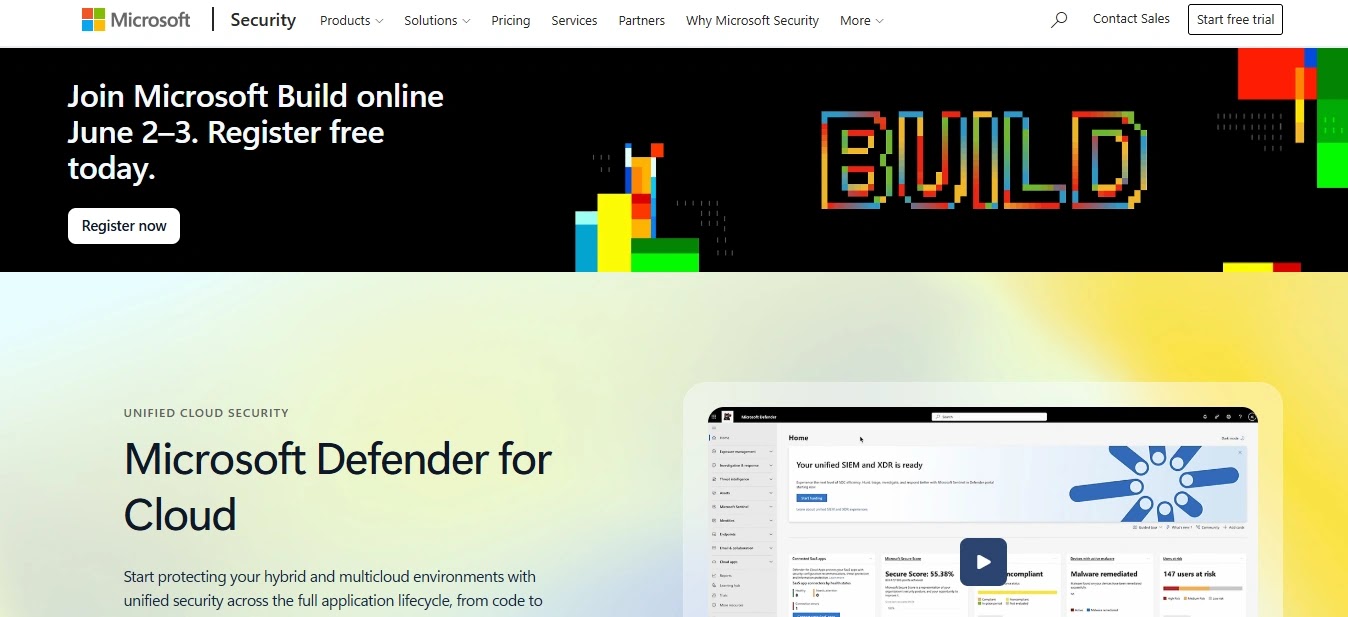
Description. Microsoft’s proprietary Cloud-Native Application Protection Platform (CNAPP) offers a foundational Cloud Security Posture Management (CSPM) tier at no cost, encompassing secure score and recommendations across Azure, AWS, and GCP. Its paid plans, with transparent per-resource pricing, extend capabilities to include attack-path analysis, agentless scanning, DevOps posture management, and comprehensive workload protection for servers, containers, databases, and storage. These advanced features are often integrated into broader Microsoft enterprise cloud security subscriptions.
Key features: A free tier for basic posture management; paid Defender CSPM for attack paths and agentless capabilities; specific per-resource workload protection plans; regulatory compliance dashboards; seamless integration with Entra ID, Sentinel, and XDR; and Azure Arc support for hybrid environments.
Best for: Essential for every Azure estate, often providing sufficient depth for many organizations.
Pros: Free entry tier; clear, published pricing; unparalleled integration with Entra ID and other Azure services.
Cons: Multi-cloud parity lags behind specialized CNAPPs; the complexity of managing various plans can lead to governance challenges.
2. Wiz

Description. Wiz is a prominent agentless CNAPP platform. It leverages its Security Graph to correlate Azure misconfigurations, Entra identities, vulnerabilities, and exposures into prioritized attack paths. This innovative approach translates the inherent chaos of cloud tenants into a manageable list of critical remediations, drawing on continuous market updates regarding its cloud security architecture.
Key features: Agentless Azure scanning; Security Graph for identifying “toxic combinations” and analyzing attack paths; comprehensive CSPM, CIEM, DSPM, and container security; in-depth Entra permission analysis; and rapid onboarding.
Best for: Mid-market and enterprise organizations that require clear prioritization of security findings over a simple enumeration of issues.
Pros: Achieves value in days; industry-leading correlation capabilities; strong user experience.
Cons: Premium pricing structure; potential roadmap implications due to ongoing market developments regarding its architecture.
3. Palo Alto (Prisma Cloud)

Description. Prisma Cloud offers a broad, comprehensive solution for organizations with diverse cloud estates, including Azure. It integrates CSPM, workload protection, CIEM, Infrastructure-as-Code (IaC) scanning, and web/API security. Boasting the market’s most extensive compliance library, it sets a benchmark for all-encompassing Cloud-Native Application Protection Platforms (CNAPPs) across Azure, AWS, and GCP.
Key features: Complete suite of CNAPP modules; extensive support for compliance frameworks; both agent-based and agentless deployment options; attack path analysis; and automated remediation capabilities.
Best for: Large enterprises seeking to consolidate their multi-cloud security operations onto a single, unified platform.
Pros: Unrivaled coverage and completeness; deep compliance capabilities.
Cons: Complex credit-based pricing model; can be operationally intensive to manage.
4. CrowdStrike (Falcon Cloud Security)

Description. CrowdStrike’s Falcon Cloud Security delivers adversary-focused protection for Azure workloads. It provides runtime defense for virtual machines (VMs) and Azure Kubernetes Service (AKS), alongside agentless posture management and integrated identity threat protection. This solution seamlessly complements Entra-focused Identity Threat Detection and Response (ITDR) and offers real-time threat detection and incident response, all managed from the familiar Falcon console, unifying endpoint and cloud security.
Key features: Runtime protection for VMs and containers; agentless CSPM; integrated identity threat protection; OverWatch threat hunting service; and consolidated management within the Falcon console.
Best for: Organizations already utilizing CrowdStrike for endpoint security and those with a detection-first security philosophy.
Pros: Strong detection capabilities; consolidates security management into a single console.
Cons: Costs can escalate with additional modules; posture management depth is still evolving compared to specialized CNAPPs like Wiz or Orca.
5. Tenable (Cloud Security)
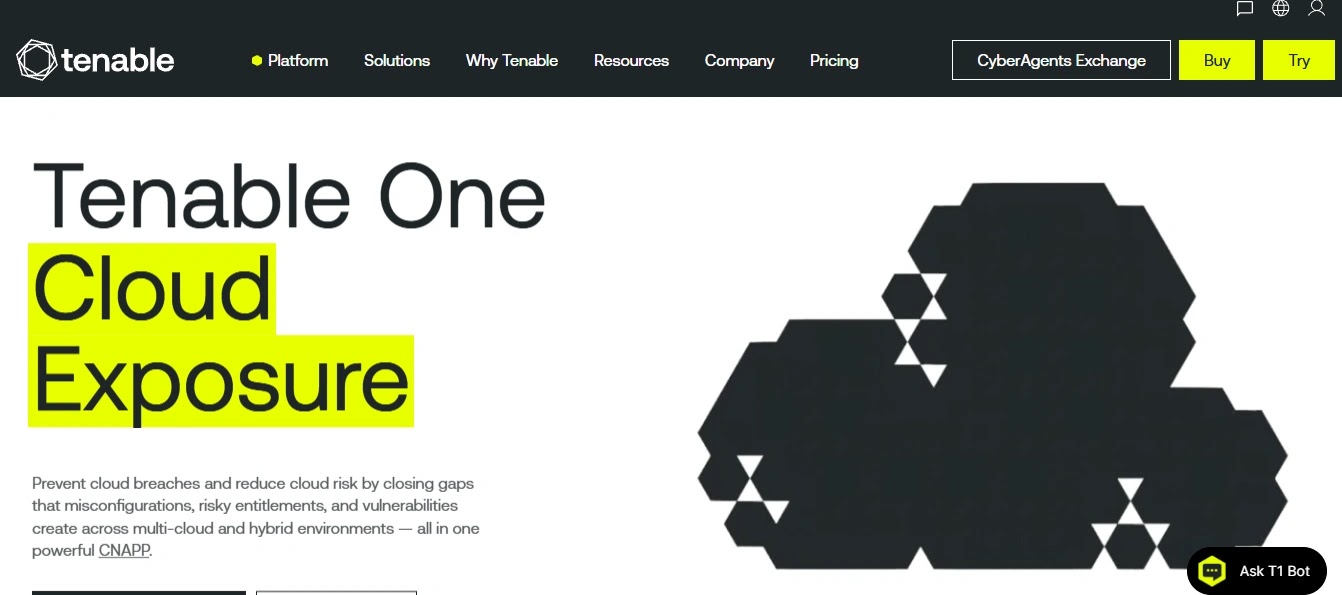
Description. Tenable applies its robust exposure management expertise to Azure environments. It features agentless scanning, exceptional Cloud Infrastructure Entitlement Management (CIEM), and just-in-time (JIT) access capabilities (derived from its Ermetic acquisition) to manage Entra ID and Azure RBAC sprawl. All these functions are unified within the broader Tenable One exposure management platform.
Key features: Agentless Azure scanning; industry-leading CIEM and JIT access; advanced Entra permission analytics; Infrastructure-as-Code (IaC) scanning; and integration with existing VM programs.
Best for: Organizations prioritizing identity risk management and existing Tenable vulnerability management customers.
Pros: Deep CIEM capabilities; unified exposure management.
Cons: Graph-style attack-path analysis and breadth are still maturing.
6. Orca Security
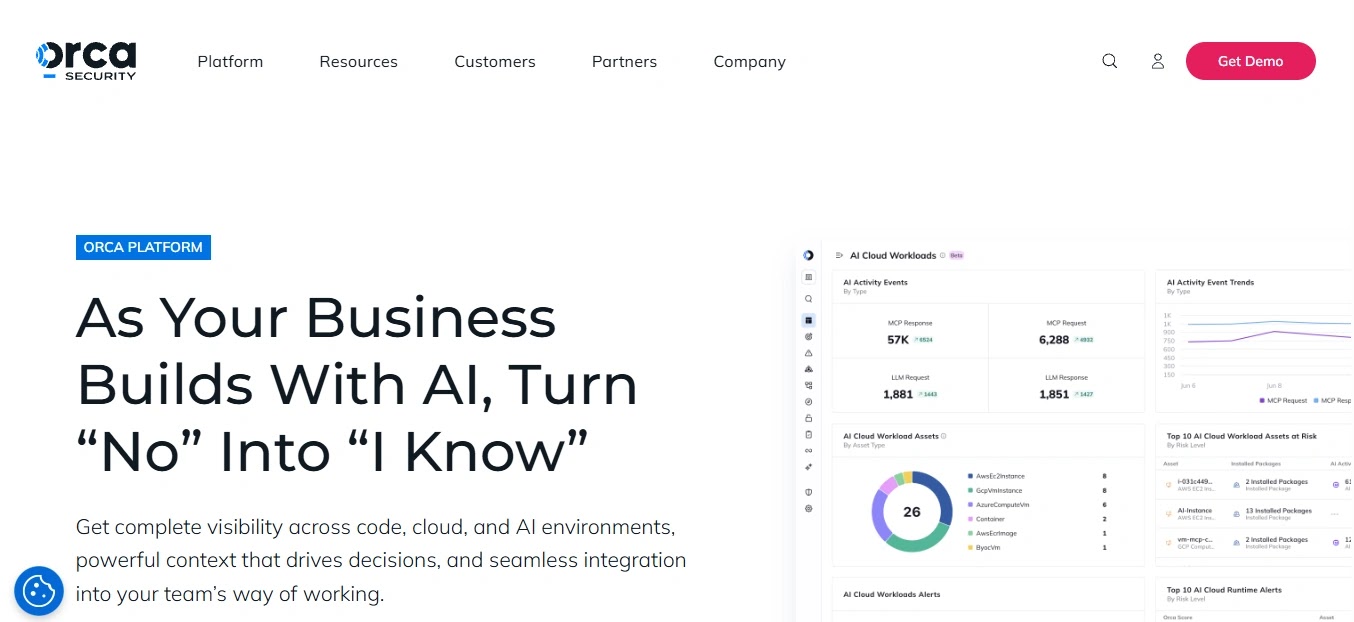
Description. Orca Security offers agentless SideScanning technology across the entire Azure estate. It rapidly uncovers vulnerabilities, malware, misconfigurations, and data exposures within days, eliminating the need for agent deployment. This plays a crucial role in identifying exposed cloud storage and unmanaged assets across various subscriptions.
Key features: Unique SideScanning technology; attack-path prioritization; integrated CSPM, CIEM, and data security; detection of Personally Identifiable Information (PII) and secrets; and strong multi-cloud parity.
Best for: Organizations needing rapid, full-tenant visibility without the operational overhead and political complexities of agent deployment.
Pros: Fast onboarding; unified view of risk.
Cons: Limited real-time blocking capabilities; enterprise-level pricing.
7. Trend Micro (Cloud One / Vision One)

Description. Trend Micro provides robust hybrid-workload security for Azure, including virtual patching for unpatched VMs, File Integrity Monitoring (FIM), and container security. These capabilities are delivered alongside modern server security and workload protection solutions, with transparent pricing available via the Azure Marketplace.
Key features: Virtual patching for legacy systems; comprehensive workload and container security; FIM and log inspection; integration with XDR channels; and streamlined Azure Marketplace billing.
Best for: Hybrid environments with legacy or immutable Azure VMs that cannot be regularly patched.
Pros: Unique virtual patching capability; published pricing; strong hybrid security heritage.
Cons: Console can be complex; correlation capabilities are less advanced compared to leading graph-based platforms.
8. Check Point (CloudGuard)

Description. Check Point CloudGuard focuses on prevention-first Azure security. It offers posture management (leveraging Dome9 lineage) with effective-permission CIEM, seamless network security integration, and automated remediation for cloud misconfigurations and compliance drift. It is particularly beneficial for organizations already utilizing Check Point virtual firewalls.
Key features: CSPM (from Dome9 acquisition); CIEM with effective permissions; robust GSL policy engine; threat intelligence enrichment; and integration with Check Point firewalls.
Best for: Existing Check Point customers looking to extend their security posture into Azure.
Pros: Unified network and cloud security; mature policy enforcement.
Cons: Primarily appealing to existing ecosystem users; user experience can lag newer competitors.
9. Rapid7 (InsightCloudSec)
.webp)
Description. Rapid7’s InsightCloudSec unifies cloud security with the broader Insight platform. It provides CSPM, CIEM, and IaC scanning, all integrated with Rapid7’s vulnerability management and SIEM (InsightIDR). This is further enhanced by Rapid7’s research into critical security tool and endpoint vulnerabilities.
Key features: Real-time CSPM; CIEM; IaC scanning; automation and bot-driven remediation; and deep integration with the Insight platform.
Best for: Current Rapid7 customers aiming to consolidate cloud posture management with their existing VM and SIEM solutions.
Pros: Strong platform synergy; robust automation capabilities.
Cons: Standalone market presence is less pronounced than leading CNAPP providers; pricing typically requires a custom quote.
10. Qualys (TotalCloud)

Disclaimer: HackersRadar reports on cybersecurity threats and incidents for informational and awareness purposes only. We do not engage in hacking activities, data exfiltration, or the hosting or distribution of stolen or leaked information. All content is based on publicly available sources.








No Comment! Be the first one.