



Best Business VPN Solutions for 2026
Key Takeaways The landscape of “business VPNs” is rapidly evolving, with Zero Trust Network Access (ZTNA) solutions now dominating the market for secure remote access. Traditional VPN...

Key Takeaways
- The landscape of “business VPNs” is rapidly evolving, with Zero Trust Network Access (ZTNA) solutions now dominating the market for secure remote access.
- Traditional VPN appliances are frequent targets for attackers due to their internet-facing nature and trusted network position, making vendors’ patch velocity a critical security feature.
- Organizations should prioritize ZTNA for remote workforce access to applications, while traditional VPNs retain utility for legacy systems, full-network administrative tasks, and site-to-site tunnels.
- Leading ZTNA solutions like Twingate and Tailscale offer least-privilege, per-application access, contrasting with the broader network access granted by conventional VPNs.
The concept of a “business VPN” in 2026 has fundamentally shifted, moving away from traditional Virtual Private Networks towards more sophisticated, least-privilege access models. While conventional VPNs encrypt traffic to a corporate network, their inherent vulnerability as internet-facing entry points has driven a widespread adoption of Zero Trust principles.
Table Of Content
- Key Takeaways
- Deciding on the Right Access Solution: VPN vs. ZTNA
- The Elevated Risk of VPN Security
- Top 10 Business VPN and Secure Access Solutions
- Tier 1 — Modern Least-Privilege Access
- 1. Twingate
- 2. Tailscale
- 3. Cloudflare
- Tier 2 — Enterprise Incumbents
- 4. Cisco Secure Client (AnyConnect)
- 5. Palo Alto Networks GlobalProtect
- 6. Fortinet
- Tier 3 — SMB-Friendly and Specialist
- 7. NordLayer
- 8. Check Point Harmony SASE (formerly Perimeter 81)
- 9. OpenVPN
- 10. Zscaler
- Full Comparison Table
- Evaluating Against Real-World Failure Scenarios
- Costs and Negotiation Strategies
- What You Should Do
This evolving landscape sees innovative solutions like Twingate and Tailscale leading the charge for modern, granular remote access. Established enterprise players such as Cisco Secure Client (formerly AnyConnect) and Palo Alto GlobalProtect continue to serve large organizations, particularly those already invested in their respective ecosystems. For smaller teams, NordLayer provides an accessible option with transparent pricing structures.
This guide explores the top business VPN and secure access solutions available, helping organizations determine when to transition from a legacy VPN system to a more secure, modern alternative.
Deciding on the Right Access Solution: VPN vs. ZTNA
A fundamental decision for any organization involves assessing whether a traditional VPN is truly the most appropriate solution or if a shift to Zero Trust Network Access (ZTNA) is warranted. Traditional business VPNs authenticate users once, then grant their devices extensive reach across the corporate network. This model presents a significant security risk: if credentials are stolen or a device is compromised, attackers can exploit the broad access afforded by the VPN tunnel to move laterally throughout the network.
ZTNA, in contrast, operates on a principle of “never trust, always verify.” It grants access only to specific applications or resources, rather than the entire network. This approach enforces stringent network segmentation and application-level controls, continuously verifying both user identity and device posture for every access request. This significantly limits potential lateral movement, enhancing overall security.
| Traditional VPN | ZTNA / Modern Access | |
| Grants | Network-level access | Per-application access |
| Trust model | Verify once at login | Continuous verification |
| Lateral movement | Possible across the tunnel | Structurally limited |
| Best for | Legacy apps, full-network needs, site-to-site | Remote workforce, contractors, SaaS-era estates |
| Typical failure | Appliance vulnerability or credential theft | Misconfigured policy scope |
Organizations should opt for a traditional VPN if their requirements include full-network access for administrative duties, support for legacy protocols, or the establishment of site-to-site tunnels. However, for most organizations in 2026, where the primary goal is secure remote workforce access to applications, ZTNA represents the superior and more secure approach.
The Elevated Risk of VPN Security
The security of remote-access and VPN appliances has become a critical concern, often rising to board-level discussions. These systems have consistently been among the most exploited enterprise products in recent years, frequently appearing in CISA’s Known Exploited Vulnerabilities catalog. This includes vulnerabilities across prominent vendors such as Ivanti, Citrix, and Fortinet. The primary reason for this persistent targeting is clear: VPN concentrators are inherently internet-facing and reside at a privileged, trusted position within the network perimeter.
This reality has two significant implications for cybersecurity strategy. Firstly, the speed at which a vendor issues patches and an organization’s ability to deploy emergency updates become crucial security features, demanding as much scrutiny as performance specifications during procurement. Secondly, minimizing the scope of what a VPN tunnel can access is more effective than merely hardening the tunnel itself. This principle underpins the entire shift towards ZTNA and the strategic pairing of remote access solutions with robust network segmentation.
Top 10 Business VPN and Secure Access Solutions
Tier 1 — Modern Least-Privilege Access
1. Twingate
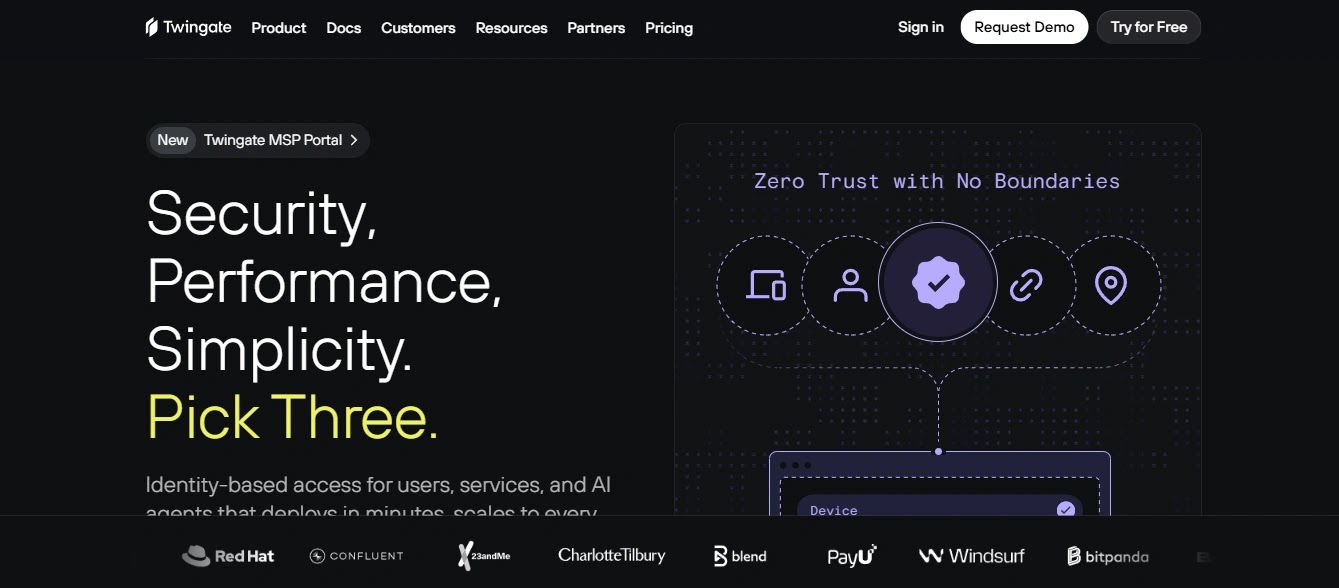
Why it’s here: Twingate stands out as a premier VPN replacement, offering resource-level, least-privilege access that can be defined as code. It eliminates the need to expose inbound ports to the public internet, significantly enhancing security. The platform is consistently recognized among the leading ZTNA solutions.
Standout: Its truly functional free tier and transparent published pricing make it ideal for small teams to transition away from traditional VPNs without a complex procurement process.
Watch out for: Twingate is primarily access-focused. Organizations requiring deep inline inspection capabilities (IPS, sandboxing) may need to integrate a broader security platform later.
Best fit: Startups to mid-market companies seeking to replace outdated, over-permissioned, and slow VPN infrastructures.
Pricing: Offers a free tier and published per-user plans. [VERIFY: current tiers]
2. Tailscale
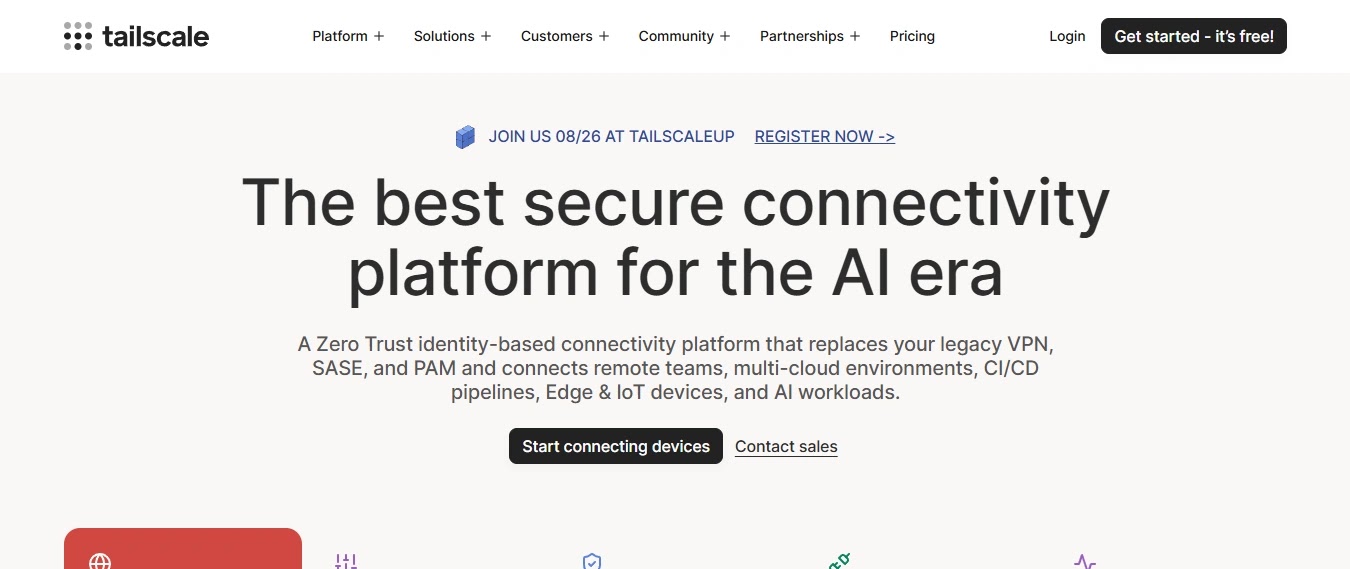
Why it’s here: Tailscale provides a WireGuard-based mesh network, enabling direct device connectivity with minimal configuration. It is a top alternative for modern teams, prized for its seamless setup and developer-centric design.
Standout: Features peer-to-peer connectivity with effortless NAT traversal. Policies are managed as code using Access Control Lists (ACLs), and a free tier is available for small teams.
Watch out for: Mesh networking requires a certain level of technical expertise from operators. Enterprise governance, auditing, and compliance features are less mature compared to established incumbents.
Best fit: Organizations with strong development teams, infrastructure-focused teams, and technically proficient SMBs.
Pricing: Includes a free tier and published per-user plans. [VERIFY: current tiers]
3. Cloudflare
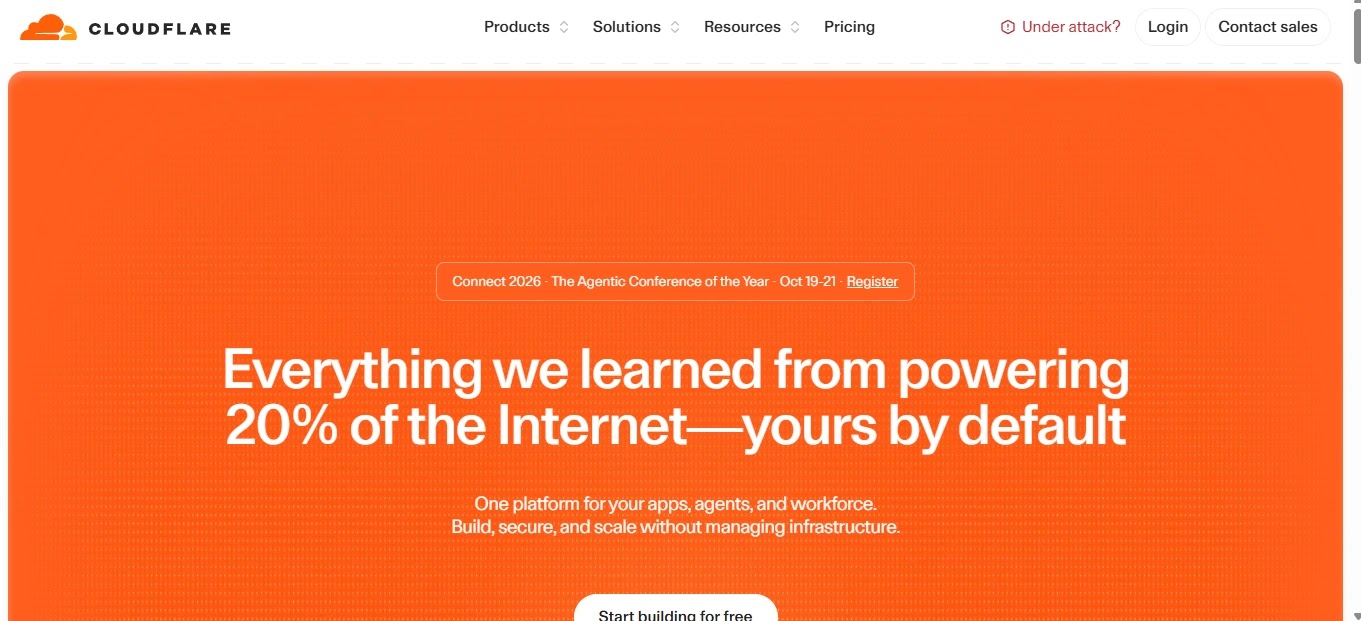
Why it’s here: Cloudflare’s Zero Trust suite, comprising the WARP client and Cloudflare Access, delivers application-level access leveraging one of the world’s most extensive networks. The platform also offers browser-based Zero Trust access, securing remote infrastructure without requiring client software.
Standout: The onboarding process is remarkably straightforward, and the platform can scale to a full Secure Service Edge (SSE) solution, including secure web gateway, CASB, and browser isolation, all within a single vendor ecosystem.
Watch out for: Supporting deep legacy applications and complex Active Directory-centric attribution can be more demanding than with traditional VPN incumbents.
Best fit: Organizations aiming to progressively adopt Zero Trust principles and phase out VPN appliances.
Pricing: Features a free tier, published per-user plans, and enterprise pricing by quote. [VERIFY: current tiers]
Tier 2 — Enterprise Incumbents
4. Cisco Secure Client (AnyConnect)
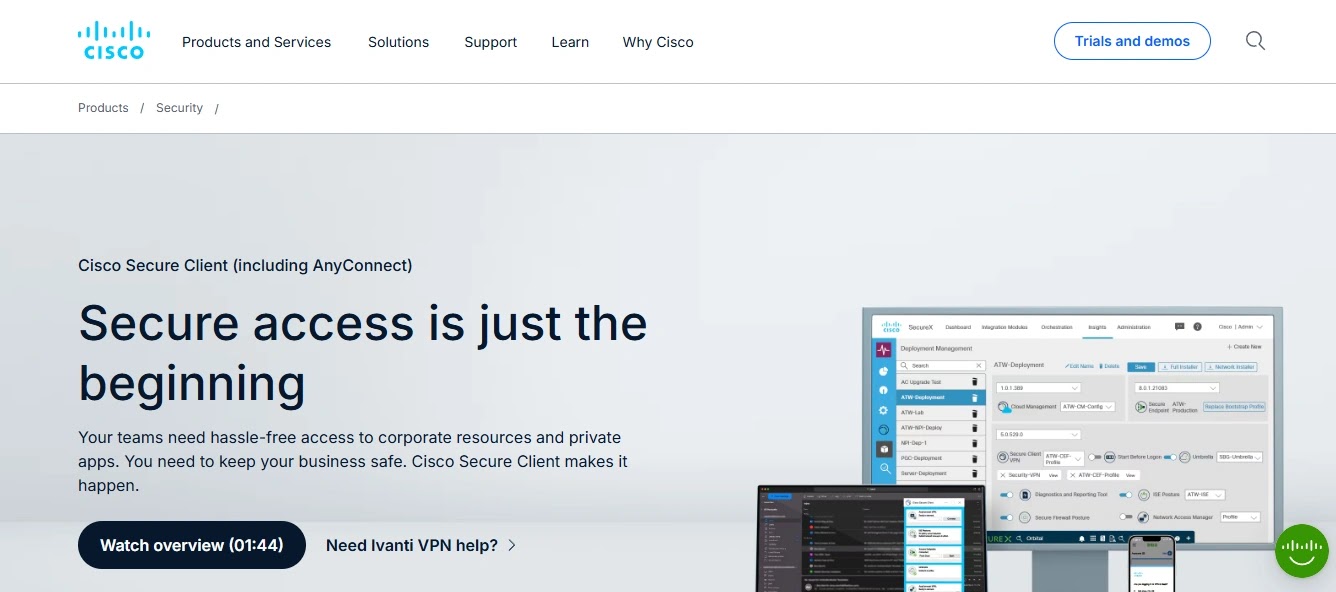
Why it’s here: Cisco Secure Client, formerly AnyConnect, remains the most widely deployed enterprise remote-access client globally. It now offers modular security services, including ZTNA through Cisco Secure Access, and integrates seamlessly with centralized endpoint management and posture assessment across complex corporate environments.
Standout: Its ubiquity and comprehensive integration are key strengths, providing a single agent for VPN, posture assessment, and network visibility within a Cisco ecosystem, complemented by Duo for identity management.
Watch out for: Licensing involves multiple SKUs, requiring effort to determine pricing. The traditional VPN model still carries the architectural limitations discussed earlier.
Best fit: Enterprises that are already standardized on Cisco networking and identity solutions.
Pricing: Quote-based, tiered licensing. [VERIFY: current SKU structure]
5. Palo Alto Networks GlobalProtect
Why it’s here: GlobalProtect provides robust remote access by applying the full Next-Generation Firewall (NGFW) inspection stack to tunnel traffic. This includes App-ID, threat prevention, and URL filtering, ensuring comprehensive security for remote connections.
Standout: Exceptional inspection depth. Traffic routed through GlobalProtect receives the same rigorous scrutiny as traffic traversing Palo Alto firewalls, with Prisma Access extending these capabilities to ZTNA 2.0.
Watch out for: Its full value is realized within an existing Palo Alto ecosystem. Subscription stacking can lead to increased costs, and careful planning is required to size gateways for peak remote access demands.
Best fit: Organizations that have already deployed Palo Alto next-generation firewalls.
Pricing: Quote-based (licensed with PA platform/Prisma Access).
6. Fortinet

Why it’s here: FortiClient VPN is bundled with FortiGate firewalls, making it the default remote-access solution for a vast installed base. FortiSASE further extends its capabilities towards Zero Trust Network Access.
Standout: Cost-effectiveness. For organizations already utilizing FortiGates, capable remote access is essentially pre-paid, with options to modernize to ZTNA as needed.
Watch out for: Fortinet has a history of exploited vulnerabilities, including a FortiCloud authentication bypass (CVE-2022-42475) added to CISA’s KEV catalog in January 2026. This necessitates rigorous patching discipline for all internet-facing gateways.
Best fit: The numerous organizations that have standardized on Fortinet at the network edge.
Pricing: Bundled with FortiGate licensing; FortiSASE offers per-user tiers through partners.
Tier 3 — SMB-Friendly and Specialist
7. NordLayer

Why it’s here: NordLayer delivers business-grade network security with clear, transparent pricing. It operates on a cloud-based Zero Trust architecture and features dedicated IP infrastructure, making it ideal for distributed teams.
Standout: Rapid setup, dedicated IP options, comprehensive device posture checks, and transparent per-user pricing that allows for straightforward budgeting without needing a sales consultation.
Watch out for: Offers lighter enterprise governance and less integration depth compared to incumbents. It is best suited for organizations with relatively straightforward access requirements.
Best fit: Small and mid-sized businesses seeking quick, manageable, and secure access solutions.
Pricing: Published per-user monthly tiers. [VERIFY: current pricing]
8. Check Point Harmony SASE (formerly Perimeter 81)

Why it’s here: Perimeter 81’s cloud-native architecture, now integrated into Check Point Harmony SASE, combines user-friendliness with Check Point’s robust threat prevention capabilities. Teams should ensure their client software is consistently updated following any Check Point Harmony SASE platform updates.
Standout: Transparent per-user pricing tiers, backed by enterprise-grade security research, effectively bridge the gap between SMB and enterprise security requirements.
Watch out for: The product packaging has undergone significant changes post-acquisition. Organizations should confirm current tier boundaries and feature mappings before committing.
Best fit: SMBs and mid-market teams looking for ZTNA with the backing of a reputable security vendor.
Pricing: Published per-user tiers. [VERIFY: current Harmony SASE packaging]
9. OpenVPN
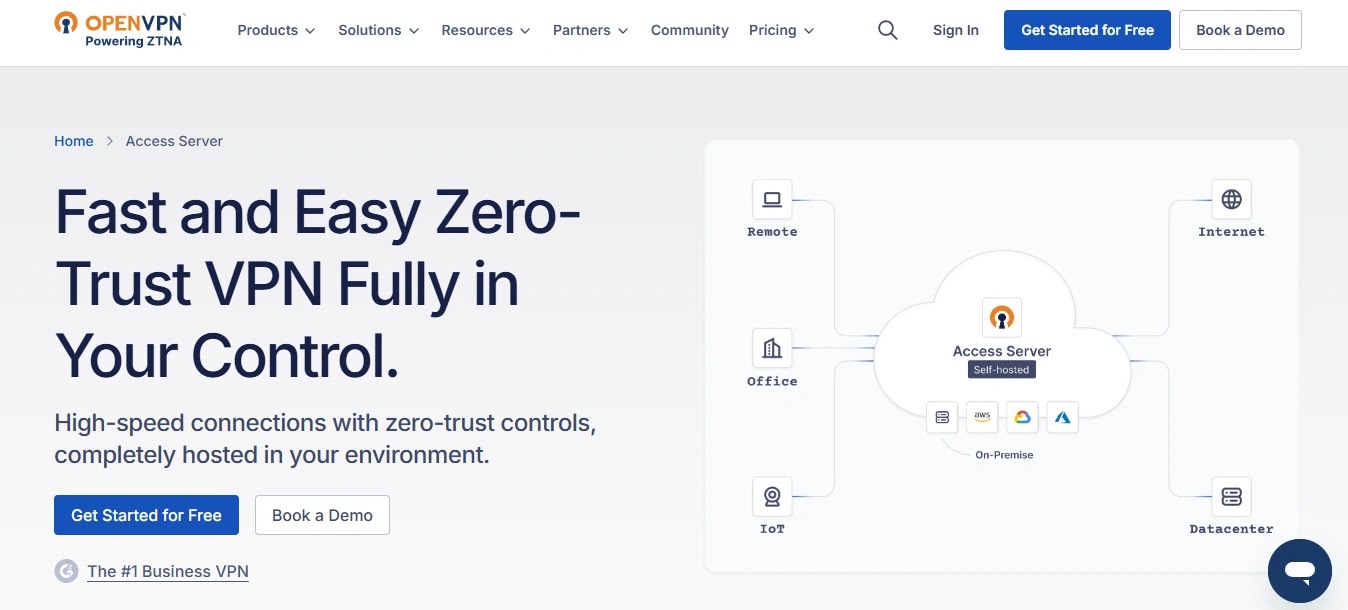
Why it’s here: OpenVPN is the open-source standard for secure connectivity, available as self-hosted software (Community / Access Server) or through its cloud service, CloudConnexa. It offers self-hosted encryption and custom routing, avoiding vendor lock-in.
Standout: The ability to self-host, audit the code, and incur no software costs (beyond infrastructure) makes it highly valuable for technical teams and organizations with budget constraints.
Watch out for: Self-hosting means full responsibility for patching, availability, and scaling. Performance tuning falls on the user, and support is community-based unless commercial editions are purchased.
Best fit: Technical teams, cost-sensitive organizations, and those requiring complete control over their VPN solution.
Pricing: Open-source is free; Access Server and CloudConnexa offer published connection-based pricing. [VERIFY: current pricing]
10. Zscaler
Why it’s here: Zscaler Private Access (ZPA) facilitates secure connections through its expansive global cloud architecture, ensuring that applications are never directly exposed to the public internet. IT teams manage agent health via the Zscaler Client Connector and the Zero Trust Exchange.
Standout: Provides proven zero-trust access at massive scale, with users never being placed directly on the corporate network.
Watch out for: Per-user economics often require negotiation at scale. Adopting Zscaler is a platform commitment, not merely a VPN replacement. On-premise east-west traffic still demands separate controls.
Best fit: Large, distributed enterprises aiming to fully decommission traditional VPN concentrators.
Pricing: Per-user quote-based.
Full Comparison Table
| Solution | Model | Free tier | Published pricing | Best for | Deployment effort |
| Twingate | ZTNA | Yes | Yes | VPN replacement | Hours |
| Tailscale | Mesh (WireGuard) | Yes | Yes | Engineering teams | Hours |
| Cloudflare | ZTNA/SSE | Yes | Yes | Progressive zero trust | Hours–days |
| Cisco Secure Client | VPN + ZTNA | No | No | Cisco enterprises | Weeks |
| Palo Alto GlobalProtect | VPN + ZTNA 2.0 | No | No | PA estates | Weeks |
| Fortinet | VPN + SASE | Bundled | Partial | FortiGate estates | Days |
| NordLayer | VPN/ZTNA hybrid | Trial | Yes | SMBs | Hours |
| Check Point Harmony SASE | ZTNA/SASE | Trial | Yes | SMB–mid-market | Hours–days |
| OpenVPN | Self-hosted/cloud | Community | Partial | Technical teams | Days–weeks |
| Zscaler | ZTNA (SSE) | No | No | Large enterprise | Weeks–months |
Evaluating Against Real-World Failure Scenarios
Making an informed decision about secure access solutions requires careful consideration of common failure points. Five key checks can help distinguish a sound investment from a costly mistake:
- Verify Device Posture, Not Just Authentication: A critical defense against credential theft is the ability to verify device health. Can the solution confirm disk encryption, the operating system’s patch level, and the presence of Endpoint Detection and Response (EDR) before granting any access?
- Test Legacy Application Compatibility: Zero Trust Network Access (ZTNA) interacts differently with thick clients, SMB shares, and Remote Desktop Protocol (RDP) compared to traditional VPNs. Conduct pilot tests with your most challenging internal applications, not just modern web dashboards.
- Measure Latency from Actual User Locations: Cloud-delivered access introduces an additional network hop. Before full deployment, rigorously test latency from the geographical regions where your workforce operates.
- Inquire About Vendor Patching and Disclosure History: For any internet-facing solution, a vendor’s history of security disclosures and patch delivery speed is a legitimate and crucial procurement question. Ask about the turnaround time for critical fixes and how customers are notified.
- Plan for Contractors and Unmanaged Devices: Support for agentless or browser-based access is often a decisive factor, especially for external contractors or personal devices. The level of support for such scenarios varies significantly across different solutions.
Costs and Negotiation Strategies
Pricing for business VPN and secure access solutions generally falls into two distinct categories. Solutions like Twingate, Tailscale, NordLayer, Harmony SASE, and Cloudflare typically offer published per-user models, ranging from a few dollars to low double digits per user per month. Many of these also provide free tiers for small teams, simplifying budgeting and expediting procurement.
In contrast, enterprise-grade platforms from vendors such as Cisco, Palo Alto, Zscaler, and Fortinet’s SASE tiers operate on quote-based enterprise models. These are priced per user with volume discounts. Comprehensive Secure Service Edge (SSE) bundles generally benchmark in the $15–$25 per user per month range at list price, before significant enterprise discounts of 30–50% are applied.
Key negotiation levers include: committing to annual versus monthly contracts, the precise definition of a “user” (named vs. concurrent), whether ZTNA features are bundled or sold as separate SKUs, and for incumbent vendors, potential migration credits if consolidating away from a competitor’s VPN solution.
What You Should Do
- Assess Your Needs: Determine if your organization truly requires a traditional VPN or if a Zero Trust Network Access (ZTNA) solution is a better fit for your remote workforce and application access. Most modern organizations benefit from ZTNA.
- Prioritize Patch Velocity: For any internet-facing remote access solution, critically evaluate the vendor’s history of security disclosures and their ability to deliver timely patches. Ensure your organization has a robust emergency update capability.
- Pilot with Legacy Applications: If transitioning to ZTNA, test its compatibility with your most challenging legacy applications (e.g., thick clients, SMB shares, RDP) before full deployment.
- Measure Performance: Conduct latency tests from actual user locations to ensure cloud-delivered access solutions meet performance expectations.
- Plan for Diverse Users: Consider how the solution handles access for contractors and unmanaged devices, as agentless or browser-based access support varies significantly.
- Review Pricing Models: Understand the difference between published per-user pricing and quote-based enterprise models to budget effectively and negotiate favorable terms.
Disclaimer: HackersRadar reports on cybersecurity threats and incidents for informational and awareness purposes only. We do not engage in hacking activities, data exfiltration, or the hosting or distribution of stolen or leaked information. All content is based on publicly available sources.








No Comment! Be the first one.