



Hackers News Hackers News
  • CyberSecurity News
  • Threats
  • Attacks
  • Vulnerabilities
  • Breaches
  • Comparisons

Social Media

Hackers News Hackers News
  • CyberSecurity News
  • Threats
  • Attacks
  • Vulnerabilities
  • Breaches
  • Comparisons
Search the Site
Popular Searches:
technology Amazon AI
Recent Posts
FortiBleed Vulnerability Exploited by INC and Lynx Ransomware to Steal Passwords
July 2, 2026
WhatsApp Username Reservations Raise Security Concerns for 2 Billion Users
July 2, 2026
Alleged Scattered Spider Member Extradited to US for 100+ Network Hacks
July 2, 2026
Home/Threats/New ClearFake Campaign Leveraging Proxy Execution to Run PowerShell Commands via Trusted Window Feature
Threats

New ClearFake Campaign Leveraging Proxy Execution to Run PowerShell Commands via Trusted Window Feature

ClearFake has entered a significantly more dangerous phase. What was once a familiar fake CAPTCHA scam now functions as a highly evasive malware delivery chain. Across hundreds of hacked websites,...

Marcus Rodriguez
Marcus Rodriguez
January 22, 2026 3 Min Read
37 0

ClearFake has entered a significantly more dangerous phase. What was once a familiar fake CAPTCHA scam now functions as a highly evasive malware delivery chain.

Across hundreds of hacked websites, visitors now see what looks like a routine verification challenge, but behind the scenes the page is preparing to launch hidden code.

Victims only need to follow simple keyboard steps, such as pressing Win + R and paste, for the attack to begin.

This ClearFake wave matters because it blends social engineering with so‑called living off the land tactics, abusing tools already built into Windows as a trusted Windows feature instead of dropping obvious malware files.

By shifting its infrastructure onto blockchain smart contracts and a popular content delivery network, the operation also avoids many domain and IP blocklists that defenders rely on.

Expel analysts and researchers identified this latest evolution while tracking ClearFake’s JavaScript framework across compromised sites and examining the new loader stages.

The team linked the campaign to a traffic distribution system that has likely pushed malware to close to 150,000 systems, based on unique IDs stored in a public smart contract visible on the BNB Smart Chain test network.
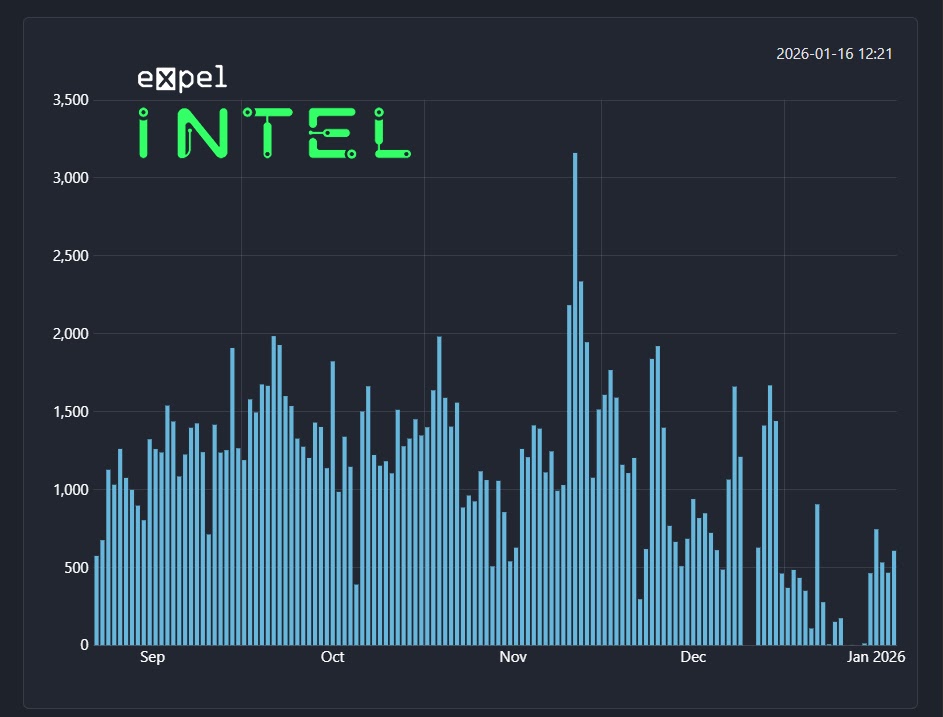
A graph detailing the number of infections per day since the smart contract was created (Source - Expel)
A graph detailing the number of infections per day since the smart contract was created (Source – Expel)

ClearFake’s operators use the Ethereum‑style contract as a resilient command center, updating encoded JavaScript that infected pages fetch through public Web3 endpoints.

Abusing a Trusted Windows Script for Proxy Execution

This design, combined with hosting later‑stage payloads on jsDelivr, a widely used CDN, means every external touchpoint in the chain sits on services defenders are reluctant to block.

The business impact is clear: a user completing what appears to be a harmless CAPTCHA can unknowingly grant attackers code execution on a trusted corporate endpoint, with little or no trace left on disk.

From there, follow‑on payloads can steal data, deploy additional malware, or provide remote access, all while hiding behind normal‑looking network traffic and legitimate Windows components.
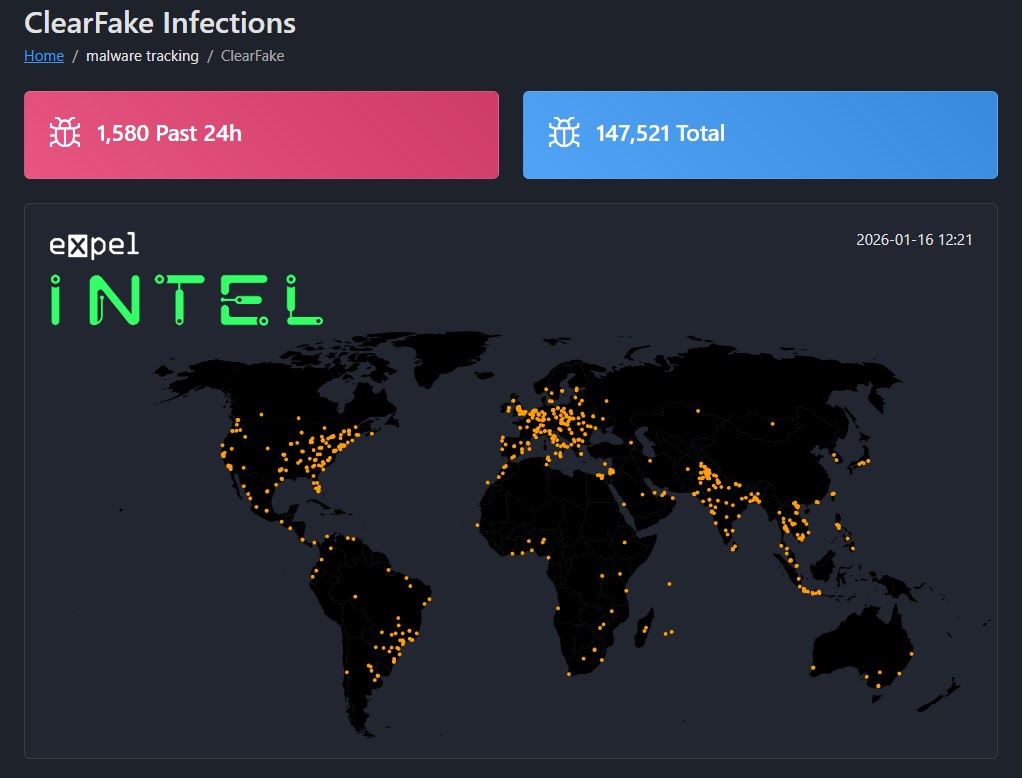
A map detailing the geographical distribution of systems infected in the past week (Source - Expel)
A map detailing the geographical distribution of systems infected in the past week (Source – Expel)

At the heart of the new technique is SyncAppvPublishingServer.vbs, a legitimate script in the Windows System32 folder that ships as part of App‑V management.
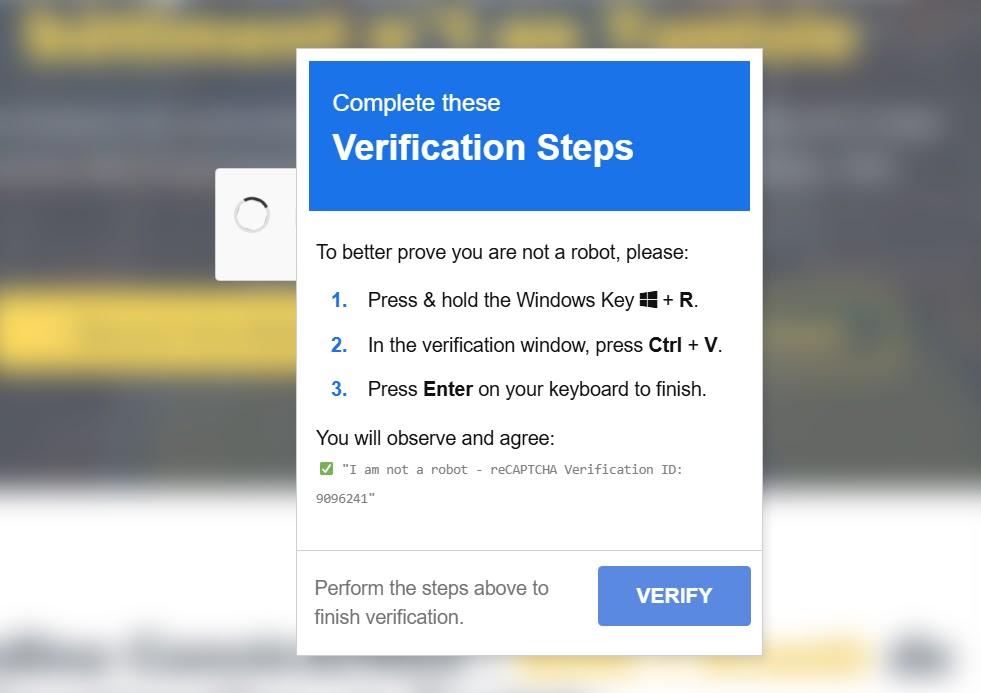
After the users click 'I’m not a robot' they’re presented with the social engineering lure (Source - Expel)
After the users click ‘I’m not a robot’ they’re presented with the social engineering lure (Source – Expel)

ClearFake’s fake CAPTCHA instructs users to open the Run dialog, where the clipboard holds a carefully crafted command that passes a malicious argument into this script.

Disclaimer: HackersRadar reports on cybersecurity threats and incidents for informational and awareness purposes only. We do not engage in hacking activities, data exfiltration, or the hosting or distribution of stolen or leaked information. All content is based on publicly available sources.


Tags:

AttackMalware

Share Article

Marcus Rodriguez

Marcus Rodriguez

Marcus is a security researcher and investigative journalist with expertise in vulnerability research, bug bounties, and cloud security. Since 2017, Marcus has been breaking stories on critical vulnerabilities affecting major platforms. His investigative work has led to the disclosure of numerous security flaws and improved defenses across the industry. Marcus is an active participant in bug bounty programs and has been recognized for responsible disclosure practices. He holds multiple security certifications and regularly speaks at industry events.

Previous Post

Cisco Unified Communications 0-day RCE Vulnerability Exploited in the Wild to Gain Root Access

Next Post

New AI-Android Malware that Auto Clicks Ads from the Infected Devices

No Comment! Be the first one.

Leave a Reply Cancel reply

Your email address will not be published. Required fields are marked *

Popular Posts
Critical Cursor IDE RCE Vulnerabilities Allow Zero-Click Prompt Injection
July 1, 2026
Automated Password Spray Attacks Target Microsoft Azure CLI
July 1, 2026
Reduce Alert Fatigue to Improve SOC Efficiency and Cut Business Costs
July 1, 2026
Top Authors
Marcus Rodriguez
Marcus Rodriguez
Jennifer sherman
Jennifer sherman
Emy Elsamnoudy
Emy Elsamnoudy
Let's Connect
156k
2.25m
285k

Related Posts

Jennifer sherman
By Jennifer sherman
Threats

GlassWorm Attacks macOS via Malicious VS Code…

January 1, 2026
Emy Elsamnoudy
By Emy Elsamnoudy
Attacks

ClickFix Attack Hides Malicious Code via Stegan Security

January 1, 2026
Sarah simpson
By Sarah simpson
Vulnerabilities

MongoBleed Detector Tool Released to Detect MongoDB Vulnerability(CVE-2025-14847)

January 1, 2026
Emy Elsamnoudy
By Emy Elsamnoudy
Breaches

Conti Ransomware Gang Leaders & Infrastructure Exposed

January 1, 2026
Hackers News Hackers News
  • [email protected]

Quick Links

  • Contact Us
  • Privacy Policy
  • Terms of service

Categories

Attacks
Breaches
Comparisons
CyberSecurity News
Threats
Vulnerabilities

Let's keep in touch

receive fresh updates and breaking cyber news every day and week!

All Rights Reserved by HackersRadar ©2026

Follow Us






