




Top 10 CI/CD Pipeline Security Tools for 2026
Key Takeaways GitHub Advanced Security (GHAS) is ranked as the leading CI/CD security tool for 2026, offering robust native protections like push protection and CodeQL where most pipelines operate....

Key Takeaways
- GitHub Advanced Security (GHAS) is ranked as the leading CI/CD security tool for 2026, offering robust native protections like push protection and CodeQL where most pipelines operate.
- The top three solutions include GitHub Advanced Security, Cycode (for its VCS-to-pipeline graph capabilities), and Legit Security (focusing on factory integrity).
- Specialized tools like StepSecurity are crucial for hardening the runner layer, a common vector for attacker exfiltration.
- Several tools, such as Aqua (Argon) and Palo Alto (Cider), are now integrated into larger Cloud-Native Application Protection Platforms (CNAPP) or broader security suites, requiring evaluation under their parent platforms.
Attackers are increasingly bypassing direct code vulnerabilities to target the very pipelines that construct software. These modern build environments frequently execute unverified third-party code with elevated system privileges, making robust CI/CD pipeline security paramount in defending against software supply chain compromise.
Table Of Content
- Key Takeaways
- How We Scored (Methodology)
- The 2026 CI/CD Security Power Rankings
- 1. GitHub Advanced Security — Best Native Floor
- 2. Cycode — Best VCS-to-Pipeline Graph
- 3. Legit Security — Best Factory Integrity
- 4. StepSecurity — Best Runner Hardening
- 5. GitLab — Best Single-Platform DevSecOps
- 6. Arnica — Best Behavioral Defense
- 7. OX Security — Best PBOM Traceability
- 8. Apiiro — Best Risk-Graph Context
- 9. Aqua (Argon) — Best CNAPP-Absorbed Lane
- 10. Palo Alto (Cider) — Best Prisma-Absorbed Lane
Our assessment of ten prominent solutions prioritizes the efficacy of native platform offerings, acknowledging that existing CI platform features significantly influence the business case for dedicated security tools. Specialized solutions must demonstrate value by addressing gaps in native capabilities.
Leading our 2026 rankings is GitHub Advanced Security, securing the top position. Cycode and Legit Security complete the top three, highlighting a strong focus on comprehensive pipeline and supply chain integrity.
How We Scored (Methodology)
Our scoring methodology for the 2026 CI/CD Security Power Rankings is grounded in research and focused on practical defense. We evaluated tools based on pipeline discovery capabilities, integrity and tamper detection mechanisms, runner hardening features, the extent of native platform coverage, pricing transparency, and clarity regarding acquisitions. This assessment did not involve lab testing or paid placements, ensuring editorial independence. Structured data excluded subjective editorial scores.
Weights were assigned as follows: attack-surface relevance (30%), discovery and integrity (25%), native-value honesty (20%), pricing clarity (15%), and ecosystem integration (10%).
The 2026 CI/CD Security Power Rankings
| S.NO | Tool | Award | Score* |
| 1 | GitHub Advanced Security | Best native floor | 9.1 |
| 2 | Cycode | Best VCS-to-pipeline graph | 8.8 |
| 3 | Legit Security | Best factory integrity | 8.7 |
| 4 | StepSecurity | Best runner hardening | 8.6 |
| 5 | GitLab | Best single-platform DevSecOps | 8.4 |
| 6 | Arnica | Best behavioral defense | 8.2 |
| 7 | OX Security | Best PBOM traceability | 8.2 |
| 8 | Apiiro | Best risk-graph context | 8.1 |
| 9 | Aqua (Argon) | Best CNAPP-absorbed lane | 7.9 |
| 10 | Palo Alto (Cider) | Best Prisma-absorbed lane | 7.8 |
*Editorial research-based scores, not lab results.
1. GitHub Advanced Security — Best Native Floor
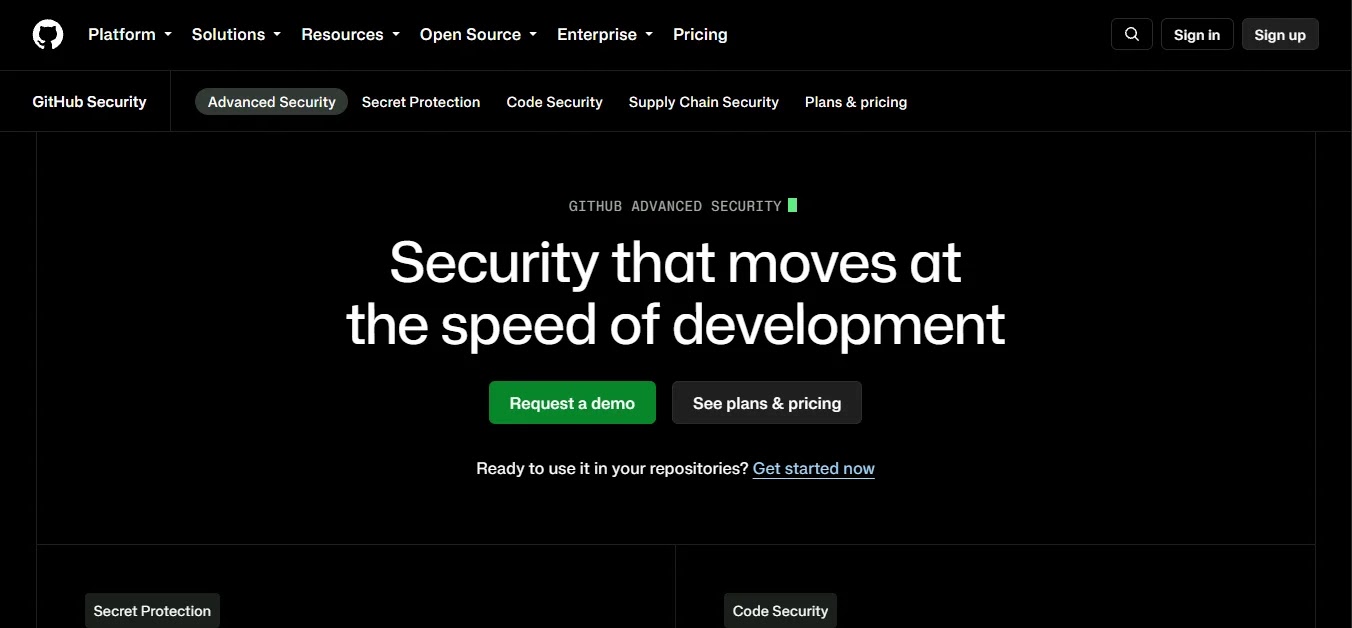
Snapshot: Priced per-committer | Features push protection, CodeQL, and Actions policy
Why it earns #1: GitHub Advanced Security (GHAS) excels by integrating critical security directly into the development workflow. It offers proactive defenses such as blocking secrets before they are committed, performing semantic code analysis, providing dependency review, and enabling OIDC-to-cloud federation. Its policy enforcement for GitHub Actions is particularly significant, given that a majority of global CI/CD pipelines operate within this ecosystem.
While organizations must actively mitigate risks from GitHub Actions supply chain vulnerabilities and potential runner token exposures, GHAS establishes a fundamental security baseline that any third-party tool must demonstrably surpass to justify its adoption.
Standout features: Push protection, CodeQL, Actions policies, artifact attestation, dependency review.
Pros: Native integration, per-committer pricing.
Cons: Primarily scoped to GitHub, limited runner hardening (see #4 for specialized solution).
Bottom line: This should be activated before considering any dedicated CI/CD security solution.
2. Cycode — Best VCS-to-Pipeline Graph

Snapshot: Quote-based pricing | Combines native engines with a risk graph | Strong source-control roots
Why it earns #2: Cycode distinguishes itself by unifying code, secrets, and pipeline posture within a single, interconnected risk graph. This dedicated platform’s foundation in Version Control System (VCS) and pipeline security aligns precisely with the evolving threat landscape where attacks have shifted. Drawing on proprietary threat intelligence, including Cycode’s discoveries of authentication and SDK vulnerabilities, the platform effectively correlates developer identities with workflow permissions to pinpoint and mitigate risk.
Standout features: Comprehensive pipeline posture analysis, secrets management, robust hardening capabilities, and an advanced risk graph.
Pros: Extensive breadth combined with deep graph analysis.
Cons: Pricing is quote-based.
Bottom line: Provides a unified perspective on the software factory and its associated code.
3. Legit Security — Best Factory Integrity
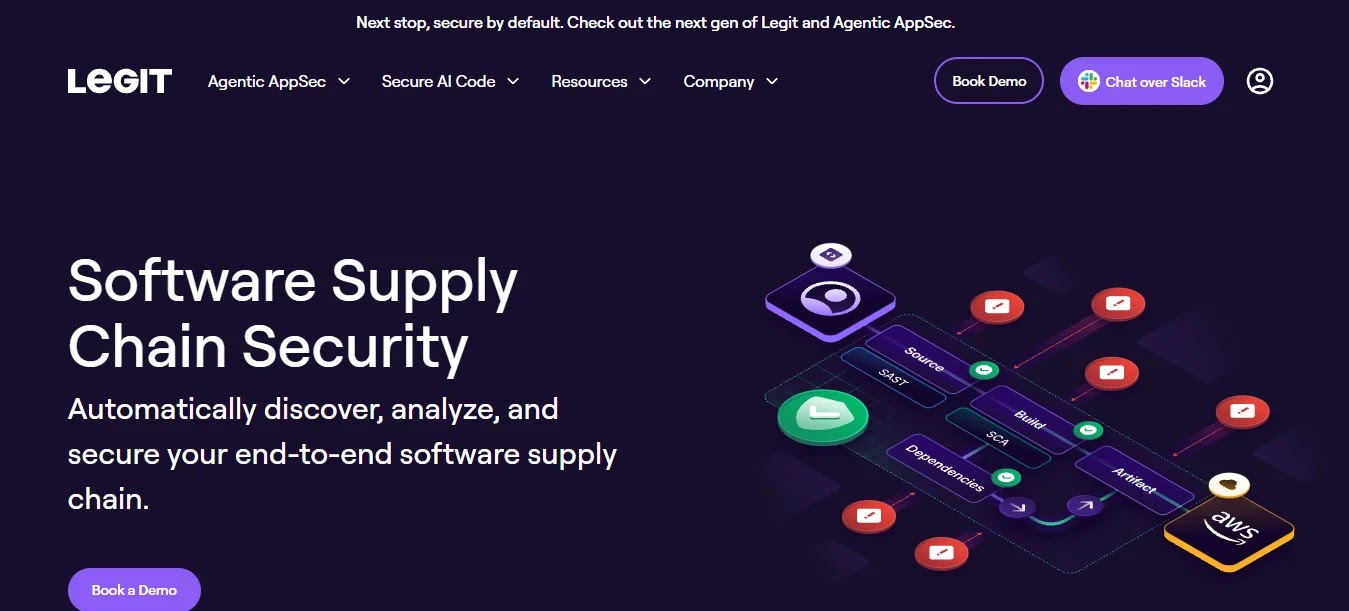
Snapshot: Quote-based pricing | Focuses on discovery and tamper detection
Why it earns #3: Effective pipeline defense begins with visibility. Legit Security provides a comprehensive inventory of an organization’s build estate, continuously monitoring for tampering and scoring the overall SDLC posture. This approach directly addresses lessons learned from major incidents like SolarWinds, productizing the need for robust integrity checks.
The platform actively defends against critical supply-chain threats targeting build environments and forged pipeline provenance by diligently overseeing the systems responsible for compiling application code.
Standout features: Detailed pipeline discovery, continuous integrity monitoring, and governance for misconfigurations.
Pros: Exceptional depth in integrity monitoring.
Cons: May require pairing with other tools for broader code-side scope.
Bottom line: Identifies every workflow capable of influencing production environments.
4. StepSecurity — Best Runner Hardening

Snapshot: Offers free and published tiered pricing | Features Harden-Runner egress control
Why it earns #4: StepSecurity directly counters a prevalent attack vector: malicious dependencies attempting to exfiltrate data from CI environments. By implementing stringent egress controls, action pinning, and robust runner policies, it effectively closes critical security gaps often left open by native platforms. Its free tier makes essential defenses accessible.
The platform provides tangible protection against campaigns such as GhostAction, which exploited GitHub Actions to steal CI/CD credentials, by blocking unauthorized outbound communications at the operating system level.
Standout features: Harden-Runner, egress filtering, action pinning, and comprehensive policies.
Pros: Addresses a highly relevant attack niche, offers a valuable free tier.
Cons: Primarily scoped to GitHub Actions.
Bottom line: Ensures CI runners cannot communicate with attacker infrastructure.
5. GitLab — Best Single-Platform DevSecOps
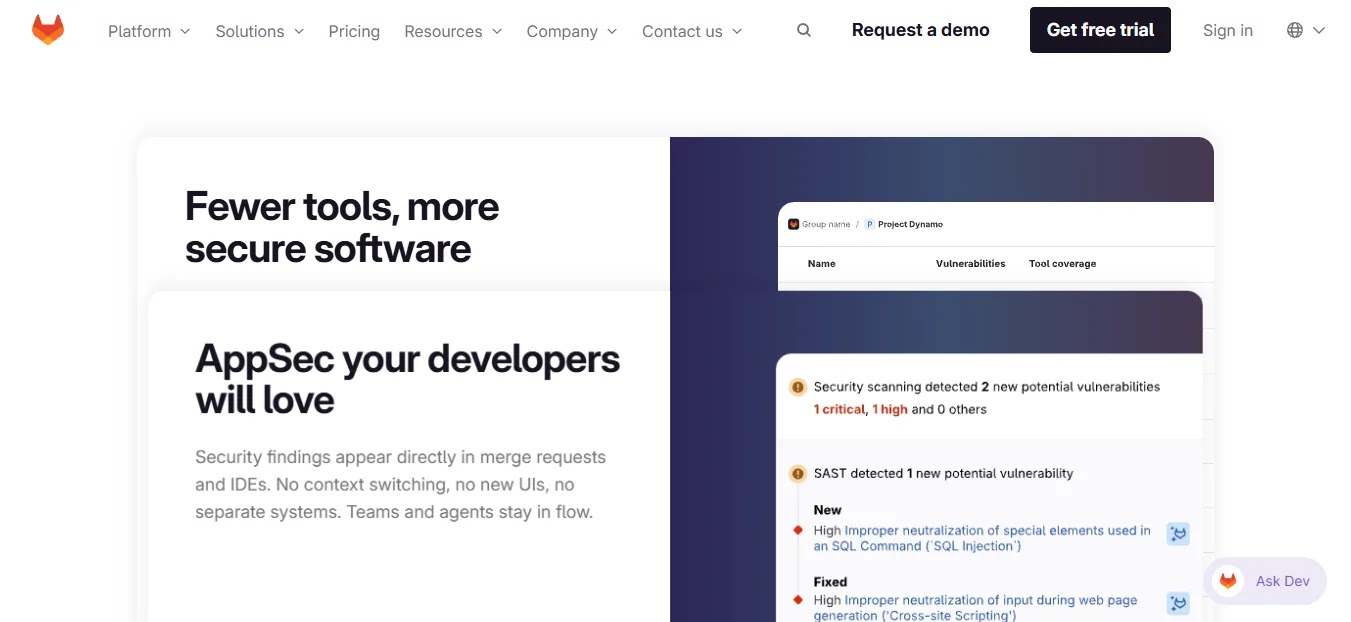
Snapshot: Published tiered pricing | Offers an Ultimate security suite
Why it earns #5: GitLab provides an integrated security solution that encompasses scanning, compliance pipelines, and protected environments as core platform features. For organizations heavily invested in the GitLab ecosystem, this translates into a single product decision that covers the entire SDLC.
Despite the ongoing need for vigilant operational management of critical GitLab CI/CD vulnerabilities and API security updates, GitLab Ultimate delivers exceptional end-to-end coherence and a comprehensive security posture.
Standout features: Integrated scanners, compliance frameworks, and protected environments.
Pros: High coherence across the platform, transparent published pricing.
Cons: May lack the specialized depth of dedicated security tools.
Bottom line: The optimal all-in-one solution for its native estate.
6. Arnica — Best Behavioral Defense

Snapshot: Published tiered pricing | Focuses on anomalous developer detection | Facilitates ChatOps fixes
Why it earns #6: Many pipeline security incidents stem from human factors and misused permissions. Arnica excels by monitoring for anomalous developer pushes and excessive access rights. It streamlines remediation through ChatOps integrations at transparent, published rates.
The platform combines behavioral tracking with developer-centric static code analysis and posture checks, automating real-time remediation directly within popular communication platforms like Slack and Microsoft Teams.
Standout features: Behavioral anomaly detection, permission rightsizing, secrets management, and ChatOps integration.
Pros: Unique behavioral lens, clear pricing structure.
Cons: Newer in the security ecosystem.
Bottom line: Detects and addresses unusual or suspicious commit activities.
7. OX Security — Best PBOM Traceability

Snapshot: Tiered pricing | Provides commit-to-workload lineage | Offers enforcement options
Why it earns #7: OX Security provides an immutable “biography” for every build artifact, meticulously tracking its origin: which commit generated it, which pipeline compiled it, and which production cluster it runs on. This comprehensive lineage is invaluable for security and compliance.
Leveraging security research, including OX Security’s own vulnerability discoveries of command execution flaws, its Pipeline Bill of Materials (PBOM) empowers security teams with automated enforcement policies that can block unverified builds from deployment.
Standout features: Pipeline Bill of Materials (PBOM), code-to-cloud mapping, native scanning capabilities, and strong enforcement options.
Pros: Exceptional clarity in artifact lineage.
Cons: Requires careful consideration for large-scale deployments.
Bottom line: Delivers robust provenance with effective enforcement mechanisms.
8. Apiiro — Best Risk-Graph Context
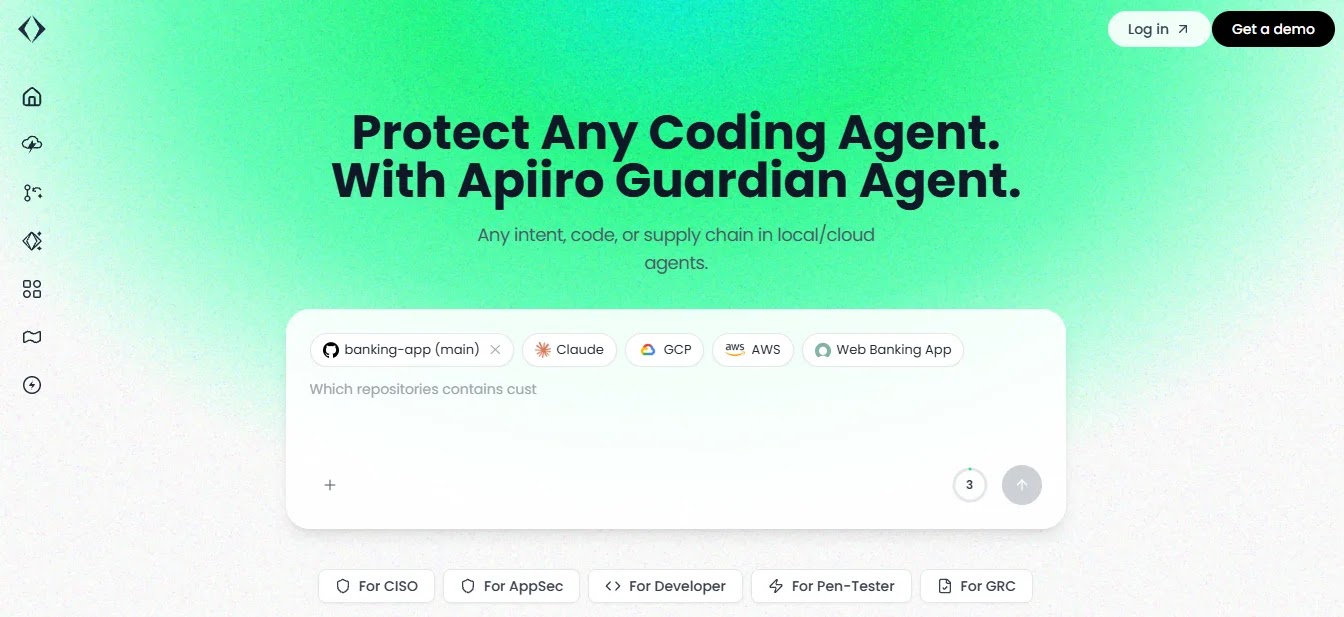
Snapshot: Quote-based pricing | Specializes in material-change detection
Why it earns #8: Apiiro excels at identifying precisely which pipeline or code changes have a substantive impact on an organization’s risk profile. This granular insight is critical for prioritizing security efforts.
Through its AI-driven application risk-graph visualization and deep architecture mapping, Apiiro continuously monitors code alterations from the initial pull request through build and deployment. It is particularly adept at identifying risky “material changes” to authorization boundaries and other critical security aspects.
Standout features: Advanced risk graph, sophisticated change detection, and comprehensive SDLC posture analysis.
Pros: Deep contextual understanding of risk.
Cons: Assumes a certain level of organizational security maturity.
Bottom line: Pinpoints the changes that truly matter for security.
9. Aqua (Argon) — Best CNAPP-Absorbed Lane
Snapshot: Tiered pricing | Argon integrated since 2021
Why it earns #9: Aqua delivers pipeline security as an integrated component of its broader Cloud-Native Application Protection Platform (CNAPP). This consolidation offers a unified security experience for organizations managing cloud-native environments.
By incorporating technology from Argon Security, Aqua protects software supply chain pipelines even amidst sophisticated supply chain attacks targeting open-source scanners and tools. It seamlessly connects build integrity checks directly to container admission controllers, enhancing overall security posture.
Standout features: Pipeline scanning, posture management, and unified CNAPP capabilities.
Pros: Provides a clear platform integration path.
Cons: May lack the standalone momentum of dedicated tools.
Bottom line: Integrates factory security within the comprehensive container estate.
10. Palo Alto (Cider) — Best Prisma-Absorbed Lane

Snapshot: Quote-based pricing | Cider integrated since 2023
Why it earns #10: Palo Alto Networks integrates pipeline security and posture management directly into its Prisma Cloud platform, offering a cohesive code-to-cloud security architecture. This provides a unified view and management for cloud environments.
By incorporating Cider Security’s
Disclaimer: HackersRadar reports on cybersecurity threats and incidents for informational and awareness purposes only. We do not engage in hacking activities, data exfiltration, or the hosting or distribution of stolen or leaked information. All content is based on publicly available sources.








No Comment! Be the first one.