




Top Network Access Control (NAC) Solutions for 2026
Key Takeaways Network Access Control (NAC) solutions are critical for enforcing device-level zero trust, managing network access for all connected devices, and mitigating risks from unmanaged IoT and...

Key Takeaways
- Network Access Control (NAC) solutions are critical for enforcing device-level zero trust, managing network access for all connected devices, and mitigating risks from unmanaged IoT and OT endpoints.
- Leading platforms include Cisco ISE for deep policy granularity in Cisco environments, HPE Aruba ClearPass for robust multi-vendor support, and Forescout for unparalleled agentless visibility of IoT/OT devices.
- Cloud-native NAC, exemplified by Portnox, is maturing, offering SaaS-delivered authentication and policy enforcement without on-premises appliances, making it accessible for mid-market organizations.
- Deployment success hinges on thorough device discovery in “monitor mode” and a phased enforcement approach, as operational missteps, not technical limitations, frequently cause project failures.
- Organizations must carefully consider vendor security posture, patch velocity, and disclosure records, especially given the increasing targeting of network edge infrastructure by threat actors.
Network Access Control (NAC) systems are foundational components in modern cybersecurity, governing which devices are permitted onto an enterprise network, what resources they can access, and how to respond to unauthorized or non-compliant endpoints. This includes everything from corporate laptops to unmanaged IoT sensors, cameras, and point-of-sale (POS) systems that might appear without IT oversight.
Table Of Content
- Key Takeaways
- The Evolving Role of NAC: What It Does Now
- Strategic Considerations for NAC in 2026
- Zero Trust Mandates NAC’s Centrality
- Network Edge Becomes a Primary Attack Vector
- Cloud-Delivered NAC Achieves Maturity
- The Top 10 NAC Solutions for 2026
- Tier 1 — Enterprise Policy Platforms
- 1. Cisco Identity Services Engine (ISE)
- 2. HPE Aruba ClearPass
- 3. Forescout
- Tier 2 — Security-Vendor NAC
- 4. Fortinet FortiNAC
- 5. Ivanti
- 6. Extreme Networks
- 7. Juniper (Mist)
- Tier 3 — Cloud-Native and Specialist NAC
- 8. Portnox
- 9. Genians
- 10. macmon
- Comprehensive Comparison Table
- Successful NAC Deployment: Avoiding Pitfalls
- NAC Cost Considerations and Negotiation Points
- What You Should Do
As organizations prepare for 2026, the landscape of NAC solutions continues to evolve. Cisco ISE maintains its position as a dominant force for large enterprises, particularly those with existing Cisco infrastructure. Forescout distinguishes itself with superior agentless visibility for extensive IoT and Operational Technology (OT) estates. For businesses seeking a streamlined, cloud-native approach without the burden of on-premises appliances, Portnox emerges as a strong contender.
This report details the essential functions of NAC in the coming year, evaluates ten prominent platforms, and provides strategic guidance for successful deployment without disrupting legitimate user access.
The Evolving Role of NAC: What It Does Now
At its core, Network Access Control validates and authorizes devices attempting to join a network. Beyond initial admission, it continuously enforces policies based on the device’s identity, security posture, and observed behavior. The NAC category has undergone significant transformation, moving from basic 802.1X port security to managing Bring Your Own Device (BYOD) programs, and now serving as a critical enforcement layer for device-level zero trust security models.
Modern NAC solutions are expected to perform four key functions, though vendor proficiency varies across these areas:
| Capability | What it means | Why it decides your shortlist |
| Discovery & profiling | Identifying every device on the network, agent or not | You cannot control what you cannot see; IoT/OT estates make this the hardest job |
| Authentication | 802.1X, MAB, certificate-based, or portal-based | Legacy and headless devices break clean 802.1X designs |
| Policy enforcement | VLAN assignment, ACLs, SGTs, quarantine | Enforcement depth depends heavily on your switch/wireless vendor |
| Posture & response | Compliance checks, continuous monitoring, auto-remediation | Where NAC stops being a gate and becomes a control |
A frequently underestimated requirement for buyers is comprehensive agentless coverage. Many enterprise environments host a vast array of devices—including surveillance cameras, badge readers, HVAC controllers, infusion pumps, and Programmable Logic Controllers (PLCs)—that cannot accommodate software agents. If a NAC solution is limited to enforcing policies solely on managed laptops, it addresses only a fraction of the total security challenge.
Strategic Considerations for NAC in 2026
Three principal factors should influence NAC solution selection in the current security climate:
Zero Trust Mandates NAC’s Centrality
The rise of zero trust security models has elevated device-level authorization from an optional feature to a fundamental requirement. NAC is the primary mechanism through which many organizations implement zero trust principles across their wired and wireless local area networks (LANs). Deploying a NAC solution without a clear zero-trust policy framework risks reducing it to an expensive VLAN management tool.
Network Edge Becomes a Primary Attack Vector
Over 2025–2026, remote access and network edge products have consistently appeared in CISA’s Known Exploited Vulnerabilities catalog, indicating a steady stream of exploited flaws. Given that any deployed NAC system occupies a highly privileged position within the network, assessing a vendor’s history of patch velocity and vulnerability disclosure is paramount, rather than an afterthought.
Cloud-Delivered NAC Achieves Maturity
Historically, NAC deployments necessitated on-premises appliances and extensive professional services. However, Software-as-a-Service (SaaS) delivered options have now matured to handle authentication, RADIUS services, and certificate lifecycle management without requiring local hardware. This represents a significant shift, particularly for mid-market teams seeking to optimize their network security operations.
The Top 10 NAC Solutions for 2026
Tier 1 — Enterprise Policy Platforms
1. Cisco Identity Services Engine (ISE)
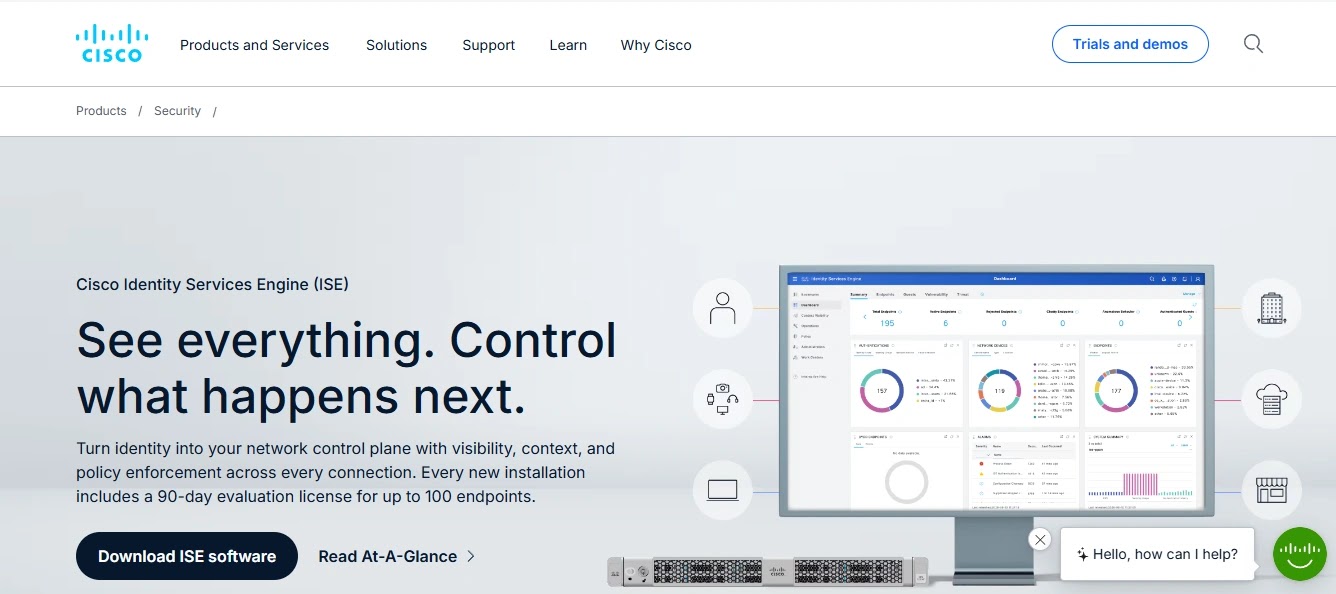
Cisco ISE stands out for its exceptionally deep policy engine and serves as a benchmark for identity-based segmentation. It leverages TrustSec Security Group Tags (SGTs) to enforce policies independently of underlying VLAN structures.
- Strengths: Highly granular policy integration with Cisco switching, wireless, SD-Access, and the broader Cisco security ecosystem, providing valuable identity context to other tools.
- Considerations: Deployments can be complex and service-intensive. Licensing tiers require careful evaluation, and its full value is most realized within Cisco-centric infrastructures.
- Best Fit: Large enterprises with existing Cisco networks and dedicated network security personnel.
- Pricing: Quote-based, tiered licensing.
2. HPE Aruba ClearPass

HPE Aruba ClearPass is recognized as the most robust multi-vendor policy manager, frequently positioned against Cisco ISE in enterprise evaluations. It offers strong capabilities for automated Wi-Fi security enforcement.
- Strengths: Exceptional device profiling and streamlined guest/BYOD onboarding workflows that function effectively across diverse switching environments, not relying on a single vendor’s hardware.
- Considerations: Primarily an appliance-centric deployment model. Advanced modules can increase costs. The optimal experience is typically achieved with Aruba wireless infrastructure.
- Best Fit: Enterprises with heterogeneous network hardware seeking a unified policy plane.
- Pricing: Quote-based (perpetual or subscription).
3. Forescout

Forescout leads in agentless visibility, excelling at identifying and classifying devices that cannot host software agents. This makes it particularly effective for securing IoT devices across complex operational technology (OT) environments.
- Strengths: Deep discovery and classification capabilities for IoT, OT, and medical devices, providing risk context and enforcement extending into industrial networks.
- Considerations: Its comprehensive platform scope means organizations are investing in a broader device security platform, not just NAC. Pricing scales with device counts, which can grow rapidly in IoT-rich environments.
- Best Fit: Healthcare, manufacturing, utilities, and any enterprise where unmanaged devices form a significant portion of the network.
- Pricing: Quote-based, by device count.
Tier 2 — Security-Vendor NAC
4. Fortinet FortiNAC

FortiNAC seamlessly integrates with the Fortinet Security Fabric, positioning Fortinet as a top-tier cybersecurity provider for unified security operations.
- Strengths: Automated response capabilities across the Security Fabric, allowing for isolation of a compromised device at the switch, firewall, and wireless layers through a single workflow.
- Considerations: Its deepest value is realized within Fortinet infrastructure; multi-vendor enforcement is functional but less integrated. Fortinet’s advisory record, including a FortiCloud authentication bypass (CVE-2022-39952) added to CISA’s KEV catalog in January 2026, underscores the critical need for prompt patching.
- Best Fit: Organizations standardized on Fortinet networking and security solutions.
- Pricing: Quote-based, device-tier licensing.
5. Ivanti

Ivanti brings established NAC capabilities, stemming from its Pulse Policy Secure heritage, alongside a strong background in VPN-adjacent access control. When implementing Ivanti, it is crucial to ensure rapid mitigation of known security vulnerabilities.
- Considerations: Ivanti products have been repeatedly featured in CISA’s Known Exploited Vulnerabilities catalog from 2024–2026, including actively exploited flaws in remote access and policy enforcement products. While this history does not disqualify the technology, it mandates a thorough evaluation of the vendor’s current patch cadence, disclosure practices, and an organization’s internal capacity for emergency updates. Prospective buyers must verify current product names, support status, and roadmaps.
- Best Fit: Organizations with existing Ivanti deployments and mature patch management operations.
- Pricing: Quote-based.
6. Extreme Networks

ExtremeControl offers NAC capabilities tightly integrated with Extreme’s fabric networking solutions, aiding in lateral movement detection across campus environments.
- Strengths: Fabric-attached policy that dynamically follows users or devices across a campus without requiring manual VLAN reconfigurations.
- Considerations: Most effective within Extreme infrastructure. Its ecosystem is smaller compared to Cisco or Aruba.
- Best Fit: Educational institutions, healthcare facilities, and campus environments operating on Extreme fabric.
- Pricing: Quote-based.
7. Juniper (Mist)
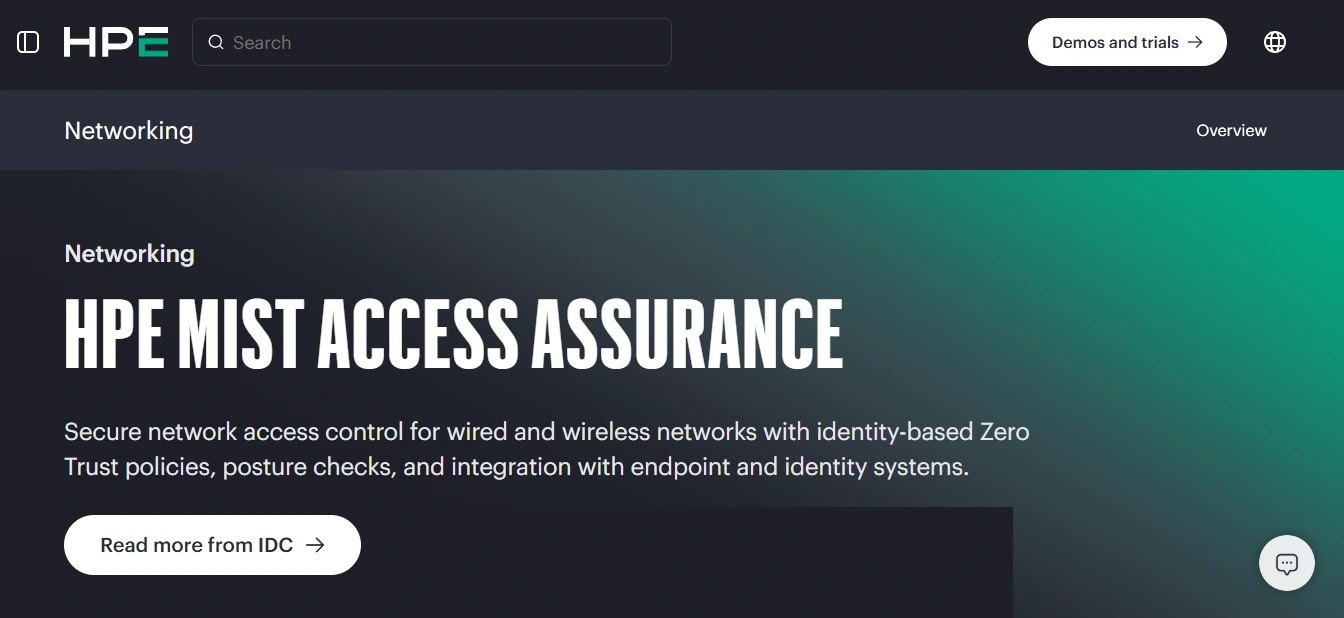
Juniper’s Mist platform provides AI-driven access management within its cloud environment, combining artificial intelligence with an integrated security approach.
- Strengths: Mist’s AI-driven operations model for access, offering proactive detection of authentication failures and onboarding issues before they escalate to the help desk.
- Considerations: Potential portfolio overlap with Aruba ClearPass post-HPE acquisition is a valid inquiry for sales representatives. Its NAC depth may not match that of dedicated platforms.
- Best Fit: Organizations utilizing Mist wireless solutions that desire access control within the same cloud console.
- Pricing: Subscription, quote-based.
Tier 3 — Cloud-Native and Specialist NAC
8. Portnox

Portnox offers genuinely cloud-native NAC, delivering RADIUS, certificate management, posture checks, and policy enforcement as a SaaS solution, eliminating the need for on-premises appliances. This positions it as a leading modern IoT security tool.
- Strengths: Transparent, published pricing and deployments measurable in days rather than quarters, making NAC a viable option for mid-market teams for the first time.
- Considerations: Enforcement depth in complex multi-vendor campus networks may not rival that of ISE or ClearPass. Cloud-delivered RADIUS necessitates careful connectivity design.
- Best Fit: Mid-market organizations and distributed businesses lacking a dedicated network security team.
- Pricing: Published per-device/per-user subscription tiers.
9. Genians

Genians provides device-platform intelligence with robust visibility features, crucial for preventing incidents such as large-scale IoT data breaches caused by undocumented “shadow” devices.
- Strengths: Detailed device fingerprinting and network sensing capabilities that discover devices without requiring inline deployment.
- Considerations: Smaller Western channel and community; verify support coverage in your specific regions.
- Best Fit: APAC organizations and buyers prioritizing visibility-driven NAC at a competitive cost.
- Pricing: Quote-based.
10. macmon

macmon, a European NAC vendor (part of the Belden group), is known for its pragmatic deployment and strong adherence to European data privacy regulations, enforcing policy across Layer 2 infrastructure like network bridges and switches.
- Strengths: Rapid deployment on existing infrastructure and clear GDPR-aligned data handling, appealing to European buyers.
- Considerations: Limited presence outside Europe. Offers a smaller feature set compared to global platforms.
- Best Fit: EU mid-market and public-sector organizations with data residency concerns.
- Pricing: Quote-based.
Comprehensive Comparison Table
| Solution | Deployment | Agentless coverage | Multi-vendor enforcement | Cloud-delivered | Ideal size |
| Cisco ISE | Appliance/VM | Strong | Best in Cisco estates | Partial | 1,000+ |
| HPE Aruba ClearPass | Appliance/VM | Strong | Yes | Partial | 500+ |
| Forescout | Appliance/VM | Strongest | Yes | Partial | 1,000+ / IoT-heavy |
| Fortinet FortiNAC | Appliance/VM | Good | Best in Fabric | Partial | 250+ |
| Ivanti | Appliance/VM | Good | Yes | Partial | Existing estates |
| Extreme Networks | Appliance/cloud | Good | Best in Extreme | Yes | Campus 500+ |
| Juniper Mist | Cloud | Good | Best with Mist | Yes | Mist estates |
| Portnox | SaaS | Good | Yes | Fully | 50–2,000 |
| Genians | Appliance/VM/cloud | Strong | Yes | Partial | 100–5,000 |
| macmon | Appliance/VM | Good | Yes | Partial | EU mid-market |
Successful NAC Deployment: Avoiding Pitfalls
NAC projects frequently encounter difficulties due to operational challenges rather than technical limitations. Adhering to four key principles can prevent common deployment issues:
- Initial Monitoring Phase: Operate the NAC solution in monitor-only mode for an extended period. This allows for thorough profiling and classification of all network devices, many of which may be undocumented, before any enforcement rules are activated.
- Address Headless Devices Proactively: Establish a clear strategy for authenticating devices such as printers, cameras, badge readers, and OT equipment. Options include MAC authentication bypass (MAB) with profiling, certificate-based authentication, or dedicated network segmentation. These devices are often the source of emergency exceptions.
- Phased Enforcement: Implement enforcement policies incrementally by network segment, rather than attempting a feature-by-feature rollout. Begin with low-risk areas like guest networks, then move to contractor access, and subsequently to specific buildings. Avoid broad, estate-wide enforcement changes, especially at critical times.
- Integrate with Incident Response: Maximize NAC’s value by integrating it into existing incident response workflows. The ability for other security tools—such as Network Detection and Response (NDR), Endpoint Detection and Response (EDR), or Identity Threat Detection and Response (ITDR)—to trigger automatic port quarantine through NAC transforms it from a mere gatekeeper into an active control mechanism. If NAC operates in isolation, its full potential as a security control is not realized.
NAC Cost Considerations and Negotiation Points
NAC solution pricing typically depends on the number of devices or users, with the definition of a “device” being a critical negotiation point. Traditional platforms like Cisco, Aruba, Forescout, and Fortinet offer quote-based pricing via endpoint tiers, with both perpetual and subscription options. Enterprise deployments, including professional services, can often range from five to six figures annually.
Cloud-native options, such as Portnox, generally publish subscription pricing, shifting costs from capital expenditure and services to a more predictable per-device fee.
Three primary factors influence the total cost:
- Count Definition: Clarify whether IoT sensors are counted identically to laptops.
- Services Scope: Deployment assistance is a common area for budget overruns; define this scope precisely.
- Module Bundling: Features like posture assessment, guest management, and TACACS+ often come as separate SKUs.
Always request a three-year total cost of ownership (TCO) that explicitly includes professional services, rather than focusing solely on the first-year licensing cost.
What You Should Do
- Conduct a Comprehensive Device Inventory: Before selecting or deploying any NAC solution, perform a thorough audit of all devices on your network, paying special attention to unmanaged IoT, OT, and headless systems.
- Prioritize Agentless Visibility: If your environment includes a significant number of devices that cannot run agents, prioritize NAC solutions with strong agentless discovery and profiling capabilities.
- Align with Zero Trust Strategy: Ensure your NAC deployment aligns directly with your organization’s broader zero-trust security architecture and policy design.
- Evaluate Vendor Security Posture: Scrutinize vendor patch velocity, vulnerability disclosure history, and inclusion in CISA’s KEV catalog, especially for products operating at the network edge.
- Plan for Phased Deployment: Always start with a lengthy monitoring phase to understand your network’s unique device landscape, then implement enforcement incrementally by network segment to minimize disruption.
- Integrate with Existing Security Tools: Design your NAC deployment to integrate with other security controls (e.g., NDR, EDR) to enable automated responses like port quarantine upon threat detection.
- Obtain Transparent Pricing: Request a detailed three-year total cost of ownership, including all licensing tiers, professional services, and module costs, to avoid hidden expenses.
Disclaimer: HackersRadar reports on cybersecurity threats and incidents for informational and awareness purposes only. We do not engage in hacking activities, data exfiltration, or the hosting or distribution of stolen or leaked information. All content is based on publicly available sources.








No Comment! Be the first one.