




Critical Flaw in iOS AI Apps Exposes LLM API Credentials
Key Takeaways A significant number of iOS applications leveraging large language models (LLMs) are inadvertently exposing sensitive API credentials through their network traffic. A study of 444 free,...

Key Takeaways
- A significant number of iOS applications leveraging large language models (LLMs) are inadvertently exposing sensitive API credentials through their network traffic.
- A study of 444 free, LLM-enabled iOS apps revealed that 64% (282 apps) were susceptible to credential leakage when their network communications were intercepted.
- This widespread vulnerability, spanning various app categories and including highly popular applications, puts developers at risk of account abuse and unauthorized access to cloud resources.
- Common leakage patterns include plaintext API keys, unauthenticated backend proxies, and vulnerable JSON Web Tokens (JWTs) with critical management flaws.
- While some developers have patched their applications following responsible disclosure, a substantial number of vulnerable apps remain unaddressed.
Widespread Credential Leakage in iOS AI Apps
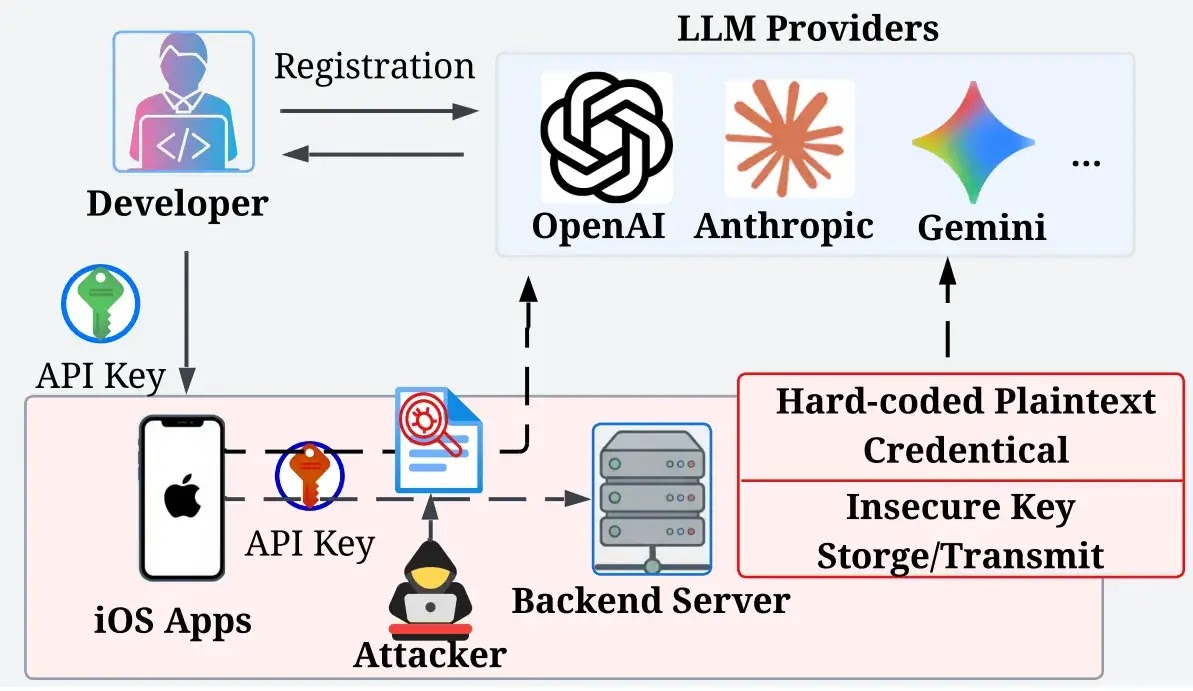
A recent investigation has uncovered a critical security flaw in a large number of iOS applications powered by artificial intelligence. These apps are inadvertently exposing credentials for large language model (LLM) APIs, creating a significant risk of large-scale abuse of developer accounts and associated cloud infrastructure.
Table Of Content
An extensive empirical study, which examined 444 free, LLM-enabled iOS applications available on the U.S. App Store, found that a staggering 282 of them—representing 64% of the sample—leaked exploitable LLM credentials. This exposure occurred when network traffic from these applications was intercepted during normal operation.
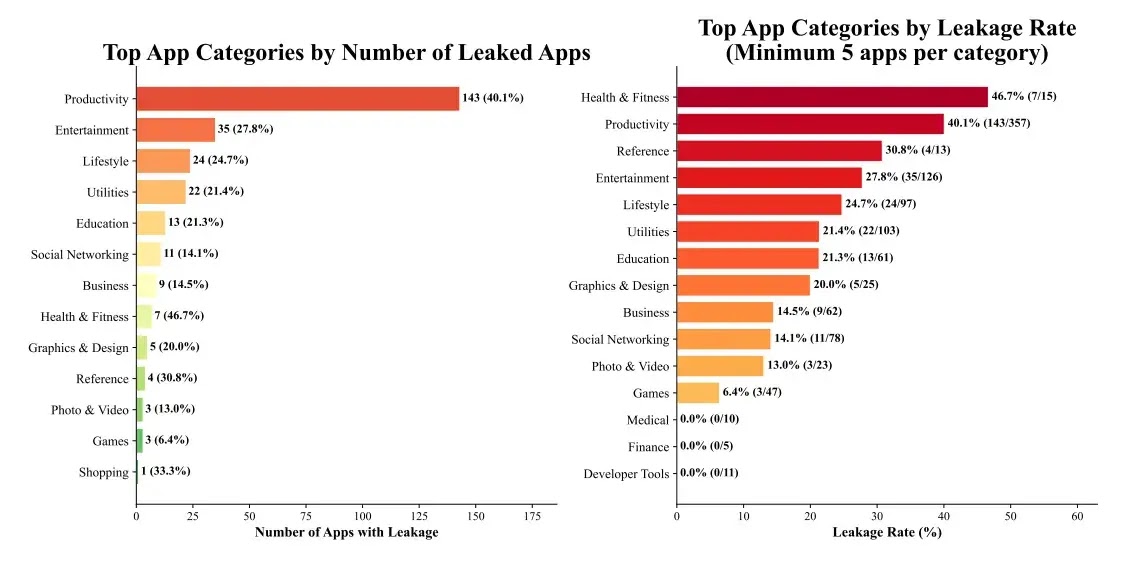
The affected applications cut across 13 distinct categories, encompassing both specialized tools and immensely popular apps that boast over two million user ratings. This broad distribution highlights that credential leakage is not an isolated incident but rather a systemic issue pervading the AI-powered iOS app ecosystem.
Methodology of the Study
Researchers developed a dynamic analysis framework, dubbed LLMKeyLens, to systematically map this threat. Unlike static binary analysis, LLMKeyLens observes iOS apps during runtime to identify vulnerabilities.
The testing process involved installing each application on physical devices. All network traffic was then routed through a man-in-the-middle (MITM) proxy. A custom root certificate was employed to decrypt HTTPS communications, allowing researchers to trigger the apps’ AI functionalities with controlled prompts and monitor the data exchange.
Credentials were identified by matching provider-specific patterns within the network traffic. To confirm their active validity and access to LLM services, these exposed credentials were then safely validated using benign requests.
Identified Leakage Patterns
The study, conducted by Wake Forest University, identified three primary credential leakage patterns, all readily observable in captured network traffic.
Plaintext API Keys
The most direct form of leakage involved plaintext API keys. Fifty-four applications were found to transmit static LLM provider keys directly within HTTP headers or query strings. These keys were sent to endpoints such as api.openai.com or generativelanguage.googleapis.com.
In many instances, these requests also contained sensitive system prompts. This means that a single interception could not only reveal a reusable API key but also the proprietary business logic driving the app’s AI behavior.
Unauthenticated Backend Proxies
A second pattern uncovered 92 applications that utilized backend proxies but failed to implement any authentication requirements for these endpoints. This effectively created unauthenticated LLM relays that could be accessed by anyone possessing the URL and a basic understanding of the JSON schema.
Vulnerable JSON Web Tokens (JWTs)
The third and most prevalent pattern involved JSON Web Tokens (JWTs). A total of 136 applications leaked bearer tokens used for authentication against intermediate backend systems. Many of these tokens remained valid for extended periods, allowing them to be replayed for continuous inference access.
Researchers discovered critical flaws in JWT management, including the absence of expiration dates, tokens valid for up to a century, and servers that accepted already expired tokens. Even when developers attempted to implement “short-lived token” strategies, weak enforcement mechanisms effectively rendered these tokens as static secrets.
Defensive Measures and Remediation Efforts
On the defensive front, only 143 out of the 444 applications incorporated any form of interception resistance. The most common protection, bypassing the system HTTP proxy, proved ineffective in 81% of cases when researchers switched to VPN-based transparent traffic capture.
More robust, multi-layered defenses, such as custom payload encryption and anti-debugging checks, were rarely observed but demonstrated significantly higher resistance to bypass attempts.
Ninety days after responsible disclosure, clear evidence of remediation was observed in only 78 of the 282 affected applications. Conversely, 66 applications remained exploitable with minimal or no changes implemented.
While some developers responded by revoking compromised keys or strengthening backend authentication, others opted to remove or abandon their services entirely rather than properly address the underlying integration flaws.
Overall, these findings underscore a significant gap in secure LLM integration within the iOS ecosystem. Developers frequently embed or indirectly expose credentials, LLM providers continue to permit insecure client-side practices, and app platforms currently lack systematic screening for AI-related secret leakage.
What You Should Do
- For Developers: Implement robust security practices for LLM API key management. Avoid embedding static API keys directly in client-side code. Utilize secure backend services for API calls and ensure proper authentication and authorization. Employ short-lived, refreshable tokens and enforce strict expiration policies. Implement multi-layered defenses against network interception, including custom encryption and anti-debugging techniques.
- For Users: Exercise caution when downloading and using AI-powered iOS applications, especially those from less reputable developers. Be mindful of the permissions requested by apps. While direct user action to mitigate this specific vulnerability is limited, choosing apps from well-known and trusted developers can reduce risk.
- For Platform Providers (Apple): Enhance app review processes to include systematic screening for LLM API credential leakage and other AI-related security vulnerabilities. Provide clear guidelines and tools for secure LLM integration to developers.
Disclaimer: HackersRadar reports on cybersecurity threats and incidents for informational and awareness purposes only. We do not engage in hacking activities, data exfiltration, or the hosting or distribution of stolen or leaked information. All content is based on publicly available sources.








No Comment! Be the first one.