




New ‘fast16’ Malware Sabotages High-Value Targets
Key Takeaways A newly identified malware, “fast16,” targets high-value organizations for sabotage and long-term control. fast16 employs a sophisticated modular architecture, including a...

Key Takeaways
- A newly identified malware, “fast16,” targets high-value organizations for sabotage and long-term control.
- fast16 employs a sophisticated modular architecture, including a kernel-mode driver (fast16.sys), a user-mode controller (svcmgmt.exe), and a flexible Lua-based payload framework.
- The malware is designed for stealth and persistence, capable of bypassing security software and preparing for destructive actions against critical infrastructure.
- Initial access likely involves exploiting existing vulnerabilities or compromised credentials, rather than broad phishing campaigns.
Cybersecurity researchers have uncovered a new, highly sophisticated malware dubbed “fast16,” engineered to infiltrate and sabotage high-value targets. Unlike commodity malware designed for widespread distribution, fast16 exhibits characteristics of a precision-engineered tool aimed at specific victims where operational disruption or sustained control could inflict severe financial and operational damage.
Table Of Content
Analysis reveals fast16 as a modular toolset, intricately combining a Windows kernel driver, a user-mode controller, and a versatile Lua-based payload framework. This design grants attackers significant adaptability, allowing them to tailor their tactics within sensitive network environments.
The Multi-Stage Attack Chain
The fast16 attack chain initiates with a component named svcmgmt.exe, which functions as the primary carrier for the malware’s core capabilities. This executable orchestrates the installation of an accompanying kernel-mode driver, fast16.sys. The integration of a kernel-mode driver is critical, as it significantly expands the malware’s visibility and control deep within the operating system’s core.
Once both components are operational, fast16 can execute lateral movement, deploy additional worm-like modules, and prepare for destructive or disruptive actions. Its targets are typically critical infrastructure or expensive operational assets, where the impact of sabotage would be most severe.
SentinelOne analysts were the first to detail fast16, identifying the various artifacts and confirming they belong to a single, unified project rather than disparate samples.
Advanced Modularity and Evasion Techniques
SentinelOne’s research describes fast16 as a sophisticated toolkit, not merely a single binary. Its functionalities are distributed across the kernel driver, the management executable, and a Lua bytecode payload. This payload is decrypted and executed at runtime, offering operators a flexible scripting layer. This allows for dynamic scripting of functions related to propagation, sabotage, and stealth without the need to continuously recompile core binaries.
Embedded strings and configuration elements within the malware reveal features such as worm installation routines, propagation controls, implant installation steps, and conditions designed to prevent overly aggressive spreading. This meticulous design reflects the attackers’ need to balance persistence and control with the imperative to remain undetected within highly monitored, high-value networks.
The initial infection vectors for fast16 appear to leverage existing access and abuse of management pathways within already compromised environments. This suggests that attackers are not relying on mass-phishing or drive-by download campaigns for initial compromise. The presence of signed or seemingly legitimate components, coupled with detailed logic for service and driver installation, indicates that operators anticipate operating with elevated privileges on domain-joined systems, likely after establishing an initial foothold using other tools and techniques.
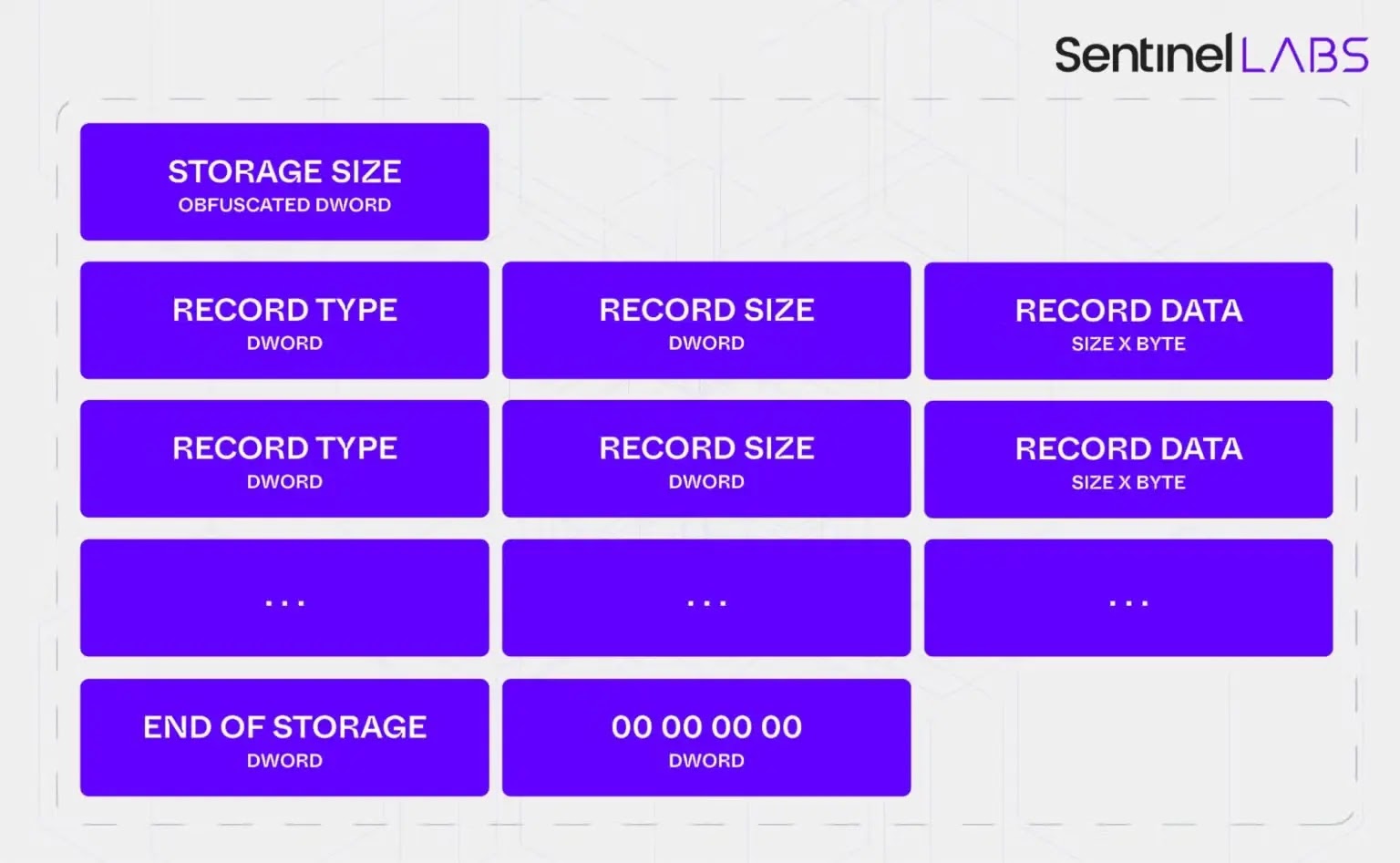
Once active, fast16 transforms these initial footholds into a resilient presence, capable of patching security software, bypassing local protections, and setting the stage for future sabotage operations against critical infrastructure or specialized workstations. The fast16 architecture, as illustrated in the original research, clearly depicts the relationship between svcmgmt.exe, fast16.sys, and the Lua payload within this layered attack structure.
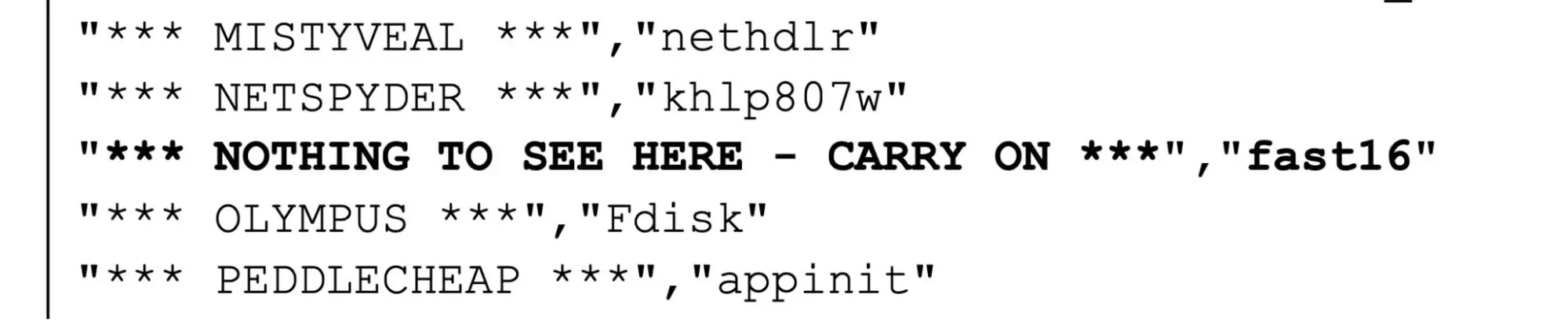
The operational impact of a fast16 intrusion can be severe. The malware is not only built for persistence but also to actively interfere with security controls and prepare for destructive actions on command. Its configuration and code reveal that its authors anticipated encountering various personal firewall and security products. It checks for relevant registry keys and adapts its behavior accordingly. For high-value targets, this capability can result in delayed detection of lateral movement, extended dwell times, and an increased likelihood of successful sabotage once triggered. In environments managing ultra-expensive equipment or critical processes, such delays could mean the difference between a contained incident and widespread operational downtime.
Deep dive into the fast16 infection and implant mechanism
At the core of the fast16 infection process is the synergy between svcmgmt.exe, acting as the user-mode orchestrator, and fast16.sys, the kernel-mode driver that anchors the implant within the system. The svcmgmt.exe component handles tasks such as copying payload files, configuring service entries, and establishing registry values that dictate the malware’s execution parameters.
SentinelOne’s analysis identified several Lua function names within the decrypted payload, including installworm, startworm, scmwormletinstall, scmwormletpropagatesystem, and oktopropagate. These functions collectively describe a phased approach to evolving an initial compromise into a network-aware implant with controlled propagation capabilities. This separation of high-risk propagation operations from core persistence allows operators to precisely control the malware’s spread within a network.
The implant specifically probes registry keys associated with personal firewalls and security products, checking paths under HKEY_LOCAL_MACHINE and HKEY_CURRENT_USER for indicators of vendors like ZoneAlarm, EZ Armor, and other firewall suites. This reconnaissance allows fast16 to determine whether to proceed with certain network operations or adjust its propagation logic to avoid detection or blocking by host-based controls.
Concurrently, the fast16.sys driver hooks low-level Windows functions and registers for file system events. This enables it to monitor new processes, file creations, and storage activity while maintaining the stealth of its own components. In some observed builds, the project also includes a “cleanfast16patchtarget” module, which appears to patch specific software modules, likely to disable or weaken existing security protections and further entrench the implant within high-value systems. This intricate design illustrates the progression from carrier execution to driver installation and Lua-based wormlet activation across the victim’s environment.
What You Should Do
- Implement stringent driver-loading policies to prevent unauthorized kernel-mode driver installations.
- Actively monitor for and alert on unusual service and driver creation events within your network.
- Continuously scrutinize registry changes, particularly those affecting firewall and security product keys.
- Enforce robust application control on all management servers to restrict unauthorized binary execution, especially for files named
svcmgmt.exe. - Deploy detection content, such as YARA rules, specifically tailored to identify fast16’s Lua payload, driver, and patching code, as detailed by SentinelOne.
- In high-value environments, combine strict least-privilege access, meticulous auditing of administrative actions, and regular integrity checks on security tooling to prevent fast16 from establishing a long-term, sabotage-ready presence.
Disclaimer: HackersRadar reports on cybersecurity threats and incidents for informational and awareness purposes only. We do not engage in hacking activities, data exfiltration, or the hosting or distribution of stolen or leaked information. All content is based on publicly available sources.








No Comment! Be the first one.