




Top 10 Data Loss Prevention Software Solutions for 2026
Key Takeaways Data Loss Prevention (DLP) solutions are essential for safeguarding sensitive information like IP, PII, and PHI in 2026’s decentralized, multi-cloud enterprise landscape. Modern...

Key Takeaways
- Data Loss Prevention (DLP) solutions are essential for safeguarding sensitive information like IP, PII, and PHI in 2026’s decentralized, multi-cloud enterprise landscape.
- Modern DLP tools go beyond perimeter defense, offering granular visibility, AI-driven classification, and automated policy enforcement to combat insider threats, compromised credentials, and accidental exposure.
- The top DLP solutions for 2026 integrate advanced features such as context-aware machine learning, omnichannel visibility, User and Entity Behavior Analytics (UEBA), and automated enforcement across endpoints, cloud, email, and shadow IT.
- Choosing the right DLP depends on an organization’s specific architecture and risk profile, with options ranging from deeply integrated ecosystem solutions to cloud-native, API-driven platforms.
The Evolving Imperative of Data Loss Prevention in 2026
In the digital economy of 2026, data stands as the critical asset powering every modern enterprise. With organizations increasingly embracing decentralized, multi-cloud architectures, the challenge of securing intellectual property (IP), personally identifiable information (PII), and protected health information (PHI) has escalated dramatically.
Table Of Content
- Key Takeaways
- The Evolving Imperative of Data Loss Prevention in 2026
- Methodology for Evaluating Top DLP Solutions
- Defining Modern DLP: Key Feature Requirements
- DLP Software Feature Comparison Overview
- Top 10 Data Loss Prevention Software Solutions
- 1. Microsoft Purview DLP
- Why We Picked It
- Pros
- Cons
- 2. Symantec DLP (Broadcom)
- Why We Picked It
- Pros
- Cons
- 3. Forcepoint One DLP
- Why We Picked It
- Pros
- Cons
- 4. Trellix Data Loss Prevention
- Why We Picked It
- Pros
- Cons
- 5. Digital Guardian DLP
- Why We Picked It
- Pros
- Cons
- 6. Zscaler DLP
- Why We Picked It
- Pros
- Cons
- 7. Netskope DLP
- Why We Picked It
- Pros
- Cons
- 8. Nightfall AI
- Why We Picked It
- Pros
- Cons
- 9. Cyberhaven
- Why We Picked It
- Pros
- Cons
- 10. Netwrix Endpoint Protector
- Why We Picked It
- Pros
- Cons
- Conclusion
Contemporary cybersecurity strategies must extend beyond traditional perimeter defenses. Enterprises now face the complex task of protecting their invaluable data from a spectrum of threats, including malicious insiders, credential compromises, and inadvertent exposures by employees.
Selecting and deploying the most effective Data Loss Prevention (DLP) software is paramount for maintaining regulatory compliance and mitigating the severe financial and reputational repercussions of a data breach. These advanced solutions empower Security Operations Centers (SOCs) with unparalleled insight into how data is created, moved, and shared across the entire corporate infrastructure.
Leveraging sophisticated machine learning algorithms, these platforms automatically classify sensitive data and enforce dynamic policies, effectively preventing unauthorized transfers through channels such as email, USB drives, or unapproved cloud applications. Whether the threat stems from sophisticated exfiltration attempts or simple human error, implementing robust DLP tools is a fundamental step in fortifying an organization’s most critical assets against the relentless tide of modern cyberattacks.
Methodology for Evaluating Top DLP Solutions
Our selection process for identifying premier DLP platforms adhered to a rigorous, practitioner-focused methodology grounded in Google’s EEAT principles (Experience, Expertise, Authoritativeness, and Trustworthiness). To ensure this guide delivers maximum value for enterprise security architects, we moved beyond marketing claims, focusing instead on practical, operational efficiency.
Our evaluation simulated high-volume, real-world data exfiltration scenarios. We fed a carefully curated dataset of highly sensitive, obfuscated information—including mock credit card numbers, proprietary source code, and simulated medical records—into each platform’s ingestion engine. We then assessed each tool’s effectiveness in recognizing and classifying this data, the speed of its automated blocking mechanisms, and its native integration capabilities with existing SIEM and SOAR platforms.
A significant weighting was given to platforms that reduce the cognitive burden on security analysts, prioritizing those that seamlessly translate raw telemetry into automated remediation workflows for cybersecurity teams.
Defining Modern DLP: Key Feature Requirements
Before committing to a data protection platform, organizations must understand the distinguishing features that elevate next-generation data security solutions above rudimentary file-blocking tools.
A leading DLP platform must offer Context-Aware Machine Learning Classification, enabling it to automatically identify sensitive data based on its content and context, rather than relying solely on rigid, manually defined regular expressions (Regex). Omnichannel Visibility is equally crucial, demanding that the system monitor data across all vectors: endpoints, cloud storage (SaaS/IaaS), email, and shadow IT applications. Furthermore, robust User and Entity Behavior Analytics (UEBA) is essential for detecting malicious intent by flagging anomalous access patterns before data can be compromised. Finally, seamless Automated Enforcement ensures the platform can instantly encrypt, block, or quarantine data in motion, creating a formidable defense against complex insider threats.
DLP Software Feature Comparison Overview
Below is a concise comparison highlighting the core deployment, automation, and integration capabilities of our top enterprise DLP recommendations.
| Platform | Endpoint DLP | Cloud / SaaS DLP | ML-Based Classification | UEBA Integration |
| Microsoft Purview DLP | Yes | Yes | Yes | Yes |
| Symantec DLP (Broadcom) | Yes | Yes | Yes | Yes |
| Forcepoint One DLP | Yes | Yes | Yes | Yes |
| Trellix Data Loss Prevention | Yes | Yes | Yes | Yes |
| Digital Guardian DLP | Yes | Yes | Yes | Yes |
| Zscaler DLP | Limited (Via Agent) | Yes (Inline) | Yes | Yes |
| Netskope DLP | Limited (Via Agent) | Yes | Yes | Yes |
| Nightfall AI | No (API/Cloud focus) | Yes | Yes (Advanced AI) | Limited |
| Cyberhaven | Yes | Yes | Yes (Data Lineage) | Yes |
| Netwrix Endpoint Protector | Yes | Limited | Yes | Limited |
Top 10 Data Loss Prevention Software Solutions
1. Microsoft Purview DLP
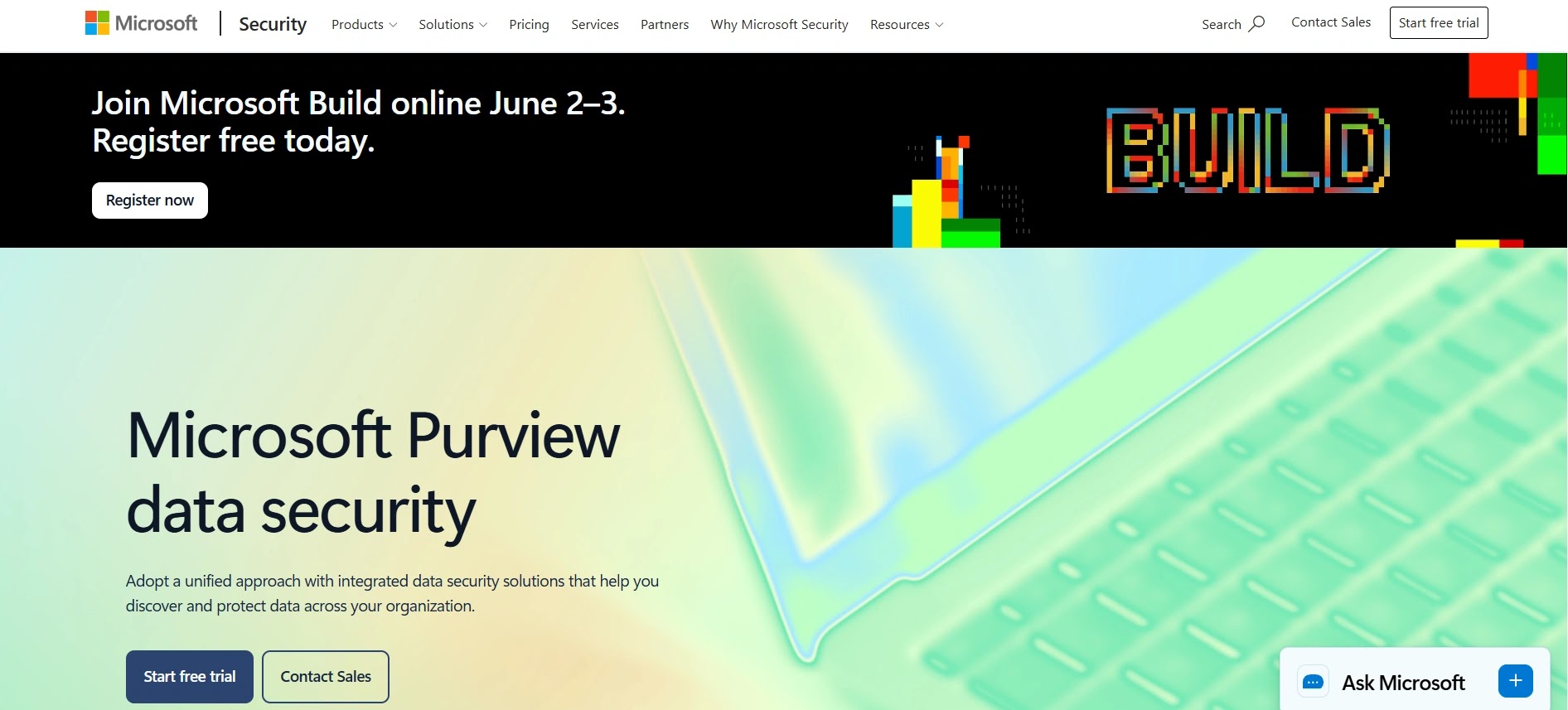
Microsoft Purview consolidates a vast array of data governance, compliance, and DLP functionalities into a cohesive, unified ecosystem. Its native integration within Windows 11/12, Microsoft 365, and the Edge browser delivers seamless data protection without the need for deploying cumbersome third-party endpoint agents.
The platform leverages advanced machine learning trainable classifiers to automatically identify sensitive intellectual property, financial data, and PII across SharePoint, OneDrive, Teams, and Exchange. When combined with Azure Information Protection (AIP), it automatically applies persistent encryption labels to documents, ensuring their protection even as they move beyond corporate boundaries.
- Specifications: Cloud-native architecture, deeply integrated into Microsoft 365 and Azure ecosystems, native endpoint integration in Windows.
- Features: Built-in endpoint DLP, trainable machine learning classifiers, native Microsoft Teams protection, seamless integration with Insider Risk Management.
- Reason to Buy: The most cost-effective and logical choice for organizations with significant investments in the Microsoft 365 ecosystem, offering unparalleled native visibility.
Why We Picked It
Microsoft Purview DLP was selected for its native architecture, which completely bypasses the traditional software conflicts and performance overhead often associated with third-party DLP agents. By utilizing existing enterprise tools, organizations can immediately activate data monitoring without deploying new infrastructure, significantly reducing the time required to defend against supply chain attacks.
Furthermore, its deep integration into the broader Microsoft security suite ensures that DLP alerts are instantly correlated with identity and endpoint signals, providing SOCs with a holistic view of potential data exfiltration attempts.
Pros:
- Zero-friction endpoint deployment for Windows environments.
- Exceptional, out-of-the-box integration with Microsoft Teams and SharePoint.
- Highly sophisticated machine learning trainable classifiers.
Cons:
- Less granular control over niche, non-Microsoft legacy applications or specialized Linux environments.
- Complex licensing tiers can make full feature deployment costly.
Try Microsoft Purview DLP: Explore Microsoft Purview2. Symantec DLP (Broadcom)
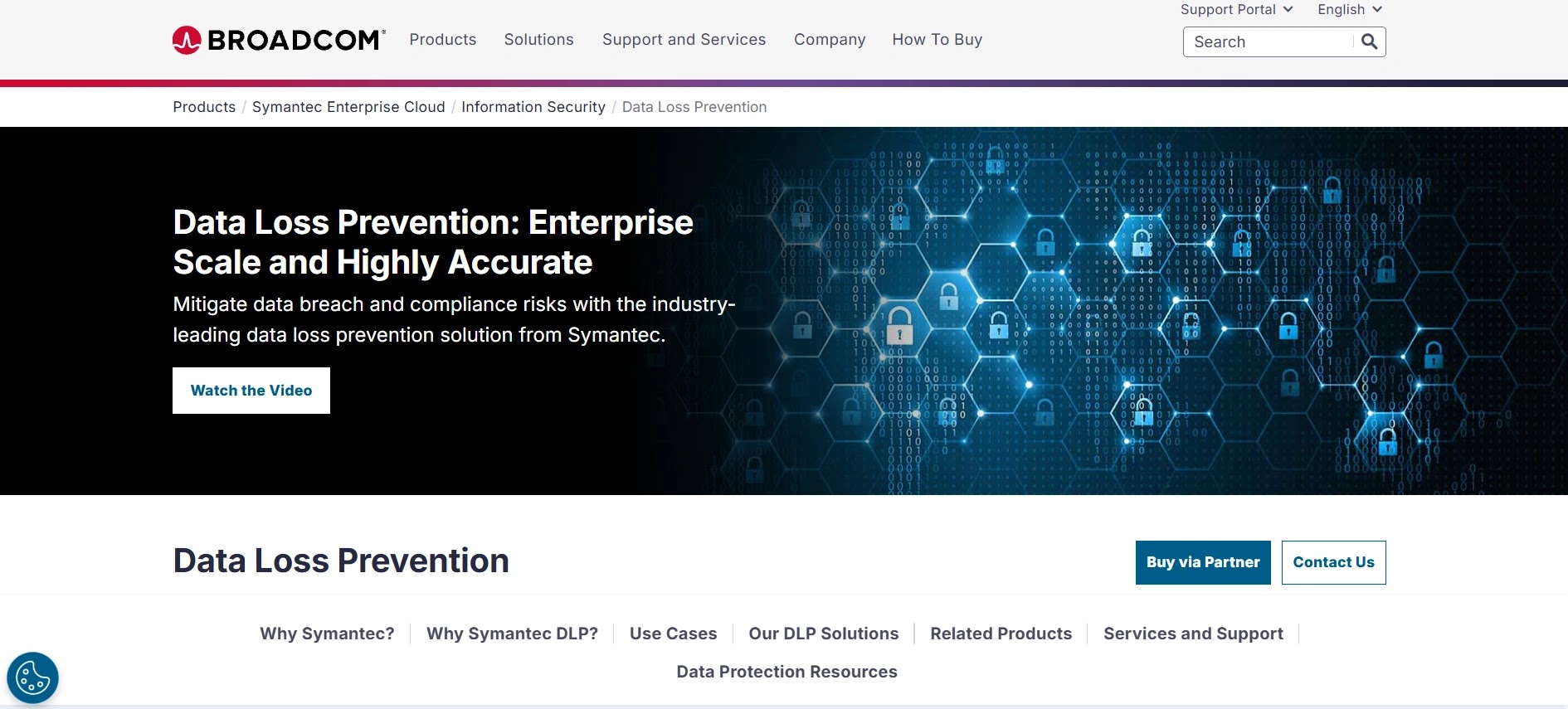
Symantec DLP, now part of Broadcom, stands as an established leader in the data protection industry. It offers an exceptionally robust and highly customizable framework for discovering, monitoring, and safeguarding data across endpoints, networks, storage, and cloud environments.
The solution is highly regarded for its Vector Machine Learning (VML) and Exact Data Matching (EDM) capabilities, which enable large enterprises to fingerprint billions of customer records. This precision ensures that if even a single record from a highly classified database is pasted into an unauthorized webmail client, Symantec can instantly intercept and block the transfer.
- Specifications: Available as on-premises, hybrid, and fully cloud-delivered architectures; supports massive, global enterprise scalability.
- Features: Exact Data Matching (EDM), Vector Machine Learning (VML), robust Information Centric Analytics (ICA), comprehensive endpoint, network, and cloud coverage.
- Reason to Buy: The leading choice for large, highly regulated enterprises (e.g., global banking, healthcare) requiring the most powerful, granular, and scalable policy engine available.
Why We Picked It
Symantec DLP was chosen for its unparalleled accuracy within complex enterprise environments. When protecting millions of sensitive records from advanced cyber threats, false positives can quickly overwhelm security teams. Symantec’s fingerprinting technology ensures that security controls are triggered only by definitively sensitive data.
Furthermore, its deep integration with Symantec Web Security Service (WSS) and CloudSOC CASB ensures that the same stringent data policies applied to a physical laptop are seamlessly extended to users accessing data via cloud applications.
Pros:
- Industry-leading Exact Data Matching and fingerprinting accuracy.
- Unmatched scalability for massive, global Fortune 500 networks.
- Comprehensive, unified policy management across all data vectors.
Cons:
- Deployment and tuning require significant, specialized engineering resources.
- The administrative interface can appear dated and dense compared to newer cloud-native competitors.
Try Symantec DLP: Explore Symantec DLP3. Forcepoint One DLP
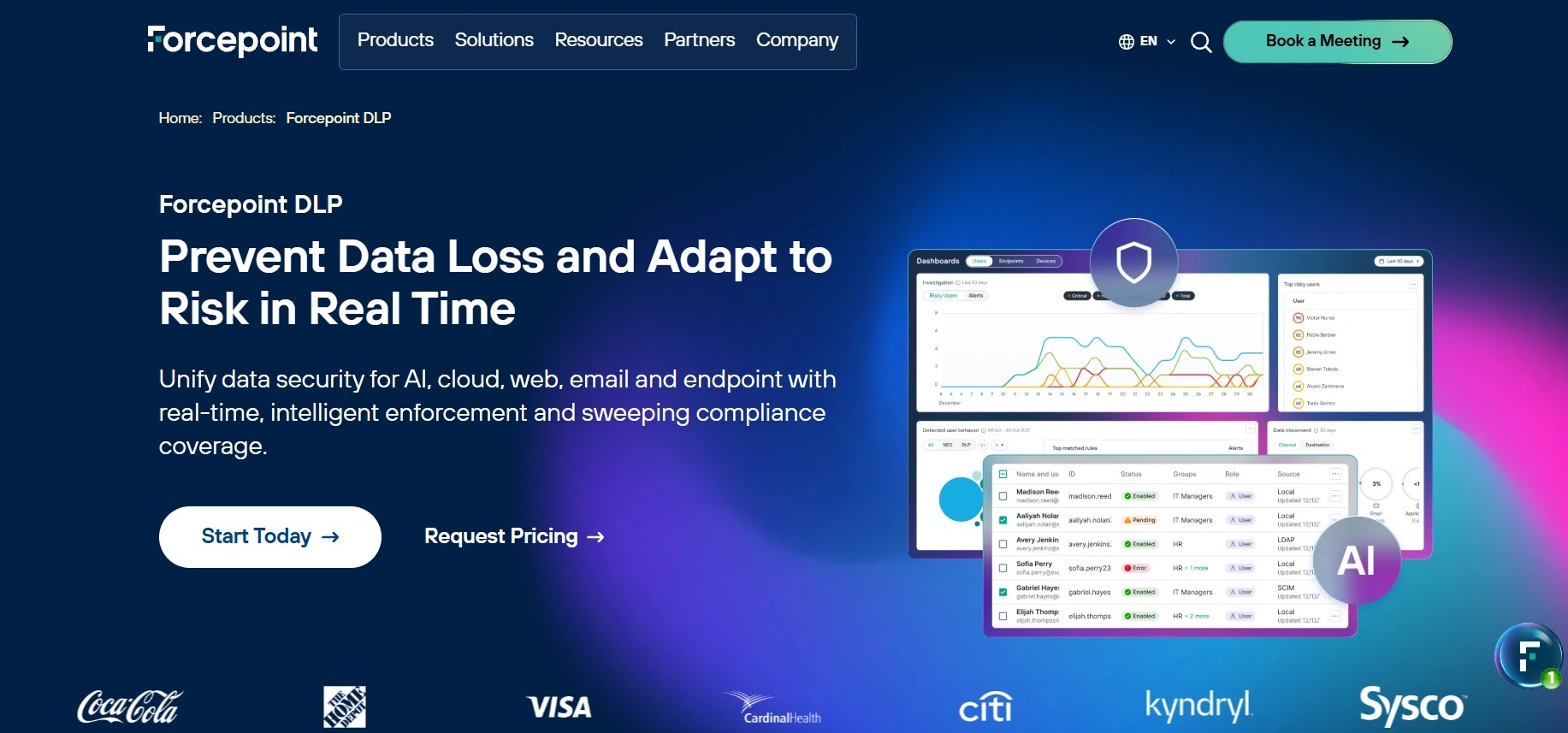
Forcepoint One DLP adopts a unified, human-centric approach to data security. Recognizing that overly rigid policies can impede legitimate business operations, Forcepoint tightly integrates its DLP engine with its Risk-Adaptive Protection (RAP) technology.
Instead of applying static block/allow rules, Forcepoint dynamically adjusts data security policies based on continuous behavioral risk scoring. If an employee’s behavior deviates from their established baseline—such as logging in at unusual hours or accessing seldom-used files—the platform automatically restricts their ability to download or transfer sensitive data, effectively neutralizing potential insider threats.
- Specifications: Cloud-native architecture, integrated into the Forcepoint ONE Security Service Edge (SSE) platform, single unified agent.
- Features: Risk-Adaptive Protection, exact data matching, optical character recognition (OCR), seamless CASB and SWG integration.
- Reason to Buy: Ideal for organizations pursuing a Zero Trust strategy that require dynamic adjustment of data access and movement based on real-time user risk scores.
Why We Picked It
Forcepoint was selected for its risk-adaptive architecture, which fundamentally addresses a major pain point of traditional DLP: user friction. By allowing low-risk users to operate freely while instantly tightening controls on risky behavior, Forcepoint ensures that security adapts to the situation rather than disrupting business workflows.
Moreover, its integration into the broader Forcepoint ONE SSE platform means that data protection policies are consistently enforced, whether the user is on the corporate network or accessing a SaaS application from an external location, thereby bolstering zero-trust security.
Pros:
- Revolutionary risk-adaptive policies dynamically alter enforcement based on user behavior.
- Highly unified console manages endpoint, web, and cloud data security.
- Excellent OCR capabilities for scanning images and PDFs for sensitive data.
Cons:
- Requires broad deployment of Forcepoint behavioral analytics to achieve maximum value.
- Customizing advanced risk-scoring logic can be complex.
Try Forcepoint One DLP: Explore Forcepoint DLP4. Trellix Data Loss Prevention
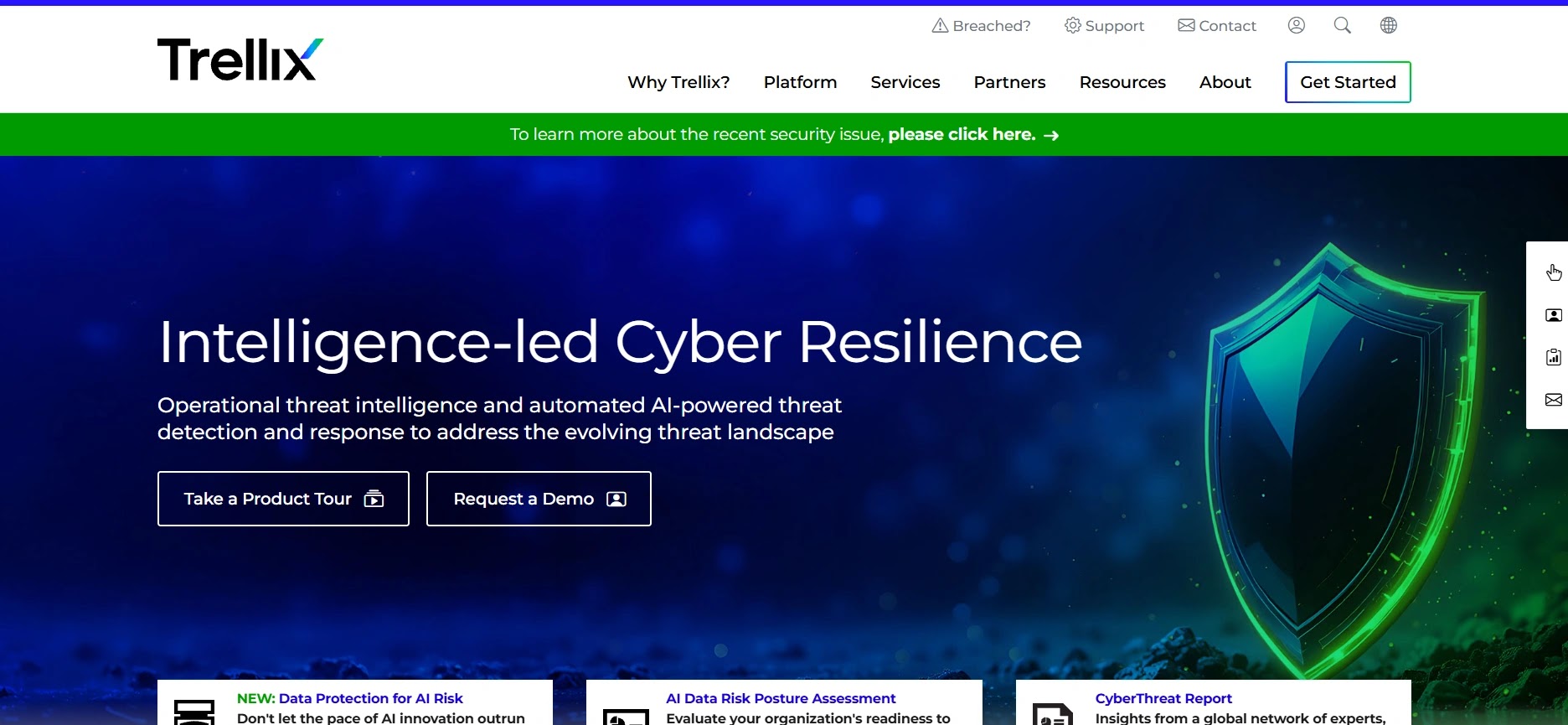
Trellix Data Loss Prevention, formed from the merger of McAfee and FireEye, delivers a robust and comprehensive suite designed to protect data across endpoints, networks, and cloud environments. It provides profound forensic visibility into data usage, ensuring strict adherence to complex compliance mandates.
Its core strength lies in its extensive incident management and reporting capabilities. Upon a policy violation, Trellix captures rich contextual evidence—including screen captures, the exact text that triggered the rule, and the network destination—enabling incident responders to conduct rapid and decisive investigations.
- Specifications: Highly flexible deployment (on-premises, hybrid, cloud); integrates deeply with the broader Trellix XDR architecture.
- Features: Manual and automated data classification, deep forensic evidence capture, endpoint device control, extensive compliance templates.
- Reason to Buy: A powerful platform for organizations demanding highly detailed forensic evidence for compliance auditing and deep integration into an existing incident response plan.
Why We Picked It
Trellix DLP was chosen for its exceptional emphasis on forensic detail. During a potential data exfiltration event, understanding what was taken is only part of the challenge; knowing the exact context is critical. Trellix provides analysts with undeniable evidence, significantly reducing the time spent validating alerts.
Moreover, its seamless integration into the Trellix XDR platform allows security teams to correlate DLP violations with broader endpoint and network telemetry, instantly determining if data loss resulted from accidental user error or a sophisticated, active malware analysis evasion technique.
Pros:
- Exceptional forensic evidence capture for undeniable incident validation.
- Massive library of out-of-the-box compliance templates (GDPR, HIPAA, PCI).
- Deep integration with the Trellix XDR and endpoint security ecosystem.
Cons:
- The legacy architecture can be resource-intensive on older endpoint hardware.
- Unlocking its full potential requires navigating the complex integration of legacy McAfee products.
Try Trellix Data Loss Prevention: Explore Trellix DLP5. Digital Guardian DLP
Digital Guardian, now part of Fortra, is a specialized, enterprise-grade data protection platform that excels at securing highly sensitive Intellectual Property (IP) and trade secrets. While many DLP solutions primarily focus on structured data like credit card numbers, Digital Guardian was specifically engineered to understand and protect unstructured data, such as proprietary source code and CAD files.
It operates with a deeply embedded endpoint agent that monitors system events at the kernel level. This capability allows it to instantly block unauthorized encryption attempts (functioning as an anti-ransomware tool) and prevent data exfiltration via USB, webmail, or untrusted network shares.
- Specifications: Cloud-delivered management console; robust kernel-level endpoint agents for Windows, macOS, and Linux.
- Features: Deep IP and unstructured data protection, kernel-level event monitoring, integrated Endpoint Detection and Response (EDR), automated data tagging.
- Reason to Buy: The definitive choice for manufacturing, engineering, and technology firms whose primary concern is the theft of highly complex, unstructured Intellectual Property.
Why We Picked It
Digital Guardian was selected for its unparalleled visibility into unstructured data workflows. When protecting custom source code or proprietary design files, traditional regex-based DLP often falls short. Digital Guardian’s context-aware tagging ensures that if an engineer attempts to copy proprietary code to a personal GitHub repository, the action is blocked instantly.
Furthermore, because its agent monitors at the kernel level, it inherently functions as a powerful defense against advanced threats, actively preventing malicious processes from accessing or encrypting sensitive files, thereby serving as a critical layer in endpoint security.
Pros:
- Unrivaled protection for unstructured Intellectual Property and source code.
- Kernel-level visibility provides deep protection against both insiders and malware.
- Highly effective at enforcing strict USB and peripheral device control.
Cons:
- The robust kernel-level agent can occasionally cause conflicts with other security software.
- Creating and maintaining complex IP tagging rules requires dedicated administrative effort.
Try Digital Guardian DLP: Explore Digital Guardian6. Zscaler DLP
Zscaler DLP fundamentally redefines data protection by relocating the enforcement engine entirely to the cloud edge. As an integral component of the Zscaler Zero Trust Exchange, it inspects all internet-bound traffic—including deeply encrypted TLS 1.3 tunnels—in real-time, preventing sensitive data from reaching unauthorized cloud services or personal webmail accounts.
Operating inline, it requires no on-premises hardware and eliminates the need for heavy endpoint DLP agents for web traffic. It employs advanced machine learning to identify complex document types and Exact Data Match (EDM) to protect highly structured databases at line-rate speeds.
- Specifications: 100% cloud-native inline architecture; natively integrated into the Zscaler Secure Service Edge (SSE).
- Features: High-speed inline SSL/TLS inspection, Exact Data Match (EDM), Optical Character Recognition (OCR), Cloud Security Posture Management (CSPM) integration.
- Reason to Buy: Perfectly suited for large, distributed enterprises adopting a Zero Trust architecture that require inline data protection without deploying heavy endpoint agents.
Why We Picked It
Zscaler DLP was chosen because it effectively addresses the realities of the 2026 borderless workforce. With users accessing data from any location, routing traffic back through an on-premises DLP appliance is an outdated approach. Zscaler inspects data inline at the cloud edge, ensuring stringent compliance regardless of the user’s physical location.
Furthermore, its ability to cleanly decrypt and inspect massive volumes of encrypted traffic at scale ensures that threat actors cannot use SSL tunnels for stealthy data exfiltration, providing a critical safety net against sophisticated network security breaches.
Pros:
- True inline blocking completely prevents patient-zero data exfiltration via the web.
- Zero hardware footprint and no heavy endpoint agents required for web enforcement.
- Exceptional performance even with full SSL inspection enabled.
Cons:
- Requires the broader Zscaler internet access architecture to function effectively.
- Does not provide deep, offline USB or peripheral port control on the physical endpoint.
Try Zscaler DLP: Explore Zscaler DLP7. Netskope DLP
Netskope DLP is widely recognized as a benchmark for securing data within cloud environments and SaaS applications. Originating as a Cloud Access Security Broker (CASB), Netskope has evolved its platform into a comprehensive Security Service Edge (SSE), offering unparalleled visibility into data movement across thousands of managed and unmanaged cloud applications.
Its zero-trust engine can differentiate between a user logging into their corporate Google Drive (allowed) versus their personal Google Drive (blocked), dynamically applying DLP policies based on the specific application instance and user context.
- Specifications: Cloud-native architecture, integrates natively via API with major SaaS providers, utilizes a lightweight steering client.
- Features: Cloud inline and API-based inspection, instance awareness, advanced machine learning classification, deep risk scoring for thousands of cloud apps.
- Reason to Buy: The premier choice for cloud-first organizations that require extremely granular control over data moving between sprawling SaaS applications and Shadow IT.
Why We Picked It
Netskope was selected for its unmatched “instance awareness.” Traditional DLPs typically block or allow an application entirely. Netskope’s granular control allows organizations to safely adopt cloud services, ensuring sensitive data can be shared with authorized corporate partners while actively blocking transfers to unapproved, high-risk shadow IT environments.
Furthermore, its API-based introspection can scan data at rest within cloud storage (like AWS S3 or Box), automatically identifying exposed credentials, PII, and misconfigured permissions, serving as a vital tool against modern cloud security threats.
Pros:
- Industry-leading visibility and control over thousands of SaaS applications.
- Instance awareness perfectly balances security with user productivity.
- Exceptional API integrations for scanning data at rest in the cloud.
Cons:
- While expanding, its offline endpoint device control is less mature than legacy pure-plays.
- Complex policy creation can be daunting for smaller security teams.
Try Netskope DLP: Explore Netskope DLP8. Nightfall AI
Nightfall AI is a modern, disruptive force in data security, built entirely around cloud-native, AI-driven detection. Instead of relying on traditional regular expressions, Nightfall employs proprietary neural networks specifically trained to identify highly sensitive, unstructured data—such as API keys, cryptographic secrets, and PII—hidden within messaging platforms and cloud infrastructure.
It integrates seamlessly via API into platforms like Slack, GitHub, Jira, and Google Drive. If an engineer accidentally pastes a live AWS access key into a public Slack channel, Nightfall’s AI instantly detects it, redacts the message, and alerts the security team.
- Specifications: 100% API-driven cloud architecture, absolutely no endpoint agents required, deploys in minutes.
- Features: Deep learning AI data classification, automated redaction and quarantine, developer-focused API integrations, highly intuitive dashboard.
- Reason to Buy: The most frictionless solution for modern DevOps teams and cloud-first organizations needing to secure data within collaborative SaaS platforms like Slack and GitHub.
Why We Picked It
Nightfall AI was chosen because it effectively secures the modern collaborative spaces where work actually happens. Traditional DLPs often struggle to parse the chaotic, unstructured nature of instant messaging and code repositories. Nightfall’s advanced AI cuts through this noise, providing incredibly high-fidelity detection without requiring complex, manual rule creation.
Additionally, its fully API-driven deployment means a security team can integrate it into their environment and begin seeing value in minutes, not months. This frictionless approach is crucial for securing fast-paced development environments against devastating phishing attacks that target administrative credentials.
Pros:
- Incredibly fast, frictionless deployment with zero endpoint footprint.
- Industry-leading accuracy for identifying developer secrets (API keys, tokens).
- Seamless, highly native integrations with modern collaboration tools like Slack.
Cons:
- Strictly focuses on cloud/SaaS; offers no protection for physical endpoint USBs or local file transfers.
- Limited historical archiving capabilities compared to massive enterprise suites.
Try Nightfall AI: Explore Nightfall AI9. Cyberhaven
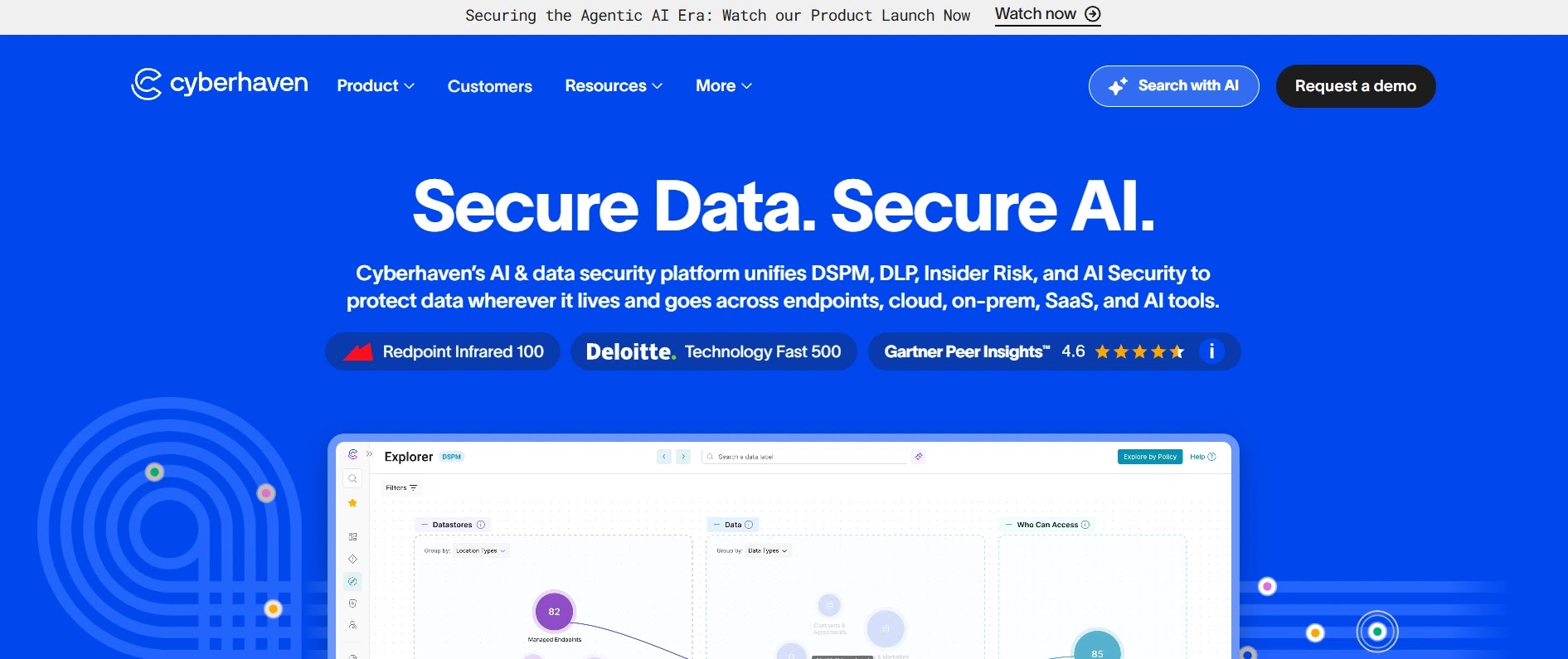
Cyberhaven introduces a fundamental paradigm shift in data protection by pioneering “Data Lineage” technology. Rather than attempting to guess if a file is sensitive by scanning its contents at the moment of transfer, Cyberhaven tracks the entire lifecycle of data from its creation.
If a highly sensitive financial report is created by the CFO, Cyberhaven records its lineage. Even if a malicious insider copies the text, pastes it into a new document, saves it as a PDF, and attempts to upload it to a personal webmail account, Cyberhaven recognizes its origin and blocks it instantly, regardless of the file modifications.
- Specifications: Cloud-native analytics engine paired with lightweight endpoint sensors and browser extensions.
- Features: Continuous Data Lineage tracking, visual data flow mapping, context-aware policy enforcement, rapid insider threat identification.
- Reason to Buy: A revolutionary approach that provides absolute visibility into the movement of unstructured data, making it nearly impossible for insiders to evade detection by modifying files.
Why We Picked It
Cyberhaven was selected because data lineage fundamentally solves the evasion problem. Sophisticated actors often know how to bypass traditional content-scanning DLPs by changing file extensions, encrypting archives, or using obscure applications. Because Cyberhaven tracks the origin of the data rather than relying purely on content inspection, these evasion techniques become ineffective.
Furthermore, its visual graph interface allows a threat hunting analyst to see the entire journey of a compromised file. This provides instant, undeniable context during an investigation, massively accelerating incident response times when dealing with corporate espionage.
Pros:
- Revolutionary data lineage tracking completely neutralizes file modification evasion.
- Exceptional visual mapping of how data moves across the enterprise.
- Drastically reduces false positives by focusing on data origin rather than basic regex.
Cons:
- Requires deployment of its specific sensors to track lineage effectively.
- As a newer technology, it lacks the massive legacy compliance templates of older vendors.
Try Cyberhaven: Explore Cyberhaven10. Netwrix Endpoint Protector
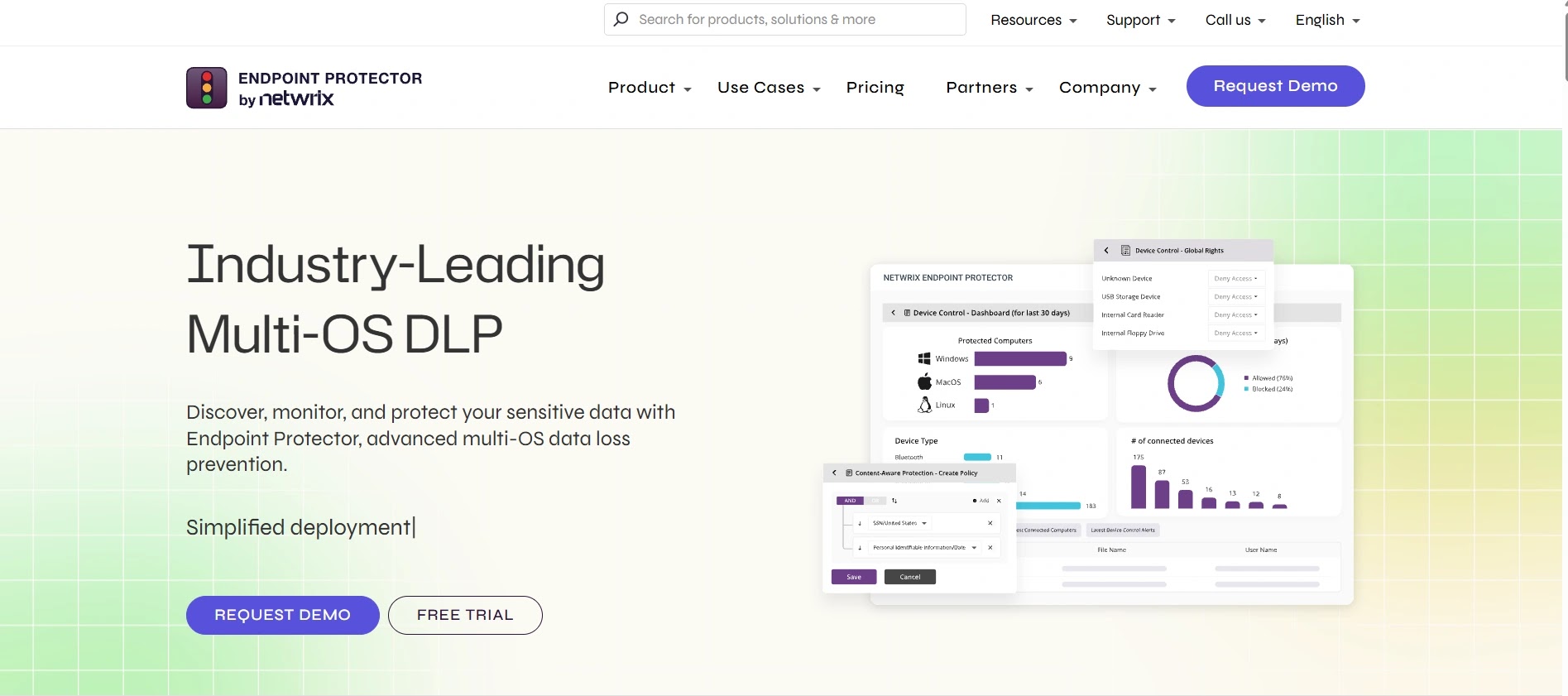
Netwrix Endpoint Protector is a highly specialized, cross-platform DLP solution that excels at securing the physical endpoint. While many platforms have shifted entirely to the cloud, Netwrix acknowledges that a significant risk persists at the hardware level—specifically involving USB drives, external hard drives, and Bluetooth transfers.
It provides incredibly granular device control, enabling administrators to restrict access based on vendor ID, product ID, or device serial number. It ensures parity across operating systems, offering robust, native protection for Windows, macOS, and heavily segmented Linux environments.
- Specifications: Available as a virtual appliance, cloud-hosted instance, or on-premises deployment; comprehensive multi-OS endpoint agents.
- Features: Granular USB and peripheral device control, Content-Aware Protection (CAP), eDiscovery scanning, strict cross-platform parity.
- Reason to Buy: The optimal choice for organizations operating diverse OS environments (especially large macOS and Linux fleets) and requiring ironclad control over physical peripheral ports.
Why We Picked It
Netwrix Endpoint Protector was included because it perfectly addresses a critical blind spot in modern cloud-first architectures: the physical machine. In highly secure, air-gapped environments or organizations handling classified government data, the ability to completely lock down a USB port while scanning for sensitive content is mandatory.
Additionally, its true cross-platform capabilities offer a massive advantage. Many legacy DLPs treat macOS and Linux as afterthoughts, providing stripped-down agents. Netwrix delivers a unified, fully featured data security posture across all operating systems, making it a favorite for diverse digital forensics and security engineering teams.
Pros:
- Industry-leading, granular control over USB and peripheral devices.
- True feature parity across Windows, macOS, and Linux endpoints.
- Very lightweight agent that does not degrade system performance.
Cons:
- Primarily focused on the endpoint; lacks the deep, inline cloud SaaS inspection of SSE vendors.
- The reporting interface is functional but lacks the advanced visual analytics of newer platforms.
Try Netwrix Endpoint Protector: Explore Netwrix Endpoint ProtectorConclusion
As the digital ecosystem expands into borderless, multi-cloud environments in 2026, relying on outdated, perimeter-centric data defenses is a recipe for operational disaster. Whether initiated by a malicious insider, a compromised vendor, or a sophisticated external adversary, the loss of sensitive corporate data carries catastrophic regulatory and financial penalties.
To maintain true resilience, organizations must integrate comprehensive, AI-driven Data Loss Prevention software into the very core of their security operations. Choosing the appropriate DLP solution depends heavily on your organization’s architectural footprint and specific risk profile. Cloud-first organizations may gravitate towards the API-driven elegance of Nightfall AI or the inline web inspection of Zscaler.
Conversely, massive enterprises with stringent on-premises compliance needs will find immense value in the deeply granular controls of Symantec or Forcepoint. Regardless of your choice, operationalizing these DLP tools and continuously
Disclaimer: HackersRadar reports on cybersecurity threats and incidents for informational and awareness purposes only. We do not engage in hacking activities, data exfiltration, or the hosting or distribution of stolen or leaked information. All content is based on publicly available sources.








No Comment! Be the first one.