




Crypto Scanner Finds Quantum-Vulnerable Crypto in Your
As the timeline for powerful quantum computing accelerates, a new open-source tool is now available, offering developers a way to secure their data against future quantum threats. Crypto Scanner,...

As the timeline for powerful quantum computing accelerates, a new open-source tool is now available, offering developers a way to secure their data against future quantum threats.
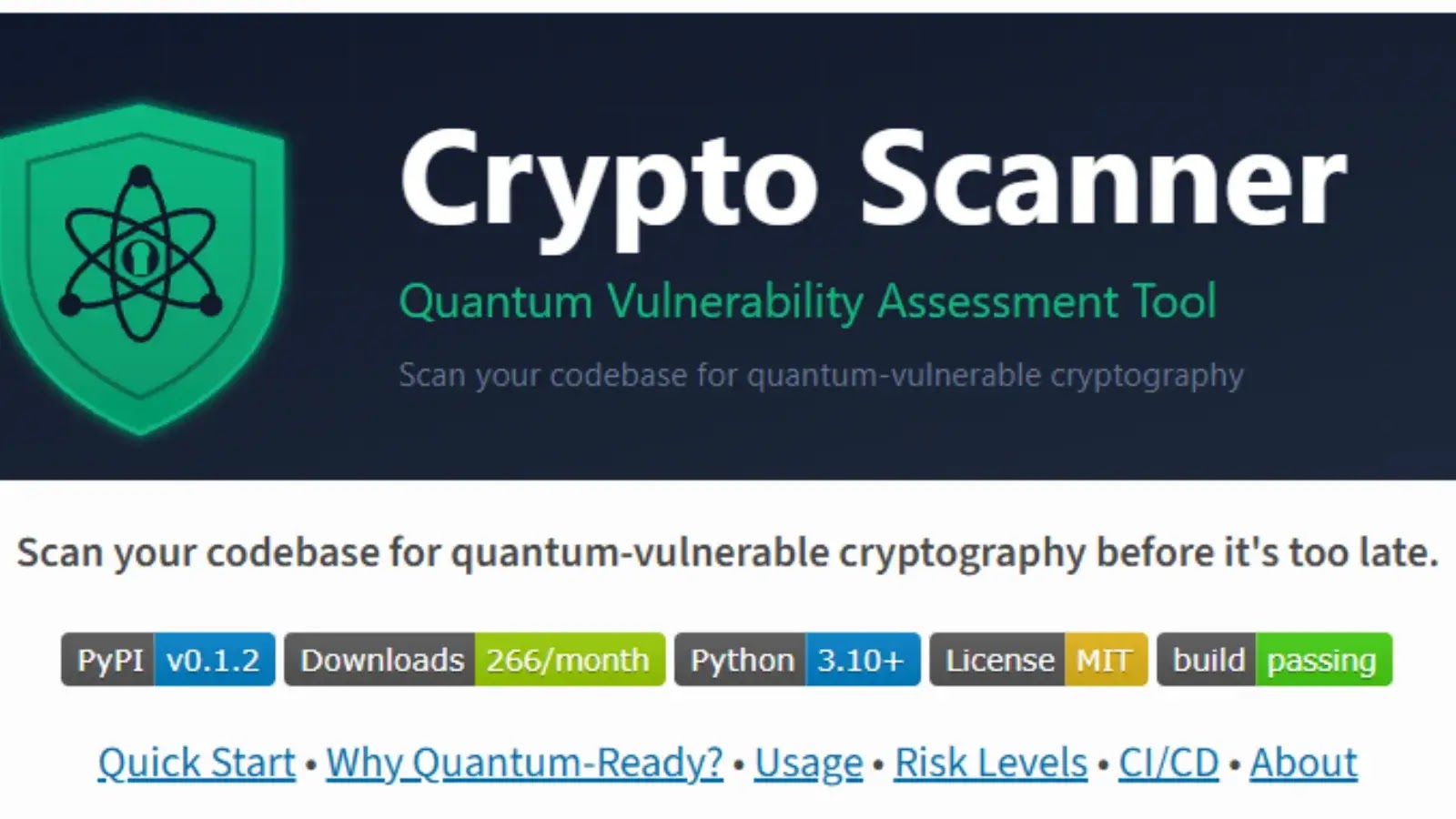
Crypto Scanner, developed by Quantum Shield Labs, is a command-line interface (CLI) utility designed to hunt down quantum-vulnerable cryptography within source code, configurations, and certificates.
Security experts warn that Cryptographically Relevant Quantum Computers (CRQCs) could break standard encryption methods like RSA and ECC by 2033.
However, the danger exists today due to “Harvest Now, Decrypt Later” (HNDL) attacks. Adversaries are currently stealing encrypted data with the intent of unlocking it once quantum technology matures.
To prepare, organizations must migrate to quantum-resistant algorithms (such as the new NIST standards ML-KEM and ML-DSA). But as Quantum Shield Labs notes, “You can’t migrate what you don’t know you have.”
How Crypto Scanner Works
Crypto Scanner acts as a rapid inventory tool. It recursively scans directories to identify cryptographic algorithms. It assesses their risk level based on exposure to quantum attacks (Shor’s algorithm).
Key features include:
| Feature | Summary |
|---|---|
| Language Support | 14 languages (Python, JS/TS, Java, Go, Rust, C++, Swift) |
| File Analysis | Source code, configs (YAML/JSON/TOML), X.509 certs |
| Risk Levels | Critical, High, Medium, Low |
| Reporting | JSON (CI/CD) and HTML reports |
| CI/CD Ready | GitHub Actions, GitLab CI, pre-commit |
| Performance | Full scan in under 60 seconds |
| Smart Scans | Skips node_modules, .git, venvs |
| Install | pip install crypto-scanner |
The tool is built for modern development workflows. It generates outputs in JSON for automation or branded HTML reports for executive stakeholders.
Furthermore, Crypto Scanner offers native integration with CI/CD pipelines (GitHub Actions, GitLab CI).
This allows teams to set “quality gates” that automatically block code commits if they introduce weak or outdated cryptography.
Crypto Scanner is available now on PyPI and can be installed via a simple command:
pip install crypto-scanner
By providing an immediate, automated inventory of cryptographic assets, Crypto Scanner aims to make the transition to the post-quantum era manageable for developers and enterprises alike.
Disclaimer: HackersRadar reports on cybersecurity threats and incidents for informational and awareness purposes only. We do not engage in hacking activities, data exfiltration, or the hosting or distribution of stolen or leaked information. All content is based on publicly available sources.








No Comment! Be the first one.