




WhatsApp Adds Usernames for Private Connections, Ditching Phone Numbers
Key Takeaways WhatsApp is rolling out a new username feature, allowing users to communicate without sharing their phone numbers. The functionality enhances user privacy by decoupling identity from...

Key Takeaways
- WhatsApp is rolling out a new username feature, allowing users to communicate without sharing their phone numbers.
- The functionality enhances user privacy by decoupling identity from phone numbers, a significant upgrade for the messaging platform.
- Usernames must adhere to strict character rules and, for security, cannot mimic website domains.
- A critical privacy consideration involves linking WhatsApp usernames to existing Instagram and Facebook profiles via Meta’s Accounts Center, potentially increasing cross-platform discoverability.
- An optional “username key” provides an additional layer of authentication, requiring a 4-digit code for initial contact attempts to mitigate spam and unwanted outreach.
WhatsApp Introduces Usernames for Enhanced Privacy
WhatsApp, the world’s leading encrypted messaging application, is implementing a long-anticipated username feature designed to bolster user privacy. This new functionality will enable individuals to engage in private conversations without disclosing their personal phone numbers, marking a pivotal advancement for the platform’s privacy safeguards.
Table Of Content
Rollout and Availability
The introduction of usernames was initially observed by WABetaInfo within the WhatsApp beta for iOS version 26.1.10.70. The system is engineered for cross-platform compatibility, extending its reach to Android, iOS, Windows, and Web clients.
Currently, the feature is accessible to a select cohort of beta testers. WhatsApp intends a gradual expansion over the coming months, meticulously monitoring stability and performance before a widespread public release.
Setup and Configuration
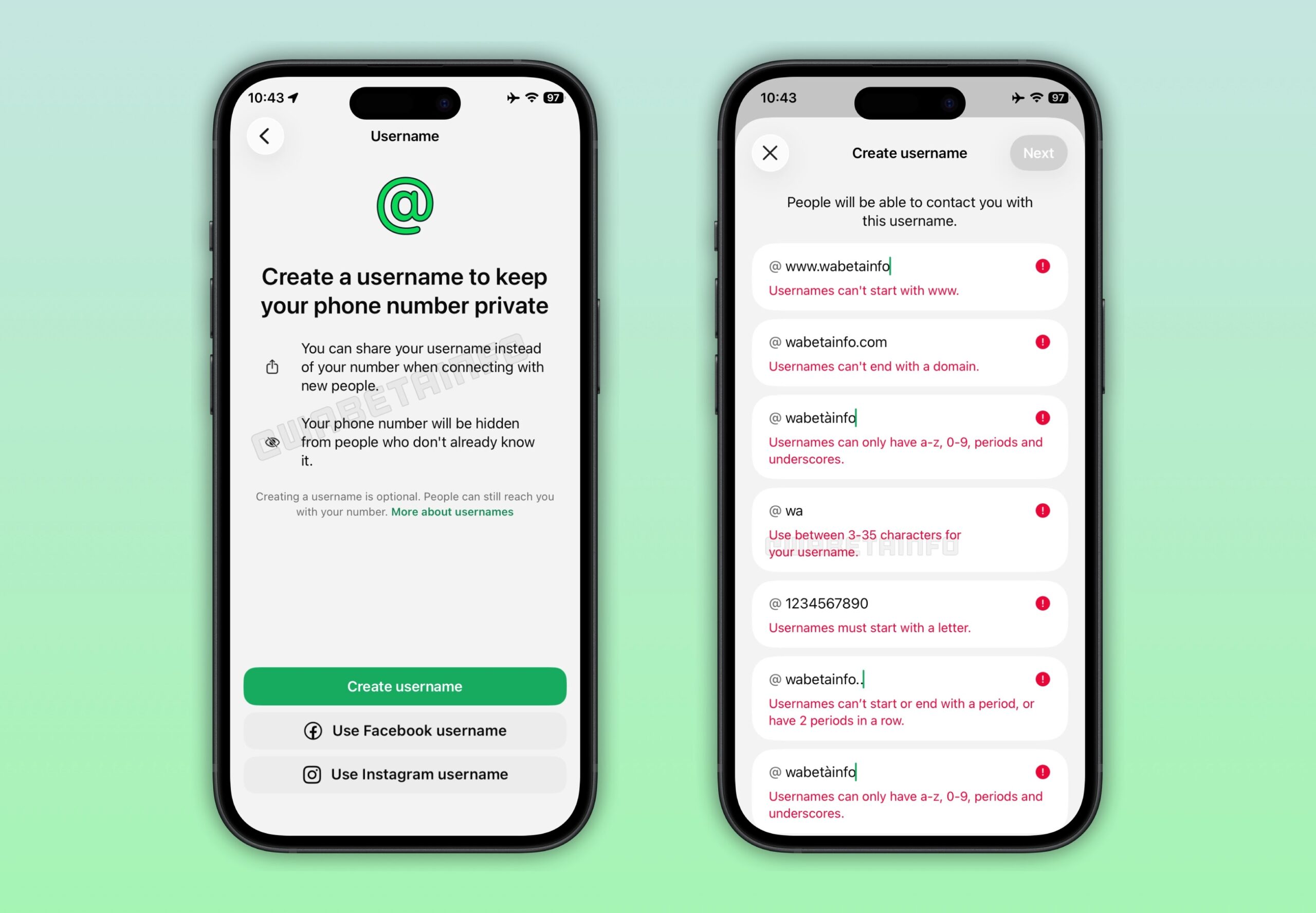
Upon general availability, users can ascertain their eligibility by navigating to their profile settings. Those with access will find a dedicated username option, guiding them through a streamlined, step-by-step configuration process. Once established, the chosen username directly links to the user’s account and can be shared as an alternative to their phone number.
Username Requirements and Security Measures
WhatsApp has instituted stringent criteria for username creation. Usernames must range between 3 and 35 characters, contain at least one letter, and be composed exclusively of lowercase letters (a–z), numbers (0–9), periods, and underscores. Furthermore, usernames cannot commence with “www.” or conclude with domain extensions such as .com or .net. These rules aim to thwart impersonation and mitigate phishing risks that could mislead users into trusting fraudulent contacts.
Meta Ecosystem Integration and Privacy Implications
A notable security consideration pertains to username availability across Meta’s broader ecosystem. A username can only be claimed on WhatsApp if it is concurrently available or demonstrably owned by the same user on Instagram and Facebook. Ownership verification is facilitated through Meta’s Accounts Center, a centralized portal for managing linked accounts.
However, users with heightened privacy concerns should be aware of a critical implication: adopting the same username across Meta platforms effectively establishes a link between their WhatsApp identity and their Instagram or Facebook profiles. This cross-platform association could inadvertently enable unknown individuals to identify and locate a user across multiple services, potentially expanding the attack surface for social engineering tactics or targeted harassment campaigns.
Enhanced Contact Control with Username Key
To address potential issues with unsolicited contact, WhatsApp is introducing an optional “username key”—a 4-digit code that functions as a secondary authentication layer. When activated, any individual attempting to initiate contact with a user for the first time must provide both the correct username and the corresponding key. This mechanism effectively restricts initial outreach to trusted individuals, offering substantial protection against spam and unwanted communications.
Crucially, all messages exchanged through username-based contacts will maintain WhatsApp’s robust end-to-end encryption, ensuring the continued confidentiality and integrity of communications.
What You Should Do
- Evaluate Cross-Platform Consistency: Carefully consider whether to use the same username across WhatsApp, Instagram, and Facebook. Be aware that doing so may link your identities across these platforms, increasing your discoverability.
- Enable the Username Key: For enhanced privacy and to prevent unwanted contact, activate the optional 4-digit username key once the feature becomes available. Share this key only with trusted individuals you wish to communicate with.
- Review Privacy Settings: Regularly review and adjust your privacy settings on WhatsApp and other Meta platforms to ensure they align with your comfort level regarding discoverability and contact.
- Stay Informed: Keep your WhatsApp application updated to the latest version to benefit from all security and privacy enhancements as they are rolled out.
Disclaimer: HackersRadar reports on cybersecurity threats and incidents for informational and awareness purposes only. We do not engage in hacking activities, data exfiltration, or the hosting or distribution of stolen or leaked information. All content is based on publicly available sources.








No Comment! Be the first one.