



Hackers News Hackers News
  • CyberSecurity News
  • Threats
  • Attacks
  • Vulnerabilities
  • Breaches
  • Comparisons

Social Media

Hackers News Hackers News
  • CyberSecurity News
  • Threats
  • Attacks
  • Vulnerabilities
  • Breaches
  • Comparisons
Search the Site
Popular Searches:
technology Amazon AI
Recent Posts
AiTM Phishing Attacks Target SharePoint, HubSpot, Google
May 2, 2026
Attackers Abuse AppSheet, Netlify, Telegram for Google Facebook
May 2, 2026
cPanelSniper PoC Exploit for cPanel Vulner Disclosed Vulnerability
May 2, 2026
Home/Threats/Muddled Libra Rogue VM Attacks VMware vSphere: Key T
Threats

Muddled Libra Rogue VM Attacks VMware vSphere: Key T

During a September 2025 incident response, investigators identified a rogue virtual machine operating within a VMware vSphere environment, linking it with high confidence to Muddled Libra, an...

Marcus Rodriguez
Marcus Rodriguez
February 12, 2026 2 Min Read
0 0

During a September 2025 incident response, investigators identified a rogue virtual machine operating within a VMware vSphere environment, linking it with high confidence to Muddled Libra, an adversary also tracked as Scattered Spider and UNC3944.

The VM acted like a quiet staging host, giving the intruders a place to recon the network, pull down tools, and move toward data theft; it also showed how a single VM can become a bridge between identity systems and cloud services during an intrusion in plain sight.

The group is known for social engineering such as smishing and vishing, and for impersonating employees to push help desks into password or multi-factor resets.
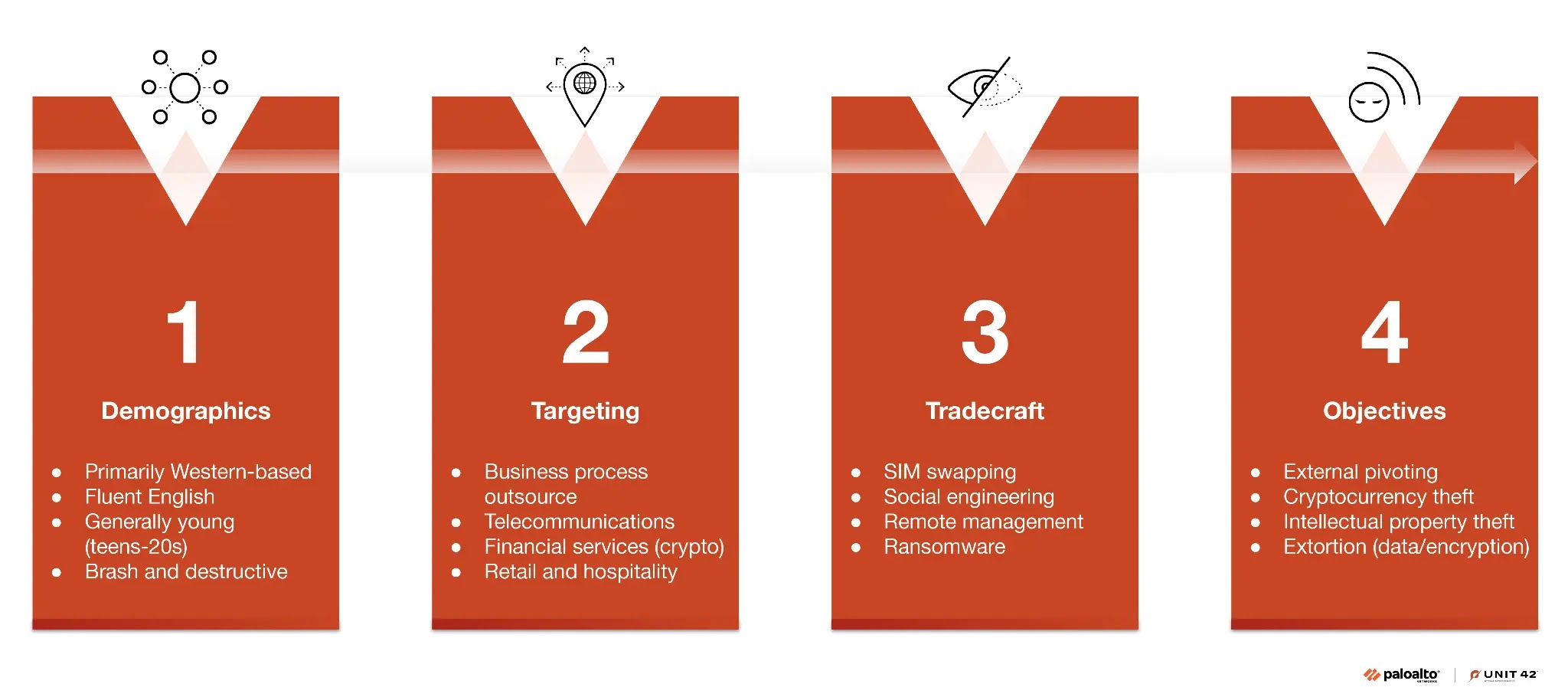
Muddled Libra threat profile (Source - Palo Alto Networks)
Muddled Libra threat profile (Source – Palo Alto Networks)

It also tends to avoid heavy malware, leaning on legitimate admin utilities and the victim’s own infrastructure to blend in.

Palo Alto researchers identified attackers accessed vSphere about two hours after initial access and created a new VM named “New Virtual Machine.”
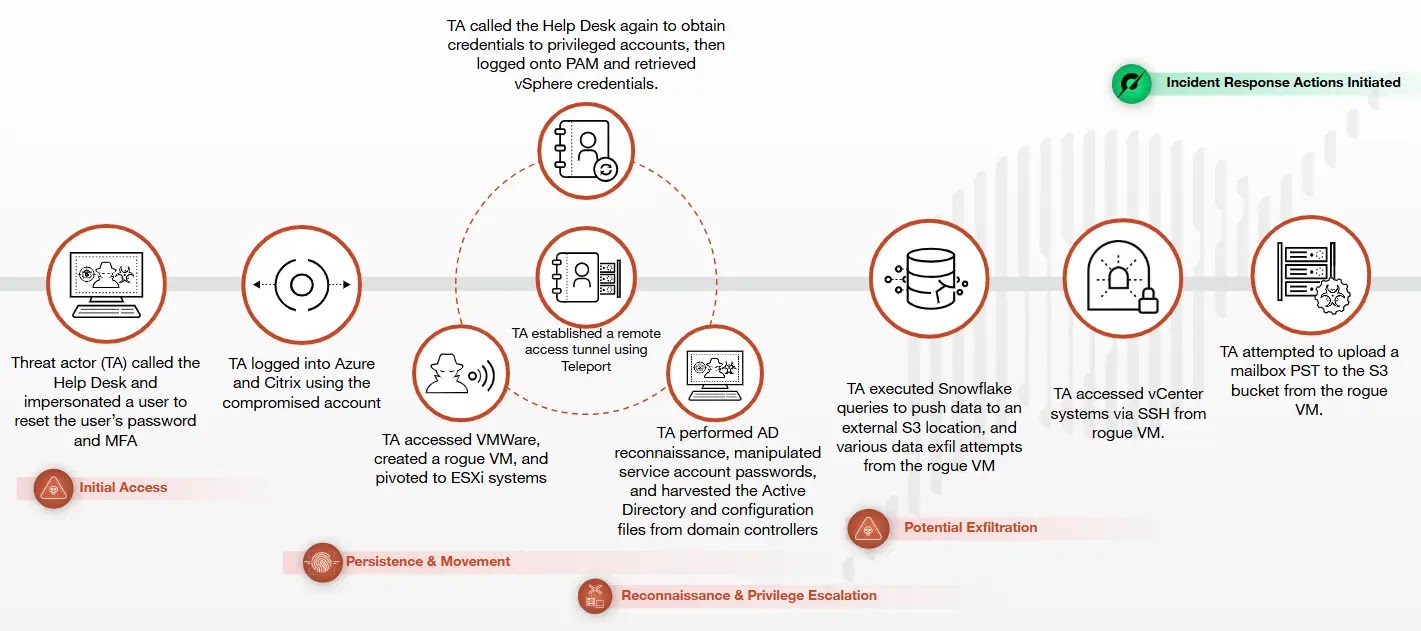
High-level chain of events in the attack (Source - Palo Alto Networks)
High-level chain of events in the attack (Source – Palo Alto Networks)

Soon after logging in, they pulled stolen certificates and used them to forge tickets as they expanded control.

From that foothold, the intruders powered down virtualized domain controllers, mounted their VMDKs, and copied NTDS.dit and SYSTEM to the VM.
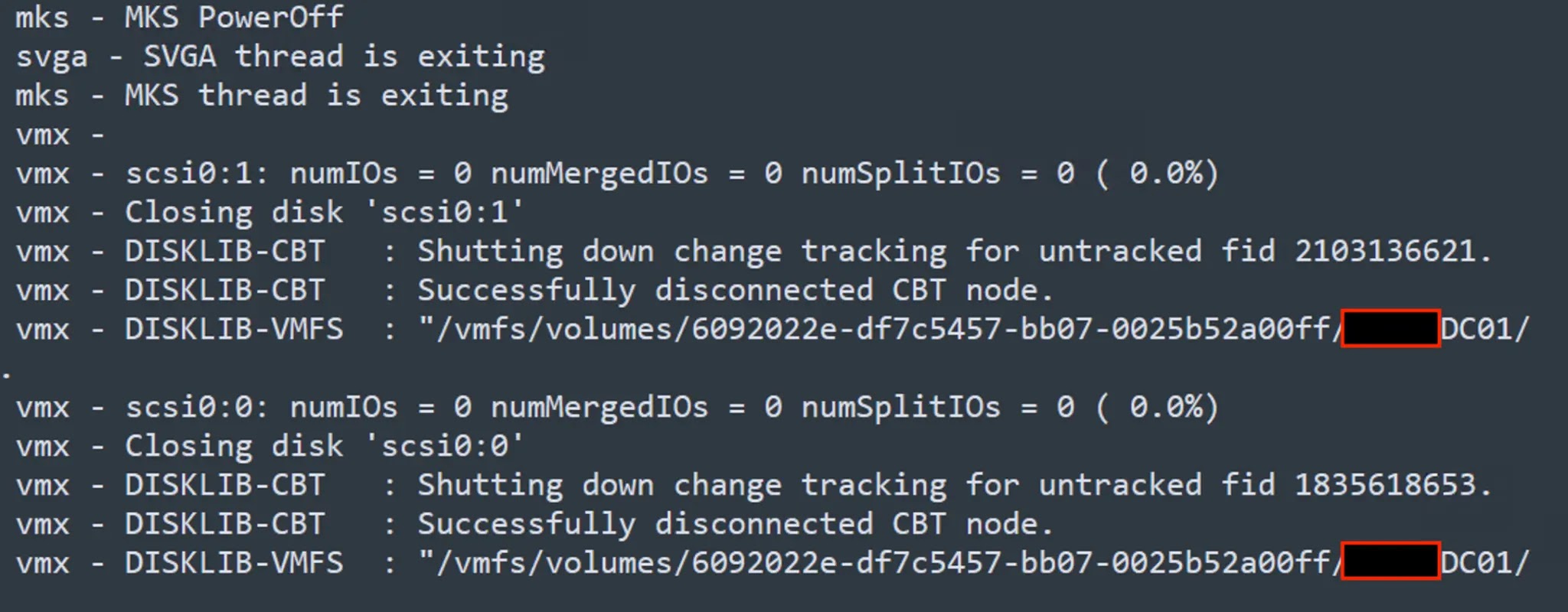
VMware logs of the shutdown activities of the DC (Source - Palo Alto Networks)
VMware logs of the shutdown activities of the DC (Source – Palo Alto Networks)

They then ran directory discovery with ADRecon and reviewed service principal names, while also reaching into the victim’s Snowflake environment and later trying to move mailbox data, including a PST, off-network using file-sharing sites and S3 Browser..

Chisel tunnel persistence

Within minutes of building the rogue VM, the attackers set up persistence using an SSH tunnel with Chisel, delivered in a ZIP named goon.zip from an attacker-controlled AWS S3 bucket.

Network logs showed traffic to an attacker-controlled address over TCP 443 that continued for roughly 15 hours, helping the tunnel look like normal HTTPS.

Defenders can reduce risk by tightening identity controls, enforcing least privilege for vSphere and admin accounts, and watching for suspicious VM creation, DC power-off events, and unexpected VMDK mounts.

Continuous monitoring for unusual use of common tools, odd outbound 443 from newly created systems, and anomalous access to cloud data platforms can help catch this living-off-the-land approach before it turns into broad lateral movement and theft.

Disclaimer: HackersRadar reports on cybersecurity threats and incidents for informational and awareness purposes only. We do not engage in hacking activities, data exfiltration, or the hosting or distribution of stolen or leaked information. All content is based on publicly available sources.


Tags:

AttackMalwareThreat

Share Article

Marcus Rodriguez

Marcus Rodriguez

Marcus is a security researcher and investigative journalist with expertise in vulnerability research, bug bounties, and cloud security. Since 2017, Marcus has been breaking stories on critical vulnerabilities affecting major platforms. His investigative work has led to the disclosure of numerous security flaws and improved defenses across the industry. Marcus is an active participant in bug bounty programs and has been recognized for responsible disclosure practices. He holds multiple security certifications and regularly speaks at industry events.

Previous Post

Chrome Security Patch Fixes Vulnerabilities Enabling Code Execution

Next Post

Critical WordPress Backup Plugin RCE Flaw Exposes 8

No Comment! Be the first one.

Leave a Reply Cancel reply

Your email address will not be published. Required fields are marked *

Popular Posts
Attackers Abuse CAPTCHA, ClickFix for Cred Tactics Boost
May 1, 2026
DDoS Malware Exploits Jenkins to Attack Source Engine Games
May 1, 2026
DDoS Attack Hits Ubuntu Website & Canonical Web Services
May 1, 2026
Top Authors
Marcus Rodriguez
Marcus Rodriguez
Sarah simpson
Sarah simpson
Emy Elsamnoudy
Emy Elsamnoudy
Let's Connect
156k
2.25m
285k

Related Posts

Jennifer sherman
By Jennifer sherman
Threats

GlassWorm Attacks macOS via Malicious VS Code…

January 1, 2026
Emy Elsamnoudy
By Emy Elsamnoudy
Attacks

ClickFix Attack Hides Malicious Code via Stegan Security

January 1, 2026
Sarah simpson
By Sarah simpson
Vulnerabilities

MongoBleed Detector Tool Detects Critical MongoDB CVE-

January 1, 2026
Emy Elsamnoudy
By Emy Elsamnoudy
Breaches

Conti Ransomware Gang Leaders & Infrastructure Exposed

January 1, 2026
Hackers News Hackers News
  • [email protected]

Quick Links

  • Contact Us
  • Privacy Policy
  • Terms of service

Categories

Attacks
Breaches
Comparisons
CyberSecurity News
Threats
Vulnerabilities

Let's keep in touch

receive fresh updates and breaking cyber news every day and week!

All Rights Reserved by HackersRadar ©2026

Follow Us






