




ShadowHS: Stealthy Fileless Linux Malware Auto- Emphasizes Automated
Security teams defending Linux environments now face a sophisticated new threat: ShadowHS, a stealthy and fileless malware designed to evade traditional detection. This advanced adversary operates...

Security teams defending Linux environments now face a sophisticated new threat: ShadowHS, a stealthy and fileless malware designed to evade traditional detection. This advanced adversary operates without leaving persistent traces on disk, making it particularly challenging for conventional security tools to spot. Its emphasis on automated operations further amplifies the risk, enabling it to propagate and maintain persistence with minimal human intervention.
A newly uncovered fileless malware framework named ShadowHS operates entirely in memory, leaving no persistent traces on disk while establishing long-term control over compromised systems.
Unlike conventional Linux threats that focus on quick monetization through cryptomining or ransomware deployment, this advanced framework prioritizes stealth and operator-driven control.
ShadowHS represents a significant evolution in Linux post-exploitation tactics.
The malware employs a multi-stage encrypted loader that decrypts its payload using AES-256-CBC encryption, then executes it directly through memory file descriptors without ever writing to the filesystem.
This fileless execution model makes forensic analysis extremely challenging, as the malware leaves minimal artifacts for investigators to discover.
Once active, the framework aggressively fingerprints security controls, identifies defensive tools, and carefully evaluates the environment before enabling higher-risk actions.
Cyble researchers identified this intrusion chain during recent threat monitoring activities. The framework builds upon a weaponized variant of hackshell, transforming the original utility into a comprehensive post-compromise platform.
Analysis reveals that ShadowHS includes dormant capabilities for credential theft, lateral movement, privilege escalation, and covert data exfiltration through user-space tunneling mechanisms that bypass firewall controls and endpoint monitoring solutions.
The malware demonstrates clear targeting of enterprise environments with advanced security infrastructure.
Its extensive detection routines check for commercial EDR platforms like CrowdStrike Falcon, Cortex XDR, and Elastic Agent, along with cloud security agents and OT/ICS tooling.
This environmental awareness allows operators to adapt their tactics based on the defensive posture of each compromised system, maintaining operational security throughout the intrusion lifecycle.
While runtime behavior remains deliberately restrained to avoid detection, code analysis exposes a broad set of latent functions that operators can activate on demand.
These include cryptomining modules supporting XMRig and GMiner, SSH-based reconnaissance tools for network scanning, and memory-dumping routines capable of extracting credentials from live processes.
The framework also features anti-competition logic that removes traces of other malware infections, ensuring exclusive access to compromised resources.
Fileless Execution and Memory-Only Operations
The infection chain begins with an obfuscated shell loader containing heavily encoded payloads that exhibit high entropy characteristics.
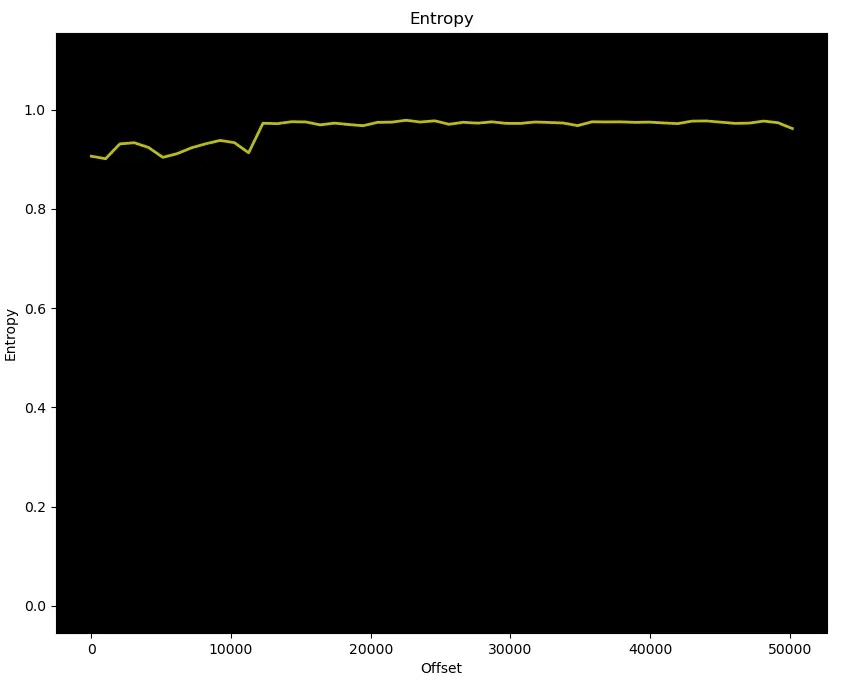
This loader validates critical runtime dependencies including OpenSSL, Perl, and gunzip before proceeding with decryption operations.
The absence of fallback mechanisms indicates targeted deployment rather than opportunistic mass exploitation campaigns.
Payload reconstruction occurs through a sophisticated multi-stage pipeline involving Perl marker translation, credential-based AES decryption, byte offset skipping, and gzip decompression.
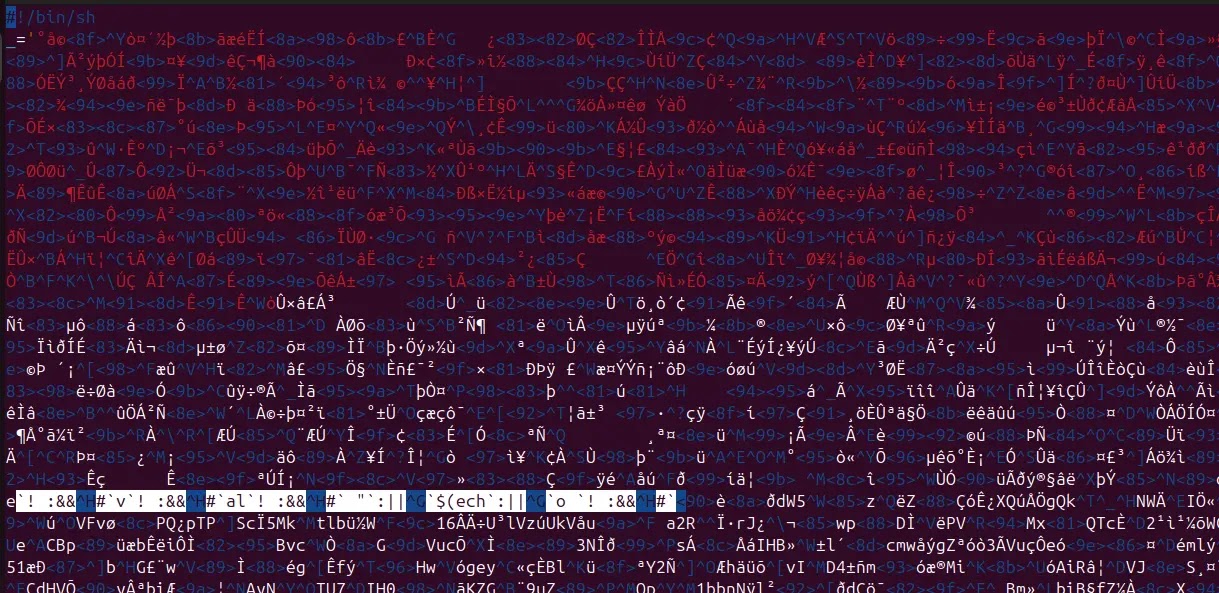
The resulting binary executes directly from anonymous file descriptors accessible through /proc filesystem paths, while simultaneously spoofing argv parameters to disguise its true nature from process listings and monitoring tools.
This execution technique proves highly effective against traditional security solutions that rely on file-based scanning or signature detection.
By operating exclusively in memory and avoiding persistent filesystem artifacts, ShadowHS significantly complicates incident response efforts while maintaining interactive operator access to compromised systems throughout extended intrusion operations.
Disclaimer: HackersRadar reports on cybersecurity threats and incidents for informational and awareness purposes only. We do not engage in hacking activities, data exfiltration, or the hosting or distribution of stolen or leaked information. All content is based on publicly available sources.









No Comment! Be the first one.