




Best Managed XDR Services for 2026
Key Takeaways Managed Extended Detection and Response (MXDR) services offer 24/7 human oversight and threat response across a broader range of telemetry sources, including endpoints, network, email,...

Key Takeaways
- Managed Extended Detection and Response (MXDR) services offer 24/7 human oversight and threat response across a broader range of telemetry sources, including endpoints, network, email, identity, and cloud environments.
- While the distinction between MDR and MXDR has blurred, the critical factor for buyers is to verify the specific telemetry sources a provider will actively monitor and defend, rather than relying solely on the service acronym.
- Top performers in the 2026 scorecard include CrowdStrike — 8.5/10 for detection and containment, Palo Alto (Unit 42) — 8.3/10 for unmatched native telemetry breadth, and Ontinue — 8.1/10 for multi-vendor flexibility.
- Sophos acquired Secureworks in February 2025 for approximately $859 million; both entities maintain distinct services currently.
- Fortinet’s Managed XDR service requires a Fortinet-centric environment, with recent concerns regarding exploited vulnerabilities such as a FortiCloud authentication bypass added to the CISA Known Exploited Vulnerabilities catalog in January 2026.
Managed Extended Detection and Response (MXDR) represents an evolution from traditional Managed Detection and Response (MDR), expanding the scope of cybersecurity monitoring beyond just endpoints. This enhanced approach integrates and correlates telemetry from a wider array of sources, encompassing networks, email systems, identity providers, and cloud environments. This comprehensive visibility is crucial for identifying and neutralizing sophisticated threats that often traverse multiple attack vectors in modern hybrid infrastructures.
Table Of Content
- Key Takeaways
- The 2026 Managed XDR Scorecard
- Is MXDR a Real Category?
- How We Scored
- The Providers, Scored
- 1. deepwatch — 8.0/10
- 2. CrowdStrike — 8.5/10
- 3. Palo Alto (Unit 42) — 8.3/10
- 4. Ontinue — 8.1/10
- 5. Trend Micro — 8.1/10
- 6. Sophos — 8.0/10
- 7. Rapid7 — 7.9/10
- 8. Bitdefender — 7.6/10
- 9. eSentire — 8.2/10
- 10. Fortinet — 7.2/10
- Head-to-Head Comparisons
- Buyer’s Guide
- Frequently Asked Questions
- What is managed XDR (MXDR)?
- What is the difference between MDR and MXDR?
- What is the best managed XDR service in 2026?
- How much does managed XDR cost?
- Do I need MXDR if I already have EDR?
- Does managed XDR include incident response?
The strategic deployment of cutting-edge Extended Detection and Response (XDR) platforms addresses inherent security gaps across complex hybrid IT landscapes. Concurrently, specialized Managed Detection and Response (MDR) services deliver essential, continuous human oversight, ensuring that alerts are not only detected but also thoroughly investigated and acted upon.
In the current market, Palo Alto’s Unit 42 service distinguishes itself with top scores for its robust platform and extensive incident response experience. Secureworks Taegis is recognized for its superior detection research capabilities, while Trend Micro — 8.1/10 offers the most expansive native telemetry coverage. This analysis evaluates the ten leading providers in the MXDR space, alongside an examination of whether MXDR constitutes a distinct category or merely a rebrand of existing MDR services.
The 2026 Managed XDR Scorecard
| Rank | Provider | Telemetry breadth (25%) | Detection quality (25%) | Response authority (20%) | Platform flexibility (15%) | Value (15%) | Total |
| 1 | Palo Alto (Unit 42) — 8.3/10 | 10 | 9 | 9 | 5 | 6 | 8.3 |
| 2 | deepwatch — 8.0/10 | 9 | 8 | 8 | 9 | 7 | 8.2 |
| 3 | CrowdStrike — 8.5/10 | 9 | 10 | 10 | 5 | 6 | 8.5 |
| 4 | Trend Micro — 8.1/10 | 10 | 8 | 7 | 6 | 8 | 8.1 |
| 5 | Rapid7 — 7.9/10 | 9 | 8 | 7 | 8 | 7 | 7.9 |
| 6 | Sophos — 8.0/10 | 8 | 8 | 9 | 7 | 8 | 8.0 |
| 7 | Bitdefender — 7.6/10 | 7 | 8 | 8 | 6 | 9 | 7.6 |
| 8 | Fortinet — 7.2/10 | 8 | 7 | 8 | 4 | 8 | 7.2 |
| 9 | Ontinue — 8.1/10 | 9 | 8 | 8 | 9 | 8 | 8.5 |
| 10 | eSentire — 8.2/10 | 9 | 9 | 9 | 8 | 6 | 8.5 |
Weighted averages are rounded to a single decimal place. The final ranking considers overall buyer fit, incorporating market observations beyond just the numerical score.
Is MXDR a Real Category?
The distinction between Managed Detection and Response (MDR) and Extended Detection and Response (MXDR) is partially genuine. Historically, MDR services focused on managing endpoint detection and response, with an analyst team monitoring EDR solutions. MXDR expands this, involving the same analyst team overseeing correlated telemetry from endpoints, alongside network, email, identity, and cloud sources, all leveraging an XDR platform.
Modern attack methodologies frequently extend beyond endpoints, moving into identity and cloud infrastructure. This necessitates a broader architectural approach than traditional EDR or MDR. An MXDR service that only focuses on endpoints will inevitably miss crucial phases of an attack, as intrusions rarely remain confined to a single vector.
However, the industry labels for these services have become somewhat ambiguous. Many providers marketed as traditional MDR now incorporate identity and cloud monitoring, while some services branded as MXDR remain heavily centered on endpoint security. Therefore, it is essential for organizations to look beyond the acronyms. Instead, demand a detailed, written list of the specific telemetry sources each provider will ingest, monitor, and use for detection in your unique environment. This list, rather than the marketing label, defines the true scope of the service.
In a significant market development, Sophos successfully acquired Secureworks in February 2025 for approximately $859 million. While both services currently operate with distinct offerings, any competitive evaluation involving both providers will effectively be a negotiation with a single corporate entity.
How We Scored
Our evaluation employed a structured, research-driven methodology, steering clear of comparative service trials or performance testing claims. We assessed providers across five key criteria:
- Telemetry breadth (25%): This criterion measures the number of data sources monitored natively beyond just endpoints, including identity, cloud, email, network, SaaS applications, and operational technology (OT).
- Detection quality (25%): This assesses the proficiency of the analyst team and the robustness of the threat research that informs their detection capabilities.
- Response authority (20%): This evaluates the extent to which the provider can take direct action to contain threats without requiring prior client approval.
- Platform flexibility (15%): This considers whether organizations are mandated to adopt the provider’s proprietary platform or if they can integrate their existing security tools. This factor significantly impacts long-term costs and vendor lock-in risks.
- Value (15%): This criterion weighs the service cost against the coverage provided, with additional credit given for transparent and predictable pricing models.
The Providers, Scored
1. deepwatch — 8.0/10
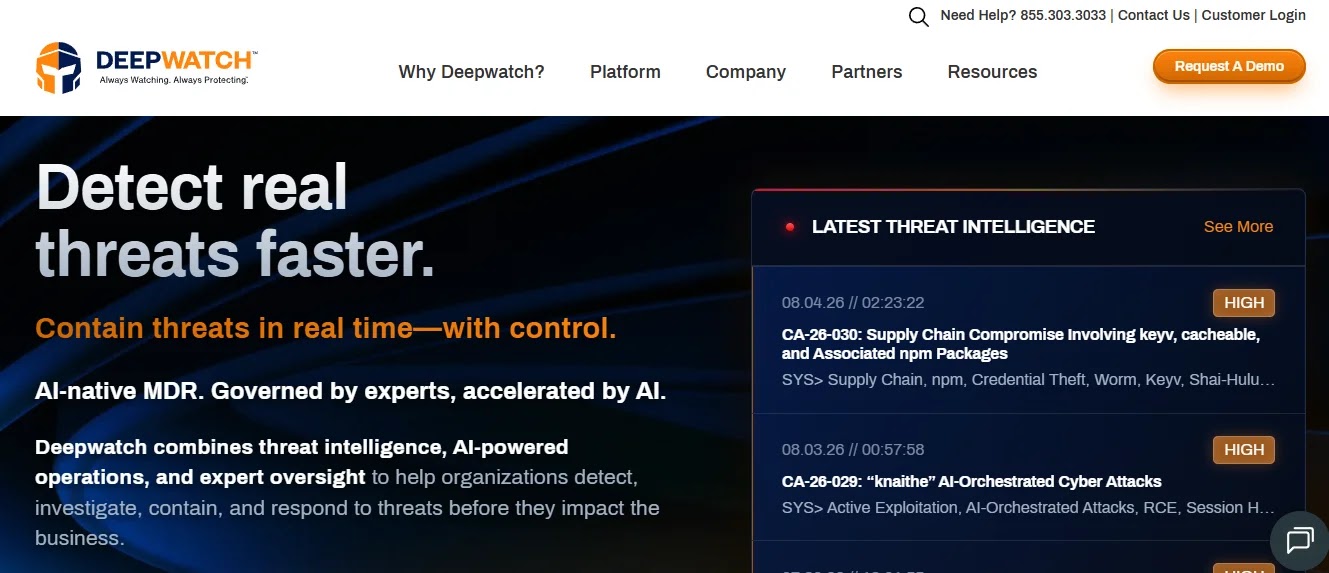
Why it scores here: deepwatch’s managed XDR service excels by offering continuous security monitoring, advanced detection engineering, proactive threat hunting, and comprehensive response capabilities across a diverse enterprise security stack.
Strengths: Benefits include 24/7 managed Security Operations Center (SOC) coverage, robust integration with third-party technologies, dedicated threat hunting and detection engineering, extensive coverage across endpoint, cloud, identity, and network environments, and a design philosophy that complements existing security investments rather than mandating a complete technology overhaul.
Trade-offs: The provider has a smaller market presence compared to larger MDR competitors. Service quality is inherently tied to the technologies and telemetry sources clients integrate into the platform. Pricing is exclusively quote-based.
Ideal buyer: Organizations seeking a managed SOC/XDR service that allows them to retain and leverage their current security technologies.
Verify before buying: Prospective clients should confirm native integrations for their existing tools, the extent of response authority granted, telemetry retention policies, and explicit contractual Service Level Agreement (SLA) commitments.
2. CrowdStrike — 8.5/10
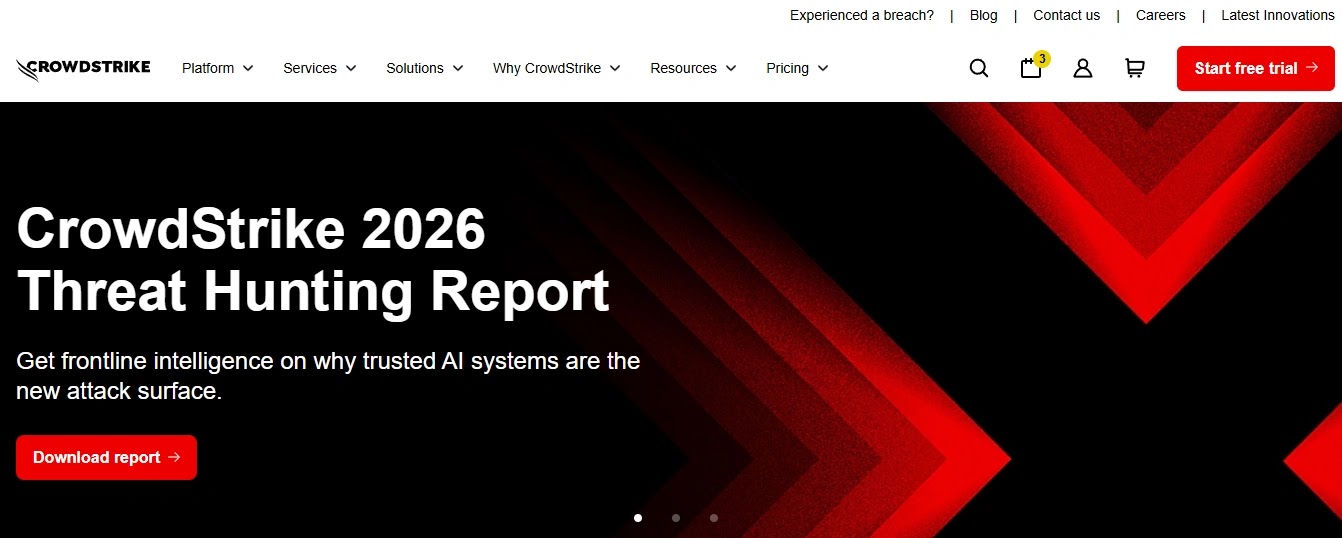
Why it scores here: CrowdStrike achieves perfect scores in detection quality and response authority. Its managed services merge elite detection capabilities with genuine, unilateral containment actions, all built upon its industry-leading EDR security tools.
Strengths: Key advantages include best-in-class detection engineering and threat intelligence, the OverWatch managed hunting service which provides human expertise beyond automated detection, full authority for threat containment, and native telemetry expansion into identity, cloud, and log management.
Trade-offs: The platform offers low flexibility, requiring adoption of the Falcon platform. It represents one of the most expensive providers in this category, and pricing is modular, increasing as telemetry coverage is extended.
Ideal buyer: Organizations that have standardized on CrowdStrike and demand the highest levels of detection and containment.
Verify before buying: It is crucial to confirm which modules are necessary to cover the specific telemetry sources required.
3. Palo Alto (Unit 42) — 8.3/10

Why it scores here: Palo Alto’s Unit 42 achieves a perfect score for telemetry breadth. Its Cortex XDR platform natively unifies endpoint, network, cloud, and identity data, providing Unit 42 analysts with the most expansive view among all evaluated providers. This is further bolstered by the proven resilience of Palo Alto’s Cortex XDR platforms and the industry-renowned expertise of its incident response practice.
Strengths: Offers unparalleled native telemetry breadth, particularly strong network context for organizations utilizing Palo Alto firewalls. Unit 42’s incident response pedigree means the same expert team can seamlessly transition from threat detection to full incident response. The service provides robust containment authority and leverages excellent threat intelligence.
Trade-offs: Similar to CrowdStrike, platform flexibility is low, requiring adoption of the Cortex platform. Data ingestion pricing demands meticulous modeling as it is a common area for budget overruns. This is a premium-cost service.
Ideal buyer: Organizations within the Palo Alto ecosystem that require the broadest telemetry coverage and a unified platform for both MXDR and incident response.
Verify before buying: Scrutinize ingestion volume and associated costs, and clearly define where the MXDR service boundary concludes and the incident response retainer begins.
4. Ontinue — 8.1/10
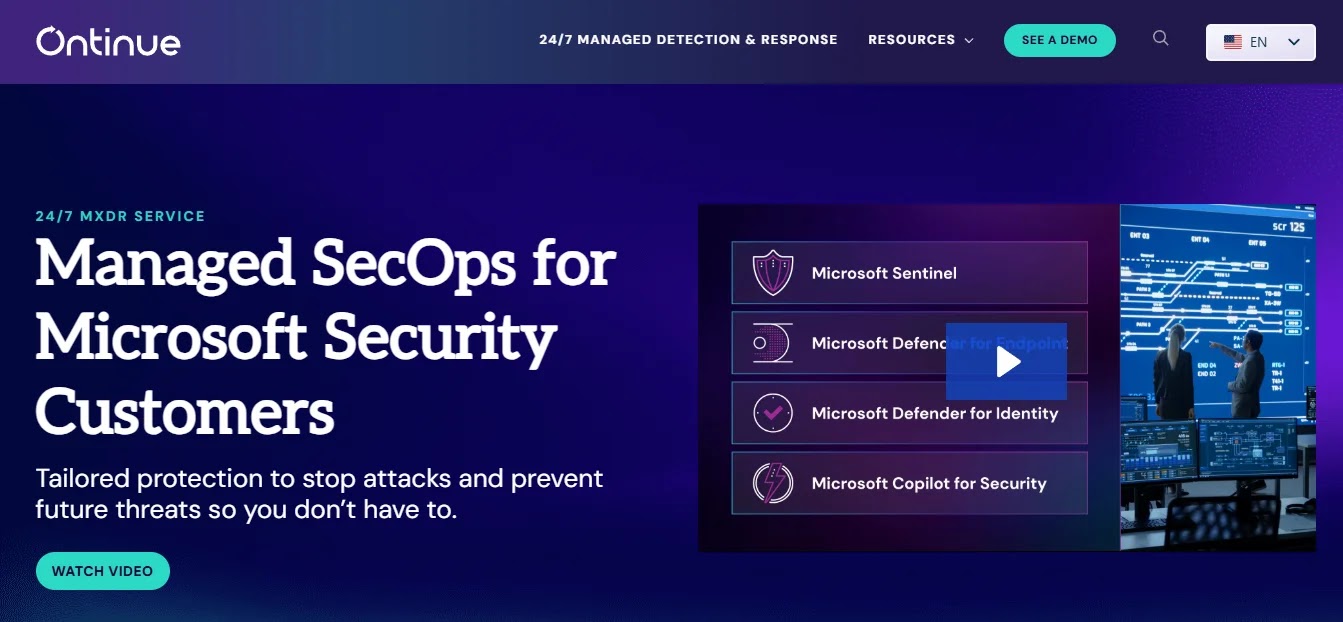
Why it scores here: Ontinue delivers robust managed XDR and SOC capabilities, featuring human-led detection, investigation, threat hunting, and response across diverse security environments.
Strengths: Provides 24/7 managed security operations, extensive telemetry coverage spanning endpoint, identity, cloud, and network, and embraces a multi-vendor approach. Its human-led threat hunting and investigation are particularly beneficial for organizations looking to enhance their SOC without replacing their existing security infrastructure.
Trade-offs: Ontinue maintains a smaller market presence compared to the largest MDR/XDR providers. Clients should thoroughly validate response capabilities and integrations against their specific operational environment. Pricing is generally provided on a quote-by-quote basis.
Ideal buyer: Organizations that utilize a heterogeneous mix of security tools and seek a managed SOC partner without committing to a single security platform.
Verify before buying: Confirm supported integrations, pre-authorized response actions, service-level commitments, and a precise list of included telemetry sources.
5. Trend Micro — 8.1/10

Why it scores here: Trend Micro achieves a perfect telemetry breadth score, rivaling Palo Alto, and offers notably better value. Its Vision One platform natively covers endpoints, email, servers, cloud workloads, and network, effectively bridging the gap between EDR and XDR. The inclusion of email as a primary telemetry source is a distinct advantage.
Strengths: Given that most attacks originate via email, Trend Micro’s native correlation of email data, rather than through connectors, is a significant benefit. It offers excellent coverage for server and cloud workloads, possesses strong vulnerability research capabilities, provides good value at platform scale, and incorporates risk insights to prioritize exposure alongside detection.
Trade-offs: Response authority at standard tiers is more advisory than unilateral, requiring explicit confirmation of pre-authorized actions. Detection engineering, while competent, trails that of top specialists. The service mandates the use of the Vision One platform.
Ideal buyer: Organizations where email and server workloads represent the most critical risk surfaces.
Verify before buying: Understand the credit-based consumption model and the specific response authority granted at your chosen tier.
6. Sophos — 8.0/10
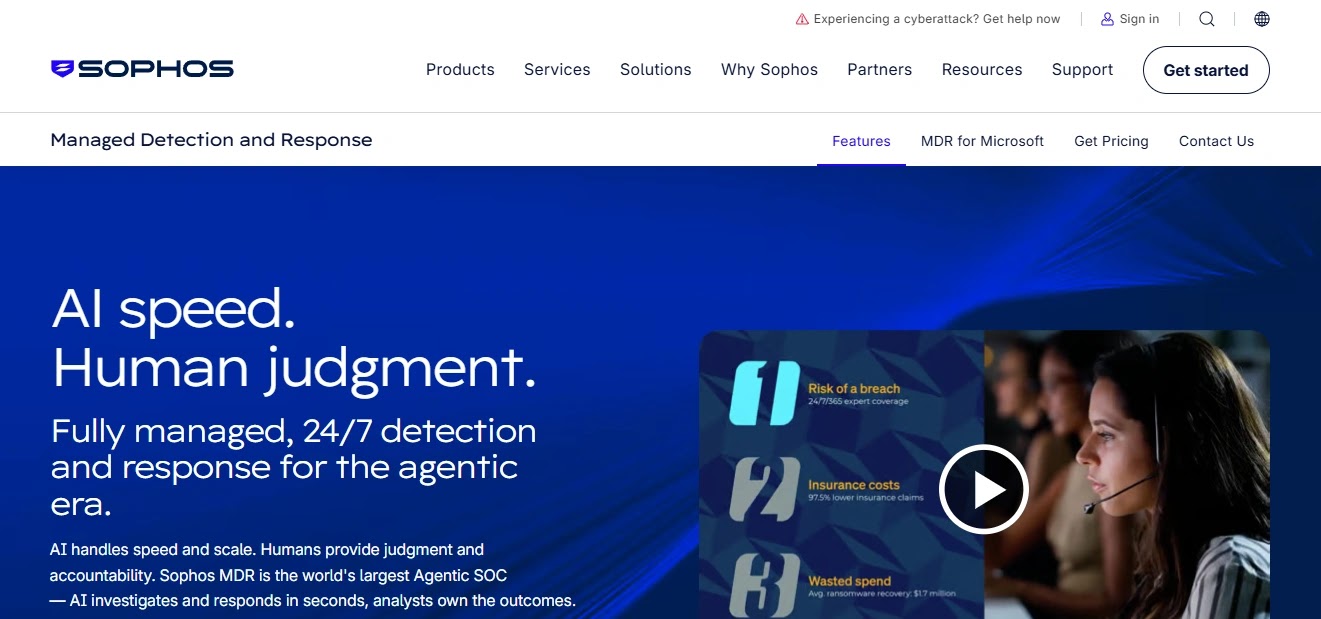
Why it scores here: Sophos offers robust response authority and strong value, particularly noted for its extensive reach into the mid-market. Its services directly feed into specialized incident response tools.
Strengths: Features a full-response tier allowing analysts to directly contain threats. It can ingest third-party telemetry in addition to Sophos products, boasts favorable mid-market economics, leverages a vast partner delivery network, and benefits from the Counter Threat Unit research depth gained through the Secureworks acquisition.
Trade-offs: Telemetry breadth and detection engineering capabilities are not as advanced as those of market leaders. The portfolio positioning relative to Secureworks remains an evolving question. Service tiers exhibit significant variations in offerings.
Ideal buyer: Mid-market organizations seeking genuine containment authority at an accessible price point.
Verify before buying: Confirm which service tier includes full response capabilities and support for third-party telemetry.
7. Rapid7 — 7.9/10
.webp)
Why it scores here: Rapid7 demonstrates strong telemetry breadth and commendable flexibility, uniquely integrating managed detection with vulnerability management and cloud security. It actively checks environments against the CISA Known Exploited Vulnerabilities catalog.
Strengths: Offers a comprehensive scope across detection, exposure management, and cloud security, a breadth few MXDR providers can match. Provides good value when services are bundled, benefits from a strong open-source community heritage, and delivers valuable correlation between vulnerability exposure and active threat detection.
Trade-offs: Response authority is generally advisory rather than unilateral. Detection engineering, while effective, does not lead the market. Its broad portfolio necessitates careful license scoping.
Ideal buyer: Organizations seeking integrated detection and exposure management from a single provider.
Verify before buying: Clarify the extent of response authority and how various services are priced when combined.
8. Bitdefender — 7.6/10

Why it scores here: Bitdefender achieves the highest value score in this evaluation, providing competent managed XDR and enterprise-proven malware protection solutions at a significantly lower price point than premium providers.
Strengths: Its robust underlying prevention capabilities reduce the volume of threats requiring management. It offers genuine response authority at an accessible cost, provides good coverage across endpoint, network, and productivity suites, and is well-suited for mid-market and smaller organizations.
Trade-offs: Telemetry breadth is comparatively narrower among serious providers. Threat research depth is below that of market leaders, and it has a smaller enterprise reference base.
Ideal buyer: Mid-market organizations seeking comprehensive managed coverage without incurring premium pricing.
Verify before buying: Confirm which specific telemetry sources are included at your chosen service tier.
9. eSentire — 8.2/10
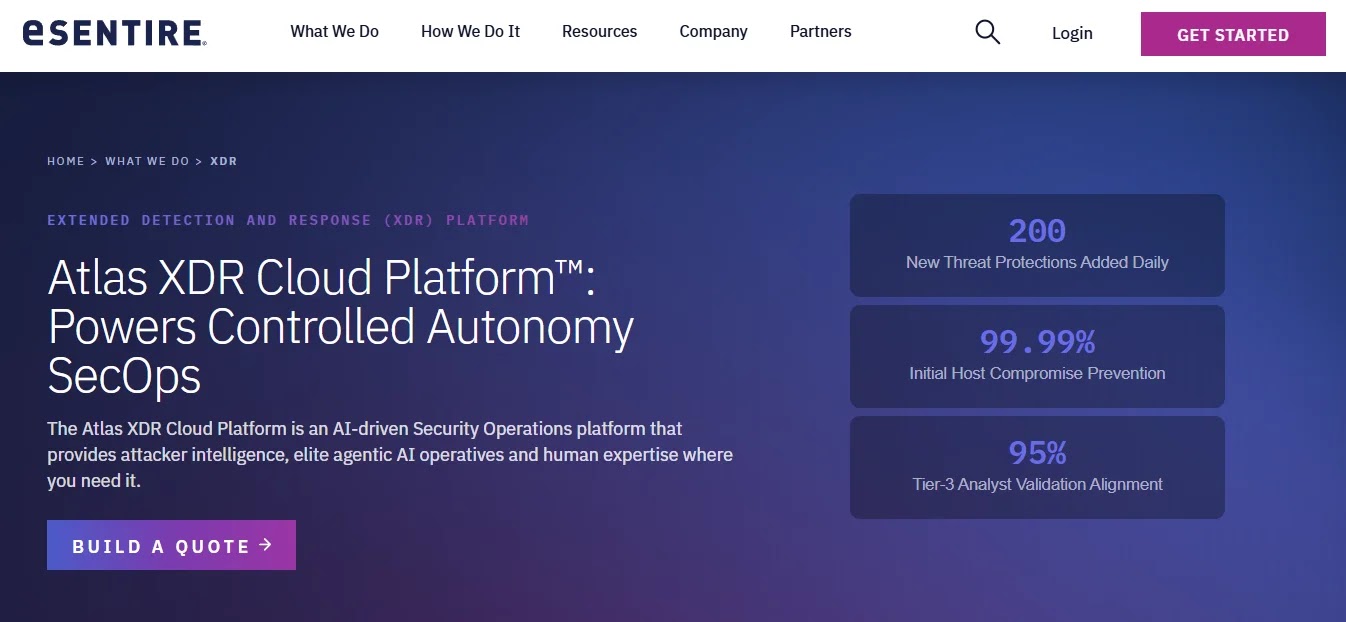
Why it scores here: eSentire provides strong detection and response capabilities, characterized by broad multi-signal coverage and a pronounced emphasis on rapid threat containment.
Strengths: Offers 24/7 managed detection and response (MDR), robust threat hunting and detection engineering, extensive coverage across endpoint, network, cloud, and identity, and boasts rapid containment capabilities. It also benefits from dedicated threat research provided by its Threat Response Unit.
Trade-offs: Features premium pricing compared to more value-oriented MDR providers. Its overall scale is smaller than that of the largest global security platforms. Organizations should validate the specific coverage and response capabilities for their unique environment.
Ideal buyer: Mid-market and enterprise organizations for whom rapid detection and containment are higher priorities than minimizing service costs.
Verify before buying: Confirm response-time commitments, pre-authorized containment actions, specific telemetry coverage, and all inclusions within the contracted service tier.
10. Fortinet — 7.2/10
Why it scores here: Fortinet offers good telemetry breadth within its Security Fabric and solid value, integrating with enterprise SOC tools. However, it exhibits the lowest platform flexibility, making the service truly valuable only for organizations with an existing Fortinet-centric infrastructure.
Strengths: Delivers strong value for existing Fortinet customers, provides broad Fabric telemetry across network, endpoint, email, and cloud, includes automated response capabilities across Fabric components, and is manageable for generalist IT teams.
Trade-offs: The value proposition significantly diminishes outside of a Fortinet-dominated environment. Detection engineering capabilities trail those of specialized providers. Fortinet’s history of exploited vulnerabilities, including a FortiCloud authentication bypass added to the CISA Known Exploited Vulnerabilities catalog in January 2026, makes explicit patch and response commitments critical contractual terms.
Ideal buyer: Organizations that have standardized on Fortinet products.
Verify before buying: Determine the precise proportion of your telemetry that originates within the Fortinet Security Fabric.
Head-to-Head Comparisons
Unit 42 vs. CrowdStrike: Palo Alto (Unit 42) — 8.3/10 provides superior native visibility, particularly across network environments, and offers a seamless escalation path to full incident response. CrowdStrike — 8.5/10 excels in endpoint detection engineering and delivers more aggressive containment authority, enhancing its SOC cyber threat detection capabilities. The choice between these two often hinges on an organization’s existing security infrastructure, as both require platform adoption.
Secureworks Taegis vs. Critical Start: Both providers allow organizations to retain their existing security tools. Secureworks Taegis distinguishes itself with significantly deeper detection research. Critical Start, conversely, offers a unique alert-resolution model and broader support for various tools. If detection quality is the paramount concern, Taegis is the stronger option; if extensive tool coverage is the priority, Critical Start may be more suitable.
MXDR vs. MDR: Avoid making decisions based solely on the acronym. The most effective approach is to first list all the telemetry sources you require monitoring. Then, obtain written confirmation from each provider detailing which of these sources they will ingest and actively use for detection. This granular comparison of actual monitored data sources, rather than marketing labels, will reveal the true scope of the service you are considering.
Buyer’s Guide
- Define your telemetry sources first: Before engaging with vendors, meticulously document all your critical telemetry sources. This includes endpoints, identity providers, collaboration suites like Microsoft 365 or Google Workspace, cloud accounts, firewalls, SaaS applications, and any other relevant security tools. Insist on written confirmation from each prospective provider detailing which of these sources they will actively monitor and develop detections for. This step is the single most crucial action in your evaluation process.
- Separate platform cost from service cost: Be aware that services from vendors like Palo Alto, CrowdStrike, Trend Micro, and Fortinet often mandate the use of their proprietary platforms. In contrast, providers such as Secureworks, Critical Start, and Rapid7 offer greater flexibility. To accurately compare monthly costs, you must normalize for any underlying technology licensing or platform purchases that are also required.
- Explicitly model data ingestion: Managed XDR inherently involves processing larger volumes of telemetry. Most providers price telemetry by volume, and this is a common area for budget overruns. Obtain a written estimate based on your actual anticipated log volume, along with a clear policy regarding overage charges.
- Contractually secure response authority: Ensure that the contract explicitly defines the scope of response authority. This should detail which actions the provider can take, under what specific conditions, and with what notification procedures. The term “Managed XDR” does not automatically imply unilateral containment authority; many providers operate on an advisory basis by default.
- Common mistakes to avoid:
- Purchasing MXDR but excluding identity telemetry, despite identity being a primary progression path for most modern attacks.
- Assuming MXDR inherently includes full incident response, when it typically only covers containment actions.
- Paying for correlated telemetry from sources that the provider will only ingest but not actively monitor or generate detections against.
Frequently Asked Questions
What is managed XDR (MXDR)?
Managed XDR is an outsourced service where a provider’s expert analysts continuously monitor, investigate, and respond to cyber threats. This is achieved by correlating telemetry from a broad range of sources, including endpoints, network infrastructure, email systems, identity services, and cloud environments, rather than focusing solely on endpoints. It integrates advanced XDR technology with a 24/7 human analyst team, and the most effective providers also include the authority to directly contain active threats.
What is the difference between MDR and MXDR?
Historically, MDR (Managed Detection and Response) specifically referred to the managed oversight of endpoint detection and response. MXDR (Managed Extended Detection and Response) expands this scope to include monitoring across network, email, identity, and cloud sources. In practical terms, these labels have become somewhat interchangeable; many services marketed as MDR now cover multiple data sources, while some MXDR offerings remain heavily concentrated on endpoints. Therefore, the most reliable approach is to compare the actual telemetry sources a provider monitors, rather than relying on the acronym alone.
What is the best managed XDR service in 2026?
Secureworks Taegis leads the overall ranking due to its exceptional detection research quality combined with high platform flexibility. CrowdStrike — 8.5/10 is distinguished for its superior detection and containment authority, while Palo Alto (Unit 42) — 8.3/10 stands out for its unmatched native telemetry breadth. For organizations prioritizing the retention of their existing tools, Critical Start is the strongest choice. Bitdefender — 7.6/10 offers the best value proposition.
How much does managed XDR cost?
Managed XDR services are typically priced per endpoint or per user per month, often with additional data ingestion charges that scale based on telemetry volume. Nearly all providers offer quote-based pricing. Services that require the adoption of the provider’s proprietary platform will incur additional technology licensing costs. Data ingestion volume is frequently the primary factor leading to budget overruns.
Do I need MXDR if I already have EDR?
If your internal security team possesses the capability to monitor and respond to EDR alerts around the clock, you might not require MXDR. However, MXDR becomes invaluable when 24/7 human monitoring is not feasible, or when threats evolve beyond the endpoint into identity and cloud environments where EDR lacks visibility. Most organizations with fewer than a few hundred employees find it economically challenging to maintain continuous 24/7 security coverage internally.
Does managed XDR include incident response?
Generally, Managed XDR services primarily focus on threat containment. Comprehensive incident response—which includes forensic analysis, root cause determination, regulatory notification, and full recovery—is typically offered as a separate retainer. Palo Alto (Unit 42) — 8.3/
Disclaimer: HackersRadar reports on cybersecurity threats and incidents for informational and awareness purposes only. We do not engage in hacking activities, data exfiltration, or the hosting or distribution of stolen or leaked information. All content is based on publicly available sources.







No Comment! Be the first one.