




Best Network Sandboxing Solutions for 2026
Key Takeaways Network sandboxing remains crucial in 2026 for detecting novel, evasive malware that bypasses signature-based defenses. Leading solutions balance automated prevention with deep...

Key Takeaways
- Network sandboxing remains crucial in 2026 for detecting novel, evasive malware that bypasses signature-based defenses.
- Leading solutions balance automated prevention with deep analytical capabilities, with vendors like Palo Alto WildFire excelling in integration and VMRay in evasion resistance.
- Organizations must choose solutions based on their primary goal: automated, fleet-wide prevention or in-depth manual malware investigation.
- Critical evaluation factors include evasion resistance, analysis depth, verdict distribution speed, and coverage of various file types and operating environments.
Network sandboxing continues to be an indispensable cybersecurity control, providing a secure environment to detonate unknown files and URLs. This process reveals their true behavior, effectively catching zero-day malware and advanced persistent threats (APTs) that evade traditional signature-based detection mechanisms.
Table Of Content
- Key Takeaways
- The Decision Matrix
- Why Sandboxing Still Matters in 2026
- How We Evaluated
- The 10 Best Network Sandboxing Solutions
- 1. Palo Alto Networks WildFire — Best Overall Integration
- 2. VMRay — Best Evasion Resistance
- 3. Fortinet FortiSandbox — Best Fabric-Wide Response
- 4. Check Point SandBlast — Best User-Experience Balance
- 5. Cisco Secure Malware Analytics — Best for Cisco Estates
- 6. Trellix — Best Within a Broad Detection Estate
- 7. Trend Micro Deep Discovery — Best Custom-Image Analysis
- 8. Proofpoint — Best for Email-Borne Threats
- 9. Joe Security — Best Deep-Analysis Reporting
- 10. Zscaler — Best Cloud-Delivered Sandboxing
- Full Comparison Table
- Buyer’s Guide: How to Choose Sandboxing That Actually Works
- Frequently Asked Questions
- What is network sandboxing?
- Which is the best network sandboxing solution in 2026?
- How does malware evade sandboxes?
- Is sandboxing still needed if we have EDR?
- Cloud sandbox or on-premises appliance?
- How much do network sandboxing solutions cost?
- The Verdict
In a dynamic threat landscape, Palo Alto WildFire stands out for its extensive scale and seamless integration with existing security infrastructures. For specialized deep analysis and resilience against highly evasive samples, VMRay offers unparalleled capabilities. Meanwhile, Joe Security maintains its position as the preferred tool for cybersecurity analysts requiring comprehensive manual investigation and detailed reporting.
This report identifies the ten leading sandboxing solutions, offering guidance on how organizations can align a solution’s analytical depth with their operational needs and team expertise.
The Decision Matrix
| If this describes you | Choose | Why |
| Palo Alto firewall estate | Palo Alto WildFire | Inline verdicts pushed fleet-wide in minutes |
| Fortinet Security Fabric | Fortinet FortiSandbox | Fabric-wide automated response from one verdict |
| Check Point gateways | Check Point SandBlast | Threat extraction delivers clean files instantly |
| Cisco networking and SecureX | Cisco Secure Malware Analytics | Threat Grid lineage plus Talos context |
| Malware researchers and IR teams | VMRay | Hypervisor-level monitoring that evasive samples can’t detect |
| Deep manual analysis and reporting | Joe Security | The most detailed analysis reports in the category |
| Email is the primary threat vector | Proofpoint | Attachment and URL detonation inside email security |
| Broad detection estate | Trellix | Sandbox integrated with the FireEye NX detection lineage |
| Network-wide APT detection | Trend Micro Deep Discovery | Custom sandbox images matching your real environment |
| Cloud-delivered, no appliances | Zscaler | Inline cloud sandboxing at the SSE layer |
Fundamentally, a network sandbox operates by executing suspicious files, attachments, and URLs within an isolated virtual environment. It meticulously monitors behaviors such as file modifications, registry changes, network callbacks, and process injections to determine malicious intent without compromising production systems.
Why Sandboxing Still Matters in 2026
Despite advancements in Endpoint Detection and Response (EDR) and AI-driven security, network sandboxing retains its critical importance due to three persistent realities:
Signatures cannot predict future threats. Sandboxing’s behavioral analysis approach allows it to identify new ransomware droppers and targeted payloads before any vendor can generate a signature, offering a crucial defense against novel attacks.
Modern malware actively evades analysis. Sophisticated malware is designed to detect virtual machine artifacts, hypervisor traces, lack of user interaction (e.g., mouse movement), sleep timers, and analysis tools. It remains dormant when it senses an analysis environment. This evasion resistance is a primary differentiator among solutions; agentless hypervisor-level monitoring, as employed by VMRay, is significantly more difficult for malware to detect compared to in-guest agents.
Verdict distribution amplifies value. A sandbox that merely identifies malware in isolation is a laboratory tool. Its true power is realized when it rapidly disseminates threat intelligence, pushing verdicts to firewalls, endpoints, and gateways across the entire estate within minutes. This capability is why platform-integrated sandboxes often provide superior operational defense compared to standalone analysis tools.
How We Evaluated
Our assessment is based on a research-driven comparison, without claiming or performing comparative lab testing. We weighted five key factors:
- Evasion Resistance: How effectively the analysis environment can withstand detection by sophisticated malware.
- Analysis Depth: The level of behavioral detail, memory forensics, unpacking capabilities, and overall report quality.
- Verdict Distribution: The speed and efficiency with which threat findings are propagated to enforcement points.
- Coverage: The range of supported file types, operating system environments, URLs, scripts, and custom images.
- Operational Model: Deployment options (cloud, on-premises, air-gapped) and the balance between automated and analyst-driven workflows.
Pricing information is included only where publicly available, with unverified specifics flagged accordingly.
The 10 Best Network Sandboxing Solutions
1. Palo Alto Networks WildFire — Best Overall Integration

The Pitch: Cloud-based sandboxing designed to rapidly translate analysis verdicts into firewall policies across an entire network infrastructure within minutes.
Palo Alto Networks WildFire ingests unknown files from its ecosystem, including PA firewalls, Prisma Access, and Cortex endpoints. It employs a multi-faceted analysis approach combining static, dynamic, and machine learning techniques, subsequently distributing new threat protections globally to all subscribing customers.
Where it Wins: Its strength lies in its distribution model. A single malware detection for one customer translates into protection for all, amplified by inline machine learning on firewalls that often blocks threats before they even require submission to the sandbox.
Where it Strains: Its maximum value is realized within an existing Palo Alto ecosystem. It operates as a subscription add-on to platform licensing and is less optimized for in-depth, analyst-led manual investigations compared to specialized tools.
Pricing Signal: Subscription-based with Palo Alto platforms; quote-based.
2. VMRay — Best Evasion Resistance
The Pitch: Offers monitoring entirely external to the guest operating system, preventing malware from detecting analysis artifacts within its environment.
VMRay utilizes hypervisor-level monitoring, which means no agents or hooks reside within the analysis environment for malware to discover. This makes it a preferred solution for threat intelligence teams, national CERTs, and security vendors requiring reliable verdicts on highly evasive samples.
Where it Wins: Provides industry-leading defense against sandbox-aware malware and environment-checking samples. It excels at automating triage at scale via its API and delivers clean, machine-readable output.
Where it Strains: Its specialized focus means fewer inline enforcement integrations compared to broader platform vendors. It carries premium pricing and is best suited for teams with advanced analysis maturity.
Pricing Signal: Quote-based. [VERIFY: current packaging]
3. Fortinet FortiSandbox — Best Fabric-Wide Response

The Pitch: Delivers a single verdict that is automatically enforced across the entire Fortinet Security Fabric.
FortiSandbox processes submissions from various Fortinet products, including FortiGate, FortiMail, FortiWeb, and FortiClient. It then disseminates updated threat intelligence back to all Fabric components, enabling automated, estate-wide blocking without manual intervention.
Where it Wins: Offers comprehensive automation across the entire Fortinet ecosystem. It is available as an appliance, virtual machine, or cloud service, including options for air-gapped deployments, and provides strong price-performance.
Where it Strains: Its primary value is concentrated within existing Fortinet environments. Its analysis depth and reporting capabilities are generally surpassed by specialist solutions. Given Fortinet’s history of exploited vulnerabilities, including a FortiCloud authentication bypass (CVE-2022-39952) listed in CISA’s KEV catalog in January 2026, diligent patch management is essential.
Pricing Signal: Appliance/VM/cloud licensing; quote-based.
4. Check Point SandBlast — Best User-Experience Balance

The Pitch: Allows users to receive a clean, sanitized file almost instantly while the original is detonated in the background for thorough analysis.
Check Point SandBlast features Threat Extraction (Content Disarm and Reconstruction), a truly differentiated capability. Instead of forcing users to wait for analysis, SandBlast removes active content from files and delivers a safe, sanitized version immediately. The original file is then delivered only if it is confirmed to be benign after full detonation.
Where it Wins: Eliminates the productivity overhead that often frustrates users with sandboxing solutions. It offers robust CPU-level exploit detection and is seamlessly integrated with Check Point gateway management.
Where it Strains: Its optimal value is achieved within an existing Check Point ecosystem. The total cost of ownership (TCO) tends to be higher than that of value-tier competitors.
Pricing Signal: Subscription-based with Check Point platforms; quote-based.
5. Cisco Secure Malware Analytics — Best for Cisco Estates

The Pitch: Leverages the powerful Threat Grid engine, enriched and supported by Talos intelligence, and integrated across Cisco’s comprehensive security portfolio.
Cisco Secure Malware Analytics combines dynamic analysis with an extensive historical sample corpus. This allows analysts to pivot from specific artifacts to related campaigns and delivers verdicts to Secure Firewall, Secure Endpoint, Email, and XDR solutions, all underpinned by Talos threat intelligence.
Where it Wins: Benefits significantly from the deep context provided by Talos intelligence. It offers robust analyst pivoting and threat-hunting workflows, alongside broad integration across Cisco’s security products.
Where it Strains: Exhibits the licensing complexity typical of Cisco products. Its interface can appear less modern than those of newer specialist solutions, and its best value is found within the Cisco ecosystem.
Pricing Signal: Quote-based via Cisco licensing.
6. Trellix — Best Within a Broad Detection Estate

The Pitch: Integrates the established FireEye NX sandboxing lineage into Trellix’s broader detection and XDR platform.
Trellix’s multi-vector FireEye virtual execution engine gained its reputation by effectively detecting targeted attacks that bypassed other defenses. It remains a powerful solution, particularly for organizations already leveraging Trellix’s network and endpoint detection capabilities.
Where it Wins: Boasts a proven detection heritage and strong integration with Trellix XDR. It offers multi-vector coverage across network, email, and file-based threats.
Where it Strains: Given the portfolio consolidation following the McAfee Enterprise/FireEye merger, a clear roadmap discussion is advisable. New standalone buyers should compare its capabilities against dedicated specialist solutions.
Pricing Signal: Appliance + subscription quote. [VERIFY: current network portfolio naming]
7. Trend Micro Deep Discovery — Best Custom-Image Analysis

The Pitch: Enables malware detonation within a sandbox environment meticulously configured to mirror an organization’s actual corporate build.
Trend Micro Deep Discovery allows users to upload custom sandbox images that precisely match their specific OS versions, applications, and locale settings. This is crucial because targeted malware often checks for particular software or language configurations before executing, thus bypassing generic sandboxes.
Where it Wins: Custom sandbox images are highly effective against environment-aware malware. It offers robust network-wide APT detection and provides good coverage for scripts, documents, and non-Windows samples.
Where it Strains: Primarily an appliance-centric deployment. The console may feel somewhat dated compared to modern interfaces, and maintaining custom images requires ongoing effort.
Pricing Signal: Appliance/virtual licensing; quote-based.
8. Proofpoint — Best for Email-Borne Threats

The Pitch: Focuses sandboxing capabilities on the most common vectors of malware delivery: email attachments and links.
Proofpoint’s Targeted Attack Protection detonates email attachments and rewrites URLs for time-of-click analysis. This approach effectively catches weaponization that occurs post-delivery and provides detailed reporting on targeted individuals.
Where it Wins: Email remains the dominant malware vector, and Proofpoint’s people-centric threat intelligence is exceptionally strong. It offers predictive URL sandboxing before users can click, significantly reducing risk.
Where it Strains: Its focus is primarily on email, making it less of a general-purpose network sandboxing solution. Organizations are essentially investing in an email security platform.
Pricing Signal: Per-user email security licensing; quote-based.
9. Joe Security — Best Deep-Analysis Reporting
The Pitch: Delivers the most comprehensive malware analysis reports available, specifically designed for analysts who require a granular understanding of sample behavior.
Joe Security supports analysis across a wide range of operating systems, including Windows, macOS, Linux, Android, and iOS, incorporating hybrid code analysis. Its reports are recognized as the industry standard for depth, utilized by researchers, incident response teams, and threat intelligence producers worldwide.
Where it Wins: Offers unmatched report detail and broad cross-platform coverage. It provides flexible deployment options, including on-premises and air-gapped environments, and is excellent for generating Indicators of Compromise (IOCs) and detection rules.
Where it Strains: Functions as an analysis platform rather than an inline prevention control. Extracting its full value requires skilled analysts with deep expertise.
Pricing Signal: Tiered licensing with cloud and on-premises options. [VERIFY: current pricing tiers]
10. Zscaler — Best Cloud-Delivered Sandboxing
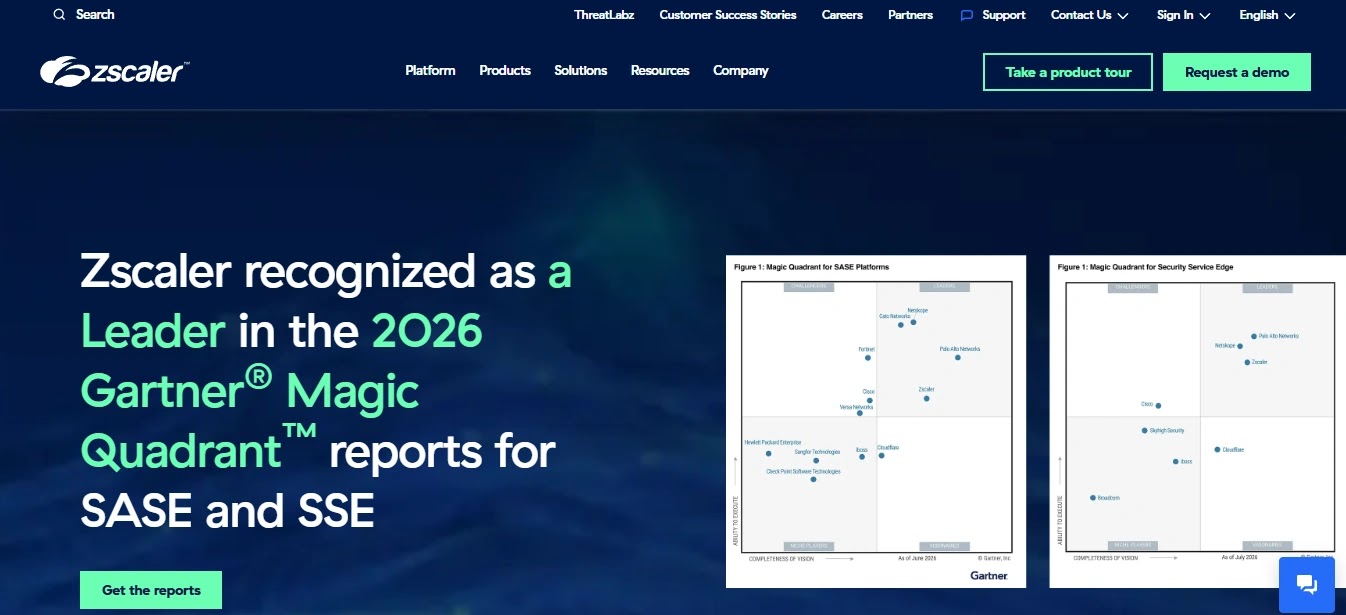
The Pitch: Provides inline sandboxing as part of its Security Service Edge (SSE) platform, eliminating the need for appliances and offering unlimited scalability without file-size or bandwidth restrictions.
Zscaler Cloud Sandbox inspects files inline as part of its Internet Access service. It holds unknown files until a verdict is returned, offering “patient-zero” protection, and applies security policies consistently to all users, regardless of their location.
Where it Wins: Requires no on-premises infrastructure, ensuring consistent protection for remote and branch users. It integrates seamlessly with the broader secure web gateway policy.
Where it Strains: Represents a commitment to a larger platform. Its analysis depth and reporting capabilities are generally surpassed by dedicated specialists, and per-user economics often require negotiation.
Pricing Signal: Included within Zscaler’s per-user licensing; quote-based.
Full Comparison Table
| Solution | Deployment | Evasion resistance | Inline blocking | Custom images | Air-gapped option | Analyst depth |
| Palo Alto WildFire | Cloud (+ on-prem WF-500) | Strong | Yes | Limited | Yes | Moderate |
| VMRay | Cloud/on-prem | Strongest | Via integration | Yes | Yes | Very high |
| Fortinet FortiSandbox | Appliance/VM/cloud | Good | Yes (Fabric) | Yes | Yes | Moderate | Check Point SandBlast | Cloud/appliance | Strong | Yes | Partial | Yes | Moderate |
| Cisco Secure Malware Analytics | Cloud/appliance | Strong | Yes | Partial | Yes | High |
| Trellix | Appliance/cloud | Strong | Yes | Yes | Yes | High |
| Trend Micro Deep Discovery | Appliance/virtual | Strong | Yes | Best | Yes | High |
| Proofpoint | Cloud | Strong | Email flow | Limited | No | Moderate |
| Joe Security | Cloud/on-prem | Very strong | No | Yes | Yes | Highest |
| Zscaler | Cloud | Good | Yes | Limited | No | Moderate |
Buyer’s Guide: How to Choose Sandboxing That Actually Works
Selecting the right sandboxing solution requires a clear understanding of your organizational needs and the technical capabilities of available products.
- Define Your Primary Goal: Prevention vs. Investigation. These two objectives often require distinct solutions. If your priority is automated blocking of unknown files at the gateway, platforms like WildFire, FortiSandbox, SandBlast, or Zscaler are ideal. For deep malware analysis and threat intelligence generation, specialized platforms like VMRay or Joe Security are more appropriate. Many mature security programs successfully deploy both types of solutions.
- Thoroughly Evaluate Evasion Resistance. It is crucial to understand how a vendor monitors execution—whether through an in-guest agent, emulation, or hypervisor-level techniques. Inquire about their specific anti-evasion strategies against tactics like sleep skipping, environment checks, and requirements for user interaction. This distinction can determine whether a sandbox effectively identifies real malware or erroneously reports it as “benign.”
- Assess Delay Tolerance. Malware analysis inherently takes time. Determine whether unknown files are held until a verdict is rendered (a safer but slower approach) or delivered and then retroactively remediated (faster but riskier). Also, consider solutions offering a middle ground, such as Check Point’s threat extraction, which provides immediate sanitized content.
- Confirm Coverage Aligns with Your Traffic. Ensure the solution can effectively analyze all relevant file types, including Office documents, PDFs, archives, scripts, installers, macOS, Linux binaries, and mobile applications. Be mindful of common blind spots, such as encrypted or password-protected archives.
Common Mistakes: Deploying a sandbox without a clear path for verdict enforcement; neglecting encrypted traffic coverage, allowing malware to bypass inspection within TLS; and assuming sandboxing replaces EDR or network detection rather than serving as a vital complementary layer.
Frequently Asked Questions
What is network sandboxing?
Network sandboxing involves executing suspicious files, attachments, and URLs within an isolated virtual environment. By observing behaviors like file system changes, registry modifications, network callbacks, and process injection, it determines if a sample is malicious. This method is crucial for detecting previously unseen malware that signature-based tools would miss.
Which is the best network sandboxing solution in 2026?
For integrated prevention at scale, Palo Alto WildFire is a top contender due to its rapid, fleet-wide verdict distribution. VMRay excels in evasion resistance for analysis teams, while Joe Security provides the most detailed reports. FortiSandbox, SandBlast, and Cisco Secure Malware Analytics are strong choices for organizations already invested in their respective ecosystems.
How does malware evade sandboxes?
Evasive malware is designed to detect virtualized environments by checking for specific artifacts, analysis tools, short uptime, lack of mouse movement, or particular software and language settings. It then remains dormant to avoid detection. Some malware uses long sleep timers or requires specific user interactions. Hypervisor-level monitoring is significantly more difficult for malware to detect than in-guest agents.
Is sandboxing still needed if we have EDR?
Yes, sandboxing and EDR are complementary security layers. EDR identifies malicious activity on endpoints after execution has begun. Network sandboxing, conversely, analyzes files before they reach endpoints, preventing initial compromise. Additionally, sandboxing generates valuable threat intelligence and IOCs that enhance detection capabilities across other security tools.
Cloud sandbox or on-premises appliance?
Cloud sandboxing offers scalability without hardware constraints, provides protection for remote users, and benefits from shared cross-customer intelligence. On-premises and air-gapped appliances are essential for environments where data cannot leave the local network due to regulatory compliance or classification requirements. Several vendors, including VMRay, FortiSandbox, Joe Security, and Trellix, offer both deployment options.
How much do network sandboxing solutions cost?
Most sandboxing solutions are sold as subscriptions, often bundled with firewall, email, or SSE platforms, with pricing based on users or appliances. Standalone analysis platforms, such as VMRay and Joe Security, typically license by analysis volume or seats, with various cloud and on-premises tiers. Organizations should also factor in the cost of analyst time required to fully leverage these tools.
The Verdict
For organizations prioritizing automated, scalable prevention, Palo Alto WildFire stands out as the strongest choice. Other platform-integrated solutions like FortiSandbox, Check Point SandBlast, Cisco Secure Malware Analytics, and Zscaler are excellent options if you are already invested in their respective ecosystems.
However, if your objective is to gain a deep understanding of malware rather than simply blocking it, VMRay and Joe Security offer superior capabilities. VMRay is unparalleled for evasion-resistant automated triage, while Joe Security provides the most in-depth analysis reports.
The critical first step is to define whether your primary need is prevention or investigation. Subsequently, rigorously scrutinize a solution’s evasion resistance; a sandbox that sophisticated malware can detect offers a false sense of security.
Disclaimer: HackersRadar reports on cybersecurity threats and incidents for informational and awareness purposes only. We do not engage in hacking activities, data exfiltration, or the hosting or distribution of stolen or leaked information. All content is based on publicly available sources.








No Comment! Be the first one.