



Best Software-Defined Perimeter (SDP) Solutions of 2024
Key Takeaways Software-Defined Perimeters (SDP) are crucial for modern cybersecurity, rendering infrastructure invisible to unauthorized scanners by authenticating users and devices before...

Key Takeaways
- Software-Defined Perimeters (SDP) are crucial for modern cybersecurity, rendering infrastructure invisible to unauthorized scanners by authenticating users and devices before establishing encrypted, one-to-one connections to specific resources.
- While “SDP” defines the architectural concept, “ZTNA” (Zero Trust Network Access) is the prevailing commercial term for solutions implementing these principles, emphasizing “authenticate first, connect second.”
- Leading SDP solutions for 2024 include Zscaler for large enterprises, Appgate for pure architectural fidelity, and Twingate for rapid VPN replacement, with Cloudflare offering broad value across all organizational sizes.
- Organizations must prioritize solutions that genuinely hide resources, verify device posture continuously, support diverse application types, and manage unmanaged devices effectively to avoid common pitfalls of partial implementation.
In the evolving landscape of cybersecurity, a Software-Defined Perimeter (SDP) has emerged as a critical architectural shift, fundamentally altering how organizations protect their digital assets. Unlike traditional network security models, SDP ensures that infrastructure remains entirely hidden from unauthenticated entities, thereby eliminating the attack surface presented by discoverable network resources. This invisibility prevents attackers from scanning, probing, or exploiting vulnerabilities in systems they cannot even perceive.
Table Of Content
- Key Takeaways
- The Decision Matrix
- What Actually Changed: SDP Became ZTNA
- How We Evaluated
- The 10 Best SDP Solutions
- 1. Zscaler — Best at Enterprise Scale
- 2. Appgate — Purest SDP Implementation
- 3. Twingate — Fastest VPN Replacement
- 4. Cloudflare — Best Value Across the Range
- 5. Check Point Harmony SASE (formerly Perimeter 81)
- 6. Cisco Secure Access — Best for Cisco and Duo Estates
- 7. Palo Alto Networks — Deepest Inspection After Access
- 8. Netskope — Best Data-Aware Private Access
- 9. Absolute (NetMotion) — Best for Mobile and Field Workforces
- 10. Fortinet — Best FortiGate Policy Continuity
- Full Comparison Table
- Buyer’s Guide: Five Questions That Separate Real SDP From Rebranded VPN
- Frequently Asked Questions
- What is a software-defined perimeter (SDP)?
- What is the difference between SDP and ZTNA?
- How is SDP different from a VPN?
- Which is the best SDP solution in 2026?
- Can SDP replace our VPN completely?
- How much do SDP solutions cost?
- The Verdict
As organizations seek to fortify their defenses in 2024, the choice of an SDP solution is paramount. Our analysis highlights Zscaler as the leader for large-scale enterprise deployments, recognized for its robust global broker network that keeps applications off the public internet. Appgate stands out as the most faithful implementation of the original SDP architecture, leveraging single-packet authorization for unparalleled stealth. For smaller teams or those looking for a swift transition from legacy VPNs, Twingate offers a rapid deployment path. This report delves into the top ten SDP solutions, dissecting their unique strengths and guiding organizations through the selection process.
The Decision Matrix
Selecting the appropriate SDP solution hinges on specific organizational needs and existing infrastructure. The following matrix provides a quick reference for matching common scenarios with the most suitable providers:
| If this describes you | Choose | Why |
| Large enterprise retiring VPN concentrators | Zscaler | Leverages a 160+ data center broker network, ensuring applications are never directly exposed to the internet. |
| Want the textbook SDP architecture | Appgate | Offers single-packet authorization, representing the purest implementation of the SDP model. |
| Replacing a VPN fast, small team | Twingate | Deploys in mere hours, includes a free tier, and enforces least-privilege access by default. |
| Want free-to-enterprise on one platform | Cloudflare | Provides a free tier and scalable global Secure Service Edge (SSE) capabilities without vendor lock-in. |
| SMB wanting published per-user pricing | Check Point Harmony SASE | Combines Perimeter 81’s accessible pricing with strong backing from a leading security vendor. |
| Cisco networking and Duo identity | Cisco Secure Access | Integrates Duo device trust with SSE within a unified Cisco ecosystem. |
| Palo Alto firewall estate | Palo Alto Networks | Features ZTNA 2.0 with continuous inspection of all authorized traffic. |
| Data protection drives the project | Netskope | Offers private access solutions deeply integrated with elite Cloud Access Security Broker (CASB) and Data Loss Prevention (DLP). |
| Field, mobile, and unreliable-network users | Absolute (NetMotion) | Built for exceptional session persistence, ideal for mobile workforces. |
| FortiGate estate modernizing access | Fortinet | Ensures policy continuity from existing FortiGate firewalls to ZTNA. |
Fundamentally, a Software-Defined Perimeter (SDP) operates by enforcing strict authentication of both users and devices before any network connection is established. Following successful authentication, an encrypted, one-to-one tunnel is dynamically created to a specific, authorized resource. This mechanism ensures that all other infrastructure remains completely invisible to external scanners, including potential attackers, thereby significantly reducing the accessible attack surface.
What Actually Changed: SDP Became ZTNA
The evolution of terminology in this space warrants clarification, as vendors often use terms inconsistently. Originally, SDP was the architectural blueprint, formally defined by the Cloud Security Alliance, centered on the principle of “authenticate first, connect second” and often incorporating single-packet authorization. Over time, ZTNA emerged as the commercial product category that embodies these SDP principles. In 2026, these terms are largely interchangeable, with most solutions described below being marketed as ZTNA even while adhering to core SDP tenets.
Practically, this means that organizations should not base their shortlisting solely on the acronym used. Instead, the critical evaluation criterion must be whether a product genuinely conceals resources from unauthenticated users, rather than merely proxying access to assets that remain publicly discoverable. This distinction is paramount, as it represents the fundamental security value proposition of SDP.
Two significant market dynamics underscore the urgency of this shift. Firstly, CISA’s Known Exploited Vulnerabilities catalog frequently lists internet-facing remote-access appliances, highlighting them as consistent entry points for attackers. SDP directly addresses this by making gateways unresponsive to unauthorized packets, thus rendering mass scans futile. Secondly, Zero Trust Architecture has transitioned from an aspirational concept to a mandatory procurement requirement, with SDP serving as the primary implementation method for remote access within most organizations.
How We Evaluated
Our assessment was based on structured research, not lab testing. We focused on five weighted factors: architectural fidelity (how effectively resources are genuinely concealed), identity and device trust (including posture checking, continuous verification, and Identity Provider integration), coverage (support for legacy protocols, unmanaged devices, agentless access, and both private and cloud applications), performance footprint (referencing Points of Presence, latency, and session handling), and commercial transparency. Pricing is indicated only where publicly available, with other instances marked as quote-based and unconfirmed details flagged with [VERIFY].
The 10 Best SDP Solutions
1. Zscaler — Best at Enterprise Scale

The Pitch: Zscaler’s architecture ensures applications connect outbound to a vast global broker network, meaning no internal resources are ever directly exposed to the internet.
Zscaler Private Access (ZPA) routes every session through its Zero Trust Exchange, spanning over 160 data centers worldwide. This design prevents users from ever directly accessing the corporate network and ensures applications never expose listening ports. ZPA represents the most operationally mature and proven SDP implementation for very large enterprises.
Where it Wins: An expansive global footprint, an architecture that intrinsically renders applications invisible, and deep integration with Zscaler’s Secure Web Gateway (SWG) for a comprehensive Secure Service Edge (SSE) offering.
Where it Strains: Per-user economics typically necessitate negotiation, the platform demands a significant organizational commitment, and east-west data center traffic still requires separate security controls.
Pricing Signal: Quote-based per-user. SSE bundles often benchmark around $15–$25 per user monthly at list price, prior to discounts.
2. Appgate — Purest SDP Implementation
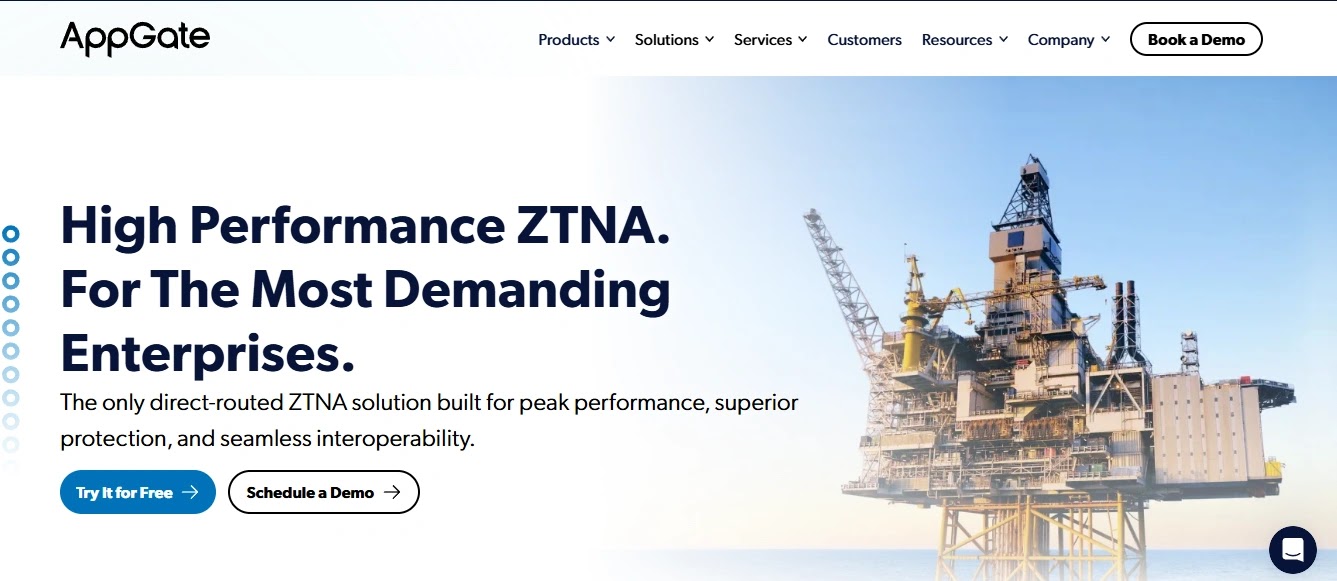
The Pitch: Appgate delivers the SDP architecture precisely as intended, employing single-packet authorization to ensure the gateway remains entirely dark until a valid cryptographic “knock” is received.
Appgate SDP adheres faithfully to the original Cloud Security Alliance model, providing granular, identity-centric entitlements and dynamic policy enforcement. The company continues to innovate, achieving “Awardable” status on the US Department of War’s Platform One Solutions Marketplace in October 2025 and launching protection for agentic AI workloads in December 2025. It stands as a premier choice among dedicated Zero Trust security vendors for government and large enterprise deployments.
Where it Wins: True cloud invisibility via single-packet authorization, strong capabilities for intricate hybrid environments and governmental compliance, and excellent support for legacy protocols and non-web applications.
Where it Strains: Possesses a smaller brand presence compared to hyperscale platforms and typically requires more in-depth architectural planning than simpler SaaS alternatives.
Pricing Signal: Quote-based. [VERIFY: current packaging]
3. Twingate — Fastest VPN Replacement
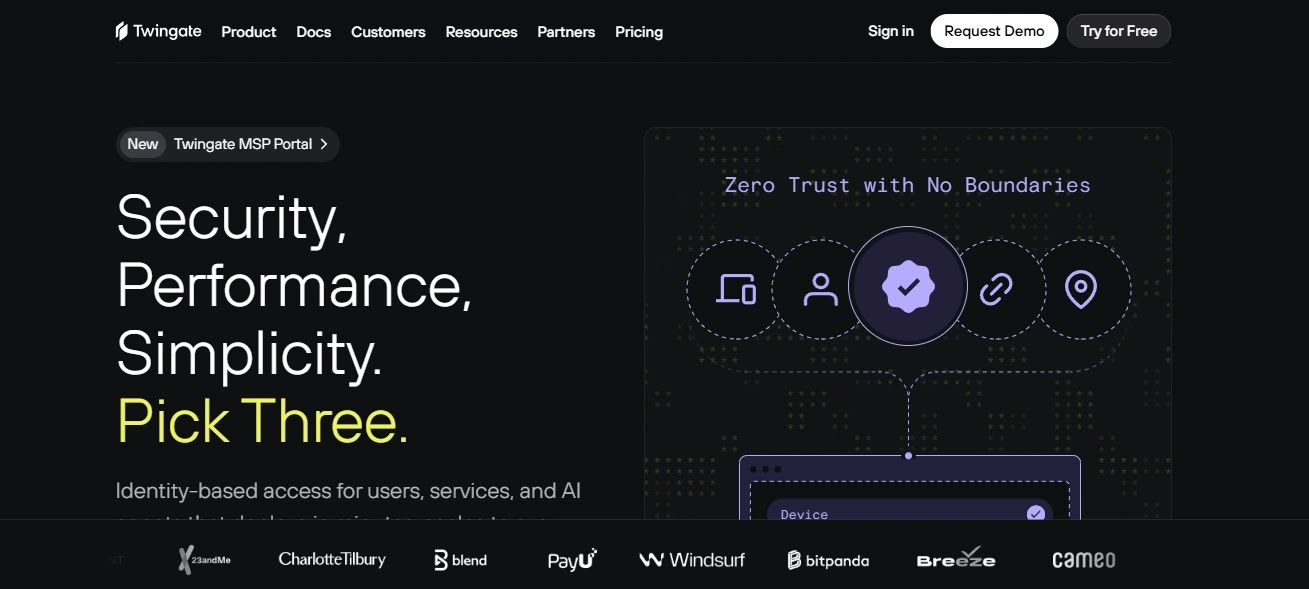
The Pitch: Twingate enables least-privilege access defined as code, deploys in an afternoon, and requires no inbound ports to be opened anywhere.
Twingate’s connectors initiate outbound connections, ensuring no public listening ports. This, coupled with a genuine free tier and transparent pricing, positions it as a top VPN alternative for rapid SDP adoption.
Where it Wins: Achieves value within minutes of deployment, is native to Infrastructure-as-Code (IaC) and APIs, offers a free tier that eliminates procurement hurdles, and features clear resource-level policy management.
Where it Strains: Deep inline inspection capabilities are more access-focused and may require a broader platform; enterprise governance features are not as extensive as those offered by established incumbents.
Pricing Signal: Free tier available; published per-user plans. [VERIFY: current tiers]
4. Cloudflare — Best Value Across the Range
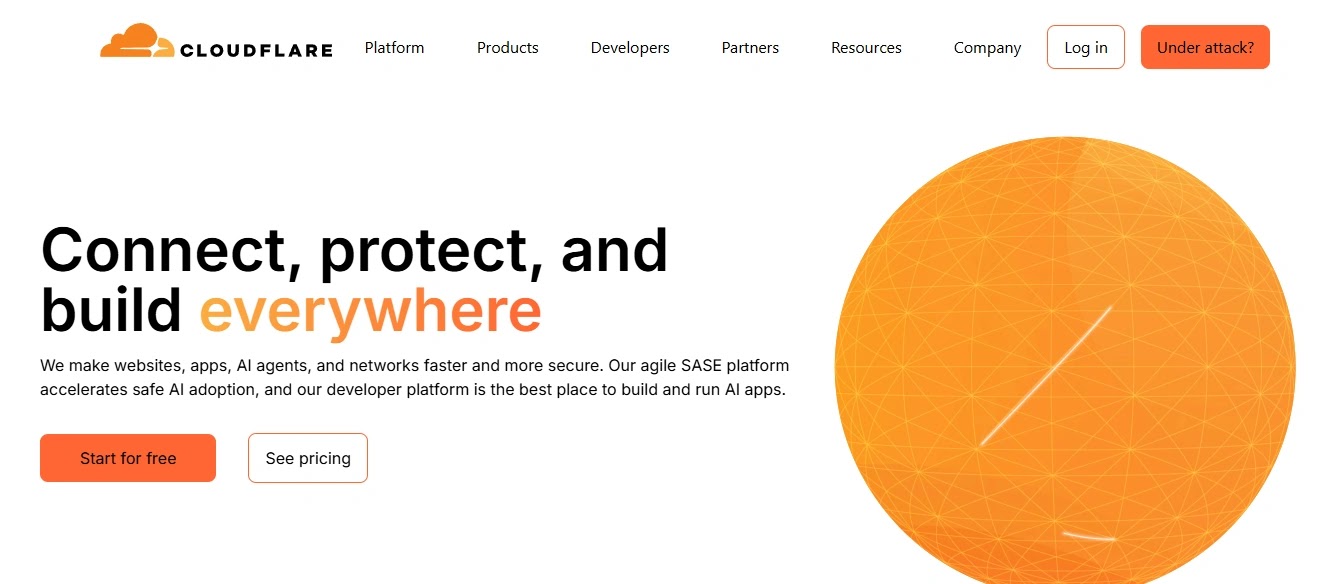
The Pitch: Cloudflare provides zero-trust access leveraging one of the world’s largest networks, with options ranging from a free starting tier to comprehensive enterprise solutions.
Cloudflare Access verifies every request against identity and device posture before brokering connections to internal applications. Its Tunnel feature ensures that origin servers never expose public IP addresses.
Where it Wins: Exceptional price-to-capability ratio, massive anycast network performance, agentless browser-based access for contractors, and seamless scalability to a full SSE platform without vendor switching.
Where it Strains: Support for legacy protocols and deep Active Directory-era attribution may require more effort compared to traditional enterprise vendors.
Pricing Signal: Free tier; published per-user plans; enterprise quotes available. [VERIFY: current tiers]
5. Check Point Harmony SASE (formerly Perimeter 81)

The Pitch: An accessible SDP solution for SMBs with published pricing, enhanced by the robust threat prevention capabilities of a major security vendor.
Perimeter 81 earned its reputation by simplifying zero-trust access procurement. Following its acquisition by Check Point in 2023, it is now offered as Harmony SASE, integrating advanced prevention features (refer to Check Point Harmony updates).
Where it Wins: Transparent per-user pricing tiers, rapid deployment, leveraging a security vendor’s extensive threat research, and effectively bridging the gap between SMB and enterprise needs.
Where it Strains: Packaging has undergone significant changes post-acquisition; organizations should verify current tiers and feature mapping. Enterprise scalability may lag behind platforms like Zscaler.
Pricing Signal: Published per-user tiers. [VERIFY: current Harmony SASE packaging]
6. Cisco Secure Access — Best for Cisco and Duo Estates
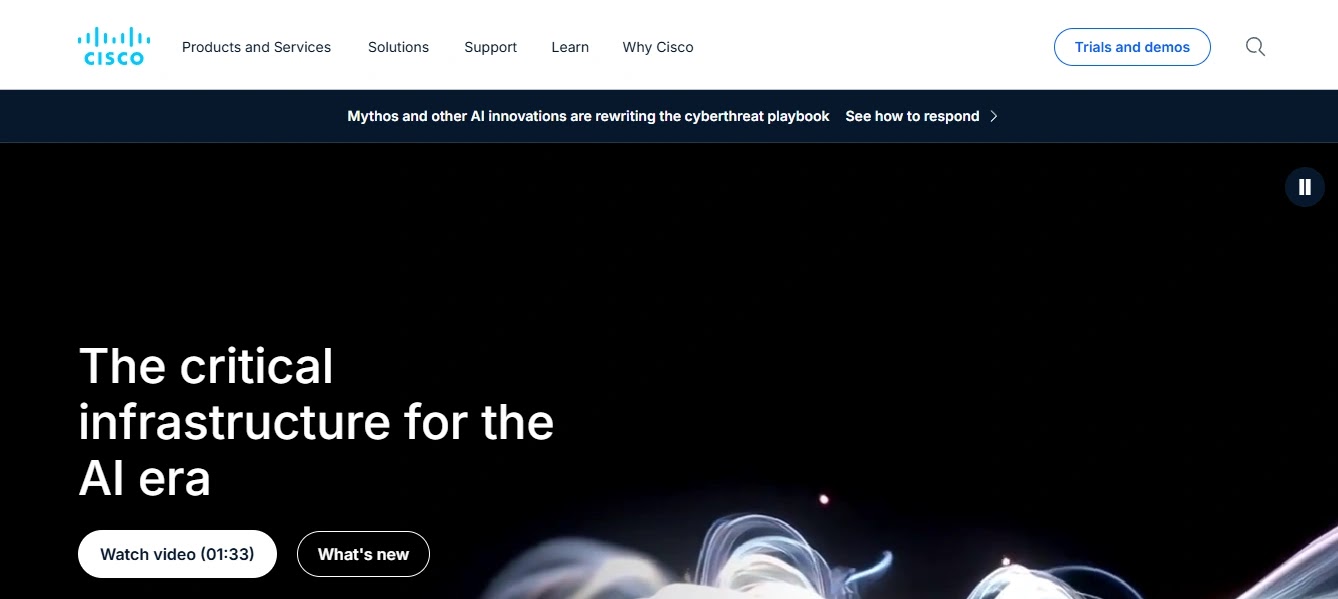
The Pitch: Combines SDP functionality with Duo’s trusted device-trust heritage and Umbrella’s DNS-layer security within a unified Secure Service Edge (SSE).
For organizations already leveraging Cisco networking and Duo MFA, the most challenging aspects of zero trust—establishing trustworthy identity and device posture signals—are already addressed internally. Cisco Secure Access natively integrates with existing Cisco networking and ISE identity stacks.
Where it Wins: Leverages Duo device trust, benefits from Talos threat intelligence, offers native integration with Cisco networking, identity, and XDR solutions, and provides a single vendor for accountability.
Where it Strains: The platform is an aggregation of acquired technologies, with ongoing improvements in console coherence. Licensing can be complex, and its greatest value is realized within the broader Cisco ecosystem.
Pricing Signal: Per-user tiers, best negotiated within enterprise agreements.
7. Palo Alto Networks — Deepest Inspection After Access
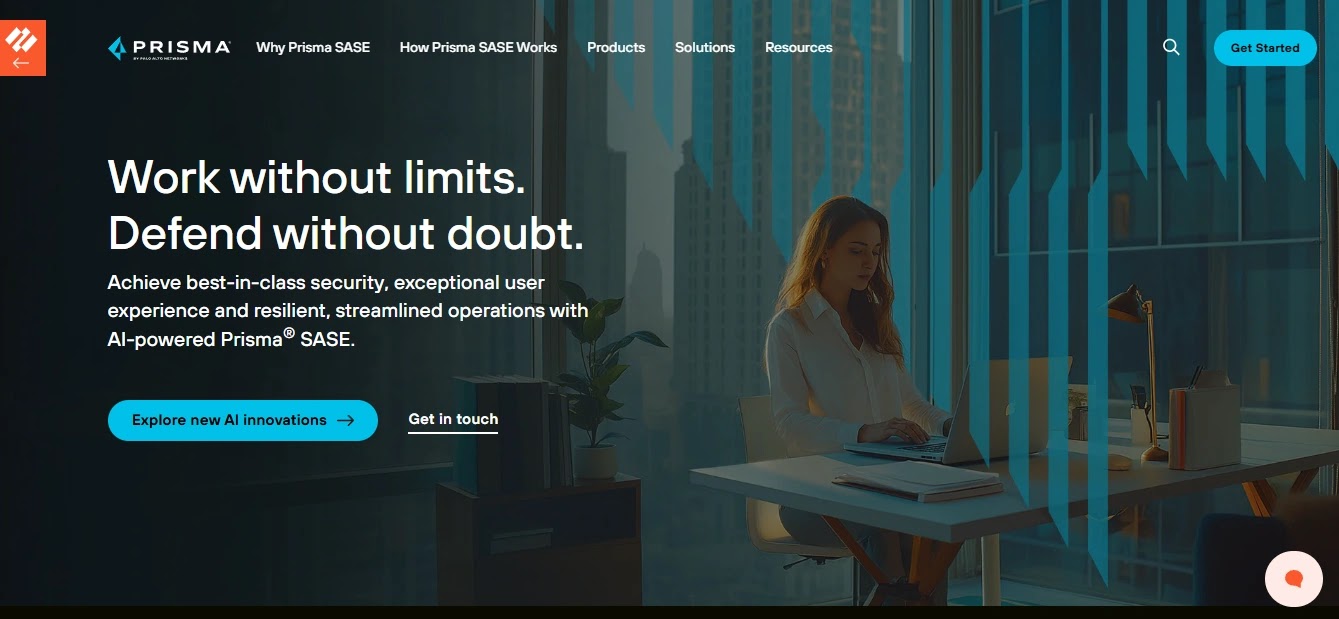
The Pitch: ZTNA 2.0 ensures that access, once granted, is not forgotten; allowed sessions remain under continuous security inspection.
Palo Alto Networks’ Prisma Access applies App-ID, advanced threat prevention, and WildFire capabilities to authorized traffic. This addresses a critical gap in first-generation ZTNA, which often authenticated once and then implicitly trusted the session indefinitely, demanding continuous management of security advisories for the underlying infrastructure.
Where it Wins: Provides continuous inspection of permitted traffic, offers unified policy management with Palo Alto firewalls, and delivers the strongest inspection depth among the solutions reviewed.
Where it Strains: Commands premium pricing with modular stacking, and its complexity is better suited for organizations with dedicated, well-staffed security teams.
Pricing Signal: Per-user/site quote.
8. Netskope — Best Data-Aware Private Access
The Pitch: Provides private application access with the same stringent data controls applied across all user interactions.
Netskope Private Access operates on the NewEdge network, seamlessly integrated with its Cloud Access Security Broker (CASB) and Data Loss Prevention (DLP) engines. This ensures that access decisions and data movement policies are governed by a single, unified policy engine.
Where it Wins: Offers elite DLP/CASB context surrounding access, boasts a robust performance architecture, and delivers unified SSE policy management.
Where it Strains: Comes with premium pricing, and the data platform is the primary investment; private access alone may not justify the cost.
Pricing Signal: Per-user quote.
9. Absolute (NetMotion) — Best for Mobile and Field Workforces
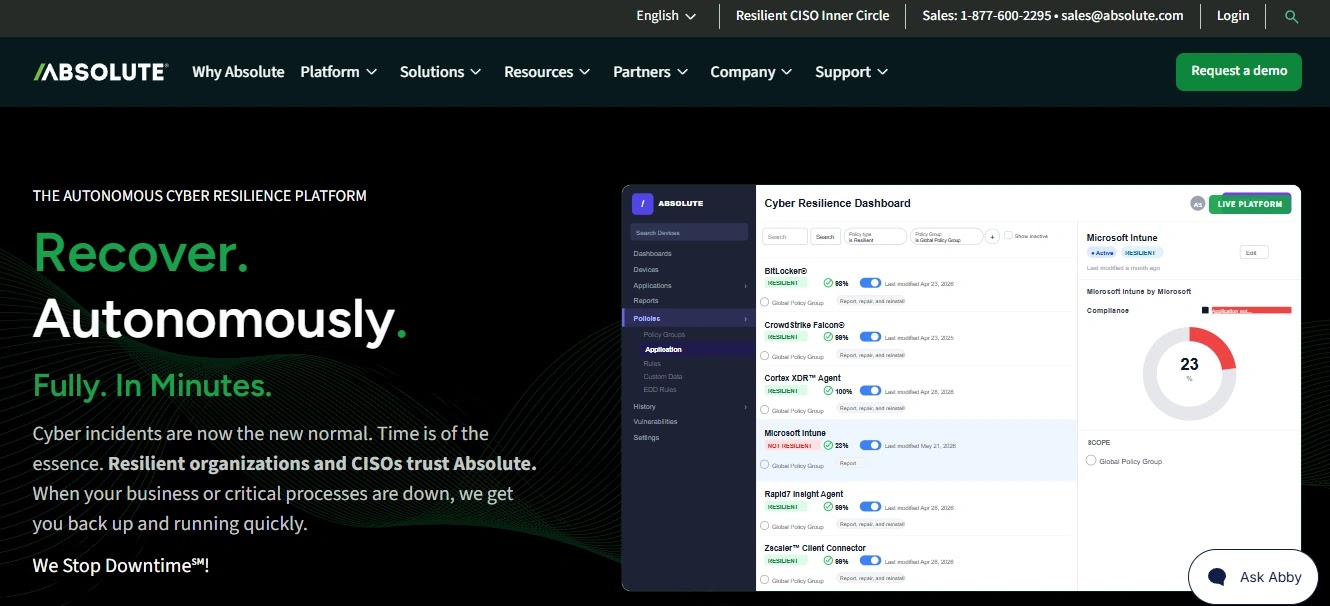
The Pitch: Secure access specifically engineered for environments with intermittent connectivity, such as vehicles, field crews, public safety personnel, and anyone operating on unreliable networks.
The NetMotion technology, now integrated into Absolute Security, excels in session persistence and network resilience. It combines with Absolute’s broader endpoint management capabilities to ensure seamless connectivity for users transitioning between Wi-Fi and cellular networks.
Where it Wins: Unmatched session persistence for mobile users, a strong pedigree in public safety and field services, and integration with Absolute’s device-resilience features.
Where it Strains: Offers a narrower general-purpose ZTNA feature set compared to market leaders; organizations should validate current product naming and its roadmap within Absolute’s portfolio.
Pricing Signal: Quote-based. [VERIFY: current product naming and packaging]
10. Fortinet — Best FortiGate Policy Continuity
The Pitch: Delivers ZTNA through the familiar FortiOS policy model and leveraging the FortiClient agent already deployed in many environments.
FortiClient serves as both the endpoint agent and the ZTNA agent, while FortiGates function as access proxies. This allows many existing Fortinet customers to adopt zero-trust access without additional licensing. FortiSASE further extends these capabilities to cloud delivery and Firewall-as-a-Service (FWaaS).
Where it Wins: Minimal marginal cost for existing Fortinet estates, consistent policy enforcement from firewall to remote access, and FortiSASE’s extension to cloud-delivered security.
Where it Strains: Its deepest value is realized within existing Fortinet infrastructure. Fortinet’s history of exploited vulnerabilities, including a FortiCloud authentication bypass (CVE-2022-39952) added to CISA’s KEV catalog in January 2026, necessitates rigorous patching of all internet-facing components.
Pricing Signal: Largely integrated within FortiGate licensing; FortiSASE offers per-user tiers via partners.
Full Comparison Table
| Solution | Architecture | Resources hidden | Agentless option | Free tier | Ideal size |
| Zscaler | Cloud broker | Yes | Yes | No | 5,000+ |
| Appgate | SPA gateway | Yes (SPA) | Partial | No | 500+ / government |
| Twingate | Outbound connector | Yes | Partial | Yes | 10–2,000 |
| Cloudflare | Global proxy + tunnel | Yes | Yes | Yes | Any |
| Harmony SASE | Cloud gateway | Yes | Yes | Trial | 20–2,000 |
| Cisco Secure Access | Cloud SSE | Yes | Yes | Trial | Cisco estates |
| Palo Alto | Cloud + firewall | Yes | Yes | No | Security-mature |
| Netskope | Cloud (NewEdge) | Yes | Yes | No | Data-led enterprise |
| Absolute (NetMotion) | Client + gateway | Partial | Limited | No | Mobile workforces |
| Fortinet | Firewall proxy + agent | Yes | Partial | Bundled | FortiGate estates |
Buyer’s Guide: Five Questions That Separate Real SDP From Rebranded VPN
Distinguishing genuine SDP from mere rebranded VPNs is crucial for effective security. Here are five essential questions to guide your evaluation:
- Are my resources actually invisible to unauthenticated scanners? Demand a clear explanation from the vendor regarding the underlying mechanism: whether it relies on outbound-only connectors, single-packet authorization, or a broker. If any component remains publicly listening, it functions as a proxy, not a true perimeter.
- Is device posture verified, not just user identity? Credential theft remains a primary vector for breaches. Confirm whether the solution validates disk encryption, patch levels, and the presence of Endpoint Detection and Response (EDR) before granting access, and crucially, if it re-checks these conditions throughout the session.
- How does it handle non-web and legacy applications? SSH, RDP, thick clients, and SMB protocols behave very differently under an SDP compared to a traditional VPN. Prioritize piloting your most challenging internal application, rather than just a simple web dashboard, to assess compatibility.
- What’s the strategy for contractors and unmanaged devices? Agentless or browser-delivered access is frequently a decisive requirement, and support for these varies significantly across different solutions.
- What happens if the broker becomes unreachable? Understand the failure modes and offline behavior before entrusting a single cloud service with gatekeeping access to all your resources.
Common pitfalls in SDP adoption include: maintaining the old VPN “temporarily” for extended periods, thereby failing to eliminate the intended attack surface; configuring overly broad access policies that effectively grant network-level access rather than granular per-application access; and neglecting to integrate the product effectively with your existing identity provider and Identity and Access Management (IAM) stack.
Frequently Asked Questions
What is a software-defined perimeter (SDP)?
An SDP is a security architecture that first authenticates both users and devices before permitting any network connection. It then establishes a dedicated, encrypted, one-to-one tunnel to a specific, authorized resource. This design ensures that unauthorized parties receive no response, making protected infrastructure invisible to internet scanning and exploitation.
What is the difference between SDP and ZTNA?
SDP represents the foundational architectural model, formalized by the Cloud Security Alliance, emphasizing “authenticate first, connect second.” ZTNA, or Zero Trust Network Access, is the commercial product category that has evolved from and largely implements SDP principles. In practice, the terms are often used interchangeably in 2026. The key is to evaluate whether a solution genuinely conceals resources, rather than focusing solely on the acronym a vendor uses.
How is SDP different from a VPN?
A traditional VPN authenticates a user and then places their device onto the network, which means a stolen credential can grant broad network access. In contrast, SDP grants access to only one authorized application at a time, continuously verifies device posture, and ensures that infrastructure remains unreachable and unscannable for all unauthorized entities.
Which is the best SDP solution in 2026?
For large enterprises, Zscaler is a leading choice. Appgate offers the purest architectural implementation with single-packet authorization, particularly for government buyers. Twingate provides the fastest and most affordable VPN replacement for smaller teams. Cloudflare delivers excellent value across its free to enterprise offerings.
Can SDP replace our VPN completely?
For remote access to applications, yes, SDP is designed precisely for this purpose. However, full-network administrative access, certain legacy protocols, and site-to-site connectivity might still require traditional VPN tunnels. Most organizations operate both systems briefly during migration, with the crucial step of fully decommissioning the VPN being what truly removes the legacy attack surface.
How much do SDP solutions cost?
Published per-user plans can start with free tiers (e.g., Twingate, Cloudflare) and typically range up to low double digits per user monthly. Enterprise platforms usually provide quote-based pricing, with comprehensive SSE bundles often benchmarking around $15–$25 per user monthly at list price, before potential 30–50% discounts. For existing Fortinet estates, ZTNA capabilities are often largely covered by current FortiGate licensing.
The Verdict
In 2026, Zscaler remains the de facto enterprise standard for Software-Defined Perimeters, while Appgate is the preferred option for organizations, including government entities, seeking a faithful architectural implementation. Twingate and Cloudflare offer the most expedient and cost-effective paths to genuine least-privilege access for smaller teams. Meanwhile, Cisco, Palo Alto, Netskope, Fortinet, and Check Point each provide compelling solutions optimized for their respective ecosystems.
Regardless of the chosen solution, it is imperative to verify that your resources are truly invisible to the internet, demand continuous device posture checks, establish a firm deadline for decommissioning legacy VPNs, and integrate your access strategy with a broader Zero Trust adoption roadmap.
Disclaimer: HackersRadar reports on cybersecurity threats and incidents for informational and awareness purposes only. We do not engage in hacking activities, data exfiltration, or the hosting or distribution of stolen or leaked information. All content is based on publicly available sources.






No Comment! Be the first one.