




Top SAST Tools for Security Teams in 2024
Key Takeaways Modern software development necessitates integrating security early in the lifecycle. Static Application Security Testing (SAST) tools are critical for identifying vulnerabilities in...

Key Takeaways
- Modern software development necessitates integrating security early in the lifecycle.
- Static Application Security Testing (SAST) tools are critical for identifying vulnerabilities in uncompiled code.
- Top SAST solutions for 2024 offer advanced features like AI, automated remediation, and deep CI/CD integration.
- Choosing the right SAST tool depends on specific organizational needs, from lean startups to large enterprises.
The relentless pace of modern software development, with engineering teams deploying code multiple times daily, has rendered traditional security gatekeeping obsolete. To maintain robust security without impeding innovation, organizations have widely adopted DevSecOps principles, embedding security checks into the earliest phases of the software development lifecycle (SDLC).
Table Of Content
- Key Takeaways
- Methodology: How We Researched and Chose This List
- SAST Tools Comparison Table
- Top 10 Best Static Application Security Testing (SAST) Tools
- 1. OX Security
- Why We Picked It
- Specifications
- Reason to buy
- Features
- Pros
- Cons
- 2. Snyk Code
- Why We Picked It
- Specifications
- Reason to buy
- Features
- Pros
- Cons
- 3. Semgrep
- Why We Picked It
- Specifications
- Reason to buy
- Features
- Pros
- Cons
- 4. SonarQube
- Why We Picked It
- Specifications
- Reason to buy
- Features
- Pros
- Cons
- 5. Veracode Static Analysis IDE Scan
- Why We Picked It
- Specifications
- Reason to buy
- Features
- Pros
- Cons
- 6. Aikido Security
- Why We Picked It
- Specifications
- Reason to buy
- Features
- Pros
- Cons
- 7. Corgea AutoFix
- Why We Picked It
- Specifications
- Reason to buy
- Features
- Pros
- Cons
- 8. Bandit
- Why We Picked It
- Specifications
- Reason to buy
- Features
- Pros
- Cons
- 9. GitLab SAST
- Why We Picked It
- Specifications
- Reason to buy
- Features
- Pros
- Cons
- 10. Arnica.io
- Why We Picked It
- Specifications
- Reason to buy
- Features
- Pros
- Cons
- Conclusion
At the forefront of this “shift-left” security paradigm are Static Application Security Testing (SAST) tools. These platforms form a foundational defense layer, scrutinizing uncompiled source code for known vulnerabilities before it can progress further into the development pipeline.
Contemporary SAST solutions have evolved beyond basic syntax checks. Today’s leading platforms incorporate sophisticated capabilities, including contextual awareness, predictive artificial intelligence, and deep data flow analysis. This allows them to uncover complex data exposure pathways and mitigate risks ranging from authentication bypasses to vulnerabilities within sprawling microservices architectures. Selecting the appropriate SAST solution is therefore paramount for any organization committed to secure software delivery.
This comprehensive guide delves into the top 10 Static Application Security Testing (SAST) tools available to security teams in 2024, assisting you in navigating the diverse market to find the optimal engine for your development workflows.
Methodology: How We Researched and Chose This List
Our evaluation of leading SAST platforms extended beyond vendor claims, focusing instead on quantifiable performance indicators. Our research team rigorously assessed numerous static analysis solutions, comparing their parsing speeds, breadth of language support, and critical false-positive rates.
We analyzed data from recent software supply chain breaches to understand how tools like Application Security Posture Management (ASPM) complement SAST in preventing widespread systemic failures. Furthermore, we consulted active DevSecOps professionals to gather direct feedback on tool performance under real-world enterprise development pressures.
Our findings were cross-referenced with the latest OWASP Top 10 vulnerability lists to ensure scanners effectively identify the most critical contemporary threats. Recognizing that adversaries frequently employ evasive tactics and exploit zero-day flaws, we prioritized SAST engines that leverage heuristic analysis over mere static signature matching. We also considered how these tools integrate with other security layers, such as leading DAST platforms, to ensure comprehensive, full-spectrum coverage.
Our selection criteria were exceptionally stringent, emphasizing speed, accuracy, and minimizing developer friction. A SAST tool’s value is directly tied to its adoption by developers, so we heavily weighted platforms that seamlessly integrated into Integrated Development Environments (IDEs). We favored tools offering instantaneous feedback, directly embedded within CI/CD pipelines alongside top DevOps tools to prevent vulnerable code from ever reaching the main branch. Platforms providing automated remediation—generating patches directly for developers—received the highest scores in our assessment.
We also accounted for the unique risks associated with outsourced web development, particularly when engaging third-party contractors. Tools capable of efficiently scanning fragmented or external codebases without demanding complex build environments were prioritized. Finally, our list balances specialized, AI-driven innovators, such as the MEDUSA security testing tool, with established, battle-tested enterprise suites. This ensures that whether your organization is a lean startup or a vast corporate infrastructure, there is a SAST solution perfectly tailored to your security maturity level.
SAST Tools Comparison Table
| Tool Name | CI/CD Integration | Cloud Native | Auto-Remediation | Custom Rules |
| OX Security | Yes | Yes | Yes | Yes |
| Snyk Code | Yes | Yes | Yes | Yes |
| Semgrep | Yes | Yes | Partial | Yes |
| SonarQube | Yes | Hybrid | No | Yes |
| Veracode Static Analysis IDE Scan | Yes | Yes | Yes | Yes |
| Aikido Security | Yes | Yes | Yes | Yes |
| Corgea AutoFix | Yes | Yes | Yes | Yes |
| Bandit | Yes | No | No | Yes |
| GitLab SAST | Yes | Yes | Partial | Yes |
| Arnica.io | Yes | Yes | Yes | Yes |
Top 10 Best Static Application Security Testing (SAST) Tools
1. OX Security
OX Security
Why We Picked It:
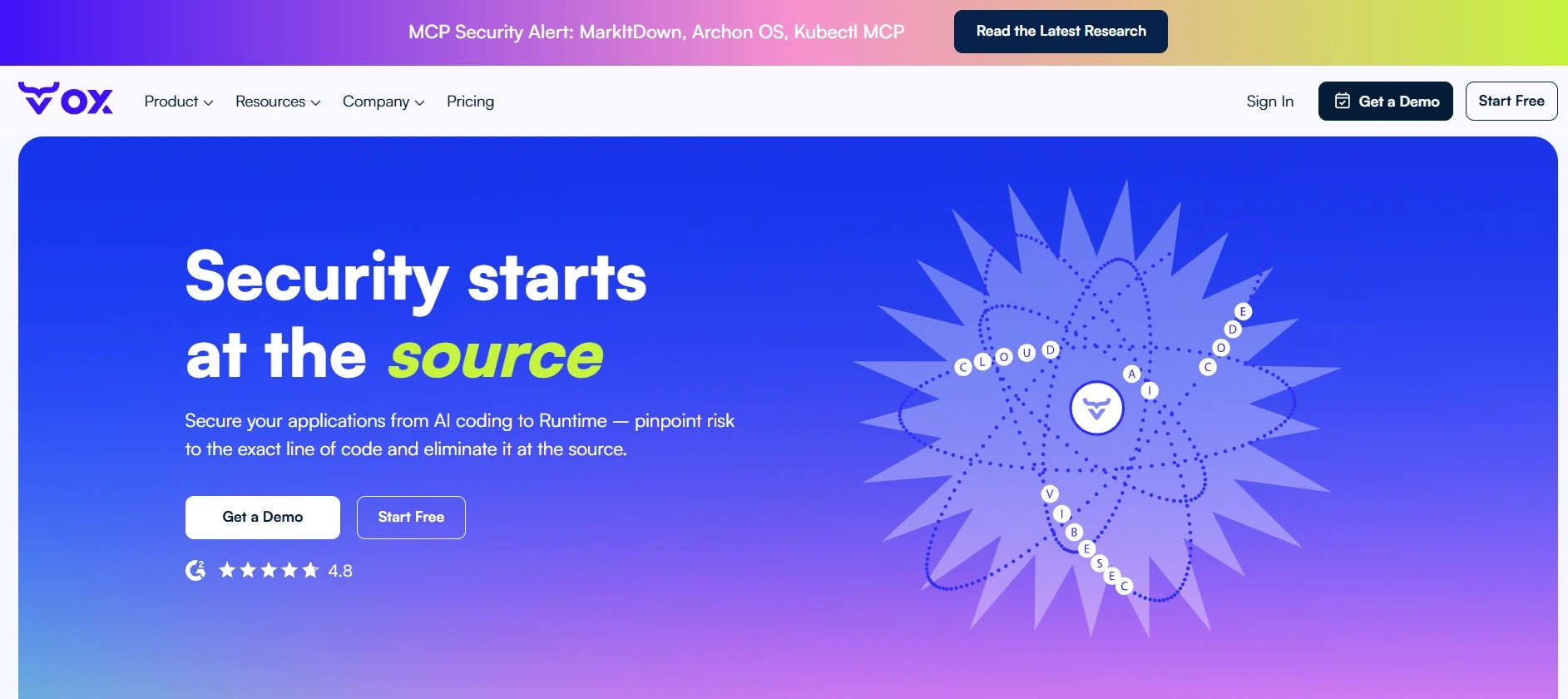
OX Security stands out for its transformative approach to the developer experience, extending beyond isolated code scans to provide comprehensive pipeline defense. Its intelligent engine effectively eliminates false positives, instilling confidence in engineering teams to maintain rapid development cycles without compromising security protocols.
By consolidating deeply nested vulnerabilities into single, actionable insights, OX Security significantly reduces the manual triage burden on security analysts. This streamlined orchestration is crucial for enterprise security teams managing thousands of automated code commits daily.
Specifications:
- Deployment: Cloud-native SaaS platform.
- Language Support: Over 35 modern programming languages and IaC frameworks.
- Analysis Types: SAST, SCA, and software supply chain security.
- Integration: Native plugins for GitHub, GitLab, and Bitbucket.
Reason to buy:
- Offers unparalleled visibility into the entire software supply chain from a single dashboard.
- Automatically prioritizes alerts based on actual exploitability and business context.
- Dramatically reduces security team fatigue by clustering related vulnerabilities together.
Features:
- Comprehensive active risk management engine to trace data flows.
- Advanced pipeline integration that blocks builds containing high-severity flaws.
- Context-aware scanning that understands Zero Trust Architecture concepts.
- Automated remediation suggestions with one-click pull request generation.
Pros
- Exceptional supply chain attack prevention capabilities.
- AI-driven contextual prioritization saves massive amounts of time.
- Clean, intuitive dashboard that bridges the gap between Dev and Sec.
Cons
- The pricing model is geared toward larger mid-market and enterprise teams.
- Requires a bit of upfront tuning to align with highly customized build processes.
Try OX Security: Explore the OX Security Platform2. Snyk Code
Snyk Code
Why We Picked It:
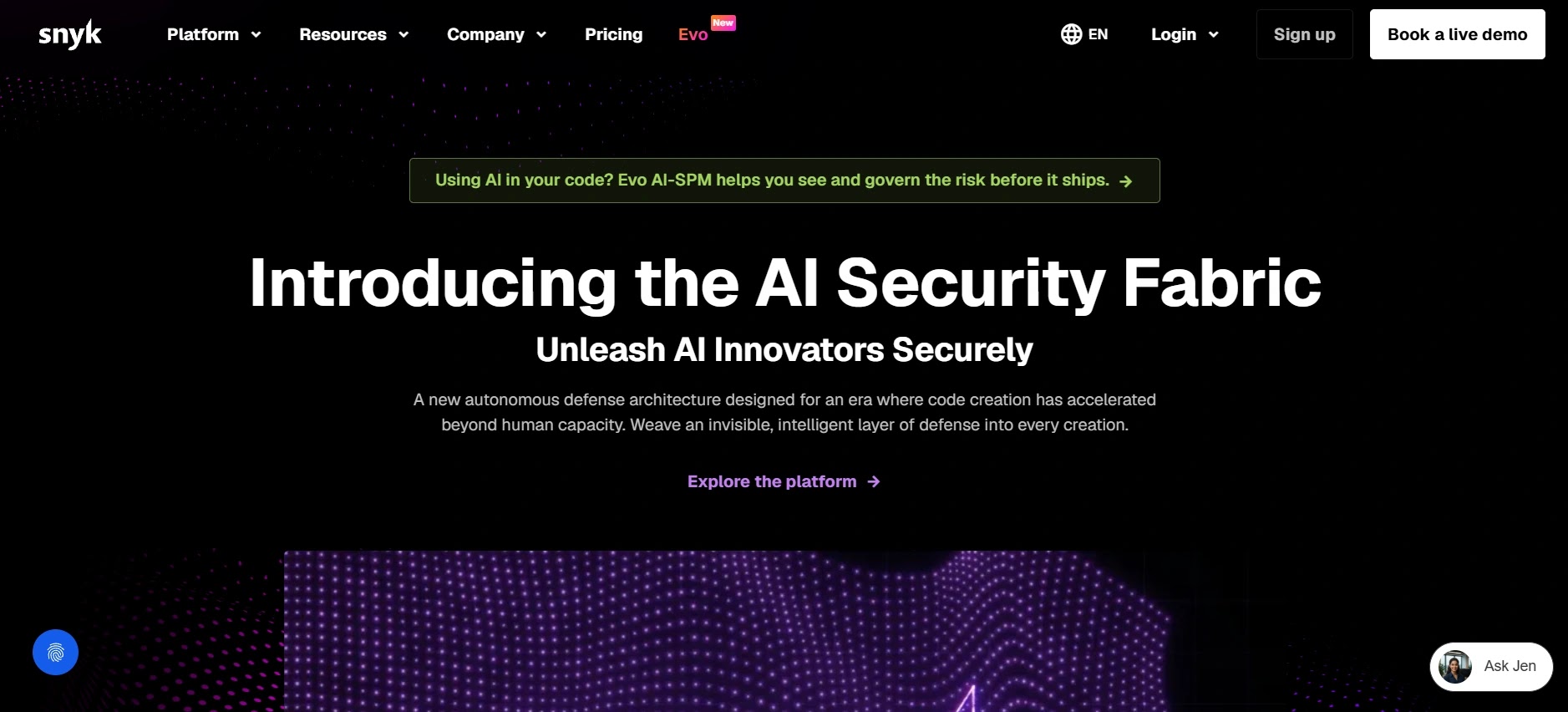
Snyk Code earned its spot due to its unwavering commitment to the developer experience, ensuring that security checks are perceived as an enabler, not a hindrance. Its real-time semantic analysis engine functions like an expert security peer-reviewer, providing immediate feedback as developers write code.
The platform’s exceptional execution speed is vital for continuous deployment workflows, where traditional, slower scanners would inevitably create bottlenecks. Snyk Code is an indispensable tool for modern engineering teams aiming to seamlessly integrate security operations early in their development process.
Specifications:
- Deployment: Cloud-native SaaS and dedicated environments.
- Language Support: Broad support including Java, JS, Python, Go, and C#.
- Analysis Types: Real-time SAST powered by AI algorithms.
- Speed: Scans complete codebases in mere seconds.
Reason to buy:
- Built specifically for developers, ensuring frictionless adoption across engineering departments.
- Extremely fast scanning engine that processes code in real-time as the developer types.
- Backed by a world-class threat intelligence network identifying the latest CVEs instantly.
Features:
- Semantic AI engine that learns from millions of global open-source commits.
- Flawless IDE integrations (VS Code, IntelliJ) and Git repository scanning.
- Deep vulnerability management tools specifically tracking dependency risks.
- Automated, mathematically proven fix suggestions presented directly in line with code.
Pros
- Industry-leading scan times that do not interrupt developer flow.
- Highly accurate AI engine that understands complex data logic.
- Incredibly simple onboarding process for new engineering hires.
Cons
- Focusing strictly on static analysis means you still need separate dynamic tools.
- Advanced custom rule creation can be slightly rigid compared to open-source alternatives.
Try Snyk Code: Explore the Snyk Code Platform3. Semgrep
Semgrep
Why We Picked It:
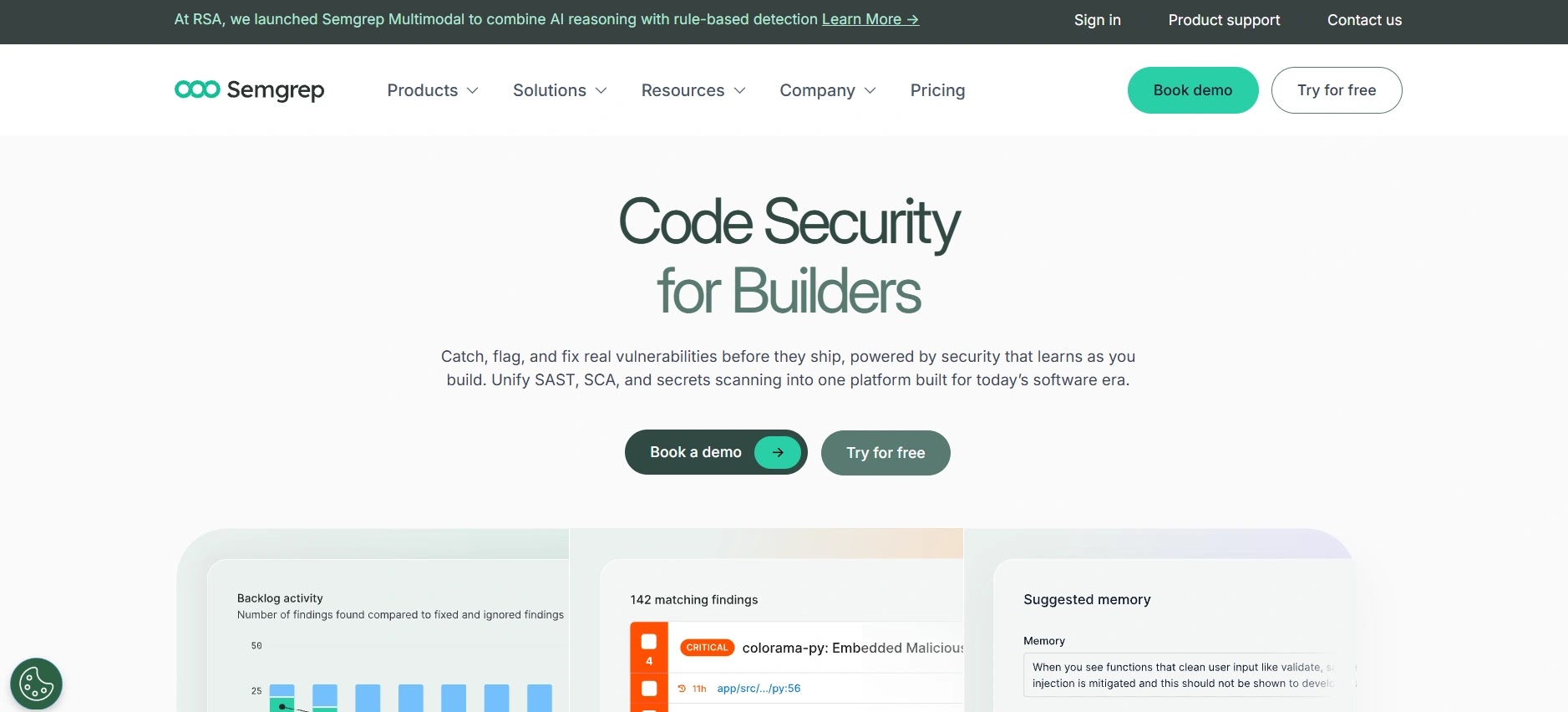
Semgrep is included in our list for democratizing custom rule creation through a syntax that developers intuitively understand. It sheds the heavy, complex infrastructure typical of legacy enterprise scanners, delivering immediate results directly from the command line.
Its extensive, community-driven rule registry ensures the scanner remains current with emerging zero-day exploit patterns. This adaptability makes it a preferred choice among independent penetration testers and agile startup engineering teams alike.
Specifications:
- Deployment: Cloud dashboard with local CLI runner.
- Language Support: 30+ languages including Ruby, Go, Rust, and TypeScript.
- Analysis Types: SAST, secrets scanning, and custom linting.
- Rules Engine: Open-source and highly customizable.
Reason to buy:
- Incredibly lightweight tool that runs flawlessly on local machines without complex configurations.
- Uses an intuitive syntax for writing custom rules that looks exactly like the source code itself.
- Serves as an essential Swiss Army knife for rapid Security Operations Center investigations.
Features:
- Lightning-fast local scanning that scales perfectly into CI/CD pipelines.
- A massive community-driven registry containing thousands of pre-built security rules.
- Detects hardcoded Google API keys and other exposed cloud credentials instantly.
- Pro version offers advanced cross-file data flow analysis for catching complex logic bugs.
Pros
- Writing custom security rules is incredibly easy and intuitive.
- Completely free tier provides immense value for smaller projects.
- Runs instantly on local developer environments without cloud dependencies.
Cons
- The free version lacks deep cross-file taint analysis.
- The cloud dashboard interface is slightly utilitarian.
Try Semgrep: Explore the Semgrep Platform4. SonarQube
SonarQube
Why We Picked It:
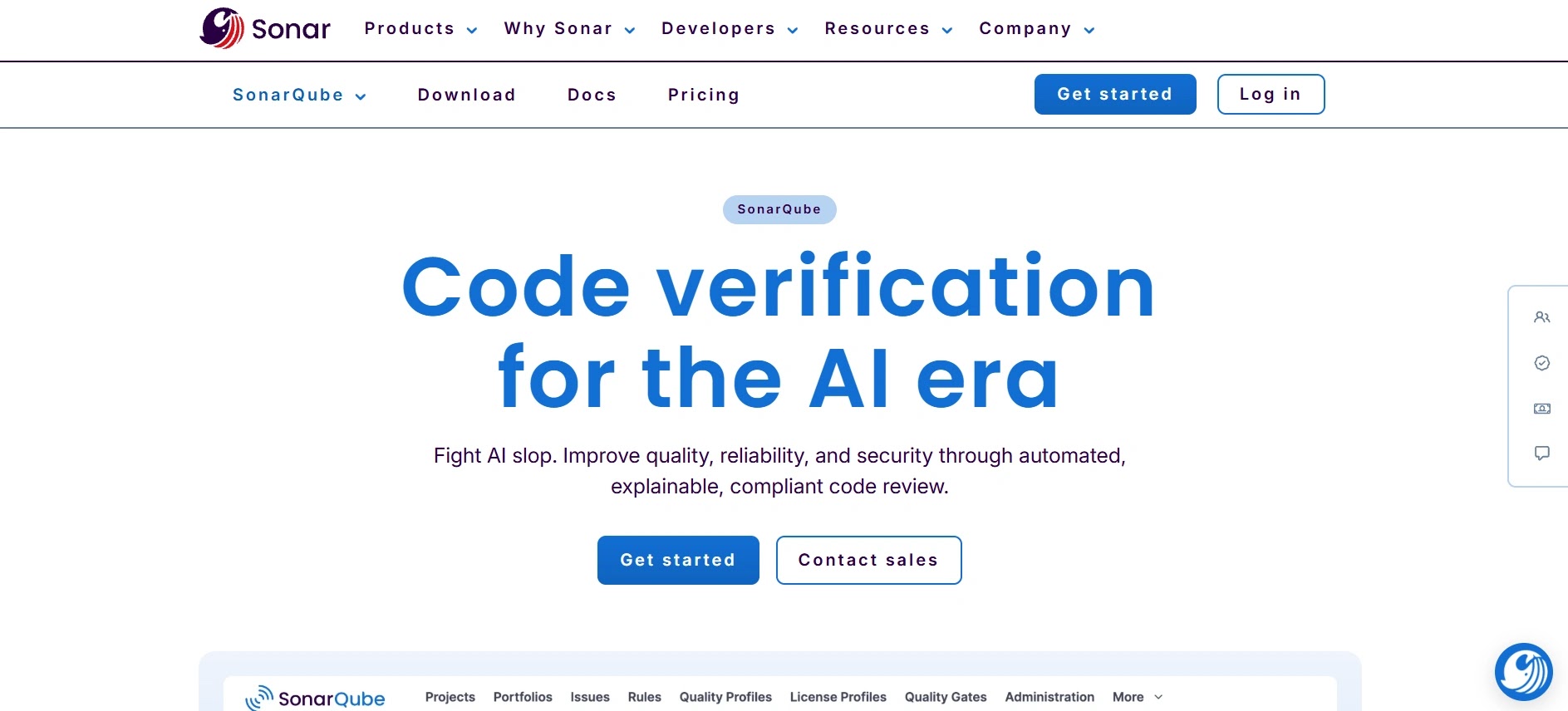
SonarQube has cemented its strong reputation by demonstrating the inherent link between code security and code quality, advocating for their unified management. It cultivates a culture of engineering excellence by automatically blocking pull requests that fail critical security gates.
We value its capability to historically track the health of extensive legacy codebases, providing clear metrics for leadership review. SonarQube remains a cornerstone for enterprise teams aiming to systematically reduce technical debt and eliminate structural vulnerabilities.
Specifications:
- Deployment: Self-hosted (On-Premises) and Cloud (SonarCloud).
- Language Support: 30+ programming languages.
- Analysis Types: SAST and comprehensive code quality metrics.
- Integration: Integrates with Jenkins, Azure DevOps, and GitLab.
Reason to buy:
- The undisputed industry standard for combined code quality and security analysis.
- Acts as an automated quality gate that absolutely forbids bad code from merging.
- Excellent historical tracking to monitor a codebase’s technical debt over years.
Features:
- Deep static analysis that catches null pointer dereferences and complex injection flaws.
- Implements strict “Clean as You Code” methodologies to ensure new additions are safe.
- Highly detailed remediation guidance to help junior developers learn secure coding practices.
- Extensive branch analysis to ensure pull requests are thoroughly sanitized.
Pros
- Unmatched capability for tracking long-term code quality trends.
- The community edition is incredibly robust and widely supported.
- Enforces strict quality gates to stop vulnerable merges instantly.
Cons
- Can be very resource-intensive to host and manage on-premises.
- Initial configuration on large legacy codebases yields overwhelming alerts.
Try SonarQube: Explore the SonarQube Platform5. Veracode Static Analysis IDE Scan
Veracode Static Analysis IDE Scan
Why We Picked It:
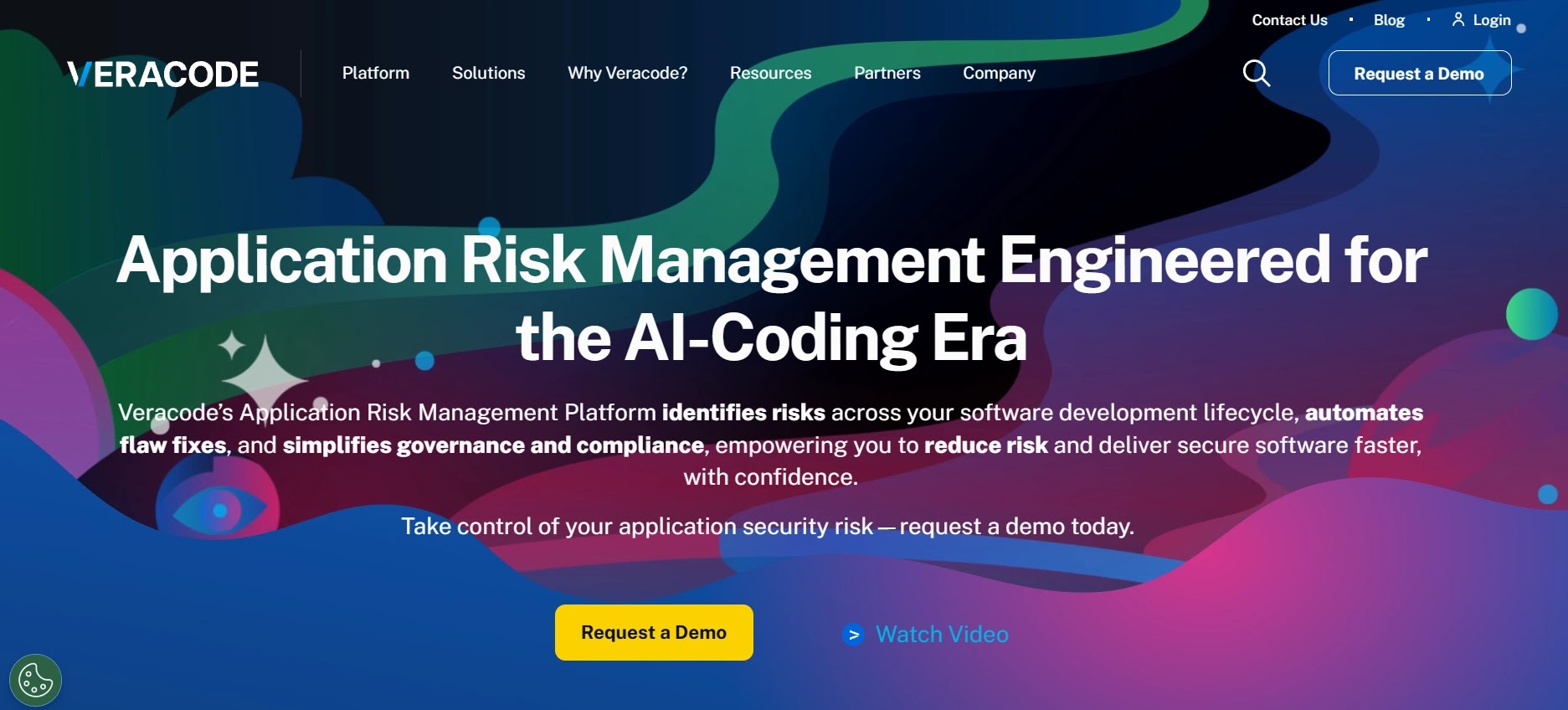
Veracode offers an enterprise-grade safety net that skillfully bridges the gap between rapid agile development and stringent regulatory compliance. Its dual approach—checking code within the IDE and during the final build—ensures that no vulnerability escapes detection.
The provision of on-demand human security experts offers development teams an invaluable resource when confronting obscure architectural flaws. This comprehensive support structure makes it the definitive choice for large financial and healthcare institutions safeguarding sensitive data.
Specifications:
- Deployment: Cloud-native pipeline scanner with deep IDE plugins.
- Language Support: Comprehensive support for legacy and modern languages.
- Analysis Types: Pipeline SAST and in-IDE scanning.
- Compliance: Strong support for PCI-DSS, HIPAA, and GDPR.
Reason to buy:
- Provides a highly mature engine backed by decades of vulnerability research.
- Offers specialized remediation coaching from dedicated human security experts.
- Generates audit-ready compliance reports for heavily regulated industries.
Features:
- Continuous flaw detection directly within IntelliJ, Visual Studio, and Eclipse.
- Patented technology that analyzes compiled binaries alongside raw source code.
- Context-aware SIEM solutions integration for enterprise logging.
- Machine learning algorithms that continuously refine accuracy and reduce noise.
Pros
- Exceptionally accurate scanning engine refined over many years.
- Direct access to professional security coaching and mitigation advice.
- Fantastic enterprise-level compliance and executive reporting.
Cons
- The full suite of features carries a premium enterprise price tag.
- Scanning massive monolithic binaries can occasionally be time-consuming.
Try Veracode: Explore the Veracode Platform6. Aikido Security
Aikido Security
Why We Picked It:
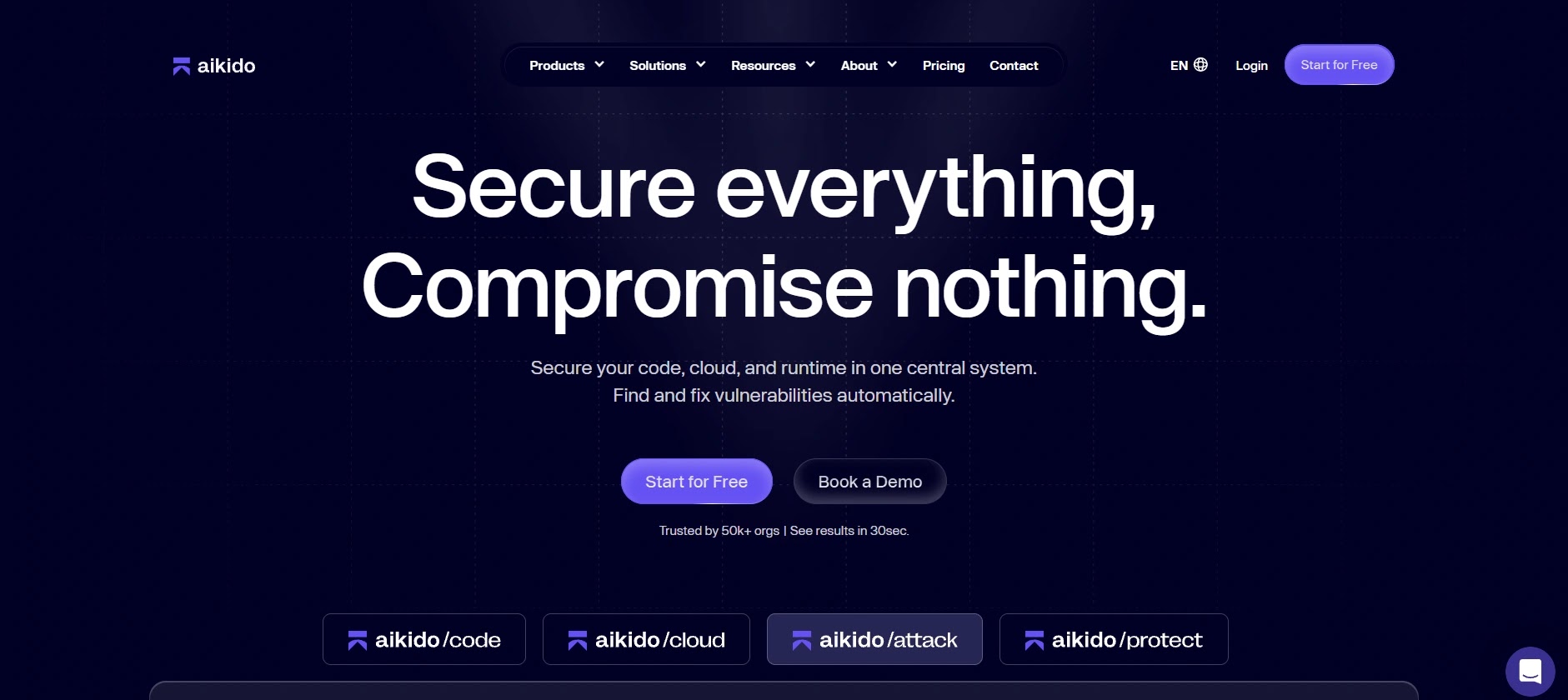
Aikido Security offers a refreshing alternative in an industry often burdened by overly complex and noisy enterprise dashboards. It automatically filters out theoretical risks, presenting developers solely with vulnerabilities that have a clear, immediate path to exploitation.
By consolidating multiple critical security layers into a remarkably affordable package, it acts as a powerful force multiplier for lean engineering teams. We selected it for its pragmatic approach to security, ensuring developers focus on fixing genuine bugs rather than dismissing false alarms.
Specifications:
- Deployment: Cloud SaaS.
- Language Support: All major modern web and cloud languages.
- Analysis Types: SAST, DAST, SCA, and Cloud Posture Management.
- Design Philosophy: “No bullshit” security for SaaS companies.
Reason to buy:
- Specifically engineered to eliminate false positives and alert fatigue immediately.
- Consolidates nine different security tools into one incredibly simple interface.
- Perfect for fast-growing startups that lack dedicated, full-time AppSec engineers.
Features:
- Ultra-fast static code analysis tuned to ignore irrelevant, unexploitable findings.
- Native integration with modern autonomous penetration testing workflows.
- Automated triage that auto-closes vulnerabilities that exist only in test files.
- Single-pane-of-glass dashboard covering code, containers, and cloud infrastructure.
Pros
- Drastically reduces noise by aggressively filtering out false positives.
- Extremely cost-effective for startups and mid-sized SaaS companies.
- Beautiful, intuitive interface that requires zero training to navigate.
Cons
- May lack the hyper-granular governance controls required by Fortune 500s.
- Relatively new to the market compared to established legacy vendors.
Try Aikido Security: Explore the Aikido Platform7. Corgea AutoFix
Corgea AutoFix
Why We Picked It:
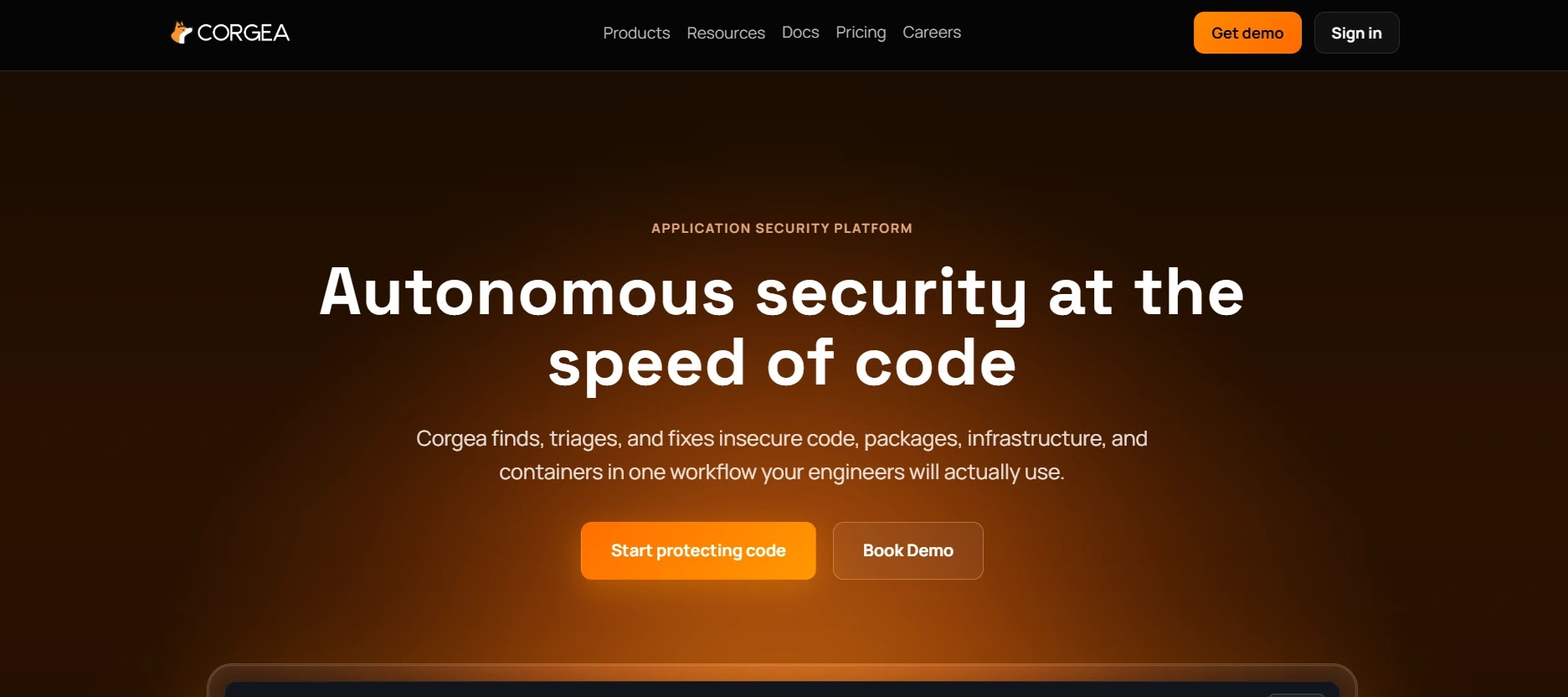
Corgea represents a significant advancement in static analysis by actively resolving identified issues rather than merely reporting them. It transforms the security tool from a passive alert system into an active, AI-powered developer continuously securing the pipeline.
Its capability to automatically generate accurate, context-aware pull requests substantially reduces friction between security teams and engineers. We strongly recommend this platform for teams seeking to leverage cutting-edge AI to eliminate vulnerability backlogs swiftly.
Specifications:
- Deployment: Cloud-native and Git integration.
- Language Support: Python, JavaScript, TypeScript, Java, Go.
- Analysis Types: AI-driven SAST with automated remediation.
- Core Focus: Writing the patch, not just finding the bug.
Reason to buy:
- Uses advanced Large Language Models to not only find bugs but automatically write the correct code to fix them.
- Generates instant pull requests containing the exact remediation logic for review.
- Massively reduces the Mean Time To Remediation (MTTR) for application security teams.
Features:
- Context-aware AI engine that understands the specific architecture of your codebase.
- Seamlessly identifies bypassing charset validation and complex injection vulnerabilities.
- Direct integration into GitHub and GitLab for automated PR generation.
- Learns from your team’s previous pull requests to mimic your specific coding style.
Pros
- The auto-remediation features save countless hours of developer time.
- Integrates directly into standard Git workflows without disruption.
- Highly effective at clearing out massive backlogs of technical debt.
Cons
- AI-generated fixes still require human review before merging into production.
- Deep integration is primarily focused on modern Git-based architectures.
Try Corgea AutoFix: Explore the Corgea Platform8. Bandit
Bandit
Why We Picked It:
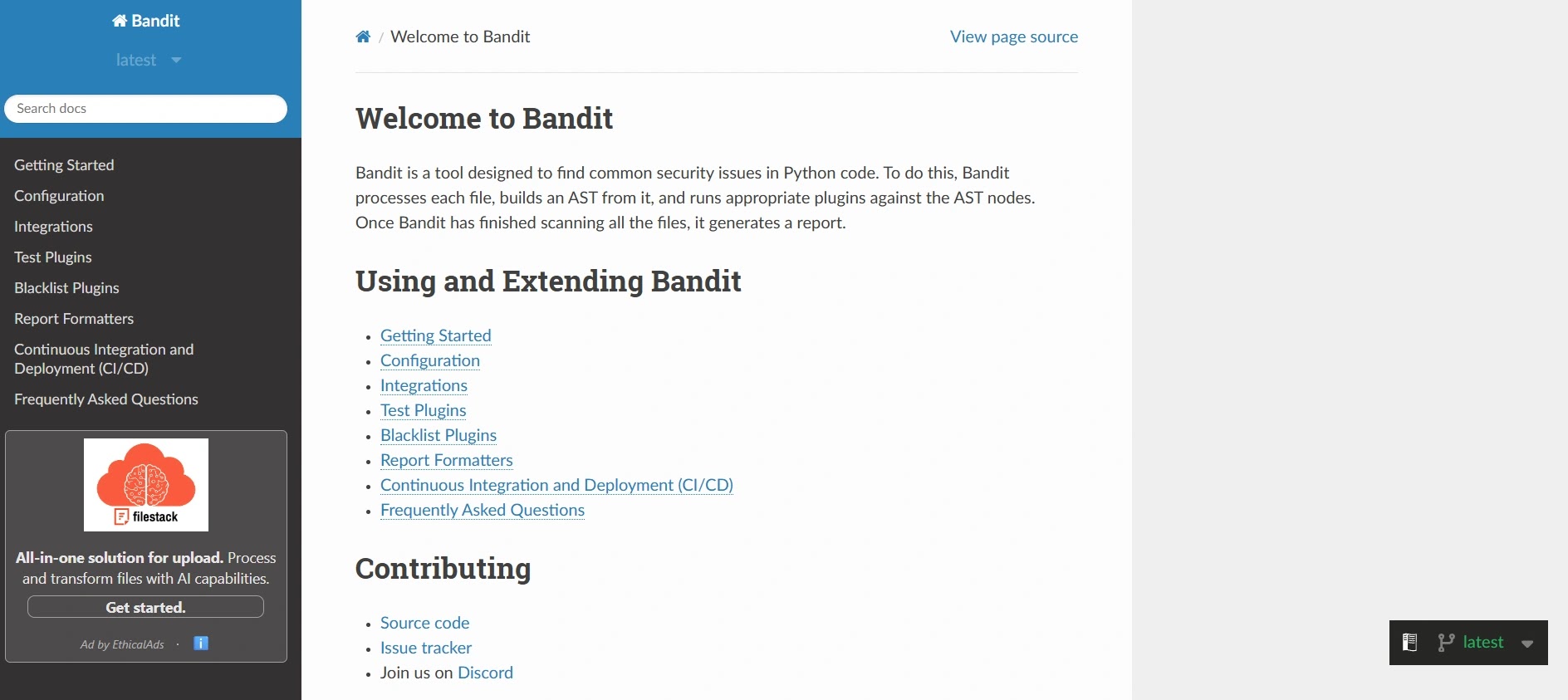
Bandit remains an indispensable tool for any organization leveraging Python, offering unparalleled depth for a purely open-source static analyzer. It excels at identifying the unique intricacies and insecure default configurations specifically prevalent in Python backend development.
Its lightweight design allows for seamless integration into any automated testing suite without impacting build times. We selected Bandit because it demonstrates that robust security in focused Python environments does not require an expensive commercial license.
Specifications:
- Deployment: Local CLI and CI/CD integration.
- Language Support: Exclusively Python.
- Analysis Types: Open-source SAST for Python code.
- Community: Maintained by the Python Code Quality Authority (PyCQA).
Reason to buy:
- The absolute standard for auditing Python applications, scripts, and backend services.
- Entirely free, open-source, and extremely easy to integrate into any build pipeline.
- Extensively customizable through simple YAML configuration files.
Features:
- Parses Python Abstract Syntax Trees (AST) to identify hardcoded passwords and weak cryptography.
- Highly effective at securing data science workflows and AI backend models.
- Easily extensible with custom plugins to catch proprietary, organization-specific flaws.
- Produces clean output formats including JSON and CSV for integration into SIEM automation tools.
Pros
- Completely free and maintained by a dedicated open-source community.
- Incredibly fast execution times when scanning massive Python projects.
- Simple to configure and customize specific rule exclusions.
Cons
- Strictly limited to Python; useless for polyglot microservice environments.
- Lacks a native graphical dashboard for tracking historical vulnerability trends.
Try Bandit: Explore the Bandit Project9. GitLab SAST
GitLab SAST
Why We Picked It:
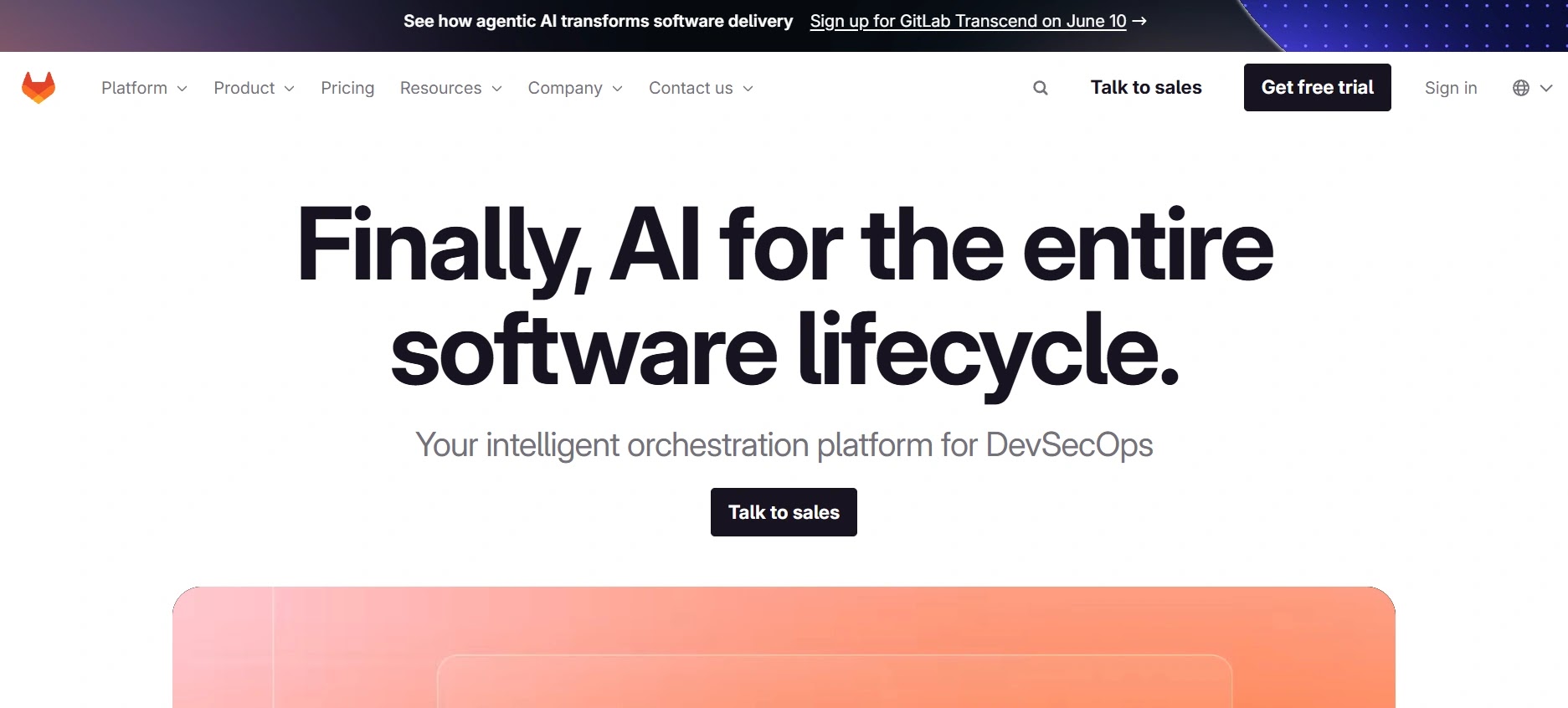
GitLab SAST earns its position by deeply embedding security within the version control process, rendering it virtually transparent to developers. It redefines industry standards by demonstrating that security testing should be an intrinsic feature of the code repository, not an external add-on.
The platform delivers an exceptional developer experience by presenting security findings precisely where code reviews naturally occur. This seamless native integration makes it the clear choice for teams that have already adopted GitLab as their primary DevOps platform.
Specifications:
- Deployment: Cloud SaaS and Self-Managed.
- Language Support: Over 20 languages seamlessly supported out of the box.
- Analysis Types: SAST, Secret Detection, DAST, and Container Scanning.
- Integration: Native to the GitLab ecosystem.
Reason to buy:
- Provides a completely unified DevSecOps platform with zero third-party integrations required.
- Security scanners run automatically on every single code commit by default.
- Dashboards are built directly into the merge request UI, putting security front and center.
Features:
- Utilizes a blend of proprietary and optimized open-source scanning engines.
- Native vulnerability management dashboard that tracks risks at the organizational level.
- Advanced detection for phishing attack vectors exposed through application portals.
- Enforces strict approval rules requiring security sign-off for critical vulnerabilities.
Pros
- No complicated integrations needed if you already use GitLab for CI/CD.
- Excellent visibility into vulnerabilities directly within the merge request.
- Extremely comprehensive suite of security tools beyond just SAST.
Cons
- Tightly coupled to the GitLab ecosystem; difficult to use with GitHub or Bitbucket.
- Advanced features require the highest, most expensive enterprise tier.
Try GitLab SAST: Explore the GitLab Platform10. Arnica.io
Arnica.io
Why We Picked It:
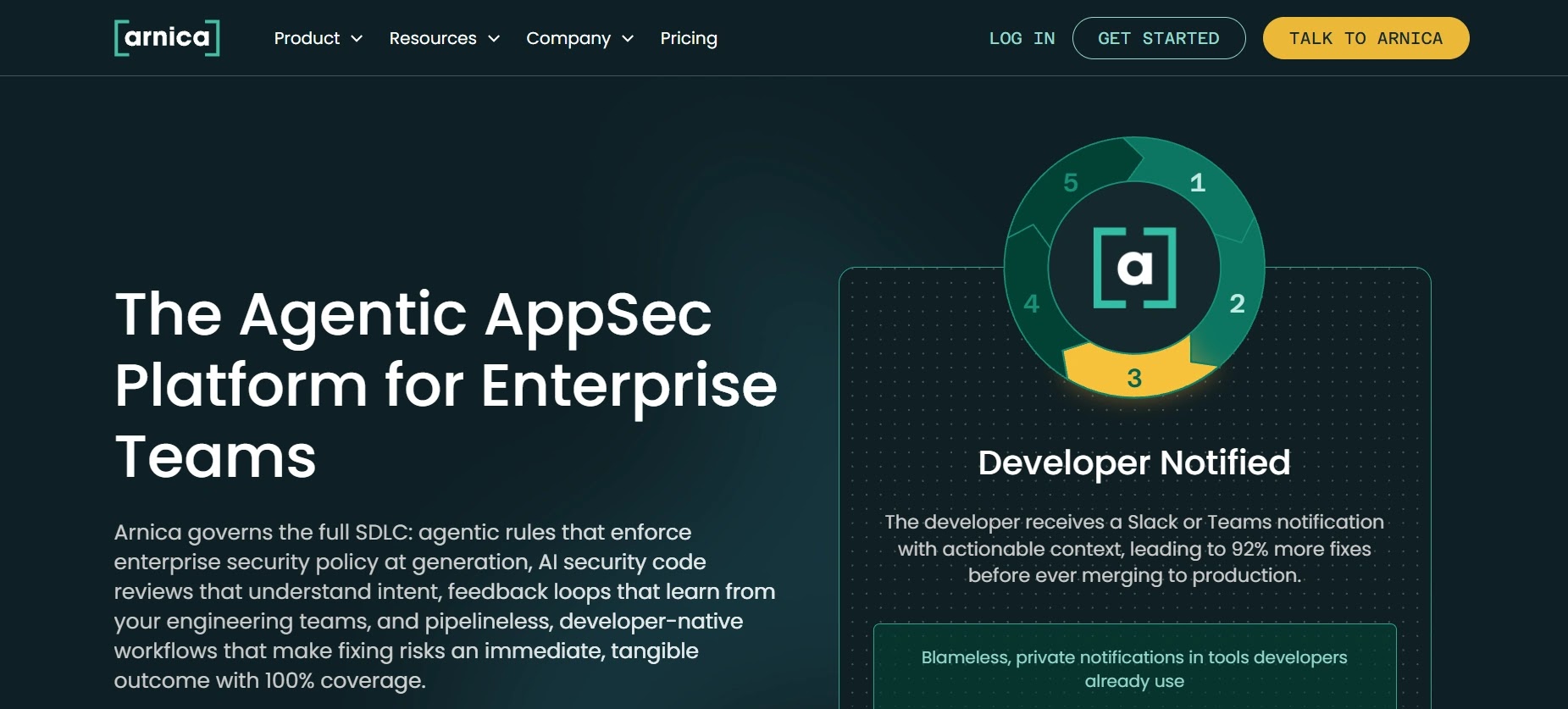
Arnica.io adopts a distinctly modern strategy, heavily emphasizing developer identity and real-time behavioral analysis in conjunction with standard static code checks. It catches vulnerabilities and exposed secrets the instant they are committed, preventing them from contaminating the central repository.
The platform’s reliance on chat-ops (such as Slack integration) for alert remediation empowers developers to correct their own errors without direct security team intervention. We highly value this tool for its ability to secure the development pipeline while fully respecting the engineer’s workflow.
Specifications:
- Deployment: Cloud SaaS integrating via Git APIs.
- Language Support: Broad support across modern development stacks.
- Analysis Types: SAST, Secret Scanning, and Developer Identity Protection.
- Core Focus: Behavior-based security and zero-friction developer experience.
Reason to buy:
- Approaches code security by strictly verifying developer identity and behavioral patterns.
- Prevents hardcoded secrets from ever being pushed to the repository in real-time.
- Requires absolutely zero changes to the developer’s local environment or IDE.
Features:
- Pipelined SAST that integrates seamlessly via webhooks to intercept risky commits.
- Comprehensive protection against compromised API penetration testing tools and rogue accounts.
- Real-time Slack/Teams notifications that allow developers to self-remediate issues instantly.
- Identifies anomalous coding behaviors to prevent insider threats and account takeovers.
Pros
- Real-time secret and vulnerability blocking directly at the git push level.
- Excellent focus on preventing developer account takeovers and insider threats.
- Chat-ops integration makes fixing vulnerabilities incredibly frictionless.
Cons
- Highly dependent on modern chat platforms (Slack/Teams) for its best features.
- The focus on identity might overlap with existing enterprise IAM tools.
Try Arnica.io: Explore the Arnica Security PlatformConclusion
In 2024, embedding security early in the development lifecycle is no longer optional; it is a fundamental requirement. SAST tools empower DevSecOps teams to effectively “shift left,” identifying and remediating vulnerabilities long before they can reach production environments.
Whether your organization requires a lightning-fast, developer-centric platform or a highly scalable enterprise scanning engine, the optimal choice hinges entirely on your specific technology stack and CI/CD pipeline. Ultimately, investing in continuous, AI-enhanced code analysis bridges the critical gap between security and engineering, thereby reducing technical debt and ensuring the confident delivery of resilient applications.
Disclaimer: HackersRadar reports on cybersecurity threats and incidents for informational and awareness purposes only. We do not engage in hacking activities, data exfiltration, or the hosting or distribution of stolen or leaked information. All content is based on publicly available sources.









No Comment! Be the first one.