




VoidLink Linux C2: LLM Malware Uses Multi Highlights LLM-Generated
The sophisticated Linux malware framework VoidLink has emerged, highlighting a concerning trend in AI-assisted threat development through its combination of advanced multi-cloud targeting...

The sophisticated Linux malware framework VoidLink has emerged, highlighting a concerning trend in AI-assisted threat development through its combination of advanced multi-cloud targeting capabilities and kernel-level stealth mechanisms.
The malware represents a new generation of cyber threats where large language models have been leveraged to create functional command-and-control implants capable of compromising cloud and enterprise environments with alarming efficiency.
VoidLink operates as a comprehensive C2 framework designed specifically for Linux systems, targeting major cloud platforms including Amazon Web Services, Google Cloud Platform, Microsoft Azure, Alibaba Cloud, and Tencent Cloud.
The implant demonstrates technical sophistication in its ability to harvest credentials from environment variables, configuration directories, and instance metadata APIs while maintaining persistent access through adaptive rootkit functionality.
What makes this threat particularly notable is its modular architecture, allowing the malware to adjust its behavior based on the target environment it encounters.
Ontinue analysts identified strong indicators that VoidLink was built using an LLM coding agent, evidenced by structured “Phase X:” labels, verbose debug logging, and documentation patterns left intact within the production binary.
These artifacts suggest automated code generation with minimal human oversight, marking a significant shift in how malware can be developed.
Despite its AI-generated origins, VoidLink remains technically capable, incorporating container escape plugins, Kubernetes privilege escalation modules, and version-specific kernel rootkits that adapt stealth approaches based on the host’s kernel version.
The malware employs AES-256-GCM encryption over HTTPS for command-and-control communications, disguising malicious traffic as legitimate web requests using patterns consistent with Cobalt Strike beacon architecture.
This combination of multi-cloud awareness, container-native exploitation, and kernel-level hiding capabilities demonstrates how AI-assisted development is lowering the skill barrier for producing functional, hard-to-detect malware.
| Field | Value |
|---|---|
| Filename | implant.bin |
| File Type | Linux ELF64 Executable |
| Architecture | x86-64 |
| Language | Zig |
| SHA1 | 9cdbc16912dcf188a0f0765ac21777b23b4b2bea |
| SHA256 | 05eac3663d47a29da0d32f67e10d161f831138e10958dcd88b9dc97038948f69 |
| Entry Point | 0x0112c490 |
| Entropy | 7.24/8.0 (High – packed/encrypted) |
| Campaign/Family | VoidLink |
Modular Architecture and Environment Detection
VoidLink employs a plugin-based architecture where each component operates independently within a shared registry framework.
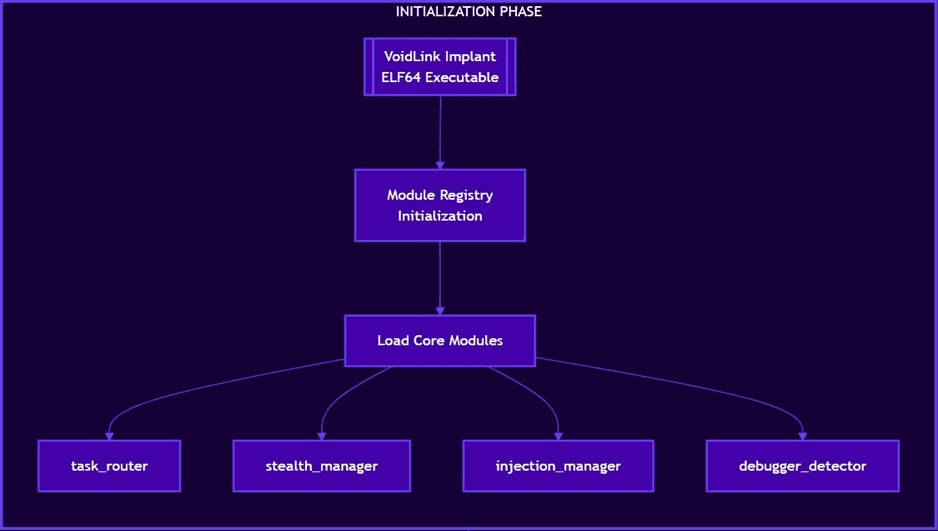
Upon execution, the malware initializes its module registry and loads four core components: a task router for command distribution, a stealth manager for evasion, an injection manager for code execution, and a debugger detector for anti-analysis protection.
The malware conducts detailed host profiling before activating operational capabilities, probing for cloud metadata APIs, container environments such as Docker and Kubernetes, and security posture indicators including EDR/AV detection and kernel version identification.
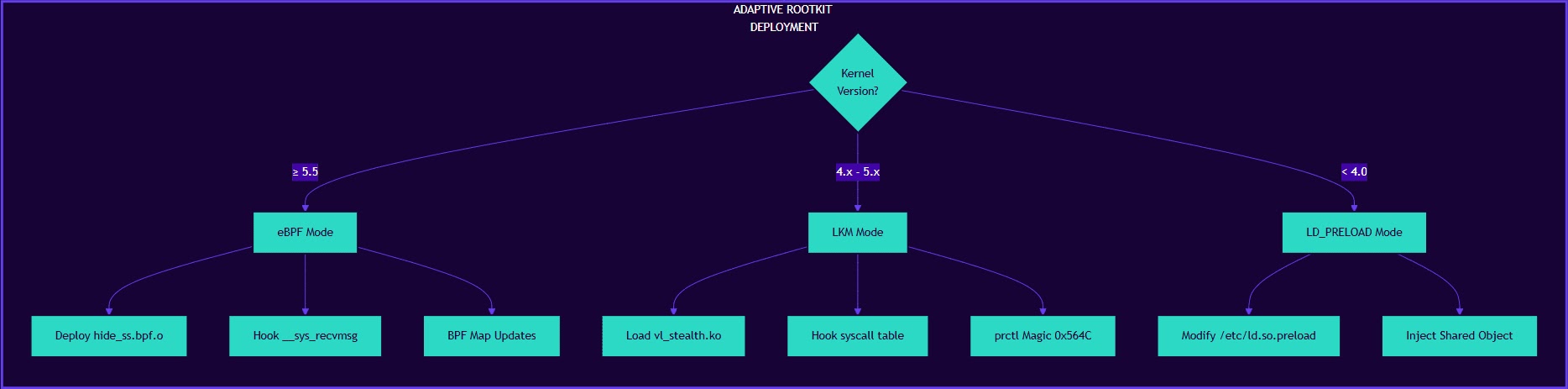
This intelligence-driven approach enables VoidLink to select appropriate stealth mechanisms and exploitation techniques tailored to each discovered environment.
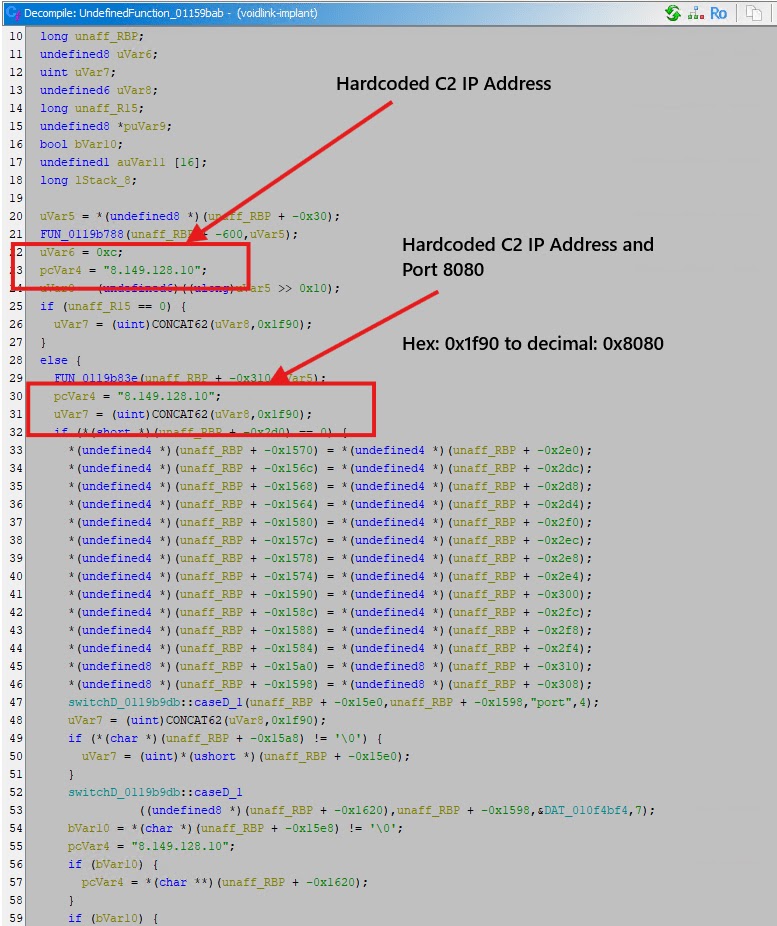
The environment detection system queries cloud metadata endpoints at 169.254.169.254 for AWS, Azure, and Alibaba Cloud, while using provider-specific endpoints like metadata.google.internal for GCP and metadata.tencentyun.com for Tencent Cloud.
Through these queries, VoidLink retrieves region information, availability zones, instance IDs, and instance types, allowing it to adapt persistence methods and stealth techniques according to the specific cloud provider infrastructure.
Organizations should implement network-level monitoring for unusual metadata API queries, particularly repeated requests to 169.254.169.254 and cloud-specific metadata endpoints.
Deploy behavioral detection rules that identify abnormal credential access patterns from environment variables, SSH key directories, and Kubernetes service account token locations.
Enforce strict container security policies, including disabling privileged containers and restricting access to the Docker socket.
Apply kernel-level security hardening through SELinux or AppArmor policies, and maintain updated endpoint detection and response solutions capable of identifying eBPF-based and loadable kernel module rootkits.
Regular auditing of cloud IAM roles, service account permissions, and container runtime configurations can help identify potential attack vectors before they are exploited.
Consider implementing network segmentation to limit lateral movement capabilities and deploy encrypted traffic inspection where feasible to detect C2 communications disguised as legitimate HTTPS traffic.
Disclaimer: HackersRadar reports on cybersecurity threats and incidents for informational and awareness purposes only. We do not engage in hacking activities, data exfiltration, or the hosting or distribution of stolen or leaked information. All content is based on publicly available sources.








No Comment! Be the first one.