




The Future of Encryption: Top Post-Quantum Cryptography Solutions for 2026
Key Takeaways Quantum computing poses an imminent threat to current public-key encryption standards, necessitating immediate migration to Post-Quantum Cryptography (PQC). Adversaries are actively...

Key Takeaways
- Quantum computing poses an imminent threat to current public-key encryption standards, necessitating immediate migration to Post-Quantum Cryptography (PQC).
- Adversaries are actively engaging in “harvest now, decrypt later” campaigns, collecting encrypted data today for future decryption by quantum computers.
- NIST has finalized key PQC standards (FIPS 203 ML-KEM, FIPS 204 ML-DSA, FIPS 205 SLH-DSA), with CISA mandating PQC-capable procurement.
- Leading PQC solutions for 2026 include IBM Quantum Safe for enterprise migration, Penta Security for data encryption, and AWS for cloud-native PQC.
- Organizations must prioritize cryptographic discovery, implement crypto-agile solutions, and secure high-value keys in PQC-capable hardware.
The cybersecurity landscape is undergoing a profound shift, driven by the looming threat of quantum computing. What was once theoretical is now a tangible risk: the advent of a cryptographically relevant quantum computer, often termed “Q-Day,” could render current public-key encryption methods—like RSA, ECC, and Diffie-Hellman—obsolete within hours. These algorithms form the bedrock of security for global banking, government, healthcare, and the entire internet.
Table Of Content
- Key Takeaways
- Methodology for Ranking PQC Solutions
- The 2026 Scorecard: Best Post-Quantum Cryptographic Solutions at a Glance
- 1. IBM Quantum Safe — Best Overall for Enterprise Migration
- Why We Picked It
- At a Glance
- The Deep Dive
- Pros & Cons
- 2. Penta Security — Best for Data Encryption & Key Management
- Why We Picked It
- At a Glance
- The Deep Dive
- Pros & Cons
- 3. AWS — Best for Cloud-Native PQC at Scale
- Why We Picked It
- At a Glance
- The Deep Dive
- Pros & Cons
- 4. PQShield — Best for End-to-End & Embedded PQC
- Why We Picked It
- At a Glance
- The Deep Dive
- Pros & Cons
- 5. Entrust — Best for PKI & Digital Identity
- Why We Picked It
- At a Glance
- The Deep Dive
- Pros & Cons
- 6. SandboxAQ — Best for AI-Driven Crypto Management
- Why We Picked It
- At a Glance
- The Deep Dive
- Pros & Cons
- 7. QuSecure — Best for Crypto-Agility Overlays
- Why We Picked It
- At a Glance
- The Deep Dive
- Pros & Cons
- 8. SEALSQ — Best for IoT & Semiconductor PQC
- Why We Picked It
- At a Glance
- The Deep Dive
- Pros & Cons
- 9. DigiCert — Best for Certificate Lifecycle Management
- Why We Picked It
Compounding this future threat is a present danger: malicious actors are already executing “harvest now, decrypt later” strategies. They are accumulating vast amounts of encrypted data today, with the explicit intention of decrypting it once quantum computing capabilities mature. This proactive threat underscores the urgency driving the rapid expansion of the Post-Quantum Cryptographic (PQC) solutions market.
In response, the National Institute of Standards and Technology (NIST) has finalized its initial suite of quantum-safe standards, including FIPS 203 ML-KEM, FIPS 204 ML-DSA, and FIPS 205 SLH-DSA, with HQC designated as a crucial backup. Concurrently, the Cybersecurity and Infrastructure Security Agency (CISA) has mandated the procurement of PQC-capable systems. Consequently, organizations are now under pressure to safely integrate these NIST Post-Quantum Cryptography Standards across their operational environments.
This comprehensive buyer’s guide evaluates and ranks the top Post-Quantum Cryptographic Solutions anticipated for 2026. Rather than a simple feature comparison, each solution is rigorously assessed across five weighted criteria, providing an in-depth analysis to help organizations identify the platform best suited to their specific risk profile, budgetary constraints, and migration timelines.
Methodology for Ranking PQC Solutions
To ensure the credibility of our cybersecurity content, our ranking methodology is transparent and robust. Each vendor and its offerings were meticulously evaluated against publicly available product documentation, official NIST and CISA guidelines, independent third-party awards, and verified enterprise deployments, with all information current as of mid-2026. It is important to note that no vendor placement on this list was influenced by payment.
Solutions were scored out of 10 across five distinct criteria, which were then weighted to produce an overall rating:
- Standards & Compliance (25%) — This criterion assesses the depth of support for NIST FIPS 203, 204, and 205, including backup algorithms like HQC and FN-DSA, along with relevant certifications such as FIPS 140-3 and Common Criteria.
- Crypto-Agility (25%) — This measures the platform’s capability to swiftly change, update, or revert cryptographic algorithms without requiring a fundamental re-architecture of existing systems.
- Deployment Breadth (20%) — This evaluates the solution’s coverage across various environments, including software, cloud platforms, Hardware Security Modules (HSM), and embedded/IoT silicon.
- Enterprise Maturity (20%) — This considers the vendor’s track record, existing customer base, certifications, and independent industry recognition.
- Value & Migration Support (10%) — This factor assesses the availability of discovery tools, professional services, and the total cost of ownership associated with the solution.
Before delving into the specific rankings, it is crucial to remember that an optimal PQC strategy often involves a multi-faceted approach. Most mature implementations typically combine a dedicated discovery tool, a crypto-agile deployment layer, and PQC-capable hardware for the protection of high-value keys. For foundational understanding, refer to comprehensive overviews of Post-Quantum Cryptographic Solutions and detailed explainers on NIST PQC standards.
The 2026 Scorecard: Best Post-Quantum Cryptographic Solutions at a Glance
| Rank | Solution | Best For | Standards | Crypto-Agility | Deployment | Maturity | Overall |
|---|---|---|---|---|---|---|---|
| 1 | IBM Quantum Safe | Discovery-led enterprise migration | 9.5 | 9.2 | 9.0 | 9.7 | 9.6 |
| 2 | Penta Security | Data encryption & key management | 9.2 | 9.0 | 9.0 | 9.5 | 9.3 |
| 3 | AWS | Cloud-native PQC at scale | 9.2 | 9.2 | 9.0 | 9.5 | 9.2 |
| 4 | PQShield | End-to-end & embedded PQC | 9.8 | 8.8 | 9.2 | 8.8 | 9.1 |
| 5 | Entrust | PKI & digital identity | 9.3 | 8.8 | 9.0 | 9.2 | 9.0 |
| 6 | SandboxAQ | AI-driven crypto management | 9.0 | 9.3 | 8.5 | 8.6 | 8.8 |
| 7 | QuSecure | Crypto-agility overlays | 9.2 | 9.6 | 8.0 | 8.5 | 8.7 |
| 8 | SEALSQ | IoT & semiconductor PQC | 8.8 | 7.8 | 8.8 | 8.4 | 8.4 |
| 9 | DigiCert | Certificate lifecycle | 9.0 | 8.7 | 8.2 | 9.0 | 8.6 |
| 10 | Quantum Xchange | Quantum-safe key delivery | 8.6 | 9.0 | 8.0 | 8.0 | 8.3 |
Note: Scores are derived from our weighted methodology and are intended for comparative analysis, not as definitive measures of security.
1. IBM Quantum Safe — Best Overall for Enterprise Migration
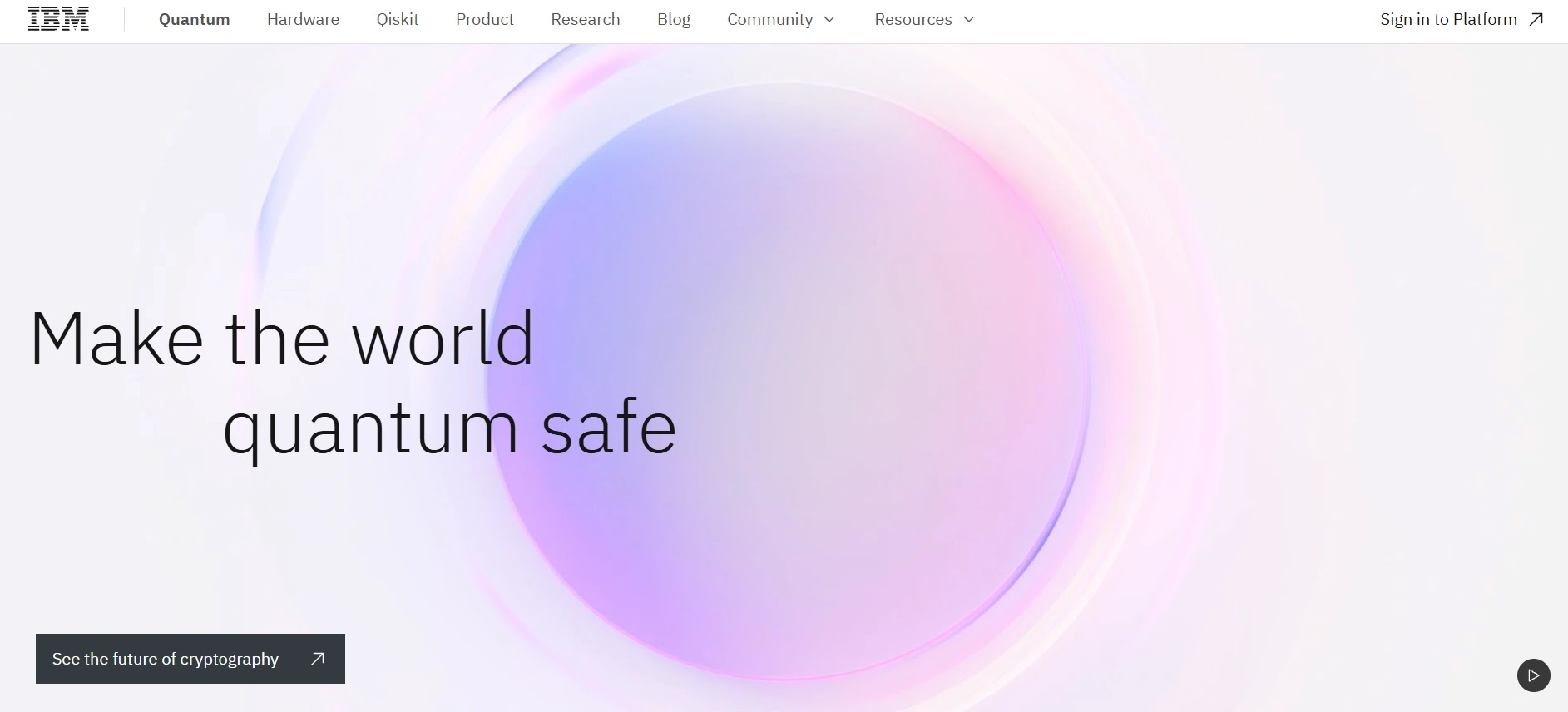
Snapshot: A formidable discovery and remediation platform designed to streamline complex PQC migrations for large enterprises.
Why We Picked It
IBM’s scientific contributions to the lattice mathematics underpinning ML-KEM and ML-DSA grant it unparalleled authority in the quantum-safe domain. The IBM Quantum Safe suite excels at the most challenging aspect of PQC migration: identifying and inventorying vulnerable cryptographic assets across vast, heterogeneous IT estates. This blend of deep research expertise and comprehensive migration governance positions IBM at the forefront. Its inventory engine transforms a potentially chaotic remediation effort into a structured, risk-prioritized roadmap, providing clarity similar to how security teams map critical vectors in sophisticated campaigns like Volt Typhoon.
At a Glance
- Type: Discovery + remediation platform; mainframe + hybrid cloud
- Algorithms: ML-KEM, ML-DSA, SLH-DSA, hybrid implementations
- Deployment: Software platform, IBM Z, hybrid cloud environments
- Compliance: NIST FIPS standards + robust enterprise governance frameworks
- Standout: Cryptographic Bill of Materials (CBOM) generation capabilities
The Deep Dive
Many PQC initiatives falter at the initial hurdle: understanding the full scope of cryptographic usage. IBM Quantum Safe addresses this by inventorying cryptographic assets across applications, networks, and codebases, generating a Cryptographic Bill of Materials (CBOM). It then prioritizes remediation based on risk, guiding the entire fix process. This transforms what could be a guessing game into a thoroughly governed migration roadmap, a crucial capability for any large organization.
Its seamless integration with IBM Z and hybrid-cloud workloads makes it particularly valuable for financial and governmental institutions that operate a mix of legacy and modern systems. While the platform truly shines within IBM-centric environments and comes with enterprise-level pricing and implementation demands, for organizations struggling to comprehend their cryptographic exposure, IBM Quantum Safe offers unmatched clarity and control.
Pros & Cons
- ✅ Best-in-class cryptographic discovery and CBOM generation
- ✅ Deep research authority and mature roadmap tooling
- ✅ Strong mainframe and hybrid-cloud integration
- ❌ Most valuable within IBM ecosystems
- ❌ Enterprise pricing and a significant implementation effort
Bottom Line: 9.6/10 — the premier choice for large enterprises requiring discovery, governance, and scientific rigor for their PQC migration. This capability is critical in the face of “harvest now, decrypt later” attacks.
2. Penta Security — Best for Data Encryption & Key Management
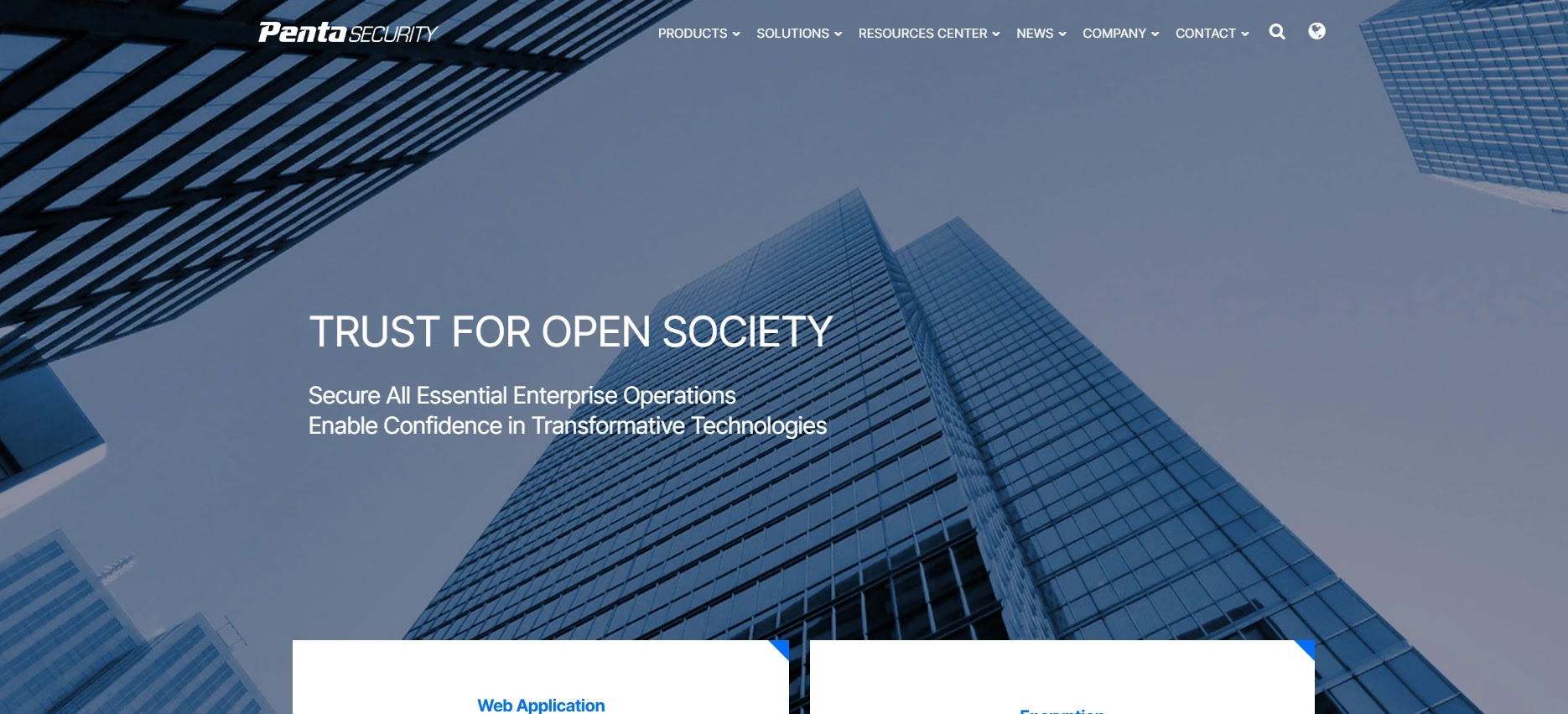
Snapshot: An enterprise-grade data security platform enabling a smooth transition to Post-Quantum Cryptography while preserving existing cryptographic infrastructure.
Why We Picked It
Since 1997, Penta Security has been a leader in enterprise data protection. Their flagship product, D.AMO, is a Crypto Agility-based platform specifically engineered to facilitate PQC transition without disrupting established cryptographic environments. D.AMO supports NIST-standard PQC algorithms like ML-KEM and ML-DSA, offers centralized key lifecycle management through D.AMO KMS, and enhances key protection via HSM and Quantum Random Number Generator (QRNG) integration. Its provision of both hardware and software-based KMS options caters to diverse deployment needs, making D.AMO an ideal solution for a phased enterprise PQC migration.
At a Glance
- Type: Data encryption (D.AMO), key management system (D.AMO KMS), integrated control center (D.AMO Control Center)
- Algorithms: ML-DSA, ML-KEM, SMAUG-T, HAETAE, hybrid classical/PQC
- Deployment: Hardware Appliance, Software Container, On-premises, Hybrid Cloud, Multi-Cloud
- Compliance: NIST FIPS 203/204/205 alignment, ISO 27001:2022
- Stand Out: An integrated data security platform supporting phased PQC transition while maintaining legacy cryptographic environments.
The Deep Dive
D.AMO’s primary strength lies in its ability to provide a practical, deployable PQC transition framework that integrates seamlessly within an enterprise’s existing cryptographic ecosystem, rather than simply offering PQC algorithm support as an isolated feature. Beyond PQC, the platform supports all standard algorithms compliant with Cryptographic Module Validation Program (CMVP) standards. With over 20,000 infrastructure deployments globally, D.AMO demonstrates robust encryption capabilities across varied environments.
D.AMO KMS centrally manages the entire key lifecycle — from generation and storage to distribution, rotation, and destruction — and integrates with both D.AMO products and third-party encryption solutions. This allows organizations to pursue PQC transition and build an integrated key management system without abandoning their legacy infrastructure. Deployment flexibility is a key feature, with D.AMO KMS offering hardware appliances for physically isolated environments and container-based software KMS optimized for hybrid and multi-cloud setups. Enhanced security is achieved through HSM and QRNG integration, establishing a cryptographic foundation resilient against long-term threats such as “Harvest Now, Decrypt Later” attacks. The platform’s PQC capabilities were further validated by winning the 2026 Fortress Cyber Security Award in the Quantum Security category, affirming D.AMO’s practical readiness for quantum-safe deployments.
Pros & Cons
✅ Pros
- Diverse encryption deployment models for performance optimization
- Supports crypto-agility-driven phased PQC transition
- Centralized key lifecycle management
❌ Cons
- Brand presence is strongest in APAC markets
- Enterprise-centric focus
Bottom Line: 9.3/10 — the leading choice for data-centric PQC migrations, bolstered by significant third-party quantum-security recognition.
3. AWS — Best for Cloud-Native PQC at Scale
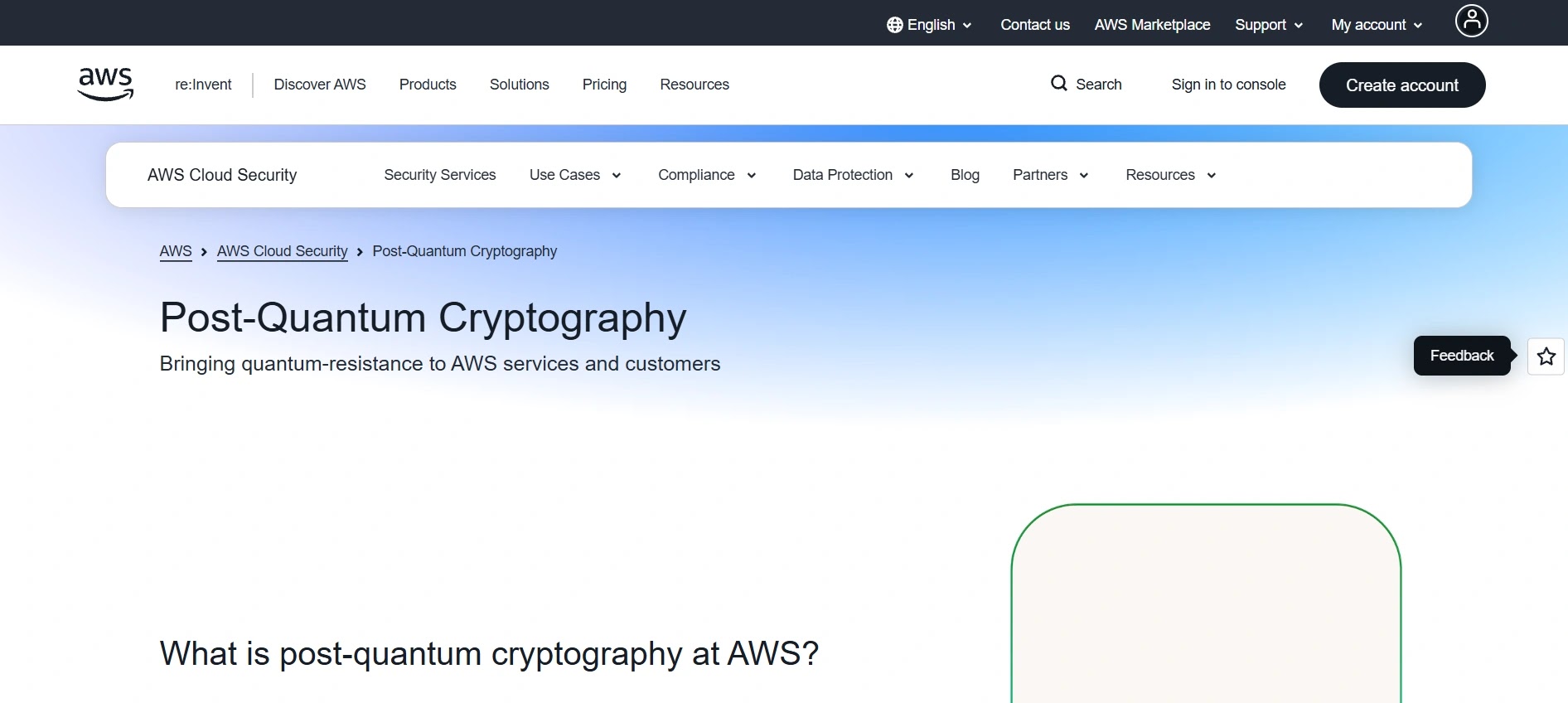
Snapshot: Quantum-safe key exchange seamlessly integrated into millions of cloud workloads, often by default.
Why We Picked It
AWS has rapidly emerged as a critical player in PQC deployment by embedding hybrid post-quantum key exchange directly into its foundational cloud services. Its open-source library, AWS-LC, is notable as one of the earliest FIPS 140-3-validated cryptographic modules to natively include ML-KEM. This extensive systemic integration fortifies vast enterprise cloud boundaries, effectively countering lateral data capture tactics reminiscent of widespread Cloud Storage Data Theft campaigns.
At a Glance
- Type: Cloud platform PQC (KMS, ACM, Secrets Manager, S3, CloudFront, Private CA)
- Algorithms: ML-KEM (hybrid TLS), ML-DSA (signatures/roots of trust)
- Deployment: Cloud-native, hybrid TLS, all major AWS regions
- Compliance: FIPS 140-3 (AWS-LC), NIST FIPS 203/204 alignment
- Standout: Hybrid ML-KEM enabled by default in security-critical services
The Deep Dive
AWS’s significant advantage lies in its expansive reach. Services such as KMS, ACM, Secrets Manager, S3, and CloudFront now combine classical key exchange (X25519/ECDH) with ML-KEM to effectively thwart “harvest now, decrypt later” attacks. Additionally, KMS and Private CA support ML-DSA for quantum-resistant signatures and establishing roots of trust. By 2026, AWS is transitioning from the pre-standard CRYSTALS-Kyber to the standardized ML-KEM-768 across its endpoints.
A major practical benefit is that much of this transition occurs transparently; customers utilizing current SDK clients automatically negotiate hybrid post-quantum TLS connections. However, it’s essential to adhere to the shared-responsibility model: users must maintain updated SDKs and TLS clients to fully leverage these benefits. Furthermore, the protection primarily focuses on data in transit and key operations, rather than offering a complete enterprise governance suite. For cloud-first organizations, however, AWS provides the most direct route to comprehensive PQC coverage.
Pros & Cons
- ✅ Massive scale with ML-KEM often enabled by default
- ✅ FIPS 140-3-validated AWS-LC (first with ML-KEM)
- ✅ Near-zero friction for existing cloud workloads
- ❌ Requires keeping SDKs/TLS clients up to date
- ❌ Focused on transit/key operations, not full crypto governance
Bottom Line: 9.2/10 — the indispensable quantum-safe layer for cloud-native organizations, deployed at hyperscaler scale.
4. PQShield — Best for End-to-End & Embedded PQC
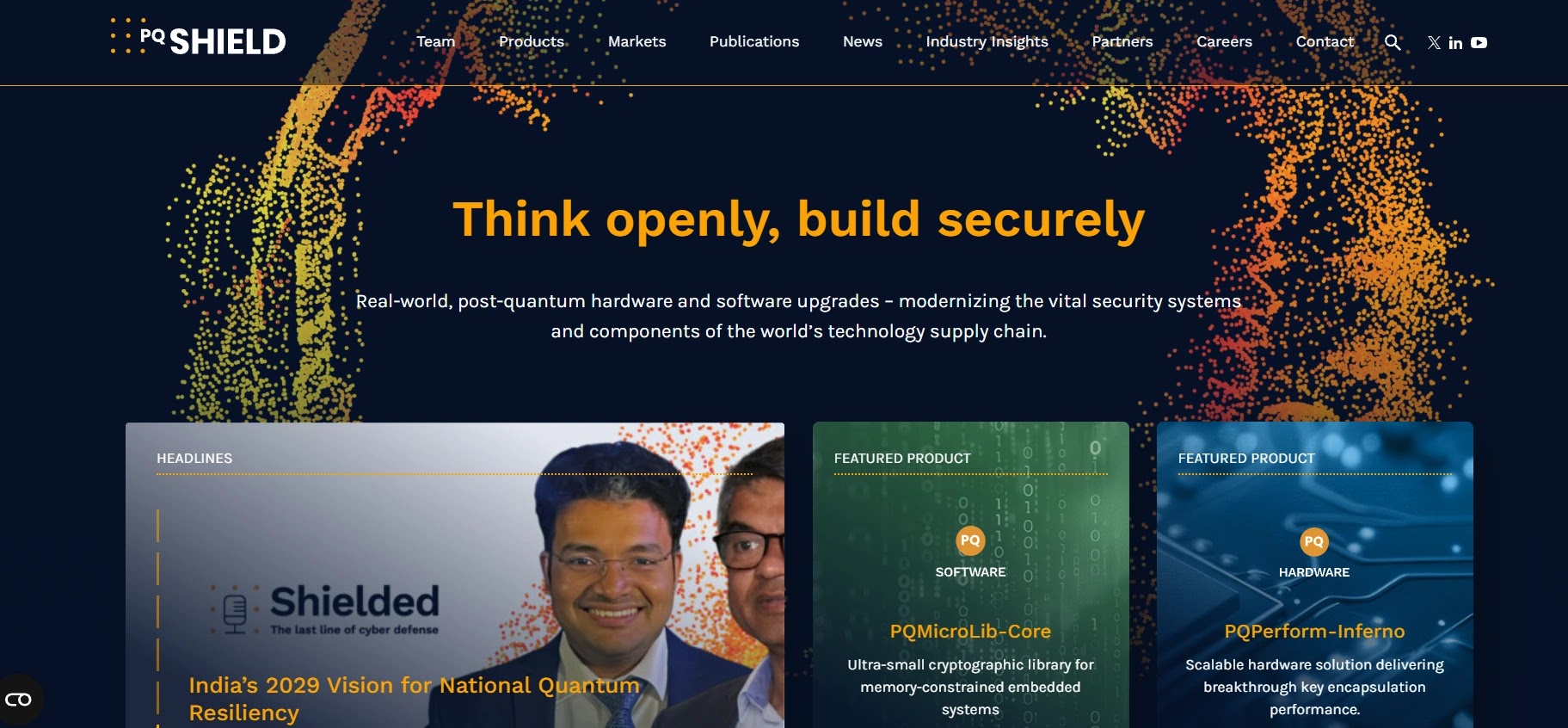
Snapshot: A standards pioneer delivering quantum-safe cryptography across silicon, software, and cloud environments.
Why We Picked It
PQShield distinguished itself as one of the early innovators to simultaneously deploy quantum-safe cryptography across hardware chips, software architectures, and cloud libraries. Its team of world-class researchers played a direct role in shaping the final NIST standards. This foundational expertise ensures their firmware is resilient against sophisticated exploit types that bypass conventional OS security measures, including severe hardware vulnerabilities like Processor Speculative Execution Flaws.
At a Glance
- Type: Hardware IP cores + firmware + software SDKs + cloud libraries
- Algorithms: ML-KEM, ML-DSA, SLH-DSA + hybrid implementations
- Deployment: Silicon IP, FPGA, embedded systems, software, cloud
- Compliance: NIST FIPS 203/204/205, FIPS 140-3 alignment
- Standout: Side-channel-resistant cryptographic cores
The Deep Dive
PQShield’s core strength lies in its consistent implementation: the same standards-grade cryptographic designs are deployed across both hardware and software. This unified approach eliminates the integration gaps that often arise when combining solutions from multiple vendors. For chipmakers and device OEMs, its side-channel-resistant cores embed quantum-safe security directly into the silicon, rather than adding it as an afterthought.
The platform also incorporates migration tools and cryptographic discovery capabilities, enabling engineering-focused organizations to identify at-risk algorithms before deployment. The primary considerations are premium licensing costs and a substantial integration effort, indicating that PQShield is designed for OEMs and large enterprises, not for plug-and-play small to medium-sized business (SMB) use cases.
Pros & Cons
- ✅ Deep involvement in NIST standardization processes
- ✅ Comprehensive silicon-to-cloud coverage from a single vendor
- ✅ Strong side-channel resistance, ideal for embedded applications
- ❌ Premium pricing for full-stack licensing
- ❌ Requires engineering integration; primarily OEM-oriented
Bottom Line: 9.1/10 — the authoritative choice for hardware manufacturers and end-to-end PQC deployments.
5. Entrust — Best for PKI & Digital Identity
Snapshot: Quantum-safe certificates, digital signing, and HSMs from a specialized identity-focused vendor.
Why We Picked It
Entrust combines its robust nShield Hardware Security Module (HSM) ecosystem with a mature, high-scale Public Key Infrastructure (PKI) management stack. Digital certificates and authentication tokens represent significant long-term quantum vulnerabilities, making them susceptible to “trust now, forge later” attacks. Entrust ensures identity infrastructure remains resilient against unauthorized interception, preventing credential exploitation similar to methods observed in Active Directory Certificate Services compromises.
At a Glance
- Type: HSM + PKI/CA + cloud signing services
- Algorithms: ML-DSA, SLH-DSA, ML-KEM, hybrid/composite certificates
- Deployment: HSM, PKI platform, cloud-based solutions
- Compliance: FIPS 140-3, WebTrust, eIDAS certifications
- Standout: Support for hybrid and composite certificates
The Deep Dive
Digital identity poses a subtle yet significant quantum liability, as every certificate, signature, and code-signing key represents a potential future forgery risk. Entrust directly addresses this by offering quantum-safe PKI that supports both hybrid and composite certificates, allowing organizations to establish trust today that will remain valid in the quantum era. When paired with nShield HSMs for protected key generation and signing, and leveraging certificate lifecycle automation for extensive deployments, Entrust provides a targeted, identity-first migration strategy. While its focus is less on data-at-rest encryption, and like other HSM providers, it delivers optimal value at an enterprise scale, it is a crucial solution for identity-centric quantum readiness.
Pros & Cons
- ✅ Strong PKI + HSM pairing under a single vendor
- ✅ Support for hybrid/composite certificates
- ✅ Trusted certificate authority heritage
- ❌ Less emphasis on bulk data encryption
- ❌ Best economic value at enterprise scale
Bottom Line: 9.0/10 — the leader for organizations whose primary quantum risk is concentrated within identity and PKI.
6. SandboxAQ — Best for AI-Driven Crypto Management
Snapshot: Cryptographic observability powered by an analytics-first, vendor-neutral intelligence.
Why We Picked It
SandboxAQ, a spin-off from Alphabet, integrates artificial intelligence with advanced cryptographic observability in its flagship AQtive Guard platform. Similar to how security teams use machine learning to detect anomalies like AI-generated phishing campaigns, SandboxAQ applies telemetry models to analyze corporate networks. This allows it to dynamically map active cryptographic usage and flag potential compliance irregularities, providing a proactive approach to crypto management.
At a Glance
- Type: Cryptographic management & observability platform
- Algorithms: NIST PQC standards, hybrid implementations
- Deployment: Software, cloud, hybrid environments
- Compliance: NIST FIPS standards + enterprise governance requirements
- Standout: AI-assisted risk scoring and remediation planning
The Deep Dive
AQtive Guard treats cryptography as a continuously monitored asset class, moving beyond a one-time project approach. It inventories cryptographic usage, employs AI to assist in risk scoring, and generates remediation plans that seamlessly integrate with existing security and PKI tools. For large enterprises operating with diverse technology stacks, this vendor-neutral visibility proves exceptionally valuable. While SandboxAQ is a newer entrant compared to legacy cryptography vendors and acts primarily as a management and orchestration layer rather than a core algorithm or hardware provider, its strong R&D background and analytical depth make it a standout for modern crypto governance.
Pros & Cons
- ✅ Strong observability and AI-assisted tooling
- ✅ Vendor-neutral management across mixed estates
- ✅ Backed by a serious research pedigree
- ❌ Newer than legacy cryptography vendors
- ❌ Management layer, not an algorithm/hardware source
Bottom Line: 8.8/10 — the contemporary choice for analytics-driven cryptographic governance.
7. QuSecure — Best for Crypto-Agility Overlays

Snapshot: Upgrade your cryptography without overhauling your infrastructure.
Why We Picked It
QuSecure’s QuProtect platform leverages a software-defined security architecture to enable enterprises to deploy PQC without necessitating a complete rebuild of their legacy network foundations. It functions as an agility wrapper, intercepting at-risk data paths in-line to neutralize external extraction threats. This is a critical defense mechanism, particularly given that threat actors frequently compromise unsecured configurations to conduct large-scale edge routing data theft.
At a Glance
- Type: Software overlay + cryptographic orchestration
- Algorithms: ML-KEM, ML-DSA, SLH-DSA, HQC-KEM, FN-DSA
- Deployment: Software overlay, cloud environments
- Compliance: NIST FIPS standards + crypto-agility controls
- Standout: One-click algorithm swap and rollback functionality
The Deep Dive
QuProtect’s standout feature is its crypto-agility. It enables the application of PQC across legacy systems without requiring a re-architecture, providing security teams with centralized visibility and policy control over their cryptographic posture. As cryptographic standards inevitably evolve over the coming years, this platform allows for rapid swapping or rolling back of algorithms. While the overlay model introduces an additional orchestration layer, and QuSecure is a software-only solution — suggesting it pairs best with a hardware key-custody solution for highly sensitive secrets — few alternatives offer such practical, broad, and flexible PQC coverage for organizations needing rapid deployment and future adaptability.
Pros & Cons
- ✅ Minimal disruption to existing infrastructure
- ✅ Best-in-class crypto-agility (swap/rollback capabilities)
- ✅ Strong traction in federal and enterprise sectors
- ❌ Adds an orchestration layer
- ❌ Software-only; no native HSM integration
Bottom Line: 8.7/10 — the fastest, lowest-friction route to broad PQC coverage.
8. SEALSQ — Best for IoT & Semiconductor PQC
Snapshot: Quantum-safe security embedded directly into chips for billions of devices.
Why We Picked It
SEALSQ designs and integrates NIST-compliant cryptographic implementations directly onto physical silicon wafers and secure microcontrollers. This fundamental approach addresses edge-device security from the ground up, effectively preventing vulnerabilities from being exploited via memory-corruption vectors, such as critical firmware remote code execution flaws. This deep-seated security is crucial for the integrity of IoT ecosystems.
At a Glance
- Type: Secure microcontrollers, secure elements, PKI
- Algorithms: ML-KEM (Kyber), ML-DSA (Dilithium), hybrid implementations
- Deployment: Silicon, secure elements, provisioning PKI
- Compliance: NIST FIPS 203/204 alignment, Common Criteria targets
- Standout: PQC implemented at the silicon and secure-element level
The Deep Dive
The IoT sector presents the most challenging frontier for PQC, where limited power and computational resources make software-only quantum-safe cryptography impractical at scale. SEALSQ overcomes this by implementing PQC directly in hardware, establishing device identity, secure boot, and update integrity within a tamper-resistant root of trust. Its integrated PKI supports provisioning at manufacturing scale, enabling OEMs to produce millions of quantum-safe devices. The trade-off is a specialized focus — SEALSQ is precisely targeted at IoT and silicon, with limited enterprise software tooling and longer hardware integration cycles. For device manufacturers, however, this specialization is a distinct advantage.
Pros & Cons
- ✅ True hardware-level PQC for constrained devices
- ✅ Strong device-identity and secure-boot model
- ✅ Scales to mass device production
- ❌ Narrowly focused on IoT/silicon applications
- ❌ Limited enterprise software; longer integration cycles
Bottom Line: 8.4/10 — the definitive choice for IoT and semiconductor-level quantum safety.
9. DigiCert — Best for Certificate Lifecycle Management
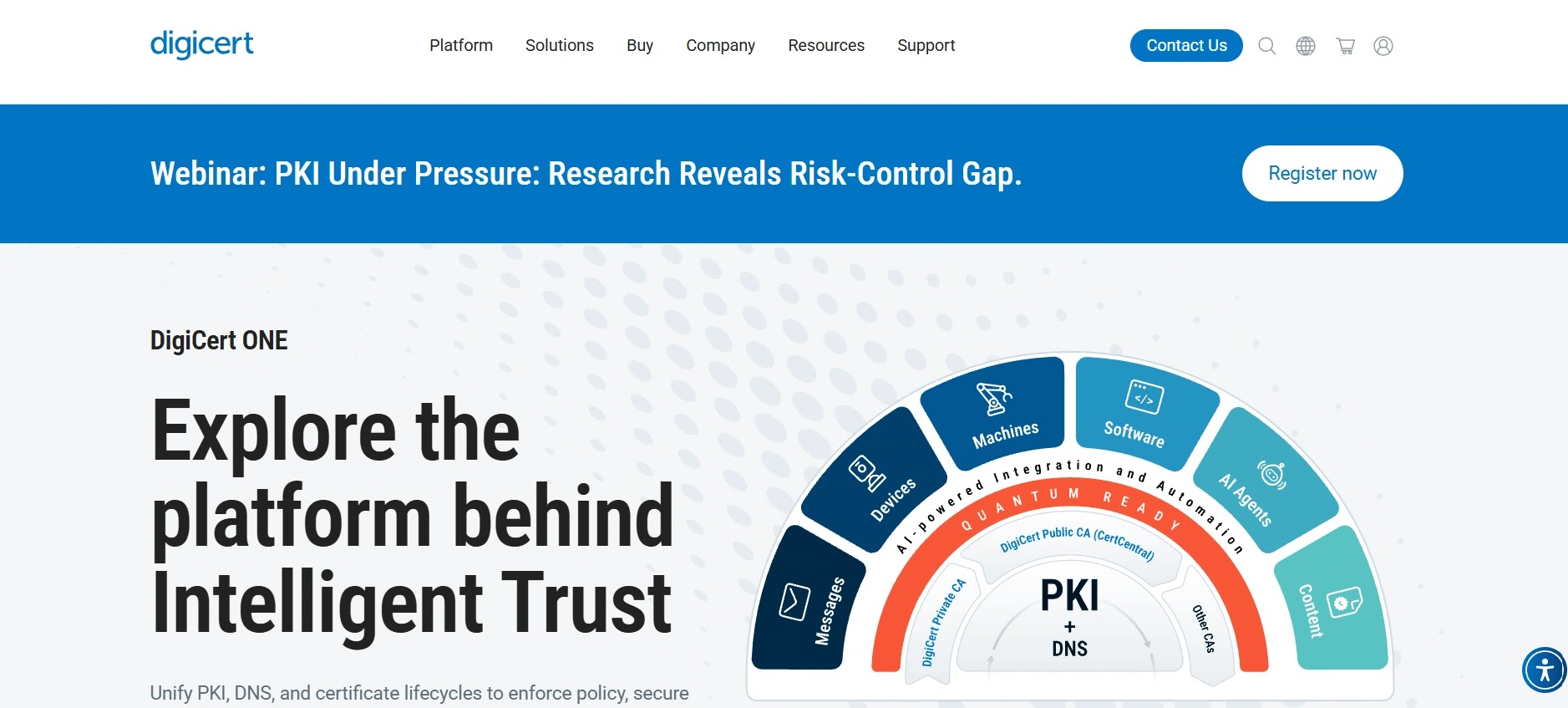
Snapshot: Internet-scale, automation-first PQC certificate management.
Why We Picked It
DigiCert ONE integrates post-quantum readiness directly into its Trust Lifecycle Manager, enabling automated discovery, deployment,
Disclaimer: HackersRadar reports on cybersecurity threats and incidents for informational and awareness purposes only. We do not engage in hacking activities, data exfiltration, or the hosting or distribution of stolen or leaked information. All content is based on publicly available sources.








No Comment! Be the first one.